Once Again, Trump DOJ Busts Convention, Splits Government in High-Profile Employment Case
EEOCThe case of Donald Zarda, a skydiver who claimed his employer, Altitude, violated Title VII when it fired him after finding out he was gay, illustrates how the U.S. Department of Justice and the Equal Opportunity Commission can sometimes operate at cross purposes in litigation.

According to a Reuters report, the EEOC, an independent federal agency, is representing Zarda’s estate against the former employer. At the same time, the DOJ has filed its own amicus brief, explicitly disavowing the EEOC’s stance.

Alison Frankel writes that the brief “argued primarily that the EEOC and the 7th Circuit, which adopted the agency’s reasoning in its en banc opinion last April in Hively v. Ivy Tech Community College, disregarded the actual language of the statute and misread Supreme Court precedent on interpreting that language. According to the Justice Department, it’s up to Congress, not the courts, to legislate protection for gay and lesbian employees, and Congress has steadfastly refused to do so.”


Read the Reuters article.


Join Our LinkedIn Group


Wells Fargo Lawyer Accidentally Releases Trove of Data on Wealthy Clients

MistakeA Bressler, Amery & Ross lawyer representing Wells Fargo, responding to a third party subpoena in a case between two financial advisors, produced documents without redaction or confidentiality designations that revealed “billions of dollars of client account information, from residents of numerous states and possibly Europe.”

Above the Law describes how the mistake got worse: “To compound the issue, [the lawyer] alleges that plaintiffs showed the documents — which, remember, weren’t protected by a confidentiality agreement — to the New York Times, which then wrote about the consumer information that was produced. All in all, an incredibly messy affair.”

Kathryn Rubino writes that a broadly worded confidentiality agreement could have mitigated the damage.

Read the Above the Law article.


Wells Fargo Oops: Confidential Data Went to Opposing Side

It was a mistake and a bad one. In responding to a subpoena for information, a lawyer for Wells Fargo inadvertently sent the opposing attorney in a lawsuit a disc filled with confidential information, including Social Security numbers, for 50,000 of the bank’s wealthiest clients, according to a post on the website of Androvett Legal Media & Marketing. This embarrassing and damaging error came to light in a New York Times article.

Telling the media is not the appropriate way to handle such a transgression, says Houston trial lawyer John Zavitsanos of Ahmad, Zavitsanos, Anaipakos, Alavi & Mensing P.C. or AZA, who has tried more than 75 cases to verdict. Normally, the recipient of the material would return it to the sender, understanding that mistakes like this happen sometimes, he said.

“Instead, this may boomerang on the people who publicized the breach, and they may get in trouble for it. Most judges are human beings and understand mistakes – and they don’t like gotchas.

“Also, many states have snapback procedures whereby if you inadvertently turn over privileged information, you can retrieve it and say it was inadvertently produced. Until that privilege is determined, the receiving party can’t hold onto it. There are a slew of states that have provisions like that. And even if this involved a state without a snapback rule, the other side can file a motion to protect their confidential information.

“Of course, if Wells Fargo is unsuccessful in retrieving the information, its law firm may be subject to claims and penalties. Usually you come up with a set of protocols to prevent this from happening. However, every lawyer with an active litigation practice has produced something in error at some point. You call the other side and ask them to return it. We’ve all been there.”


Join Our LinkedIn Group


The Supreme Court Delivers a Blow to Plaintiff Paradise

St. Louis archSt. Louis has been a destination of choice for attorneys going after companies that do business nationwide. But those days may be over, and drugmakers such as Bristol-Myers Squibb Co. and Johnson & Johnson couldn’t be more relieved, according to Bloomberg Law.

After the U.S. Supreme Court in June struck a blow against so-called litigation tourism, the fallout in St. Louis was quick. “Within days, J&J, citing the Supreme Court ruling, won a mistrial in a case in which the families of three women blamed their deaths from ovarian cancer on use of the company’s talc products. Two of the families were from out of state,” report Bloomberg’s Margaret Cronin Fisk and Jef Feeley.

The reporters predict more challenges to come in St. Louis, where many non-resident plaintiffs have been flocking for years.

Read the Bloomberg article.


Join Our LinkedIn Group


Pharmaceutical Company Celgene Settles Suit for $280 Million

The Associated Press is reporting that Celgene Corp. has agreed to pay $280 million to settle a whistleblower lawsuit alleging the pharmaceutical company committed fraud promoting a drug with a notorious history that was re-purposed to treat leprosy and another therapy for unapproved cancer treatments.

The agreement, announced by federal prosecutors, came out of a lawsuit filed by a former Celgene saleswoman who said Celgene submitted false claims to Medicare and health care programs in 28 states and Washington, D.C.

The lawsuit filed by Beverly Brown was brought on behalf of the U.S. government under a federal whistleblower law. She could receive as much as $84 million as her share of the settlement,” writes Brian Melley.

Read the AP article.


Join Our LinkedIn Group


Can the President Be Indicted? A Long-Hidden Legal Memo Says Yes

A newfound memo from Kenneth W. Starr’s independent counsel investigation into President Bill Clinton sheds fresh light on a constitutional puzzle that is taking on mounting significance amid the Trump-Russia inquiry: Can a sitting president be indicted?

The New York Times reports that the 56-page memo, locked in the National Archives for nearly two decades and obtained by the newspaper under the Freedom of Information Act, amounts to the most thorough government-commissioned analysis rejecting a generally held view that presidents are immune from prosecution while in office.

Reporter Charlie Savage writes: “It is proper, constitutional, and legal for a federal grand jury to indict a sitting president for serious criminal acts that are not part of, and are contrary to, the president’s official duties,” the Starr office memo concludes. “In this country, no one, even President Clinton, is above the law.”

Read the NYT article.


Join Our LinkedIn Group


Republicans Introduce Bills to Scrap New Bank Arbitration Rule

Republican lawmakers in the House and Senate have introduced bills calling for the repeal of a just-announced regulation that would make it easier for consumers to bring class-action lawsuits against banks, reports The Los Angeles Times.

The new Consumer Financial Protection Bureau rule would ban banks and other financial institutions from forcing arbitration clauses on customers to prevent them from bringing or joining class-action suits.

Some Republicans have introduced resolutions calling for use of the Congressional Review Act, which allows Congress to new regulations created by federal agencies, writes James Rufus Koren.

Read the LA Times article.


Workplace Plaintiffs Face Long Odds at Trial, Analytics Data Indicates

The ABA Journal reports that only 1 percent of plaintiffs who file federal job discrimination, harassment and retaliation claims win on the merits at trial, according to an analysis by the Lex Machina legal analytics firm.

The article by Stephen Rynkiewicz discusses Lex Machina’s new employment litigation search and analysis module that covers findings of hostile work environment, retaliation and Title VII issues such as race bias, as well as discrimination based on age, equal rights, military, pregnancy and rehabilitation.

“Lex Machina reviewed nearly 72,000 cases and found that nearly three-fourths them settle, while employers prevail on summary judgment 13 percent of the time,” writes Rynkiewicz. “In more bad news for plaintiffs, only 192 damage awards since 2009 included punitive damages.”

Read the ABA Journal article.


After N.F.L. Concussion Settlement, Feeding Frenzy of Lawyers and Lender

Some former NFL players are receiving pitches for legal help in receiving checks from the league’s legal sports history aimed at retirees who sued for lying about the dangers of concussions suffered by the players.

Ken Belson of The New York Times writes, “Some players may get very little, but others with severe neurological diseases may receive as much as $5 million. Now lawyers, lenders and would-be advisers are circling, pitching their services and trying to get a cut of the money.”

Some of the ex-players with severe neurological disorders are cognitively impaired and may not understand the terms used by the lawyers who make the pitches.

Read the NYT article.


Dot Your I’s, Cross Your T’s, and Place Your Commas

When drafting contracts, briefs, and other documents, the significance of placing a comma is often overlooked, points out Hyatt & Weber P.A. The decision to include or omit a comma, however, could be dispositive in a dispute over the meaning of legislation or a contract.

“Indeed, in O’Connor v. Oakhurst Dairy, 851 F.3d 69 (1st Cir. 2017), the United States Court of Appeals for the First Circuit found the absence of a comma created an ambiguity when interpreting certain legislation, and that ambiguity drove the outcome of the litigation,” according to a post of the firm’s website.

“Guiding principles regarding the use of commas and other writing conventions should be strongly considered when drafting contracts, for example, as including or excluding a comma in a particular contract provision may ultimately determine whether a company owes or is owed millions of dollars in a subsequent dispute,” the post continues.

Read the article.


Join Our LinkedIn Group


Trump Faces Obstacles in Bid to Re-Shape Key U.S. Courts

President Donald Trump’s effort to reshape influential U.S. courts by stocking them with conservative judges faces at least one significant impediment, reports Reuters: some of the courts best placed to thwart his agenda have liberal majorities that are likely to stay in place in the short-term.

“Those courts, including an influential Washington appeals court and two appellate courts that ruled against Trump in cases involving his travel ban, all had an influx of fresh liberal blood under President Barack Obama,” writes Lawrence Hurley.

Hurley explains that in Obama’s eight years in office, he was able to make enough appointments to leave a strong liberal imprint on the federal courts. At the end of his second term, nine of the 13 federal appeals courts had a majority of Democratic-appointed judges.

Read the Reuters article.

Join Our LinkedIn Group


Consumer Watchdog Makes It Easier to Sue Banks and Other Companies

ArbitrationThe government’s consumer watchdog has finalized a rule that will make it easier for people to challenge financial companies in court, reports The Washington Post.

The new Consumer Financial Protection Bureau rule targets arbitration clauses, which can show up on user agreements for credit cards, bank accounts and other consumer products.

“As a condition for receiving services or products, consumers often give up their right to join a class-action lawsuit with these clauses, and instead agree to settle any disputes in a private process known as arbitration,” writes the Post‘s .

Now the rule will ban companies from using these agreements to block consumers from joining group lawsuits. But supporters of arbitration say the clauses can help companies and consumers save money by minimizing legal costs.

Read the Post‘s article.


Join Our LinkedIn Group


Webcast: Emerging Trends And Legal Analytics For Employment Litigation

Above the law and Lex Machina will present a webinar on trends and legal analytics for employment litigation on Thursday, July 13, at 12 p.m. EDT.

David Lat, founder of Above the Law, says the event will address such questions as: The What do recent political and economic changes mean for the employment litigation landscape? How can knowledge management and technological tools help litigators navigate the transformations in this sector?

Lex Machina is expanding its Legal Analytics to a new practice area, Employment Litigation, shedding light on this rapidly evolving area of law, Lat writes. The webcast will feature panelists discussing new employment litigation data, with never-before seen trends and insights about judges, parties, lawyers and law firms.

Register for the webinar.


Judge Shoots Down eDiscovery Trade Secrets Case

A federal judge in Manhattan has rejected DTI Global’s arguments that a sales team lured away by a competitor had misappropriated key trade secrets, such as its e-discovery clients’ purchasing needs, and denied its motion for a preliminary injunction, according to a Bloomberg Law report.

The four sales agents had gone to work for LDiscovery.

U.S. District Judge Jed Rakoff wrote in his opinion that he was “unpersuaded that LDiscovery has done anything improper by entering into these agreements with the Individual Defendants, let alone that the Individual Defendants have breached the applicable terms of their agreements with DTI.”

Read the Bloomberg article.


Join Our LinkedIn Group


Justice Neil Gorsuch Has Already Changed the Supreme Court Forever

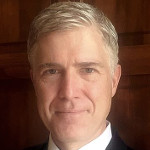
Neil GorsuchThis past term shows that the Supreme Court is really the Gorsuch Court — a trend that will likely continue well into the future, writes Jessica Mason Pieklo in Rewire.

“Gorsuch’s concurring opinion in Trinity Lutheran Church v. Comer, the case that has further opened a pipeline for direct government spending to some religious institutions, was so conservative not even Justice Samuel Alito — who happily endorsed corporate religious rights in the Hobby Lobby v. Burwell decision — agreed with it,”
Pieklo writes.

If justice Anthony Kennedy retires from the court, a second Trump appointee could move the court the most conservative in its history, she adds.

Read the Rewire article.


Join Our LinkedIn Group


Download: Insights From the Latest E-Discovery Cases

Zapproved’s  2017 Summer volume offers insights from the latest e-discovery cases — and how courts are applying the FRCP to reach big decisions. The new volume is available for downloading at no charge.

The company says the publication includes summaries detailing e-discovery no-nos — from data compliance missteps to misconduct to total e-discovery breakdown. It also discusses trends in how courts are applying the new Federal Rules of Civil Procedure (FRCP) to validate best practices.

The collection covers cases with many high-profile brands, such as Wal-Mart Stores, UPS, Goodyear Tire, Angie’s List and the return of Targate. Other cases put lesser known names in the spotlight, like Fischer v. Forrest, Vir2us, Inc. v. Invincea, Inc. and OOO Brunswick Rail Mgmt. v. Sultanov.

This free volume includes abstracts of e-discovery case law from the last 10 years, plus 11 full summaries of recent 2017 cases. It reveals how the courts are bringing issues of proportionality, cooperation and preservation to the forefront:

Gordon v. T.G.R. Logistics, Inc.
– United States v. HV1 Cat Canyon, Inc.
– Goodyear Tire & Rubber Co. v. Haeger
– Williams v. Angie’s List, Inc.
– Bird v. Wells Fargo Bank
– Fischer v. Forrest
– HCC Ins. Holdings, Inc. v. Flowers
– Vir2us, Inc. v. Invincea, Inc.
– Wal-Mart Stores, Inc. v. Cuker Interactive, LLC
– Solo v. United Parcel Serv. Co.
– OOO Brunswick Rail Mgmt. v. Sultanov

Download the 2017 volume.


Join Our LinkedIn Group


Firms Offer Litigation Insurance So Clients Can Hedge Bets in Court

Some American law firms trying to collect on big contingency claims are starting to use  form of litigation insurance to hedge against the possibility that the judgment could be wiped away on appeal, according to Bloomberg Law.

Reporter Gabe Friedman describes one case in which a firm used the process when it was trying to resolve one of its biggest cases: a $300 million trial judgment for a client, which would yield a 10 percent fee for the firm.

The lawyer “negotiated for a type of ‘insurance’ with Credit Suisse that was acceptable to the court,” Friedman explains. “Under the deal, his firm paid Credit Suisse what was akin to an insurance premium. And if his firm was unable to collect its 10 percent fee award, Credit Suisse would pay it an undisclosed sum; and if the firm did collect, which it eventually did, the firm had only paid the bank the premium, an amount equal to a portion of its fee award … .”

Read the Bloomberg article.


Law Firm Not Liable for $1.5B Loan Gaffe

Image by C_osett

Entities that loaned General Motors $1.5 billion before it went bankrupt cannot sue GM’s law firm, Mayer Brown, for accidentally canceling the collateral on the loan, the Seventh Circuit ruled.

Courthouse News Service is reporting that the Chicago-based appeals court ruled Wednesday that Mayer Brown has no duty to GM’s lenders because it did not represent them.

The suit was based on a statement drafted by Mayer Brown that mistakenly terminated the collateral securing a $1.5 billion loan. That mistake resulted in the lenders’ loans becoming unsecured, putting their claims behind the claims of secured creditors, writes Lorraine Bailey.

Read the Courthouse News article.


Join Our LinkedIn Group


The Litigation Storm Around President Trump

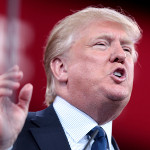
Donald Trump

Image by Gage Skidmore

Liberal activists are thrilled to be suing President Donald Trump, reports Bloomberg Law.

The article by Paul Barrett and Dune Lawrence quotes Norman Eisen, the chief White House ethics lawyer for President Barack Obama: “The reason you’re seeing a proliferation of lawsuits against President Trump is that he brought his lifelong contempt for the rule of law with him to the Oval Office.”

A varied collection of plaintiffs accuse Trump of improperly profiting from private businesses such as his Washington hotel, which has been patronized by officials from Saudi Arabia, Kuwait, and other countries.

“Yet another legal challenge has blocked a separate executive order cutting off certain federal funds from ‘sanctuary cities,’ which refuse to have their police departments help federal authorities target immigrants for deportation,” the authors report.

Even some stare and local governments are taking Trump to the courthouse.

Read the Bloomberg article.


Join Our LinkedIn Group


Bailey Brauer Helps Secure Appellate Win in Texas Partnership Liability Battle

In a decision relying on the Fifth U.S. Circuit Court of Appeals’ application of a 19th century court ruling to Texas general partnership liability law, an agricultural wholesaler will be allowed to enforce a judgment against individual partners of a defunct agribusiness partnership.

The partners of G&K Farms, a North Dakota-based general partnership formed in 2008 to farm land in Texas, amassed debts of nearly $650,000 to Crop Production Services. G&K partners John and Dawn Keeley and Thomas Grabanski made payments on the debt until Grabanski and his wife filed for bankruptcy in 2013.

A default judgment was issued in 2014 against G&K Farms totaling more than $1.3 million, with a subsequent judgment also issued against the Keeleys based on their derivative liability as partners.

In their efforts to vacate the judgment, the Keeleys relied on the 1872 U.S. Supreme Court ruling in Frow v. De Le Vega, which they felt protected them from individual liability after Keeley avoided a finding of liability based on a guaranty he signed. Frow v. De Le Vega determined that when there are multiple defendants, if some parties present a defense and win, then the ruling can be applied to defaulting parties under certain circumstances.

“The courts had already found that there was no logical application of Frow in this case. It was simply a very thinly veiled attempt by the Keeleys to avoid their responsibilities as partners in repaying the general partnership’s debts,” said CPS’s lead appellate attorney Clayton Bailey of Dallas’ Bailey Brauer PLLC. “Crop Production Services’ trial attorneys, John Mark Stephens and Abel Leal, did a terrific job in the trial court demonstrating that the Frow doctrine did not apply.”

“This has been a protracted battle that should have been settled years ago. Nevertheless, this is a big win for CPS,” said Stephens of the Dallas law firm Johnson Stephens & Leal, PLLC, who represents CPS at trial along with partner Leal. “We are gratified that the Fifth Circuit saw through this smoke screen and affirmed the ruling of the district court.”


Join Our LinkedIn Group