Liability in the Oil and Gas Fields: The Gap Between Your Company and Its Employees

Oil wellsTexas courts have continued to evaluate the nature and extent of liability that property owners have for the acts of independent petroleum contractors, points out Marcy Rothman in Kane Russell Coleman Logan’s Energy Law Today blog.

She explains that a new opinion from the Eastland Court of Appeals is highly relevant for owners, operators, and drillers.

The Texas Supreme Court specifically held that the plain language of the Liability for Acts of Independent Contractors statute in the Texas Civil Practice & Remedies Code protects only the property owner, not its employees.

Boiling the Eastland court’s decision to its most practical terms, when it comes to claims for negligent hiring, companies are subject to claims that they knew or should have known that the contractors were not competent, Rothman writes.

Read the article.


Join Our LinkedIn Group


Supreme Court Has Another Chance To Help Take Down Patent Trolls

When the U.S. Supreme Court hears  Oil States Energy Service v. Greene’s Energy Group, the justices will have the opportunity to banish patent trolls back under the bridge where they belong, according to Above the Law.

Gary Shapiro explains that Oil States hinges on inter-partes review – “the process used by the U.S. Patent and Trade Office to determine whether a patent under question was issued based on merit. If not, the patent can be rescinded. The process is similar to a trial: Lawyers make their case to the Patent Trials and Appeals Board (PTAB), and three highly qualified administrative patent judges hear their case and come to a decision.”

He says the process is expensive, but it’s much less costly than going to court.

Read the Above the Law article.


Join Our LinkedIn Group


Valeant’s Latest Legal Threat Could Be Especially Costly

Valeant Pharmaceuticals International Inc. has been selling assets, paying down debt and riding a recovery of its shares from their lowest point last spring. But one big uncertainty — its potential legal costs — just got bigger, reports Bloomberg.

Mutual fund company Lord Abbett & Co. filed a securities fraud lawsuit against Valeant, alleging that it bought shares in the drug giant at an artificially high price because of misinformation provided by Valeant, write Greg Farrell and Neil Weinberg. The suit, alleging violations of New Jersey’s racketeer influenced and corrupt organizations (RICO) law, represents a new and potentially costly legal attack on Valeant, which is already facing lawsuits over alleged manipulation of drug prices.

“If other investors were to follow Lord Abbett’s lead, Valeant’s legal exposure could balloon,” according to Bloomberg. “In its filings with the Securities and Exchange Commission, Valeant says that the class action suits are without merit and that it intends to fight them.”

Read the Bloomberg article.


Join Our LinkedIn Group


Mueller Uses Classic Prosecution Playbook Despite Trump Warnings

magnifyer-investigate-search-puzzleBloomberg Law describes how special counsel Robert Mueller is following a time-tried strategy for looking into the Trump campaign’s possible ties to Russia:

“Follow the money. Start small and work up. See who will ‘flip’ and testify against higher-ups by pursuing charges such as tax evasion, money laundering, conspiracy and obstruction of justice.”

Reporter Chris Strohm quotes Jeffrey Cramer, a former prosecutor who’s now managing director of consulting firm Berkeley Research Group LLC: ““You go for the weakest link, and you start building up.”

Mueller’s approach has been used for decades in criminal investigations, from white-collar fraud to mob racketeering.

Read the Bloomberg article.


Massive California Verdict Expands J&J’s Talc Battlefield

Reuters is reporting that a massive California verdict in a lawsuit alleging Johnson & Johnson’s talc-based products cause cancer has opened a new front in the litigation.

“The $417 million award by California jury to a California resident suggested so-called forum-shopping, in which parties seek to file cases in whichever jurisdictions seem most favorable, may not be the main problem facing J&J as it wrestles with some 4,800 outstanding talc lawsuits,” according to reporter Tina Bellon.

Previous talc cases, all tried in the same state court in St. Louis and involving out-of-state plaintiffs, totaled $307 million.

Read the Reuters article.


Join Our LinkedIn Group.


Waymo Jury May Be Warned Uber Lawyers Didn’t ‘Come Clean’

Uber Technologies Inc. may pay a price for withholding key evidence from Waymo when their trade secrets dispute goes to trial — the judge proposed letting the jury know the ride-hailing company’s lawyers didn’t “come clean,” reports Bloomberg Technology.

“I’m inclined to let the jury know what happened here,” U.S. District Judge William Alsup said Wednesday at a hearing in San Francisco, speaking to one of Uber’s lead lawyers. “You misled the judge time and time again.”

“Since the case was filed in February Alsup has repeatedly expressed frustration with lawyers at Morrison and Foerster, or MoFo, for making sweeping arguments that information sought by Waymo is protected by confidentiality provisions and out of its adversary’s reach,” writes Joel Rosenblatt.

Read the Bloomberg Technology article.


Join Our LinkedIn Group


If You Trademark It, Then You Better Put a Ring on It

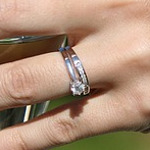
Engagement ringThe iconic jewelry store Tiffany & Co. is a model for trademark enforcement, aggressively and successfully policing its brand in the courts. Last year, Tiffany filed a lawsuit against Costco Wholesale Corp., claiming that the warehouse giant sold more than $6 million of ersatz Tiffany engagement rings and improperly used the jeweler’s name on at least 200,000 in-store signs. This week Tiffany prevailed by winning a $19.4 million judgment in federal court.

Dallas lawyer Chris Schwegmann, a partner at Lynn Pinker Cox & Hurst who tries intellectual property cases, has been following the Tiffany v. Costco dispute.

“This type of litigation not only discourages counterfeiters, but also ensures that Tiffany’s luxury brand doesn’t get diluted over time. I find it interesting that Costco argued that ‘Tiffany’ represents a generic term used to describe a ring setting, and not just a brand name. That’s a tough case to make against a company that aggressively defends its brand.

“Based on the sizable judgment, it is unlikely that other companies in the industry will try to make the same arguments against Tiffany & Co. That’s the benefit of aggressive trademark enforcement.”


Join Our LinkedIn Group


Lost Profits: Direct or Indirect Damages?

By 
King & Fisher Law Group, PLLC

In 2014, the New York Court of Appeals, in Biotronik A.G. v. Conor Medsystems Ireland, Ltd., held that the lost profits claimed by a party were “general damages”, and were recoverable. They were recoverable despite the limitation of liability provision in the contract, which stated that neither party would be liable for “any indirect, special, consequential, incidental or punitive damage with respect to any claim arising out of [the] agreement” for any reason, including a party’s performance or breach of the agreement.

Why is a case that was decided in 2014 worthy of writing about now? It’s been over three years since the Court’s decision, and we still commonly see limitation of liability language in commercial contracts that does not clearly address the issue of lost profits, and whether they are direct or indirect damages. That may be a strategic decision of the drafter, or it may be an oversight. While New York law does not govern all commercial contracts, other courts may rely on Biotronik in the future, or reach a similar holding independently. Regardless, it’s generally better to have a contract that clearly expresses the intent of the parties, rather than have a court determine it.

Direct Damages vs. Indirect Damages

Consider whether lost profits are reasonably foreseeable and quantifiable. Will breach of the contract almost surely cause a party to lose profits? Is there a reasonably certain way to prove the amount of lost profits? If so, lost profits may be considered direct damages. For example, if the parties have a non-compete agreement, the main purpose of that agreement is to ensure one party does not compete with the other party for business, thereby diverting customers, which results in lost profits. Lost profits can be reasonably quantified by sales to each diverted customer by the competing party. This is a situation where lost profits would likely be considered direct damages.

Defining Lost Profits

Consider whether the parties want lost profits to be recoverable. A provision can be included in the contract expressly stating that lost profits are direct damages, or that lost profits are indirect damages. Limitation of liability language can be included that states lost profits are not recoverable, regardless of how they are categorized. Alternatively, the limitation of liability language can expressly exclude lost profits from the limitation, making them recoverable.

Ultimately, whether lost profits should be recoverable, and how they are addressed in a contract will depend on the individual relationship or transaction in question. Given the potential for dispute, drafting clear language is key.


Join Our LinkedIn Group



Why Tiffany & Co.’s $19.4M Court Win Against Costco Is Correct – And Important

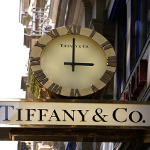
Tiffany signIn a legal battle that’s been underway since 2013, a federal judge ruled this week that Costco owes Tiffany & Co. a settlement of $19.4 million for selling diamond rings confusingly labeled as “Tiffany” in its stores, Forbes reports.

Forbes contributor Rachelle Bergstein explains that, while a jury found in Tiffany & Co’s favor in September of 2015, Costco continued to argue that its use of the name “Tiffany” referred to a generic style of ring, and not to the storied luxury house itself.

She writes that, while the suit sounds like a case of an elite, heritage brand pummeling a mass-market retailer for using its name to sell merchandise, it’s also a noteworthy example of how selling specialized products without a deep understanding of them can be disastrous (and potentially quite expensive) for the retailer.

Read the Forbes article.


Join Our LinkedIn Group


Big Pharma’s Tobacco Moment as Star Lawyers Push Opioid Suits

Big Pharma is having a Big Tobacco moment as litigation over opioids attract star lawyers and a growing list of states and local governments seeking their own multibillion-dollar payout to deal with costs of a burgeoning drug epidemic, reports Bloomberg Law.

Six states have sued opiod markers, alleging they have created a public health crisis.

“Plaintiffs’ lawyer Joe Rice, a plaintiff lawyer who helped negotiate a $246 billion settlement with the tobacco industry in 1998, suggests states are laying the groundwork to force a resolution that provides billions of dollars to cover the costs of an epidemic blamed for 62 deaths per day,” explain Jef Feeley and Jared S. Hopkins.

Read the Bloomberg article.


GM Accuses Bankruptcy Trust of Secret $1 Billion Stock Plot

General Motors GMGeneral Motors Co. accused the trust set up to handle its bankruptcy claims of secretly plotting with plaintiffs’ attorneys to make it pay $1 billion in stock as part of a $15 million class-action settlement. Bloomberg Law is reporting.

As Bloomberg’s Erik Larson explains, the accord will pit GM against the “Old GM” General Unsecured Creditors Trust for the first time since the 2009 bankruptcy sale created the split to save the company.

Larson writes that attorney Steve Berman said that the settlement “between the plaintiffs and the trust for old GM will resolve hundreds of personal-injury cases stemming from GM’s faulty ignition switches, as well as a class-action suit over millions of vehicles that allegedly lost value due to a series of recalls in 2014.”

Read the Bloomberg article.


Join Our LinkedIn Group


Defendant Company Faces Bad Faith Discovery Spoliation Tag

Plantronics faces a big hurdle in its upcoming trial on a competitor’s accusations that it used “monopolistic” power to control the market for telephone headsets: how to explain to a jury that its employees deleted potentially crucial emails, reports Bloomberg Law.

A federal judge concluded last July that Plantronics had engaged in bad faith discovery spoliation, and demonstrates the far reaching consequences of discovery. The presiding judge said at the time he would instruct the jury that “it may — not that it must” presume that the deleted emails — some of which were never recovered — were unfavorable to Plantronics, writes reporter Gabe Friedman.

The trial is scheduled for October.

Read the Bloomberg article.


Join Our LinkedIn Group


Download: In-Depth Analysis and Tips for Improving E-Discovery Strategy

Zapproved has published an exclusive report that reveals insights about current and year-over-year changes in legal hold and data preservation processes.

The “2017 Legal Hold & Data Peeservation Benchmark Report” discusses automation maturity levels, allowing users to see how their company measures up.

This complimentary report offers in-depth analysis of:

  • Legal hold automation trends over time
  • Meeting best practices with automation
  • Process satisfaction based on process type
  • Power Preservers’ secrets to success
  • Surprising dip in employee training

Download the guide.


Firm Wants Former Employee’s Millions From Recent Settlement; ‘Absurd,’ He Replies

Forbes tells the story of a plaintiffs lawyer who worked on a long-running class action for the past 13 years, and now his former firm wants nearly all of his $2.45 million in fees from a settlement, even though he resigned from the firm in 2004.

“On June 5, the Pittsburgh law firm Specter Specter Evans & Manogue filed a lawsuit against [R. Bruce] Carlson, who left the firm long ago to create Carlson Lynch in 2004,” explains John O’Brien, Forbes contributor and editor of Legal Newsline. “The Specter firm alleges Carlson owes it nearly all of his $2.45 million in fees gained in a recent $24 million settlement regarding fees imposed on those who took out second mortgages from Community Bank of Northern Virginia.”

The firm cites a separation agreement, but Carlson says the firm was only entitled to a percentage of his fees if the original 2003 settlement was approved. An appellate court rejected that settlement, and the case went on for another 11 years.

Read the Forbes article.


Trump’s Real Personnel Victory: More Conservative Judges

While the public watches President Trump churn through White House staff members, his Administration is humming along nicely in filling federal judgeships, with the enthusiastic assistance of the Republican majority in the Senate, points out Jeffrey Toobin in The New Yorker.

Neil Gorsuch to the Supreme Court was Trump’s most important victory. Senate Republican leader Mitch McConnell kept that seat vacant for nearly the full final year of Barack Obama’s presidency.

“But McConnell didn’t just protect a Supreme Court seat for the next President; he basically shut down the entire confirmation process for all of Obama’s federal-judgeship nominees for more than a year,” Toobin writes. “It’s the vacancies that accumulated during this time—more than a hundred of them—that Trump’s team is now working efficiently to fill.”

Read the New Yorker article.


Join Our LinkedIn Group


Newlyweds Ordered to Pay Photographer More Than $1M In Damages

Do words matter? A Dallas County jury recently ruled — to the tune of $1 million — that they do, according to a post by Androvett Legal Media & Marketing.

In March 2015, Dallas wedding photographer Andrea Polito filed a defamation lawsuit against former clients Neely and Andrew Moldovan.

Polito, who photographed the couple’s wedding in 2014, alleged they launched a large-scale social media campaign against her over what they claimed were unreasonable fees associated with the delivery of their wedding photos.

In a TV interview, the couple charged that Polito was “holding their pictures hostage.”

According to the suit, the newlyweds posted to social media and blogs that Polito “cheated” and “scammed” people, and that they were “pretty sure [Polito’s] business was done.”

As their online onslaught went viral, Polito said the allegations ruined the business she spent 13 years building.

“People knew me and my reputation,” she told the Dallas Morning News. “All the name-calling, all the bullying … I was humiliated.”

In court, Polito’s attorney, Dave Wishnew of Gruber Elrod Johansen Hail Shank LLPargued the Moldovans should be held liable for defamation, disparagement and civil conspiracy.

The jury agreed, awarding Polito $1.08 million in actual and punitive damages.

“We hope that this sends a message that freedom of speech does not mean freedom from consequences,” Wishnew said. “The right to air legitimate grievances and opinions doesn’t extend to a concerted campaign designed to defame and destroy someone’s hard-earned business.”


Join Our LinkedIn Group


Family of Brothers Electrocuted in Fort Worth Park File Suit Against Oncor

The family of two young brothers electrocuted by a downed Oncor power line in a Fort Worth park have filed a wrongful death lawsuit against the electric utility company.

Androvett Legal Media and Marketing reports on its website on the case:

On March 29, 2017, while exploring a heavily wooded section of Fort Worth’s Oakland Lake Park the day after a storm, Alex Lopez, 12, was electrocuted when he came into contact with an energized power line. Moments later, his brother, 11-year-old Isaiah, also was electrocuted when he raced to pull his brother to safety.

“Oakland Lake Park was a place Alex and Isaiah loved and felt safe to explore. It was never a place to fear,” said Dallas lawyer Jeffrey Rasansky, founder of Rasansky Law Firm, who represents Alex and Isaiah’s mother, Tammy Brooks. “But due to Oncor’s negligence and delay in cutting power to this live line, the park became the scene of horror, ending these young boys’ lives.”

According to the lawsuit, Oncor uses interactive smart technology that provides real-time notification of disruptions. Yet the company failed to address line problems in the park until after the tragedy. Even then, it took Oncor workers an hour to arrive on the scene to cut power so that emergency personnel could reach the Lopez brothers. Both boys died from extensive injuries resulting from high-voltage electric shock.

“As the owner and operator of Texas’ largest electric grid, Oncor has a responsibility to operate in a manner that protects all citizens,” said Houston lawyer Arturo Gonzalez of Arthur J. Gonzalez PC, who represents the boys’ father, grandmother and estate. “Not only did Oncor fail to secure the area and de-energize the downed line within a public park, the company also failed to warn the public.”

The lawsuit is Alejandro Luis Lopez, Tammy Brooks, and Ana Lopez as Personal Representative of the Estates of Jose Alexandro Luis Lopez and Isaiah Alexander Luis Lopez v. Oncor Electric Delivery Company, LLC, in Dallas County.


Join Our LinkedIn Group


McKool Smith Secures $9.4 Million Verdict for Quincy Jones Against Michael Jackson Estate

McKool Smith has secured a $9.4 million jury verdict on behalf of legendary music producer Quincy Jones against the late music icon Michael Jackson’s production company, MJJ Productions Inc., in a breach of contract and royalty dispute. Jones produced a number of the King of Pop’s most acclaimed albums, including “Off the Wall,” “Thriller,” and “Bad.”

According to a release from the firm, the lawsuit centered on allegations that MJJ Productions Inc., which is controlled by Michael Jackson’s estate, failed to pay Jones royalties for the soundtrack to “This Is It,” a documentary that was released just months after Michael Jackson’s death, and Jackson’s Cirque du Soleil productions, which both feature several musical hits produced by Jones.

Read the article.


In Texas, Guns and Alcohol Can Be OK – If People Aren’t Drunk

HandgunIs it OK to mix guns and alcohol? A Texas Court of Appeals seems to be saying, “It depends.”

A post on the website of Androvett Legal Media & Marketing reports that the court ruled that when people are drinking, but not obviously intoxicated, it can’t be assumed that a serious injury will happen just because there’s a gun around. The ruling came in a case in which a woman sued a Houston area homeowner after she was accidentally shot in the ankle at a barbecue where people were drinking. Hours before she was wounded, the plaintiff and other guests shot soda cans with a pistol. The plaintiff testified that she did not feel safe.

The 14th Court of Appeals in Houston concluded that the homeowner couldn’t be sued for premises liability and gross negligence just because there was a gun where beer and wine were served. The ruling isn’t surprising, said Ross Asher of Roberts Markel Weinberg Butler Hailey PC, which has offices across Texas. The Houston-based trial lawyer is experienced in insurance and premises liability matters.

“The most basic aspect of negligence law is foreseeability, and whether a reasonable person in similar circumstances should have foreseen that such an injury would occur. Texas law recognizes the important distinction between merely drinking alcohol and drinking to the point of impaired judgment.

“For example, the law criminalizes driving while intoxicated, but not simply driving after drinking. Thus, the amount of alcohol consumed and the effect of the alcohol on a person are the deciding factors – not the mere fact that some alcohol was imbibed. In this case, there was apparently no evidence that anyone near the firearm showed any signs of excessive drinking and impaired judgment. Therefore, such an incident could not be reasonably foreseen by the homeowner.”


Join Our LinkedIn Group


Law Firm Releases Documents in Litigation, Angering Monsanto

Image by Mike Mozart

Documents released Tuesday in a lawsuit against Monsanto raised new questions about the company’s efforts to influence the news media and scientific research and revealed internal debate over the safety of its highest-profile product, the weed killer Roundup, reports The New York Times.

Monsanto said it was outraged by the documents’ release by Baum, Hedlund, Aristei & Goldman, writes Danny Hakim.

“There is a standing confidentiality order that they violated,” said Scott Partridge, vice president of global strategy for Monsanto. He said that while “you can’t unring a bell,” Monsanto would seek penalties on the firm.

A partner in the firm said Monsanto had failed to file a motion seeking continued protection of the documents, but the company said no such filing was necessary.

Read the NYT article.


Join Our LinkedIn Group