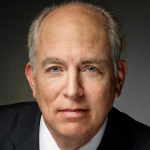
Super Lawyer Boies Entangled in Intrigue Over Weinstein; Times Fires His Firm
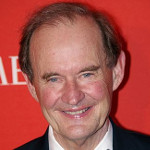
Image by David ShankboneThe sexual-assault scandal that brought Harvey Weinstein’s career to an abrupt halt and started a national conversation about the treatment of women has led to scrutiny of tactics used by his former attorney, David Boies, one of America’s most-famous litigators, according to Bloomberg Big Law Business.

Boies hired private detectives who sought to identify accusers and undermine news coverage of their claims. Reporter Erik Larson writes that a primary target was the New York Times, which published an article in which the Hollywood producer was accused of raping an actress. At the same time, Boies’ firm, Boies Schiller Flexner LLP, was representing the Times in various legal matters, raising concerns about conflict of interest.

The newspaper fired the firm, and Boies admitted that he participated in the hiring of private investigators who targeted the Times‘ reporters.
Read the Bloomberg article.


JPMorgan Judge Upends $1.1 Million Whistle-Blower Verdict

A U.S. district judge says she saw prejudice in a jury’s verdict Tuesday that would have awarded $1.13 million in damages to a former JPMorgan Chase & Co. employee over her dismissal, according to Bloomberg.

The Manhattan jury deliberated for five hours to find the former wealth manager has been fired illegally. The jury awarded her $563,000 in back pay and $563,000 for emotional damage.

Reporter Bob Van Voris quoted Judge Denise Cote:

“The award of emotional damages says to me that the jury was prejudiced against the bank. That undermines the entire verdict.”

Read the Bloomberg article.


Jury Hits Hospital With $26M Med-Mal Verdict in Tragic Birth Case

Jurors took just eight hours to award a Brooklyn couple $26 million — double what they had sought — after overwhelmed medical residents at Maimonides Medical Center allegedly botched the birth of their twins, leaving one dead and the other deaf and mute, reports the New York Post.

Under a “high-low” agreement struck earlier by both sides, the plaintiffs agreed to receive a “high’’ of $7.5 million if they won their suit and a “low’’ of $1.5 million, even if they lost, according to reporter Julia Marsh.

In 2010, the expectant mother went to the hospital twice with cramping and spotting but was sent home by doctors-in-training, according to the lawsuit. When her twins daughters were born later, they weighed about 1.5 pounds each. A month later, one died from an infection, and the other is deaf and suffers from kidney failure.

Read the Post‘s article.


A Renewable-Energy Champion Is Suing His Scientific Critics

Stanford professor Mark Jacobson has sued a prominent energy researcher and the National Academy of Sciences for defamation over a sharply-worded rebuttal of his work, shifting a heated scientific debate over renewable energy out of the journals and into the courts, according to the MIT Technology Review.

The suit demands a retraction of a June paper in the Proceedings of the National Academy of Sciences.

“Jacobson seeks more than $10 million in damages from both the paper’s publisher and its lead author, Christopher Clack, who is chief executive of Vibrant Clean Energy and a former NOAA researcher,” according to the article.

Clack and 20 other researchers responded in a publication that Jacobson’s paper “contained modeling errors and implausible assumptions that could distort public policy and spending decisions.”

Read the article.


Defending Breach-of-Contract Claims in Data-Breach Litigation

A post on the What’s Fair? blog on the Ellis & Winters LLP website discusses a recent federal appellate decision that shows how data-breach lawsuits premised on overpayment theories — which often assert claims sounding in contract — still face an uphill battle.

Alex Pearce explains that the overpayment theory rests on the premise that the price of a product or service includes a payment for data security measures. He outlines the recent ruling in Kuhns v. Scottrade.

“In that decision—a boon for data-breach defendants—the Eighth Circuit employed a demanding test for the pleading of facts that give rise to an overpayment claim,” Pearce writes.

Read the article.


Enforcing Nursing Home Arbitration Agreements Post-Kindred

Liz Kramer, writing for Stinson Leonard Street’s Arbitration Nation, writes that a recent ruling for a state supreme court may be indicative of what litigation over nursing home arbitration agreements will look like after the U.S. Supreme Court’s ruling in Kindred Nursing Centers v. Clark.

Kramer, a partner in the firm, discusses the Wyoming Supreme Court’s reversal of a lower court’s ruling in an arbitration case. The lower court denied a nursing home’s motion to compel arbitration.

But the state’s high court reversed, following the U.S. Supreme Court’s Kindred ruling that another state’s rationale for not enforcing an arbitration agreement was preempted by the Federal Arbitration Act.

Read the article.


Federal Financial Resources Essential to Addressing Opioid Crisis

President Trump declared the opioid crisis a public health emergency, stopping short of calling it a national emergency. The announcement expands access to treat the epidemic, but doesn’t free new federal funding for cities and states to use.

Dallas attorney Jeffrey Simon of Simon Greenstone Panatier Bartlett, who represents Texas counties suing drug manufacturers, says more federal funding is needed.

“I commend the president for using his platform to highlight the epidemic of opioid abuse in America,” said Simon. “Opioid addiction is a disease rather than a character flaw, and the president’s effort to draw this distinction is welcome. But the financial costs of successfully treating opioid addiction are substantial, as are the costs of effective educational programs to stem the epidemic. I remain hopeful that our federal government will devote the financial resources necessary to combat this health crisis, but that remains to be seen.

“I contend that the second essential step to addressing any problem, after acknowledging its existence, is to identify the source of the problem. Our Texas county governments, which pay high costs to combat the opioid abuse epidemic in their communities, are doing this very thing. They are fighting back. Counties we represent, such as Bowie County and Upshur County, have filed lawsuits against drug manufacturers and wholesale distributors for the purpose of holding them financially accountable for their roles in promoting and selling so many of these addictive drugs.

“On behalf of their citizens, these county governments are confronting the opioid abuse epidemic in their communities. We are proud and privileged to serve Texas counties as legal counsel in this fight.”


U.S. States Allege Broad Generic Drug Price-Fixing Collusion

Image by Images Money

A large group of U.S. states accused key players in the generic drug industry of a broad price-fixing conspiracy, reports Reuters.

Reporter Karen Freifeld writes: “The states said the drugmakers and executives divided customers for their drugs among themselves, agreeing that each company would have a certain percentage of the market. The companies sometimes agreed on price increases in advance, the states added.”

The suit names 18 companies and subsidiaries and named 15 medicines. Mylan NV, Teva Pharmaceuticals USA, Ascend Laboratories and Encure Pharmaceuticals are among the 18 companies named.

The Los Angeles Times also covered Mylan’s challenges: “A price-fixing noose tightens around Mylan, the company that profiteered from the Epipen.

Read the Reuters article.


Alternative Fee Arrangements With Outside Firms Level Off

The portion of Norton Rose Fulbright’s 2017 Litigation Trends Annual Survey that covers alternative fee arrangements presents a puzzling picture that probably reveals the challenges of bringing about changes in the way external counsel are instructed, the firm reports.

Last year, 37 percent of respondents predicted they were going to increase their use of AFAs.

“Those who have used AFAs over the year are almost universally satisfied with the quality of the work they have received,” according to the report. “But, despite this, the use of AFAs (56 percent) and their average spend under an AFA (28 percent) are largely unchanged since last year.

“The inherent unpredictability of many types of dispute could be placing a ceiling on the proportion of matters where both parties feel confident operating under an AFA. However, staged approaches to AFAs can help to overcome this. Predictions for 2018 once again show a rise in AFAs – it will be interesting to see if this materializes or whether inertia persists.”

The survey also looks in detail at other major areas of concern, including regulatory investigations; class actions and environmental disputes.

Read the survey report.


Join Our LinkedIn Group


Winston & Strawn Lawyer Collaborates With Judge to Write Jury Trial Reference

Tom Melsheimer

Tom Melsheimer

The University of North Texas Press is releasing a lawyers’ guide to courtroom preparation and strategy titled “On the Jury Trial: Principles and Practices for Effective Advocacy.”

Texas trial lawyer and Winston & Strawn Dallas managing partner Tom Melsheimer and Texas judge Craig Smith wrote the book, which covers jury selection, witness preparation, opening statements, jury research, and more.

Judge Craig Smith

Judge Craig Smith

“In an age when the jury trial is vanishing, I think a book such as ours is a must-read,” said Melsheimer. “To preserve the jury trial, we must preserve the skills involved in trying a case effectively and efficiently. Judge Smith and I wrote this to add to that effort.”

Trial lawyers whose comments appear on the book’s jacket laud the work for its down-to-earth advice, illustration and commentary.

“Real-world, real-life insights. A book that every lawyer should read,” said Michael E. Tigar, author of “Persuasion: The Litigator’s Art and Examining Witnesses.”

“I will definitely order a copy of this book for every associate in my firm and recommend that others do so too,” said Steve Susman of Susman Godfrey L.L.P.

Before being elected to the 192nd District Court in Dallas County in 2006, Judge Smith was a trial lawyer for more than 25 years. As a judge, he was honored as Trial Judge of the Year by the Dallas Chapter of the American Board of Trial Advocates and was elected president of the Texas Association of District Judges in 2010.

Melsheimer has tried cases for more than 30 years. He is a past “Trial Lawyer of the Year” by the Texas Chapters of the American Board of Trial Advocates and by the Dallas Bar Association. He is a Fellow in the International Academy of Trial Lawyers and an Advocate in the American Board of Trial Advocates.


Join Our LinkedIn Group


Dismissal of $472 Million Verdict v. J&J is Disaster for Talc Plaintiffs

A ruling that throws out a plaintiff’s $417 million jury verdict against John & Johnson will affect many of the nearly 5,000 women who claim they developed ovarian cancer from J&J power containing talc, reports Reuters.

“The judge’s skepticism about causation will reverberate across the talc litigation in California because she’s overseeing all of the more than 800 suits by women who attribute their cancer to J&J powders that contained talc,” writes Alison Frankel. “Unless their lawyers can come up with better evidence than Echeverria – or unless scientific developments boost causation theories – Judge Nelson’s decision is ominous for plaintiffs and a boon for J&J and its subsidiary.”

Read the Reuters article.


Join Our LinkedIn Group


Texas Supreme Court Examines $48,000 An Hour Legal Fee in H.L. Hunt Case

The heir of Texas oil tycoon H.L. Hunt involved in a bitter decade-long dispute with his son over control of a $1 billion trust wants the Texas Supreme Court to declare illegal his lawyer’s request to be paid $48,000 an hour for his legal services, reports The Houston Chronicle.

Janet Elliott of The Texas Lawbook writes that attorney Gregory Shamoun claims to have made a 50 percent contingency agreement with Albert Hill Jr. to settle the high-dollar family fight.

Then, when Shamoun negotiated a global settlement for $40.5 million that left Hill Jr. in exclusive control of the family trust, Hill Jr. refused to pay the 50 percent. He claimed the legal fee was ludicrously too high, Shamoun sued and won a $7.25 million award – or an estimated $48,000 an hour – from a jury.

Read the Chronicle article.


Florida Law Firm Fined $9 Million By Federal Court Over Tobacco Litigation

First Coast News reports that federal judges in Florida handed down $9,164,404.12 in fines Wednesday on prominent Jacksonville litigation firm, Farah & Farah, P.A.

Farah & Farah and the Wilner Firm filed 1,250 frivolous tobacco claims against the Engle Trust Fund, the court found.

“Engle is a class action lawsuit named for a Miami pediatrician who defeated tobacco companies in court,” First Coast News explains. “A multi-million dollar fund paid by tobacco companies was set up for Floridians and their survivors who suffered illnesses due to cigarette smoking from 1994-2006. The class action in 2008 was estimated to include 700,000 people.”

Some cases filed by the attorneys were for deceased clients, non-smokers, those who did not suffer from one of the required diseases, and 572 that did not authorize the attorneys to file lawsuits on their behalf, the report says.

Read the First Coast News article.


Join Our LinkedIn Group


GM to Pay $120M in Multistate Defective Ignition Switch Settlement

Image by C_osett

General Motors will pay $120 million to settle claims from dozens of states in its massive ignition switch defect scandal, reports The Detroit Free Press.

Earlier this year, the U.S. Supreme Court ruled that GM could no longer avoid hundreds of suits from victims of the defective ignition switches in accidents occurring before GM filed for Chapter 11 bankruptcy in 2009. according to reporter Eric D. Lawrence.

“The settlement is tied to violations of consumer protection laws and is on top of GM’s previous penalties and settlements of an estimated $2.5 billion, including $900 million to settle a U.S. Department of Justice criminal case,” Lawrence writes.

The settlement does not resolve federal multi-district litigation involving what has been reported as possibly hundreds of plaintiffs.

Read the Free Press article.


Join Our LinkedIn Group


Appeals Court Tosses $72 Million Award in Talcum Powder Case

The Associated Press is reporting that a Missouri appeals court on Tuesday that vacated a $72 million award to an Alabama woman who claimed her use of Johnson & Johnson products that contained talcum contributed to her ovarian cancer has thrown the fate of awards in similar cases into doubt.

“The appeals court cited a Supreme Court ruling in June that placed limits on where injury lawsuits could be filed, saying state courts cannot hear claims against companies not based in the state where alleged injuries occurred. The case involved suits against Bristol-Myers Squibb over the blood-thinning medication Plavix,” writes the AP’s Margaret Stafford.

More than 1,000 plaintiffs have filed similar lawsuits in St. Louis against New Jersey-based J&J. “In four of five trials held so far, jurors awarded more than $300 million combined. Only two of the 64 cases attached to Fox’s case lived in Missouri,” according to Stafford.

Read the AP article.


Join Our LinkedIn Group


Disney Takes Insurer AIG to Court Over ‘Pink Slime’ Defamation Settlement

The Walt Disney Company is going to battle with its insurer, AIG, as it seeks coverage for a massive settlement in the “pink slime” defamation case, Variety is reporting.

Disney is trying to force AIG to submit to arbitration on the coverage dispute. While the underlying litigation is not identified, the dates line up with Disney’s court battle with Beef Products Inc. in South Dakota, according to reporter Gene Maddaus.

BPI sued Disney, alleging that ABC News had damaged its business with a series of reports on “pink slime.” Disney settled the case partway through trial in June.

“In August, Disney disclosed that it had incurred legal costs of $177 million, the bulk of which was believed to be due to the BPI settlement,” Maddaus writes. “The total settlement was believed to be significantly larger, once insurance claims were factored in.”

Read the Variety article.


Join Our LinkedIn Group


Jury Slaps JPMorgan Chase with $6 Billion-Plus Verdict in Sabre Creator’s Estate

A jury has awarded the widow and heirs of Sabre airline reservation system pioneer Max D. Hopper more than $6 billion in damages after finding JPMorgan Chase in breach of its fiduciary duty in administering the multimillion-dollar Hopper estate.

“JPMorgan Chase is one of the world’s largest and most respected banks, and its clients expect honesty and fairness in the handling of trusts and estates,” said James S. Bell of James S. Bell, PC, trial lawyer for Hopper’s adult children, Dr. Stephen Hopper, a Tulsa, Oklahoma, psychiatrist, and Laura Wassmer, mayor of Prairie Village, Kansas.

“In this case, the JPMorgan Chase name doesn’t mean the institution put its clients’ interests above its own. When challenged, the bank used the family’s own money to fight them in court over the handling of their father’s estate,” said Bell.

Hopper, who helped create the Sabre reservations system, died unexpectedly in 2010 without a valid will. At the time of his death, his estate was estimated at more than $19 million.

Read details about the case.


Proving Liability in Las Vegas Shooting Could be Challenging

Lawsuits are being filed over the Oct. 1 Las Vegas massacre that left 58 dead and more than 500 wounded when Stephen Paddock fired down on a country music festival from a nearby high-rise hotel. Among the first was a suit filed by a wounded Texas college student, seeking to hold MGM Resorts, Live Nation, Bump Stock manufacturer Slide Fire and the estate of the gunman liable, reports Androvett Legal Media & Marketing.

“There does not appear to be any dispute that Stephen Paddock was the gunman, making the move to freeze the estate a prudent decision,” says Dallas attorney Timothy Zeiger. “Injured victims will often sue the estate of the person who acted negligently, such as when a careless driver causes a traffic fatality, or in this case carries out an intentionally malicious act.

“However, despite the reported size of his estate, given the large number of potential claims related to the horrific injuries and deaths he caused, the chance that any particular victim will be justly compensated from the estate does not appear to be likely,” adds Zeiger, head of the litigation section at Shackelford, Bowen, McKinley & Norton.

It is still too early to determine the legal responsibility of MGM Resorts, Live Nation or Slide Fire, Zeiger says. He notes that unless a tragedy is “reasonably foreseeable” and not just an “isolated, and up to now, unique crime,” it will be difficult to prove negligence.


Join Our LinkedIn Group


J&J Blames Jury Misconduct for $417 Million Talc Verdict

Johnson & Johnson said a $417 million verdict in a talc powder cancer case should be thrown out because three jurors were excluded by fellow panelists from the decision-making process, reports Bloomberg Technology.

“The three were wrongly left out of deliberations on the fourth-largest U.S. jury award of the year because they didn’t agree with the other nine jurors that baby powder was the cause of a lifelong user’s ovarian cancer, the company said in a request for a new trial,” according to reporter Edvard Pettersson.

The jury foreperson said that the three jurors who were excluded from the discussions about damages had expressed doubts that J&J’s product was a fault.

Read the Bloomberg article.


Join Our LinkedIn Group


Patent Suit Filings Plunge in East Texas Following Supreme Court Ruling

New lawsuits are down — way down — in the mostly rural district that was once the national hotspot for patent disputes, reports Ars Technica, citing a study by IP litigation research company Lex Machina.

In a case called TC Heartland, in May, the Supreme Court sharply limited where patent owners can choose to file their lawsuits.

Joe Mullin writes that Lex Machina compared patent filings in the 90 days before the TC Heartland decision came down on May 22 to the 90-day period directly after the decision. Before the ruling, 377 patent lawsuits were filed in the Eastern District of Texas. After TC Heartland, just 129 cases were filed in a similar period.

“Much of that litigation seems to have moved to Delaware, where many national firms are incorporated due to favorable tax laws,” Mullin writes. “Delaware’s single judicial district had 153 patent lawsuits in the period before TC Heartland, but that shot up to 263 lawsuits in the period after the decision.”

Read the Ars Technica article.


Join Our LinkedIn Group