AZA Adds Six Litigators to Trial Team

Ahmad, Zavitsanos, Anaipakos, Alavi & Mensing P.C.Houston-based  Ahmad, Zavitsanos, Anaipakos, Alavi & Mensing has added six litigators to its trial, the firm announced.

The new hires include:

  • Matt Caldwell, with experience advising clients on regulatory and compliance matters, especially involving tax and accounting questions
  • Monica Cooper,  a trial lawyer with civil and criminal experience
  • Shahmeer Halepota, a commercial litigator with mediation, international arbitration, and state and federal trial experience
  • Kyle A. Poelker, who handles all types of complex commercial litigation in state and federal court
  • Paul Turkevich, a commercial litigator who handles a variety of business disputes
  • Patrick Yarborough, a commercial litigator with experience representing clients in all aspects of litigation, including mediation, arbitration and trial

Read details about the new hires.



Qualcomm Just Got Fined $1.23 Billion for Illegal Payments to Apple

Fortune is reporting that  Qualcomm has been hit with a massive $1.23 billion antitrust fine in the European Union, for illegally paying billions of dollars to Apple to make sure that its components were used in iPhones and iPads.

Reporter David Meyer writes: “The payoffs ensured that rival manufacturers of LTE baseband chipsets—the components that let mobile devices connect to cellular networks in order to provide internet connectivity—had no chance of getting into Apple’s devices for half a decade.”

The commission found that Qualcomm effectively shut down competition in the market, no matter how good competitors’ products were.

Read the Fortune article.


Usual Suspects: MDL-Experienced Lawyers Flock to Opioid Litigation for Possible Big Payday

Pills - medicineThere will be a lot of familiar faces in U.S. District Judge Dan Polster’s courtroom in Cleveland on Jan. 31, when lawyers gather for a hearing on multidistrict litigation against the nation’s opioid manufacturers and distributors, writes Daniel Fisher, a contributor for Forbes.

“The prospect of the biggest payday since the $200 bill­­ion tobacco settlement in 1998 has drawn many of the same plaintiff lawyers who appear again and again in big tort cases over everything from VW diesels to Vioxx to the BP Deepwater Horizon disaster,” according to Fisher.

Some of those firms include Simmons Hanly Conroy, the Lanier Firm, Seeger Weiss, Lieff Cabraser, Motley Rice and Weitz & Luxenberg.

Read the Forbes article.


Trump Appointing Judges at Rapid Pace

A data analysis by the Los Angeles Times has found that President Trump is ranked sixth of 19 presidents for appointing the highest number of federal judges in their first year.

Reporter Kyle Kim explains that Trump’s Republican Party’s slim majority in the Senate is one reason he has been able to fast-track judges.

“Another reason is a little bit of political warfare. Republican senators blocked 36 judicial nominations in President Obama’s first five years, according to Politifact. The best-known nominee was Judge Merrick Garland, chosen to replace the late Supreme Court Justice Antonin Scalia,” writes Kim.

Read the LA Times article.


Appellate Court Tosses $2.9M Judgment in Breach of Contract Case

Houston civil trial lawyer John H. Kim, founder of The Kim Law Firm, and attorney Tim Rothberg persuaded a Texas appeals court to drop a $2.9 million judgment against energy clients High Cotton Holdings LLC and Ranger O&G Operating LLC last week, according to a post on the website of Androvett Legal Media and Marketing.

The Texas 4th Court of Appeals in San Antonio found that the lawyer retained by the two energy companies prior to The Kim Law Firm filed an agreement in a breach of contract lawsuit without signing it, and failed to keep the companies apprised of court events. Due to those actions, both High Cotton and Ranger were not served with the complaint or made aware of the $2.9 million default judgment.

The 4th Court of Appeals reversed and rendered the judgments and remanded the case to state court for trial on the merits.

Read the article.


Biglaw Firm Hit With $300 Million Gender Discrimination Lawsuit

Above the Law reports that Ogletree, Deakins, Nash, Smoak & Stewart nonequity shareholder Dawn Knepper has hit her employer with a $300 million purported class-action suit alleging gender discrimination and unequal pay.

In her complaint, Knepper alleges: “Through formal policies and widespread practices, [Ogletree’s] male leadership interferes with, limits, or prevents female shareholders from receiving the appropriate credit for the business they bring to the firm and their hard work in running complex and demanding cases day-to-day.”

Kathryn Rubino writes that the complaint also alleges that on average, women shareholders make  to to $110,000 less than their male counterparts. And the complaint notes that while women represent about 58 percent of associates at Ogletree, a mere 32 percent of shareholders are women.

Read the Above the Law article.


Workplace Lawyers Race Against the Trump Clock

Litigators are settling more cases as labor agencies and federal courts fill up with business-friendly appointees, reports Bloomberg.

“While employers across the U.S. paid a record amount in settlements for workplace violations last year, don’t expect this to mark the beginning of a trend. Think of it more as the storm before the calm, as labor lawyers rush to lock in payouts ahead of a shifting legal landscape,” writes Rebecca Greenfield.

She quotes Paul DeCamp a lawyer at Epstein Becker & Green who represents employers:

“I think that what we see is a race to settle. I’ve seen it in my practice. Cases that plaintiffs’ counsel felt very strongly about and seemed more bullish and willing to go to trial—since the election they were more eager to settle those cases.”

Read the Bloomberg article.


Judge Fines Environmental Attorneys $52,000 for ‘Frivolous’ Injection Well Suit

fracking-drilling-oil-gas-wellA federal judge has ordered a pair of attorneys for an environmental group to pay $52,000 in legal fees to an energy company because, the judge said, they filed a “frivolous” legal challenge to a fracking waste injection well in Pennsylvania, according to a report by StateImpact, a reporting project of NPR member stations.

“U.S. Magistrate Judge Susan Paradise Baxter of the Western District of Pennsylvania ruled the attorneys, Thomas Linzey and Elizabeth Dunne, should pay part of Pennsylvania General Energy’s (PGE) legal fees for advancing a “discredited” legal argument that had already been defeated in prior decisions,” writes reporter Reid Frazier. “In addition to the fine, the judge referred Linzey to the state Supreme Court Disciplinary Board for additional discipline.”

In her opinion, Baxter wrote:

The continued pursuit of frivolous claims and defenses, despite Linzey’s first-hand knowledge of their insufficiency, and the refusal to retract each upon reasonable request, substantially and inappropriately prolonged this litigation, and required the Court and PGE to expend significant time and resources eliminating these baseless claims.

Read the StateImpact article.


Defend, Indemnify, Hold Harmless – What This Contract Language Means for A/E Professionals

J. Brandon Sieg of Vandeventer Black LLP addresses the question of what is meant when a contract requires an architect or engineer to “defend, indemnify, and hold harmless” the project owner for specific (or not so specific) types of claims that might arise in the future.

Regarding duty to defend, he explains that: “If you agree to similar language in your design contract, then you are agreeing to hire the project owner’s lawyer to defend a lawsuit filed against the project owner.”

He also covers responsibilities that go with indemnification and “hold harmless.”

Read the article.


Download: ‘Comprehensive E-Discovery Workflow Guide’

Exterro has published its “Comprehensive E-Discovery Workflow Guide,” which can be downloaded at no charge.

This resource compiles four checklists documenting best practices for each stage of the e-discovery process.

The guide includes:

  • 4 e-discovery checklists covering (1) Preservation and Legal Holds through (2) Preparation for Discovery, (3)Search and Collection, and (4) Review and Production
  • 32 workflow steps to ensure your e-discovery process is efficient and defensible
  • How to communicate across teams inside and out of your organization

Download the guide.


Billionaire Files Legal Malpractice Suit Over $214M Judgment

Billionaire Ira Rennert has filed a $214 million malpractice lawsuit against his former law firm, after a jury found him liable for looting his magnesium company to build a huge mansion in New York’s Hamptons, reports Reuters.

The plaintiff claims that he would not have been liable had Kaye Scholer and partner Peter Haveles objected to faulty jury instructions that Rennert has said led to an “irrational” February 2015 verdict, according to reporter Jonathan Stempel.

The U.S. Supreme Court has already rejected his appeal of the verdict and resulting $213.2 million judgment.

“In Monday’s complaint, Renco said its former lawyers wrongly failed to object both to jury instructions that led to the ‘inexplicably inconsistent’ verdict, and to the jury’s dismissal after the verdict was read,” Stempel writes.

Read the Reuters article.


2018’s Top 10 Legal Challenges in Privacy and Data Security

In an article for Bloomberg Big Law Business, Wiley Rein LLP’s Kirk Nahra details the top-10 U.S. and international developments in 2018 that companies must be aware of to ensure an effective information security program.

Nahra writes that “it is clear that privacy and data security has moved from an issue impacting primarily healthcare and financial services companies, to an issue that affects, in large and small ways, virtually every company across the globe. These issues affect litigation, mergers and acquisitions, product development, research, corporate strategy, business partnerships, and, in some way most activities of most companies.”

His article covers the European Union’s new General Data Protection Regulation, Privacy Shield and other data transfer obligations, non-EU data transfer programs, cybersecurity, breach litigation, FTC and Office for Civil Rights enforcement, and the role of the states.

Read the Bloomberg article.


Here are the Major Questions Before the Supreme Court This Year

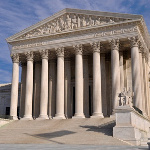
U.S. Supreme CourtLos Angeles Times reporter David G. Savage takes a look at the most-interesting legal issues that the U.S. Supreme Court will be facing during the first half of the new year.

First on the list is a case that can have implications for religious liberty and gay rights: Masterpiece Cakeshop vs. Colorado.

Other cases involve cellphone tracking and privacy, jail before deportation, voting rolls and purges, sports betting, and public employees and union fees.

In NLRB vs. Murphy Oil USA, the court will consider: Can companies require workers to waive their rights to join any class or collective action against their employer and instead resolve disputes as individuals through binding arbitration?

 Read the LA Times article.


Trump’s Effort to Stop Publication of Scathing Book is a Break in Precedent

Legal experts and historians said the decision by President Trump to threaten “imminent” legal action against a publishing house, a journalist and a former aide represented a remarkable break with recent precedent and could have a chilling effect on free-speech rights, according to Slate.

The threats did not appear to work, at least as far as the scathing book by Michael Wolff. His publisher announced Thursday that publication had been moved forward four days to Friday because of what they described as “unprecedented demand.”

Reporters 

“Though several presidents — including Jimmy Carter and Theodore Roosevelt — have sued for libel after leaving office, it is uncommon and potentially damaging for a current occupant of the Oval Office to try to use the powers of the presidency to take on personal and political rivals, Brinkley said.”

Read the Slate article.


Southwest Airlines Reaches $15 Million Settlement in Price Collusion Lawsuit

Fortune is reporting that Southwest Airlines agreed to pay $15 million to settle nationwide antitrust litigation by passengers who accused the four largest U.S. carriers of conspiring to raise fares by reducing seating capacity.

The Dallas-based carrier denied wrongdoing but said it settled to avoid the cost and distraction of further litigation.

The remaining defendants, including American Airlines Group, Delta Air Lines and United Continental Holdings, have not settled.

The report says Southwest agreed to help plaintiffs with their suit against the other three.

Read the Fortune article.


Spotify Hit With $1.6B Copyright Suit Over Tom Petty, Neil Young Songs

Tom Petty
Image by musicentropy

A music publishing company has filed a lawsuit in California federal court that alleges that Spotify is using tens of thousands of popular songs without a license and compensation, reports Billboard.

Reporter Eriq Gardner writes that Wixen Music Publishing is seeking damages worth at least $1.6 billion plus injunctive relief.

The report says Wixen administers song compositions by Tom Petty, Zach De La Rocha and Tom Morello of Rage Against the Machine, The Black Keys’ Dan Auerbach, Steely Dan’s Donald Fagen, Weezer’s Rivers Cuomo, David Cassidy, Neil Young, Sonic Youth’s Kim Gordon, Stevie Nicks, and many others.

During 2017, Spotify was hit by lawsuits from some other songwriters.

Read the Billboard article.


GM Wins Ruling That Could Narrow Ignition Switch Litigation

Image by C_osett

Reuters is reporting that General Motors Co. on Thursday won a court ruling that could reduce the private litigation it faces over flawed vehicle ignition switches, which have been linked to 124 deaths and triggered a big recall.

“U.S. District Judge Jesse Furman in Manhattan said the plaintiffs in two bellwether cases, involving accidents where airbags had deployed, could not introduce expert testimony to show how defective ignition switches might have played a role in the crashes,” reports Jonathan Stempel.

The judge in the multi-district litigation ruled that the expert testimony offered by plaintiffs was unreliable, and their opinions “do not pass muster.”

Read the Reuters article.


Apple’s iPhone Slowdowns Have Customers Hurrying to Court

TextingBloomberg Law reports that IPhone users have begun racing to courthouses, infuriated by an Apple Inc. software update that slowed down the operation of their smartphones.

Plaintiffs complain about the deterioration of their phones’ performance.

A group of plaintiffs in a suit filed in Chicago federal court claims the software updates that slow down iPhone 5, iPhone 6 and some iPhone 7s were were intended to push customers to buy newer iPhones, some of which sell for more than $1,000, writes Joe Schneider.

Apple acknowledged that the update slows down iPhones with dying batteries.

The Bloomberg report says: “The fix was supposed to help people get more out of their aging batteries, and ‘reduce occurrences of unexpected shutdowns,’ according to the company.”

Read the Bloomberg article.


Download: FRCP & E-Discovery: The Layman’s Guide

Exterro has published “FRCP & E-Discovery: The Layman’s Guide” to sort out the technical aspects of the FRCP as they relate to e-discovery, supported with relevant case law and expert opinions. The publication can be downloaded at no charge.

“Simply put, The Federal Rules of Civil Procedure (FRCP) prescribe how federal civil lawsuits are governed,” Exterro says on its website. “The FRCP is constantly evolving and many parts may change over the years. The FRCP is intentionally vague, with the idea that judges are not to be constrained by a rigid set of directives, and ultimately, judicial rulings will determine what the FRCP really mean and how they are to be applied.”

The guide includes:

  • 30-pages on how the FRCP governs the e-discovery process
  • Expert analysis from federal judges and legal scholars
  • Practical e-discovery tips for taking advantage of the new FRCP e-discovery rules

Download the guide.


Republicans Attack ABA Over ‘Not Qualified’ Judicial Nominee Ratings

Senate Republicans have declared war on the American Bar Association, according to a report from Politico.

For decades, the ABA has assessed judicial nominees and their fitness to serve on the bench. But now, reporters Seung Min Kim and John Bresnahan write, as the ABA has emerged as a major stumbling block in President Donald Trump’s effort to transform the courts, the GOP is accusing the nonpartisan group of holding a liberal slant and is seeking to sideline it.

“The ABA has deemed at least four of Trump’s judicial nominees ‘not qualified’ — a high number, although other administrations had the ABA evaluate candidates privately before they were nominated,” they write.

Republicans have responded by ratcheting up their attacks to try to discredit the century-old group.

Read the Politico article.