Savannah Law School Student Sues for Fraud, Breaching Trust in Planned Closing
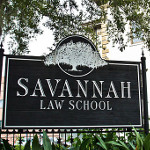
A Savannah Law School student has sued school officials for fraud and breach of trust duties stemming from their decision to prematurely close the school in May, which she said will deprive her of the chance to become a lawyer, reports the Savannah Morning News.

The plaintiff, Jordan Crewe, alleged the school’s pending closure results “at least in part from the defendants’ mismanagement of funding for the law school.” In the suit, she also contended the defendants “established Savannah Law School to obtain federal student loan money while aiming long-term to make a profit by flipping the property.”

Reporter Jan Skutch writes that the defendants in the suit are Savannah Law School, John Marshall Law School and John Marshall University, Savannah Law School Associate Dean Keith Harrison and Michael Markovitz, law school board member and treasurer.

Crewe has completed three of the four years needed to obtain a law degree from the school.

Read the Morning News article.



AT&T Wants to Buy Time Warner To ‘Weaponize’ Its Content, Government Says in Antitrust Trial

Image by Mike Mozart

The biggest U.S. antitrust case of this century kicked into high gear Thursday as a government lawyer warned that AT&T Inc. wants to buy media giant Time Warner Inc. to “weaponize” its must-have content — a move that would raise prices for consumers and hinder innovation, according to the Los Angeles Times.

In opening arguments, Justice Department lawyer Craig Conrath said AT&T could use Time Warner’s content as a weapon against competitors that rely on the programming.

Reporter Jim Puzzanghera writes: “AT&T’s added leverage over pay-TV competitors to withhold content from some of the most valuable assets in entertainment — including HBO, CNN, TBS, TNT and Warner Bros., Hollywood’s largest TV and film studio — would cause prices to rise by more than $400 million a year for Americans, Conrath said.”

Read the LA Times article.


Judge Stunned by Ex-Rolls-Royce Counsel Switching Sides in Litigation

A magistrate judge in the U.S. Western District of Texas has disqualified a former counsel to Rolls-Royce from representing a client in litigation against his former employer, reports Bloomberg Law.

“Donald Little represented Rolls-Royce as in-house counsel from 1997-2008 and as outside counsel in a 2010 case where Rolls-Royce was alleged to have made false statements about ‘suspect’ airplane parts,” explains reporter Mindy L. Rattan. “Rolls-Royce hired George Gage as an expert in that case.”

Then, when Gage sued Rolls-Royce North America Inc. in a qui tam case that involved the explosion of a U.S. Air Force plane, Little represented him.

The magistrate judge who heard the defendant’s motion to disqualify Little said it was “stunning” that Little took that position.

Read the Bloomberg article.


Paying the Price: The Pitfalls of Ineffective Liability Waivers

Poorly drafted waivers include lawyerly language that may appear concrete on the surface but crumbles during a lawsuit, warns Hellmuth & Johnson in a blog post.

Authors Micheal D. Howard and Jason S. Raether describe a recent case involving a fitness studio  that demonstrates how a poorly drafted waiver can be as effective as having no waiver at all.

In the case, involving an injury to the customer of a fitness studio, a trial court found in favor of the studio, based on the language of an indemnity agreement. But the appellate court reversed, finding the language to be inadequate.

Read the article.


Whistleblower Says Walmart, Eyeing Amazon, Cheated on E-Commerce

Walmart Inc. was sued on Thursday by a former executive who accused the world’s largest retailer of issuing misleading e-commerce results, amid growing pressure from Amazon.com Inc,, and firing him for complaining about it, reports Reuters.

In his complaint, former director of business development Tri Huynh alleges various wrongdoing, including the mislabeling of products, enabling Walmart to charge excessive sales commissions, and failure to properly process customer returns, enabling it to boost results, according to the report by Jonathan Stempel and Nandita Bose.

“Wal-Mart cut corners and cheated in a race to expand and gain market-share,” having been “desperate to gain the ground it had long lost to Amazon,” Huynh said in his complaint filed in U.S. District Court in San Francisco.

Walmart called Huynh a disgruntled former employee who was let go during a restructuring.

Read the Reuters article.


Dallas Judge Denies Toyota Request to Seal Safety, Product Defect Documents

A Dallas judge has rejected an attempt by Toyota to seal documents describing the automaker’s history of withholding information about its defective and dangerous products in connection with consumer lawsuits, often involving injured victims, according to a post on the website of  Androvett Legal Media and Marketing.

In his March 5 ruling, state District Court Judge Dale Tillery said that it is in the public interest to keep such documents open for review because they detail issues involving public health and safety. In a separate ruling, Judge Tillery ordered Toyota to make a representative available to describe how the company manages and stores databases of hundreds of thousands of documents that may contain information about safety and design issues of Toyota products.

Attorneys from The Law Offices of Frank L. Branson obtained the records as part of a lawsuit on behalf of a Dallas family whose two children were seriously injured in 2016 when seatbacks in their Lexus ES300 failed during a rear-end collision.

“The implications of this ruling go far beyond our case,” said Branson. “Toyota has a track record of not producing information in American courts.”

The judge’s order also applies to internal correspondence from a former Toyota corporate lawyer who complained that the automaker routinely refused to comply with information requests from lawyers in product defect cases. The Androvett post says in-house lawyer Dimitrios Biller left Toyota in 2007, citing his objections to Toyota’s lack of transparency and its efforts to avoid releasing proprietary internal documents to plaintiffs in injury lawsuits. Biller’s correspondence specifically describes Toyota’s efforts to settle injury lawsuits rather than turn over a safety database known within Toyota as the “Books of Knowledge.”

The case is Reavis et al. v. Toyota Motor Sales USA et al., Cause No. DC-16-15296.

Branson, who represents the Reavis family along with Branson firm attorneys Chip Brooker and Eric Stahl, said the public deserves access to court files, particularly when the records document safety and design issues.


Morgan Lewis Scolded for Possible Conflict in Hotel Wage Case

A U.S. district judge in California concluded that Morgan Lewis “plainly violated” California attorney professional conduct rules by representing “both sides of the case” in a hotel workers’ class action suit, Bloomberg Law reports.

Sheraton workers in San Francisco won class action status for their claim that their employer created a culture that encouraged staff to work through breaks without pay.

Reporter Jon Steingart writes that Judge William Alsup criticized the way lawyers from Morgan, Lewis & Bockius LLP obtained statements from three former employees that were used to argue against certification of the class. The same lawyers also represented the former workers in depositions conducted later.

A Morgan Lewis lawyer responded to a show cause order with an apology and a pledge that the firm wouldn’t repeat the conduct in any court.

Read the Bloomberg Law article.


Plaintiff Lawyers See Nationwide Settlement As Only End For Opioid Lawsuits

Lawyers who met in a federal courtroom in Cleveland to discuss a settlement of opioid litigation faced the difficult task of crafting a deal that will not only pay their clients — mostly towns and cities — but include states and even the federal government while spreading the cash evenly across the country, according to Forbes.

Contributor Daniel Fisher writes that most of the attendees were private lawyers who have signed contingency-fee contracts with municipal clients.

He adds that “the sheer complexity of the litigation raises questions about how the parties will craft an agreement that ends the threat of further lawsuits against the industry while distributing cash to all the varied entities who have sued.”

But the situation for the self-funded private lawyers is complicated by the involvement of state and federal claims on some of the expected settlement funds.

Read the Forbes article.


Global Warming Public Nuisance Actions Will Stay in Federal Court

A U.S. District Court has rejected motions filed by the cities of Oakland and San Francisco to remand two global warming public nuisance lawsuits filed by the cities in state court against several large energy companies, reports  in Pillsbury’s Gavel2Gavel blog.

The companies are BP P.L.C., Chevron Corporation, ConocoPhillips Company, Exxon Mobil Corporation and Royal Dutch Shell plc). The case is The People of the State of California v. BP P.L.C., et al.

“The complaints filed by the City of Oakland and the City of San Francisco are based on the premise that, despite knowing of the risks associated with climate change and global warming, these companies continued to produce and sell their products to the public that uses fossil fuels in their day to day operations,” Cavender writes. “The complaints seek an abatement fund to pay for seawalls and other infrastructure to address rising sea levels.”

Read the article.


Dead Law Firm’s Estate Can’t Collect Fees, California Court Says

The California Supreme Court has ruled that failed law firms are not entitled to fees earned on legal matters that are in progress – but not completed – at the time the firm closes its doors, reports Bloomberg Law.

“Any expectation the law firm had in continuing the legal matters cannot be deemed sufficiently strong to constitute a property interest allowing it to have an ownership stake in fees earned by its former partners, now situated at new firms, working on what was formerly the dissolved firm’s cases,” according to the court’s opinion.

Reporter Elizabeth Olson writes that the estate of bankrupt Heller Ehrman LLP “brought suit against 49 law firms to recover millions of dollars it said were owed from legal work that the firm’s former partners had taken with them to their next legal workplace. But this ruling appears to let the law firms off the hook.”

Read the Bloomberg article.


Assault Allegations Highlight Home Service Call Vulnerabilities, Plaintiff’s Attorney Says

A lawsuit has been filed against cable company Charter Communications and its third-party cable installation partner DCOMM after the alleged sexual assault of a 72-year-old Dallas woman during a cable installation visit, according to a post on the website of Androvett Legal Media & Marketing.

The woman, who is not named in the filing in order to protect her privacy, was sexually assaulted by the technician sent to set up television, internet and telephone service, according to her family’s attorney, Michael Lyons of the trial firm Deans & Lyons, LLP. The technician, Moises Cabrera, is facing criminal charges of aggravated sexual assault.

“Calling the cable person to come to your house — that’s not something you ordinarily associate with the threat of criminal danger,” Lyons told Dallas ABC affiliate WFAA.

There is a false sense of safety because these workers are viewed as representatives of a company that is trusted to properly screen, train and supervise its employees.

“But in reality, you don’t know who you are allowing into your home,” he said. “Consumers need to recognize that most of these workers are contractors who may not always be properly vetted, well-trained or supervised. That can result in dangerous consequences, especially for vulnerable customers who are home alone. Service companies need to be held accountable for the people they hire to go into residents’ homes.”


Biglaw Firm Could Pay $1.4 Million After Malpractice Verdict

A jury in a legal malpractice case has found Alston & Bird 32 percent responsible for a former company manager’s theft from a client, according to a report at Above the Law.

Kathryn Rubino writes, “Their (now former) client, family-held Hatcher Management Holdings LLC, took a loss after former manager, Maury Hatcher, cashed out of the business, allegedly at an inflated price in addition to hundreds of thousands of dollars in self-dealing fees. Hatcher Management Holdings alleged Alston & Bird partners assisted the departed Maury Hatcher from providing company members access to financial records and documents after he left the company.”

The Atlanta jury also awarded up to $1.1 million in fees and expenses, which the law firm could be required to cover in full, according to the report.

Read the Above the Law article.


Harvey Weinstein’s Insurer Refuses to Pay for Legal Defense

Variety is reporting that Harvey Weinstein’s insurance company is refusing to defend him against 11 sexual harassment lawsuits, saying that his alleged misconduct is not covered under his personal liability policies.

Chubb Indemnity Insurance Co. sued on Wednesday, asking the New York Supreme Court for a declaration that it is not obliged to fund the disgraced producer’s legal defense, according to reporter Gene Maddaus.

The suit says that some of Weinstein’s policies cover damages he is obligated to pay “for personal injury or property damage.” The damages must arise from “an accident or offense” to be covered.

But Chubb’s position is that Weinstein’s alleged pattern of sexual assault and harassment does not qualify.

Read the Variety article.


Indemnification Clauses and Defining the Relationship

An attorney client-relationship can arise from something far less definite than an explicit agreement between the attorney and his or her client, warns Robert J. Glowacki Jr. in a post for Poyner Spruill LLP.

He explains:

“In the recently decided Friday Invs., LLC v. Bally Total Fitness of the Mid-Atl., Inc., the North Carolina Supreme Court found the existence of an attorney-client relationship under circumstances where neither party explicitly discussed legal representation. There, the central question was whether an attorney-client relationship exists between a defendant to a lawsuit and a non-party that contractually agreed to indemnify that defendant and, if so, whether correspondence between the two is protected by the attorney-client privilege.”

Read the article.


U.S. Supreme Court Wrestles With Microsoft Data Privacy Fight

MicrosoftReuters reports that Supreme Court justices on Tuesday wrestled with Microsoft Corp’s dispute with the U.S. Justice Department over whether prosecutors can force technology companies to hand over data stored overseas, with some signaling support for the government and others urging Congress to pass a law to resolve the issue.

“The case began when Microsoft balked at handing over a criminal suspect’s emails stored in Microsoft computer servers in Dublin in a drug trafficking case. Microsoft challenged whether a domestic warrant covered data stored abroad” according to reporters Lawrence Hurley and Dustin Volz.

Two of the justices, Ruth Bader Ginsburg and Sonia Sotomayor, questioned whether the court needed to act now,  considering the fact that Congress is considering bipartisan legislation that would resolve the legal issue.

Read the Reuters article.


States to Forego Most of $650M Legal Settlement With Takata

The Associated Press is reporting that Japanese air bag maker Takata Corp. has reached a $650 million deal to settle consumer protection claims from 44 states and Washington, D.C., but only a fraction of the money will be paid due to Takata’s financial problems and bankruptcy.

Plaintiff states agreed not collect the settlement so that victims of Takata’s faulty air bag inflators can get a bigger piece of the company’s remaining money. But South Carolina, which led the states, will get more than $139,000 to cover costs of the investigation.

Reporter Tom Krisher explains that Takata air bag inflators can explode with too much force and spew shrapnel into drivers and passengers. At least 22 people have died worldwide and more than 180 have been hurt.

Read the AP article.


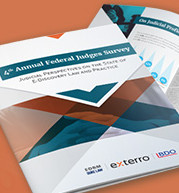
4th Annual Federal Judges Survey – Full Report Released

Exterro Inc., a provider of e-discovery and legal software, has released the 4th Annual Federal Judges Survey, produced in partnership with BDO Consulting and EDRM at Duke Law.

The survey report can be downloaded from Exterro’s website at no charge.

The report is a compilation and analysis of the responses of 30 judges to questions about attorney and judicial e-discovery proficiency, recommendations for improvements, and their thoughts on how legal teams are using new e-discovery rules.

It includes:

  • 33-pages of quantitative data analysis on where attorneys need to improve their e-discovery skills — and how to do so
  • Op-ed commentary from judges on the practical implications of the survey results
  • Access to the raw data, showcasing how the judges responded to  each of the 27 questions we asked them

Download the survey report.


Do Architects and Engineers Owe a Legal Duty to Non-Contracting Parties?

A recent unpublished Michigan Court of Appeals opinion provides some guidance with respect to the architect’s and engineer’s common law duty when processing pay applications, according to a post on the website of Clark Hill.

Jeffrey M. Gallant and Scott D. Garbo explain that the court held that the owner of a construction project could not maintain a professional negligence claim against the architect for failing to adequately review payment applications.

“While you may only have a contract with one of many project participants, Michigan courts continue to elaborate on the potential obligations owed to all other participants, including architects, engineers, contractors, subcontractors, owners, and lenders,” they write.

Read the article.


Detours on the Way to Your Contractually Selected Forum

Glenn West, writing in Weil, Gotshal & Manges LLP’s Global Private Equity Watch, writes about a case in which a cut-and-pasted forum selection clause from an unrelated contract made its way into the wrong document.

The cut-and-pasted text declared that “any action pertaining to this agreement shall be the State of Illinois.” When the plaintiff sued the defendant in Florida, where the defendant’s headquarters were located, the defendant moved to dismiss on the basis that the contract required choice of Illinois as the forum.

The Florida appellate court said that mandatory forum selection clauses mean what they say, even when what they say was the result of a supposed cut and paste error. Accordingly, the case was dismissed for being filed in an improper forum.

West sees the ruling as good news for the careful transactional lawyer and bad news for those who fail to draft a bespoke clause.

Read the article.


Trump on Track to Nominate Record Number of 5th Circuit Judges

Dallas appellate attorney and specialist David Coale of Lynn, Pinker, Cox & Hurst LLP says President Trump is on track to nominate more full-time judges to the U.S. 5th Circuit Court of Appeals than any other president, according to a post on the website of Androvett Legal Media & Marketing.

Trump recently announced the nomination of Andrew Oldham as his third pick from Texas, after previously nominating to the 5th Circuit Don Willett, a Texas Supreme Court justice, and Jim Ho, a former Texas Solicitor General. Oldham is currently general counsel to Texas Gov. Greg Abbott and a former deputy state solicitor general.

Coale says the nominations could result in even more of a Republican influence on the bench for this traditionally conservative court.

Read the article.