Jury Hits Monsanto with $289 Million Verdict in Roundup Trial

A San Francisco jury has returned a $289 million verdict against Monsanto Co., finding that the company marketed its Roundup weedkiller products for years while aware of the brand’s cancer-causing properties. Ruling in favor of former school groundskeeper Dewayne Johnson, the jury awarded $39.25 million in compensatory damages and $250 million in punitive damages, according to a post on the website of Androvett Legal Media & Marketing.

The post continues:

“Today the jury confirmed what we have known since our investigation began — that Monsanto knew Roundup contained cancer-causing ingredients and failed to take this product off the shelf and protect consumers. The company chose corporate profit and greed above humanity,” said Micah Dortch of the Potts Law Firm in Dallas. Although not involved in the just-concluded trial, the firm represents more than 100 clients currently with similar claims.

Johnson sued Monsanto in 2016, claiming the company has known of the health risks associated with its herbicides since at least the 1990s, when studies began showing a correlation between the products and lymphoma. As the company did not include a warning label on its products, he claimed he believed they were safe to use. Johnson suffers from advanced non-Hodgkin’s lymphoma that he claims was caused by the Monsanto herbicides he regularly used as part of his job.


Probate Judge Largely Wipes Out Widow’s Big Verdict Against JPMorgan

JPMorgan Chase & Co. was ordered to pay $7.1 million to the widow of a deceased American Airlines executive in a ruling that largely wiped out her portion of a Dallas jury’s $8 billion verdict against the bank for mismanaging the family estate, Bloomberg reports.

The September jury award that was the highest in the U.S. for 2017, according to reporter Tom Korosec.

“Judge Brenda Thompson concluded a final judgment was proper under the circumstances and ordered the bank to pay $781,432 in actual damages; more than $5 million in lawyers’ fees; almost $1 million in exemplary damages; and more than $255,000 prejudgment interest on the actual damages,” Korosec writes.

Read the Bloomberg article.


Firm Disqualified for Dropping One Client, Then Suing It for Another

A firm that represented two software competitors for years without issue can’t ditch one client and then sue it on behalf of the other, a Massachusetts federal court said July 26, according to a Bloomberg Law report.

A Massachusetts federal judge said Sunstein Kann Murphy & Timbers LLP’s breach of duty of loyalty was clear and the situation was not “unforeseeable.”

Reporter Mindy L. Rattan explains: Sunstein represented tech companies Syncro Soft and Altova from 2011 to 2017, until Altova asked Sunstein to sue Syncro Soft for patent infringement in June 2017, the judge said. The next month, Sunstein sent a letter to Syncro Soft terminating the relationship to avoid a conflict of interest. Sunstein then sued Syncro Soft on behalf of Altova in August 2017. Syncro Soft moved to disqualify Sunstein, which the court granted.

Read the Bloomberg Law article.


‘He Has Torn My Head Off’: Manafort Judge Known for Being Tough During Trials

Senior U.S. District Judge T.S. Ellis III, presiding over the Paul Manafort trial, has a reputation of displaying a no-nonsense, sharp demeanor that sometimes stings the lawyers in his courtroom, reports The Washington Post.

“He has torn my head off in front of my wife multiple times,” said Kevin Mikolashek, who recently left the U.S. Attorney’s Office.

Reporter Rachel Weiner quotes defense lawyer John Zwerling, who says he warns lawyers who are new to the Alexandria, Va. court: “It’s important for him that everyone in the courtroom knows he is the smartest person in that courtroom, and just be aware that he usually is. So you better be on your A game.”

Weiner adds: “Ellis regularly interrupts trial testimony with his own questions and demands that certain lines of inquiry be cut short, clearing up ambiguity that defense attorneys hoped to create. More than one lawyer has tried to block him from doing so with pretrial motions or mid-case demands for a mistrial.”

Those attempts have been struck down, however.

Read the Post article.


Brett Kavanaugh Likely to Disappoint Conservatives With Recusals

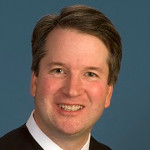
Brett Kavanaugh

Conservatives who were hoping to get a new justice onto the Supreme Court before a major case involving illegal immigrants’ rights to abortion reaches the justices may end up being disappointed by PResident Trump’s Judge Brett M. Kavanaugh, warns The Washington Times.

Under standard court practice, Kavanaugh would have to recuse himself because he participated in the case while on the Circuit Court of Appeals for the District of Columbia, writes reporter Alex Swoyer.

Swoyer explaqins: “While there are specific standards for district and circuit judges, there aren’t any hard-and-fast rules for the high court — only precedent. Justices set their own standards, and make decisions on a case-by-case basis.”

Read the Washington Times article.


Biglaw Partner Suspended After Accusing Small-Firm Litigator of Using Pregnancy to Delay Trial

Shook, Hardy & Bacon has suspended a Miami lawyer after he objected when a pregnant opposing lawyer sought a continuance because her due date coincided with a trial date, reports the ABA Journal.

According to a statement provided by the law firm’s administrative managing partner, Paul Reid has been suspended pending further review by firm management.

Christen Luikart of Murphy Anderson in Jacksonville, Florida, is the opposing lawyer who sought the delay.

Reid argued his client had been injured five years ago and “parental leave is not a compelling circumstance justifying the severe prejudice” that will be caused by delaying the trial.” The court overruled his objection.

Read the ABA Journal article.


Papa John’s Founder Sues the Company, Seeking Documents Related to His Ouster

Papa John’s International Inc. founder John Schnatter is suing the pizza chain, demanding internal files related to directors’ handling of his ouster for using a racial slur during a media-training session, reports Bloomberg via the Los Angeles Times.

Schnatter, who owns 29% of the company, resigned as chairman this month but remains on the board.

The report continues:

“Mr. Schnatter sought to inspect documents because of the unexplained and heavy handed way in which the company has treated him” after news surfaced of his use of a racial epithet, the founder’s lawyers said in the suit. After the report, Schnatter resigned as chairman of Papa John’s but later said he regretted the decision.

Read the LA Times article.


Burn Victim Sues Chinese Phone Subsidiary ZTE USA Over House Fire

Attorneys at Texas-based Deans & Lyons and Brian Branch of New Mexico are suing ZTE USA, the domestic subsidiary of the Chinese cell phone company ZTE Corp., on behalf of a New Mexico man who suffered life-altering burn injuries he attributed to his recently purchased ZTE ZMax Pro Blu phone catching fire while he slept.

According to a release from the firm, the fire occurred after Jose Perez of Bernalillo County, New Mexico, plugged in the phone he had bought just weeks earlier, placing it beside his bed to charge. According to the lawsuit, the phone overheated and ignited while he slept. Perez sustained second- and third-degree burns that left him in critical condition. Still hospitalized nearly nine months later, Perez has had multiple surgeries and skin grafts, and is permanently disabled.

“We believe this phone was dangerous and the manufacturer knew it,” said Deans & Lyons co-founder Michael Lyons, who represents Perez. “We can demonstrate that this phone did not meet recognized industry standards concerning its Chinese manufactured lithium ion battery and its charging system.”

The suit alleges the ZTE phone uses a non-standard, terraced-cell design with non-compliant overhang between the electrodes, leaving it susceptible to overheating, exponentially increasing fire risks, according to the lawsuit.

“Cutting corners is an extension of ZTE’s corporate conduct that includes misappropriation of U.S. intellectual property, lying to the U.S. Government, and, according to the Pentagon, threatening the security of the United States. We intend to hold them accountable for this tragedy,” said Lyons.

The lawsuit, filed July 23, is Jose Antonio Perez v. ZTE (USA), Inc., MetroPCS Texas, LLC, and Ultimate Wireless CSR, LLC, Cause No. D-101-CV-2018-02167 in New Mexico’s First Judicial District Court in Santa Fe County.


US Duck Boat Operators Under Scrutiny Following Branson Drowning Tragedy

A common attraction at major U.S. waterfronts and tourist destinations, the amphibious WWII-era vehicles known as Duck Boats have a long record of design flaws that make them unstable in rough water with often tragic results, according to a post on the web site of Androvett Legal Media & Marketing.

When a sightseeing boat in Branson, Missouri, sank last week in a sudden storm, killing 17, the tour company’s president acknowledged that the boat should not have been on the water during the storm. Safety experts renewed criticism of the boat’s unstable design, including a canopy that can prevent occupants from escaping. More than 40 people have died in Duck Boat accidents since 1999.

“The problems with these boats are well-known. This latest tragedy should spur operators everywhere to take a close look at safety procedures and design issues and ensure that personnel are properly trained to respond to emergencies,” said Steve Fernelius of Houston-based Fernelius Simon, who represents plaintiffs and defendants in personal injury and product liability litigation. “This tragedy must prompt operators to re-examine procedures to ensure there is no chance passengers will be caught in rough water. As these tragic deaths continue to be associated with Duck Boats, the potential liability for operators continues to grow.”


Las Vegas Shooting Victims Outraged Over MGM’s Lawsuit Against Them

Victims of a mass shooting at a Las Vegas country music festival said they were outraged when they learned they were being sued by the company that owns the hotel where the gunman opened fire, reports the Associated Press.

At a press conference, one of the victims, Jason McMillan, a 36-year-old Riverside County sheriff’s deputy who was shot and paralyzed, said he can’t believe MGM officials would try to foist blame onto anyone but themselves. Other survivors, victims’ relatives and attorneys railed against the decision to file lawsuits against hundreds of victims.

“MGM Resorts International sued victims in at least seven states last week in a bid to get federal courts to declare the company has no liability for the deadliest mass shooting in modern U.S. history,” writes Amy Taxin.

Read the AP article.


Bitcoin Exchange Operator Faces 40 Years in Jail for Lying to SEC

Smart contracts - bitcoin - blockchainBloomberg Law is reporting that a virtual currency operator accused of running off with investor funds after a 2013 hack and lying to investigators has accepted a plea deal with federal prosecutors in New York.

Reporter Lydia Beyoud writes that Jon E. Montroll of Saginaw, Texas, faces up to 40 years in prison.

Manhattan U.S. Attorney Geoffrey S. Berman said in a July 23 statement accompanying the plea agreement that Montroll “repeatedly lied during sworn testimony and misled SEC staff to avoid taking responsibility for the loss of thousands of his customers’ bitcoins,” in 2013, Berman said.

Read the Bloomberg Law article.


East Texas Firm Chalks Up $43.3 Million Med-Mal Verdict

In a new video, lawyers from Tyler, Texas-based Martin Walker PC discuss a recent medical malpractice case that yielded their client a $43.32 million verdict, including $25 million in exemplary damages.

Jurors found the hospital grossly negligent in its retention and supervision of a doctor on probation whose abandonment and improper care led to a patient’s complete loss of his quality of life and ability to provide for his family, plaintiff’s lawyers said.

A statement from the firm continued: “In reaching the gross negligence verdict, jurors agreed that the hospital had put its patients in extreme risk by allowing Dr. Gary Boyd to treat them even though the Texas Medical Board had placed him on probation which automatically suspended his hospital privileges pursuant to the hospital’s bylaws and policies.”

After the jury’s verdict, the case settled for $9 million, with the defendants agreeing not to appeal, according to the firm’s video.

Watch the video.


White House Withdraws Judicial Nominee; GOP Didn’t Have Votes for Confirmation

The GOP’s bid to transform the federal bench with conservative judges hit its first significant snag Thursday as the White House withdrew the nomination of Ryan Bounds to serve on the powerful and famously liberal 9th Circuit appeals court, reports The Washington Post.

After an hour-long delay on the vote, Senate Majority Leader Mitch McConnell announced that the nomination had been withdrawn. Two Republican senators planned to vote against the confirmation.

“The nomination drew widespread criticism over articles Bounds wrote in the Stanford Review as an undergraduate that ridiculed multiculturalism and groups concerned with racial issues,” writes Karoun Demirjian. “Bounds attempted to apologize for those writings earlier this year, but his apology — which focused more on his rhetoric than his views — failed to convince Democrats or satisfy all Republicans.”

Read the Post article.


Court Affirms Take-Nothing Verdict for Company Harmed by Texas Ponzi Scheme

A federal district court judge has affirmed a take-nothing defense verdict for the owner of an Oklahoma City-based company that unknowingly provided services in connection with a mineral royalties Ponzi scheme, finding that the company, Cianna Resources Inc., does not have to repay $21.7 million the scheme paid to Cianna for mineral interests and commissions.

“Our group of attorneys did an outstanding job and put together a powerful case,” said Sawyer Neely of Dallas-based Sayles Werbner, one of the attorneys who represented Cianna. “It certainly was a David-and-Goliath situation, and we appreciate that our hard work resonated with the jury.”

In a release, the firm described the case:

In 2008, Cianna Resources and owner Kyle Shutt entered into a sub-broker agreement with Oklahoma-based Ruthven Oil & Gas, LLC, for the purchase of mineral interests. Ruthven was working with Dallas-based Provident Royalties, Joseph Blimline and others, in what authorities described as a scheme involving nearly 7,800 investors and losses of more than $400 million.

The scheme collapsed and the company went bankrupt after natural gas prices fell. Mr. Blimline was convicted in 2012 for his role in the scheme, and a bankruptcy trustee later attempted to recover funds from investors who had profited before the collapse, including seeking $21.7 million from Cianna Resources.

The trial before U.S. District Judge Jane Boyle in Dallas lasted more than a week when the jury returned the defense verdict on March 28. The successful defense hinged on providing evidence that Cianna had acted in good faith and provided valuable services to an entity. On June 28, Judge Boyle entered a final judgment, denying the trustee’s motion for a new trial and rejecting requests to throw out the jury verdict.

Cianna was represented by Bill Johnson, David Elder, and Matt Brockman of Oklahoma City-based Hartzog Conger Cason & Neville, in addition to Mr. Neely.

The case is Segner et al v. Ruthven Oil and Gas LLC et al, case number 3:12-cv-01318, in the U.S. District Court for the Northern District.


Netflix v. Winston & Strawn Spotlights Advance Conflict Waiver

An order resolving a bitter disqualification fight between Netflix Inc. and its lawyers at Winston & Strawn LLP is the latest example of the acrimony that “advance conflict waivers” can engender between corporations and the law firms they hire, reports Bloomberg Law.

Reporter Samson Habte explains: “The order disqualifying Winston—issued by a federal bankruptcy judge presiding over a high-stakes licensing dispute between Netflix and a financially troubled film studio—could emerge as a blueprint for a particularly contentious category of disqualification motions: those alleging law firms betrayed existing clients by bringing cases against them on behalf of newer clients.”

Because ethics rules prohibit law firms from taking a case against a current client unless both clients waive the conflicts created by the law firm’s concurrent representation.

The waivers—often broadly worded and vague—have become a regular feature of retainer agreements that large law firms execute with corporate clients.

Read the Bloomberg Law article.


Jury Needed Only 45 Minutes to Agree on Punitives in Johnson & Johnson Talc Case

A lawyer for plaintiffs in the case against talcum-powder maker Johnson & Johnson said the company had spent 40 years covering up evidence of asbestos in some of its talcum-based products and should mark those products with warning labels or focus on powders made with cornstarch.

The New York Times quoted Mark Lanier of The Lanier Law Firm as saying the jury’s award of $4.14 billion in punitive damages is among the largest ever awarded in a product liability case. He added that the jury deliberated over compensatory damages for eight hours but decided on the punitive damages in roughly 45 minutes.

Times reporter Tiffany Hsu writes: “Johnson & Johnson was ordered Thursday to pay $4.69 billion to 22 women and their families who had claimed that asbestos in the company’s talcum powder products caused them to develop ovarian cancer.”

The jury’s award included $550 million in compensatory damages for the women, who had accused the company of failing to warn them about cancer risks associated with its baby and body powders.

Read the NY Times article.


Dick Sayles Named Dallas Bar Association’s 2018 Trial Lawyer of the Year

Dallas trial lawyer and Sayles Werbner co-founder Richard A. “Dick” Sayles was chosen by the Dallas Bar Association as the 2018 Trial Lawyer of the Year based on his achievements in the courtroom.

Sayles, a native of Gatlinburg, Tennessee, is profiled in the July issue of the Dallas Bar Association’s Headnotes in the article, “Dick Sayles: 2018 DBA Trial Lawyer of the Year.” The story highlights Sayles’ motivation for becoming a lawyer, provides a history of how he became a courtroom master, and explains how Sayles Werbner maintains its status among the most respected law firms in the nation.

“To me, there is no greater honor than to be recognized by your peers,” says Sayles. “It’s also a testament to the dedication and commitment of my colleagues at Sayles Werbner. I am very proud of what our firm has become.”

Sayles credits his firm’s strong relationship with large, national firms as a key factor in Sayles Werbner’s success. “We are often asked by major, out-of-state firms to serve as co-counsel in high profile, high stakes cases.”

In a release, the firm said Sayles has made a career of representing clients in big cases involving commercial litigation, personal injury and patent litigation. His list of accomplishments includes significant defense wins, 150 cases tried to verdict, and more than a dozen multimillion-dollar jury verdicts, the firm said.

This year Chambers USA, the legal guide, honored Sayles for the sixth time as a top litigator in Texas. Texas Lawbook named Sayles to the Lions of the Texas Bar, an exclusive list of the state’s most respected and influential lawyers. The Best Lawyers in America recognized him as the 2018 Dallas-Fort Worth Lawyer of the Year for bet-the-company litigation. He also received recognition in the 2018 edition of Benchmark Litigation and has been named seven times to the list of Top 10 attorneys in the state in the annual Texas Super Lawyers guide.


ITT’s Former Top Executives Settle Fraud Charges With SEC

The Washington Post reports that tormer top executives at ITT Educational Services, the parent company of defunct ITT Technical Institute, have settled fraud cases with the Securities and Exchange Commission, avoiding a trial slated to begin Monday.

ITT chief executive Kevin Modany and former chief financial officer Daniel Fitzpatrick were chagred with civil fraud in 2015 for allegedly deceiving investors about high rates of late payments and defaults on student loans backed by the company, writes Danielle Douglas-Gabriel.

Although they didn’t admit or deny any wrongdoing, they agreed to pay penalties of $200,000 and $100,000, respectively. The agreement bars them from serving as officers and directors of public companies for five years.

Read the Washington Post article.


Democrats’ Long-Shot Plan to Stop Trump’s Supreme Court Pick

The Los Angeles Times reports that Democrats, though narrowly outnumbered in the Senate, are embarking on a Hail Mary campaign to block President Trump’s pick for the U.S. Supreme Court.

Reporter Sarah D. Wire explains: “Flipping a moderate Republican is probably their only hope. And that only works if they can keep Democrats who represent red states that Trump won from breaking ranks.”

Democrats are planning to stress Trump’s repeated promises to only appoint justices who would overturn Roe v. Wade.

Wire quotes Brian Fallon, Hillary Clinton’s former press secretary, who now runs the liberal advocacy group Demand Justice: “While these litmus-test-style commitments may have been politically sensible for Donald Trump at the time when he was running in the campaign in 2016, we believe they will come back to haunt his nominee in this summer’s confirmation battle.”

Read the LA Times article.


IADC Calls for Class Action Reforms in Ontario, Canada

The International Association of Defense Counsel (IADC) recently submitted to the Law Commission of Ontario (LCO) recommendations for reform to the Ontario Class Proceedings Act (CPA) that could eventually affect class action legislation in Ontario and other Canadian provinces.

The IADC began the initiative in 2014 by forming its Canadian Class Actions Task Force to study and develop positions on key issues that the Ontario government asked the LCO to consider. The LCO has described the project as the most comprehensive assessment of the CPA in more than 25 years.

In a release, the organization said the Task Force is made up of IADC members who are lawyers with class action experience in Canada, the United States and Australia. The Task Force also includes representation from Lawyers for Civil Justice, DRI – The Voice of the Defense Bar and the Federation of Defense and Corporate Counsel, all of which have members who represent and serve as in-house attorneys with companies exposed to class actions in Ontario. All of these organizations, along with the Canadian Defence Lawyers and the Product Liability Advisory Council, supported the Task Force’s submission to the LCO.

The release continues:

“The IADC is committed to improving civil justice, and to positive reform of the civil justice system. This includes ensuring fairness in the judicial process and a proper balance between plaintiffs and defendants in litigation procedures in the United States, Canada and other countries as well,” said Gordon McKee, an IADC board member, chair of the Canadian Class Actions Task Force, and a partner at Blake, Cassels & Graydon LLP in Toronto. “When the Law Commission of Ontario requested stakeholder input as part of itsreview of class action procedures, the IADC committed to responding on behalf of its members who represent corporate defense interests.”

IADC members include lawyers with large and small law firms, senior counsel in corporate law departments, and corporate and insurance executives. A significant number of IADC members are Canadian, and many other IADC members represent multinational companies with subsidiaries that do business in Canada and/or that have been defendants in class actions in Ontario and other parts of Canada.

“Our corporate defense perception is that class action procedures in Ontario currently are unbalanced and unduly tilted in favor of plaintiffs, and a more level procedural playing field between plaintiffs and defendants is required to achieve fairness and judicial economy,” said Peter J. Pliszka, also a member of the IADC and its Canadian Class Actions Task Force, as well as a partner with Fasken Martineau DuMoulin LLP in Toronto.“We want to help ensure access to just outcomes that are not driven by matters extraneous to the merits of a case.”

McKee added that, for example, the current regime in Ontario can create undue pressure on companies to settle class actions for extraneous reasons such as the high cost of defense, potential impact on shareholder value or business transactions, and negative publicity surrounding a claim regardless of its lack of merit.

The IADC’s Canadian Class Actions Task Forcerecommendations for more fair and efficient class proceedings in Ontario include:

– Adding a merits analysis prior to or at certification, and giving the court more ability to critically review evidence, to weed out class actions with little or no merit, and to narrow overly broad class actions at an early stage;

– Requiring the court to consider coordinated case management and discovery as an alternative to a class action where there are a small number of cases, to allow more timely and proportionate resolution of the claims of the putative class members;

– Allowing plaintiffs and defendants equal opportunities to appeal certification decisions, and discouraging wasted resources and costs caused by material changes to the class claims/issues/definition on appeal;

– Codifying transparency and other requirements for third-party litigation funding to prevent unfairness to the parties or the class members and to remove incentives to fund claims with little or no merit; and

– Adopting provisions to address overlapping class proceedings in multiple provinces, including requiring a certification judge to consider whether he or she should defer to an overlapping class action in another jurisdiction.

After considering input from the IADC and other submissions, the LCO says it plans to issue a final report to the Ontario government at the end of this year or in early 2019. It is expected that the LCO’s report will also be carefully considered by governments in other Canadian provinces.