$43M Awarded to Intellectual Ventures I LLC in Patent Infringement Trial

A Texas jury awarded $43 million to Intellectual Ventures I LLC after finding telecom heavyweights T-Mobile and Ericsson Inc. infringed on the company’s patents used for wireless services for the LTE network. The jury awarded $34 million against T-Mobile and $9 million against Ericsson, according to a post on the website of Androvett Legal Media & Marketing.

The jury also determined T-Mobile and Ericsson failed to provide convincing evidence that Intellectual Ventures’ claims involving the patents were invalid. The case was decided on Feb. 8 following a one-week trial in the U.S. District Court for the Eastern District of Texas in Marshall.

“We are grateful for the jurors’ attention in this case and their decision in favor of our client,” said Johnny Ward of Ward, Smith & Hill PLLC, who represented Intellectual Ventures. “This verdict shows you can’t infringe on another company’s patents and expect to get away with it.”

The patents-in-suit trial included U.S. Patent Nos. 6,628,629, 7,412,517 and RE46,206 owned by Intellectual Ventures for wireless transmissions. Bellevue, Washington-based Intellectual Ventures is a global invention and investment business that creates, incubates, and commercializes impactful inventions.

Also representing Intellectual Ventures were Ward, Smith & Hill partners Claire Abernathy Henry and Andrea Fair, along with co-counsel Martin J. Black and Kevin M. Flannery of Dechert LLP.

The case is Intellectual Ventures I LLC v. T-Mobile USA, Inc., T-Mobile US, Inc., Ericsson Inc., Telefonaktiebolaget LM Ericsson, case number 2:17-cv-577, in the U.S. District Court for the Eastern District of Texas.




Army Vet Files Lawsuit Over Hearing Damage from Defective 3M Earplugs

An Army combat veteran in Utah has filed a lawsuit against 3M, seeking damages for permanent hearing loss caused by defective earplugs and alleging that the manufacturer doctored test results to win a government contract.

The lawsuit filed by Dallas-based Fears Nachawati Law Firm on behalf of Nathan Fortie seeks economic damages for permanent hearing loss and tinnitus allegedly caused when 3M Combat Arms Earplugs failed to protect him from loud combat noises including impulse noises and gunfire, mortar and cannon explosions. The suit also contends that 3M failed to provide key safety information to the soldiers.

“This company took advantage of the U.S. government by profiting from an inferior and defective product. But more significantly, it took advantage of U.S. troops who put their lives on the line to serve their country,” said Fears Nachawati cofounder Bryan Fears.

Originally created by Aearo, which was acquired by 3M in 2008, the “selective attenuation earplugs” were issued to soldiers between 2003 and 2015. In 2018, 3M paid more than $9 million to resolve Justice Department claims that it violated the False Claims Act by knowingly selling the earplugs without disclosing defects, according to a release from Fears Nachawati.

Fortie’s suit says the earplugs are too short for proper insertion. Combined with a separate defect, they are prone to loosen, making them ineffective at protecting soldiers from harmful noises.

The Hearing Health Foundation estimates that 60 percent of returning Iraq and Afghanistan veterans suffer from tinnitus or hearing loss. Tinnitus is the No. 1 service-related disability, affecting more than 1.5 million veterans, according to the American Tinnitus Association.

The case is Nathan Fortie v. 3M et al., Case No. 1:19-cv-00011-EJF in the U.S. District Court for the District of Utah. Similar lawsuits on behalf of injured veterans have been filed across the country. The Judicial Panel on Multidistrict Litigation is now considering a motion to transfer all related lawsuits to the U.S. District Court for the District of Minnesota where 3M is based.


Roberts Again Sides With Liberal Supreme Court Justices in Disagreeing With Lower Court Interpretations

For the second time in as many weeks, Chief Justice John G. Roberts Jr. has sided with liberal Supreme Court justices to disagree with how lower courts have interpreted Supreme Court precedent, reports The Washington Post.

“On Tuesday, Roberts was pointed in saying the Texas Court of Criminal Appeals has ‘misapplied’ a 2017 ruling that instructed that court to reconsider its analysis of whether death-row inmate Bobby James Moore was intellectually disabled, and thus ineligible for execution.” writes the Post‘s Robert Barnes.

And less than two weeks ago Roberts joined in blocking a Louisiana law that tightened restrictions on abortion providers.

Read the Post article.


Judge Dismisses Pipeline Operator’s Racketeering/Defamation Suit Against Greenpeace

A federal judge in North Dakota has dismissed a $900 million defamation and racketeering suit against Greenpeace filed by Energy Transfer Partners, operator of the Dakota Access Pipeline.

Greenpeace was represented in the matter by Lance Koonce, Laura Handman, Lisa Zycherman, and Thomas R. Burke of Davis Wright Tremaine, the law firm said in a release.

District Judge Billy Roy Wilson wrote in his order dismissing the case that, “Posting articles written by people with similar beliefs does not create a RICO enterprise,” and that, “Donating to people whose cause you support does not create a RICO enterprise.”

Last month, the same Davis Wright Tremaine team won dismissal of similar RICO claims lodged against Greenpeace by Resolute Forest Products. That case was heard in the Northern District of California.

“The dismissal of these cases is of enormous importance not just to our clients but to watchdog and advocacy groups of all stripes,” said Koonce. “Because if companies criticized by such organizations were able to bring claims under the guise of RICO, with its treble damage provision, that are really designed to chill speech, it would put critical discourse on issues of public significance at great risk.”


MoFo Faces Overbilling Lawsuit Alleging ‘A Billing Feeding Frenzy’

A lawsuit filed in the U.S. District Court for the Western District of Texas against Morrison & Foerster accuses the firm of expending “an exorbitant and excessive amount of time” running up the bill for clients, reports Above the Law.

The five plaintiffs hired the firm to handle the winding down of the entities.

They allege that MoFo had 34 different timekeepers bill 669 hours at a cost of $484,321 during a two-month period.

“The complaint also says while the firm had arranged for $625,319 to be paid to its trust account, it also “unilaterally decided to pay itself from these funds—although this was never authorized. This left $170,978 in the trust account,” according to Above the Law senior editor Kathryn Rubino.

 Read the Above the Law article.


Dallas Quadriplegic Crash Victim Wins $37.6 Million in Seat Belt Suit

A jury has awarded $37.6 million to a Dallas woman who was left paralyzed from injuries caused by a poorly designed seat belt system in a Honda minivan that rolled over in a collision in Dallas in 2015, according to a post on the website of Androvett Legal Media.

Sarah Milburn, 27, was a passenger in a Honda Odyssey that was hit broadside by a pickup truck on Nov. 15, 2015, causing the van to roll over onto its side and top. Milburn, who was a passenger in the third-row middle seat, suffered a broken neck and was left a quadriplegic, with very limited use of her arms and hands.

Milburn sued American Honda Motor Co. Inc. of Torrance, California, a subsidiary of Honda Motor Co., Ltd., claiming Honda’s design for the seat belt in the third row’s middle seat is defective. Specifically, the seat belt is a two-part system requiring the user to grasp a detachable shoulder strap from the van’s ceiling, anchor it to the seat and then pull the belt across the user’s hips and buckle it.

In independent testing, an expert showed the jury that fewer than 10 percent of people who were unfamiliar with the van’s two-part seat belt system were able to use it properly.

“What the jury understood is that it’s not enough to just equip a car with seat belts. The carmaker also has to make sure people can and will use them safely,” said attorney Charla Aldous of Aldous\Walker in Dallas, who along with Brent Walker represented Milburn at trial. “Sarah put the seat belt on the same way 50 out of 53 people in our studies did and wearing it that way was actually more dangerous than having no seat belt at all.”

Milburn also was represented by attorney Jim Mitchell of the PayneMitchell Law Group in Dallas.

The jury verdict includes a finding that the regulations governing seat belts in passenger cars were inadequate to protect the public from harm. The family is hopeful the finding will lead to the creation of “Sarah’s Law,” which would forbid automakers from using this seat belt system in the future, according to the Androvett post.

The case is Sarah Milburn v. American Honda Motor Co. Inc., number DC-16-16470 in the 116th Civil District Court in Dallas County, Texas.


WWE Hall of Famer Sues ‘Call of Duty’ Publishers, Alleges Copyright Infringement

WWE Hall of Famer Booker T. Huffman has filed a copyright infringement suit against the publishers of the video game franchise “Call of Duty,” claiming its character “Prophet” is too similar to the “G.I. Bro” comic book action hero character he created based on one of his early pro wrestling personas, according to a post on the website of Androvett Legal Media & Marketing.

The 2018 release Call of Duty: Black Ops 4 prequel depicts the pre-cybernetics Prophet which bears striking similarities to G.I. Bro, a special operations soldier created and copyrighted by Huffman from the Houston suburb of Friendswood.

“When seen side-by-side there can be no question that this character was copied from G.I. Bro. From the hair, body type and clothing, right down to facial expressions, the similarities are too profound to be an accident,” said Micah Dortch of the Dallas office of the Potts Law Firm. Huffman is represented by Dortch and Houston attorney Patrick Zummo with the Law Offices of Patrick Zummo.

Since the 2015 release of the G.I. Bro and the Dragon of Death Preview and G.I. Bro and the Dragon of Death comic books, Huffman has appeared at a number of events dressed as G.I. Bro to promote the titles.

In the first three days of its release by Activision Publishing Inc., Activision Blizzard Inc., and Major League Gaming Corp., Call of Duty: Black Ops 4 sold more than $500 million in physical copies and downloads. Total sales to date are thought to exceed $1 billion.

“Booker T. has devoted a significant amount of time and money creating and organically growing his G.I. Bro character,” said Dortch. “That entrepreneurial investment should not be erased by such a blatant act of copyright infringement by a gaming juggernaut.”

The case is Booker T. Huffman v. Activision Publishing, Inc., Activision Blizzard, Inc., and Major League Gaming Corp., filed in the U.S. District Court for the Eastern District of Texas.



Opioid Epidemic Lawsuits Take Strategy from Epic Big Tobacco Litigation

Thousands of lawsuits against pharmaceutical companies, prescription drug distributors and pharmacy retailers for their role in causing the opioid epidemic are based on the legal strategy honed 20 years ago in epic litigation against the tobacco industry, said Fears Nachawati Law Firm trial lawyer Jonathan Novak in a special appearance on the Lawyer 2 Lawyer podcast.

Trial lawyers are demanding that manufacturers and companies along the prescription drug supply chain pay sweeping economic penalties for damages caused by opioid drugs. Attorneys for those harmed by opioids are working to force the companies to pay to stop the scourge of opioid addiction going forward, a course similar to the tobacco litigation in the 1990s, said Novak, who is a former lawyer for the Drug Enforcement Administration with experience investigating abuses by pharmaceutical companies.

“What we’re looking to do is similar to what was done in the tobacco litigation,” Novak said in an appearance on the Legal Talk Network’s Lawyer 2 Lawyer podcast. “We want to hold these parties responsible, and then we want them to pay to fix the problem that they deliberately caused.

“Because of the nature of what these companies did – the ignoring of federal law and state law, the malicious, heartless, thoughtless way these companies pushed opioids, which they knew were addictive – we need to hold them accountable,” he said. “In my work at DEA, one thing I found every single time is that these companies do not have any interest in altruism. They are not going to do what’s right. We need to make them do that.”


Courtroom Reference Book ‘On the Jury Trial’ Tops UNT Press’ Best-Sellers List

The guide to courtroom preparation and trial strategy co-authored by Winston & Strawn Dallas Managing Partner Tom Melsheimer and Texas Judge Craig Smith that spent more than a year as the University of North Texas Press’ best-selling book, has consistently ranked among the publisher’s top-selling titles since its release in October 2017.

Almost immediately upon its release, “On the Jury Trial: Principles and Practice for Effective Advocacy,” vaulted to the top of UNT Press’ best-sellers list, holding that distinction from September 2017 through August 2018. According to UNT Press, the book remains solidly among the top 10 best-selling titles in its catalog through the beginning of 2019.

Described as the “senior law partner’s memo to associates on how to really try a case,” “On the Jury Trial” also represents a literal investment in the next generation of trial lawyers. Melsheimer and Smith have donated all profits from the sale of the book to the UNT Dallas College of Law, the only public law school in Dallas. The pledge has grown in significance with the continued strong combined physical and digital sales of the book.

“We are at a point where the number of jury trials is diminishing. As a result, too few lawyers are getting the experience they need to be effective advocates for their clients when they do end up before a jury,” said Melsheimer. “It is through the sharing of knowledge and experience that we can help prevent the loss of these important skills.”

The book has earned praise from preeminent trial lawyers across the country as an invaluable resource. Providing advice, examples, and commentary, “On the Jury Trial” offers an insider’s view into high-level trial preparation and strategy, focusing on jury selection, witness preparation, jury research, effective opening statements, and more.

Nationally renowned for his trial skills, Melsheimer has tried cases for more than 30 years. He has been honored as a Trial Lawyer of the Year by the Texas chapters of the American Board of Trial Advocates (ABOTA) as well as the Dallas Bar Association. Smith was an accomplished trial lawyer for more than 25 years before his election to the 192nd District Court in Dallas County in 2006.


Hunton Andrews Kurth Acted ‘Poorly’ But Not Disqualified Over Privileged Documents

SecretHunton Andrews Kurth attorneys won’t be disqualified from an insurance law case where they received 10 inadvertently produced, privileged documents, a Florida district court ruled recently, according to Bloomberg Law.

But the judge had harsh words for both parties, reports Bloomberg’s Melissa Heelan Stanzione:

“The facts underlying this disqualification motion establish that, unfortunately, lawyers on both sides of the litigation acted poorly,” Magistrate Judge William Matthewman said, adding that the attorneys’ conduct didn’t help their clients and was “downright unproductive and silly.”

The motion was the result of defendant’s attorneys mistakenly producing some documents that appeared to be attorney-client privileged between the defendant and its attorneys. The defendant’s counsel filed a disqualification motion against Hunton Andrews over the documents.

The magistrate judge said the defendant and its counsel took reasonable steps to prevent disclosure and to rectify the error. But the court concluded that Hunton Andrews disqualification was not justified.

Read the Bloomberg Law article.


Former Football Players Ran Out of Time to Sue NFL, 9th Circuit Says

NFL football playerA panel of the 9th U.S. Circuit Court of Appeals has rejected a class action seeking to hold National Football League teams liable for conspiring to push painkillers on hurt athletes to get them back on the field, finding the claims time-barred, reports Courthouse News Service.

Reporter Nicholas Iovino writes that the players failed to explain adequately why they lacked the essential knowledge to file their lawsuit within the four-year statute of limitations.

“In this case, plaintiffs knew of their injury – that their careers had been ‘cut short’ – as soon as their careers ended due to physical injuries,” the panel wrote.

Read the Courthouse News Service article.


Limiting Exposure With a Limitation of Liability Clause

Gregory J. Reigel asks and answers the question: Can you really limit your liability simply by including certain language in your agreements?

He finds the answer in a recent Texas Supreme Court ruling in Bombardier Aerospace Corp. v. SPEP Aircraft Holdings, LLC.  In that case, plaintiff aircraft purchasers sued Bombardier, alleging that the engines installed on the plane they bought were not new equipment. A jury found in favor of the plaintiffs and awarded $2.7 million in actual damages and $5.4 million in punitives.

On appeal, Bombardier relied on a limitation of liability clause in the purchase agreement. The state Supreme Court ruling shows that “where sophisticated parties have bargained for a limitation of liability clause in an arms-length transaction, courts are likely going to enforce that clause to limit the damages that may be recovered,” Reigel writes.

Read the article.


Fired Hershey IP Attorney Sues Alleging Race, Age, Sex Bias

Kurt Ehresman, 52-year-old former senior counsel for global intellectual property at Hershey Co., has sued his ex-employer, claiming he was replaced with a younger, black, female lawyer in a case of race, age and sex bias.

Ehresman, who is white, filed suit Feb. 6 with the U.S. District Court for the Western District of Pennsylvania, according to a Bloomberg Law report.

Bloomberg’s Patrick Dorrian writes:

“The move came roughly five years after Hershey recruited him to be ‘the first licensed practice attorney’ in the candymaker’s more than 100-year history, Ehresman charges in the complaint. And it required him to give up his ‘entire portfolio of clients’ and private practice as a condition of joining Hershey, Ehresman says.”

Read the Bloomberg Law article.


Safety Questions Arise After Multiple Vape Pen Explosions

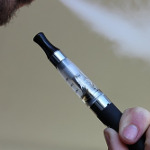
A 24-year-old Fort Worth electrician is yet another victim of an exploding vape pen or e-cigarette, and in this case it was fatal. Sitting in a parked car on Jan. 27, the young man died after a piece of the exploding pen severed his carotid artery, according to a post on the website of Androvett Legal Media & Marketing.

According to a study published by Tobacco Control, more than 2,000 vape pen explosions and burn injuries occurred in the U.S. between 2015-17.

“If these dangerous explosions and fires are shown to be the result of an inherent design defect that could have been avoided, the companies that designed these products may have significant legal exposure,” says attorney Joel Simon, who focuses on personal injury litigation at Houston-based Fernelius Simon Mace Robertson Perdue, PLLC.

“Moreover, if these companies knew that the interaction of the vape pen’s body and battery posed a significant safety risk, but they did nothing, they could face allegations of gross neglect, which could lead to punitive damages.”

E-cigarettes rely on lithium-ion batteries to operate, but officials are advising users to be aware of the volatile nature of these batteries, according to the Androvett website.


Google Fails to Get IP Suit Transferred Out of Plaintiff-Friendly East Texas

Alphabet Inc.’s Google will have to fend off a patent infringement lawsuit in East Texas after a federal appeals court refused to reconsider moving the case to another court, reports Bloomberg Law.

A panel of the U.S. Court of Appeals for the Federal Circuit denied Google’s petition to rehear the issue of whether having servers in third-party facilities establishes a regular place of business for the purposes of filing a lawsuit, according to Bloomberg’s Malathi Nayak.

“SEVEN Networks LLC sued Google in for allegedly infringing patents related to data network traffic optimization through servers in East Texas,” Nayak writes. “Google said the case should be transferred because the presence of its servers in the district doesn’t amount to a regular and established place of business under the patent venue statute.”

Read the Bloomberg Law article.


BigLaw Partner Files $20M Suit Claiming Rape By Bartender

The ABA Journal reports that a partner at a large international law firm in Houston has filed a $20 million suit claiming a bartender at Brennan’s of Houston spiked her drink with a drug and later raped her at her home.

The woman and her law firm are not identified in the lawsuit, according to the Journal‘s Debra Cassens Weiss. The suit names the bartender, Sean Kerrigan, and a restaurant manager who accompanied Kerrigan to the plaintiff’s home.

Kerrigan was criminally charged in July with raping the plaintiff and another woman in a later assault, but he died in November.

The plaintiff is in treatment  for post-traumatic stress disorder, according to the lawsuit.

Read the ABA Journal article.


IADC’s First 2019 DCJ Covers Civil Procedure, Bankruptcy Trust Reform and Employment

In its newly published Defense Counsel Journal (DCJ), the International Association of Defense Counsel (IADC) offers insights on current challenges involving civil procedure, bankruptcy trust reform, and employment law. The IADC is an invitation-only global legal organization for attorneys who represent corporate and insurance interests.

The IADC’s first quarter 2019 DCJ is available for free and without a subscription via the IADC’s website.

The DCJ is a quarterly forum for topical and scholarly writings on the law, including its development and reform, as well as on the practice of law in general. DCJ articles are written by members of the IADC, which is a 2,500-member, invitation-only, worldwide organization that serves its members and their clients, as well as the civil justice system and the legal profession.

“The diverse, thought-provoking articles in this first 2019 edition of the Defense Counsel Journal focus on practical solutions to significant challenges,” says IADC president and Venable LLP partner Craig A. Thompson. “Our contributors have invested time and resources to ensure that we are kept up to date with the best, cutting edge thinking on key issues that affect many of our members and their clients.”

Current DCJ editor and former IADC board member Kenneth R. Meyer adds, “We delight in publishing thoughtful articles that offer insights and answers to the diverse and difficult problems facing those of us in the defense bar.” Meyer also is a partner at McCarter & English, LLP.

Following are brief summaries of some of the key articles included in the first quarter 2019 issue of the DCJ:

“Good Strategy or Forum Manipulation? The Continuing Evolution of the Bad Faith Exception to the One-Year Time Limit on Removal” by Anne K. Guillory, a partner and co-chair of the Toxic Tort Subgroup at Dinsmore & Shohl LLP – The article explores the complicated issues relating to removal, diversity jurisdiction, and forum shopping, and provides helpful and practical commentary on the “bad faith” exception to the legislative time limit imposed upon removal. The article analyzes a process that by its nature is not susceptible to appellate review, and explanation, and thus often misunderstood and misused.

“Department of Justice Combats Asbestos Trust Abuse” by Mark A. Behrens, a partner and co-chair of the public policy group, and William F. Northrip, of counsel, both at Shook, Hardy & Bacon, L.L.P. – The article examines governmental efforts to deal with the fraud and mismanagement prevalent with the administration of asbestos trusts. It is a companion piece to an article published in the fourth quarter 2019 DCJ and represents the DCJ Board of Editors’ ongoing effort to promote articles that spotlight IADC initiatives – in this case efforts by the IADC’s Civil Justice Response Committee to promote trust transparency laws.

Are You Ready for a Wallaby at the Water Cooler? Service Animals and Emotional Support Animals in the Workplace – What Do Employer Clients Need to Know? by Donna L. Burden, a founding member, and Sarah E. Hansen, a partner, both at Burden, Hafner & Hansen, LLC; and Sean Nash, managing counsel, labor & employment, in the United Airlines Legal Department – The article presents a timely and insightful look at workplace accommodations employers are asked to make for employees’ service animals.


Texas Court Addresses Bad Acts in an Oil-Patch Lease Play

Writing in Gray Reed’s Energy & the Law blog, Charles Sartain points out that parties to a transaction need to be mindful that if a business deal is a partnership, there will be rights and duties not present in arms-length commercial transactions.

He discusses a recent appellate court opinion and considers the main question: Was a partnership formed by a letter agreement, a participation agreement and the actions of the parties?

Stephens et al v. Three Finger Black Shale Partnership et al. is a complicated petroleum development deal that included all those elements. The jury trial ended with a multimillion dollar judgment for actual and exemplary damages in favor of two separate groups of plaintiffs and intervenors against several groups of defendants.

The appellate court determined that there was no evidence of a partnership, which meant that no fiduciary duty was owed by the defendants.

Read the article.


Trade Secrets Take Center Stage, and Contracts Play a Lead Role

Trade secretWith increasing attention on trade secrets and a developing body of case law around Defend Trade Secrets Act claims, an emphasis on contracts also is growing, point out Douglas R. Nemec and P. Anthony Sammi in a post for Skadden, Arps, Slate, Meagher & Flom.

“Breach-of-contract claims frequently have appeared alongside trade secret claims in lawsuits over the years and often materially impacted the results,” they write. “But a contract should not be viewed as a mere alternative to trade secret protection. Properly crafted, and if necessary properly litigated, a contract can both strengthen and expand the reach of a trade secret claim.”

Their article covers defining confidential information, term limitations and their risks, and maintaining confidentiality.

Read the article.


Judge in Yahoo Data Breach Case Criticizes ‘Unreasonably High’ Attorney Fees

A federal judge in San Jose, California, refused to approve a class action settlement in litigation over a series of Yahoo data breaches, citing a lack of transparency and the possibility of “unreasonably high” attorney fees, according to the ABA Journal.

The plaintiffs had proposed a $50 million settlement fund, but the proposed notice to class members did not disclose the costs of creditor monitoring services or costs for class notice and settlement administration, U.S. District Judge Lucy Koh said.

She also found problems with the plaintiffs’ lawyers’ fees:

“Specifically, the court finds that class counsel prepared limited legal filings with numerous overlapping issues, and that class counsel completed limited discovery relative to the scope of the alleged claims. Moreover, class counsel fails to explain why it took 32 law firms to do the work in this case.”

Read the ABA Journal article.