Appellate Justice in Houston Serving With Alzheimer’s Disease, Records Show

The Houston Chronicle reports that an appeals court justice serving Southeast Texas continues to sit on the bench as she suffers from Alzheimer’s disease, all while facing familial discord over the control of her $8 million estate, court records show.

The Chronicle‘s Samantha Ketterer explains:

“Her sons launched an effort this month to become her legal guardians, alleging that Justice Laura Carter Higley, 72, is continuing with her daily routine in a manner contrary to the path of her failing cognitive health. That includes driving herself to work downtown and serving in her capacity on the First Court of Appeals based in Houston, said sons Garrett C. Higley and Robert Carter Higley.”

Documents filed in probate court indicate that she received an official diagnosis of Alzheimer’s disease in October.

Read the Houston Chronicle article.


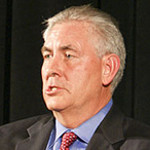
Rex Tillerson Back in Spotlight at Exxon Climate Trial

Image by William Munoz

Former secretary of state Rex Tillerson is again at the center of the climate change debate, as the former Exxon Mobil CEO prepares to take the witness stand regarding allegations his former company deceived shareholders about the financial risks posed by climate change, reports the Houston Chronicle.

Tillerson is scheduled to make an appearance at the New York Supreme Court Wednesday to answer questions about missing emails and varying carbon pricing schemes amid a growing wave of climate change litigation against the oil industry, according to the Chronicle‘s James Osborne.

The New York attorney general wants to answer the question of whether Exxon defrauded investors when it used one carbon price to estimate the potential taxes or fees the company might have to pay on greenhouse gas emissions from oil drilling projects and another in the economic modeling it presented to investors regarding future oil and gas demand.

Read the Houston Chronicle article.


DLA Piper Turns Sex-Assault Probe Back on Accuser: Cites Alleged ‘Flirtation’

DLA Piper, fighting a sexual-assault claim against a former partner, filed a response to the accusation Tuesday, saying the lawyer who filed the complaint orchestrated a “flirtation” to advance her career, reports Bloomberg News.

DLA and former partner Louis Lehot parted ways after his colleague Vanina Guerrero accused the star Silicon Valley lawyer of sexually assaulting her.

The firm said it conducted an “impartial investigation” of the matter.

“Ms. Guerrero was a willing participant in a lengthy emotional flirtation with Mr. Lehot that she orchestrated to advance her career,” DLA Piper said in a letter to the U.S. Equal Employment Opportunity Commission, citing Guerrero’s emails.

Read the Bloomberg Law article.


Jones Day Women Point to Managing Partner’s ‘Totalitarian Grip’

Jones Day’s “hypercentralized,” subjective decision-making process places final control over pay, promotion, and other significant decisions “unchecked in the hands of one man,” six female former lawyers told the U.S. District Court for the District of Columbia.

That man is managing partner Stephen J. Brogan, claim Nilab Tolton and the five other lead plaintiffs. They filed a supplemental memorandum Oct. 24  opposing Jones Day’s motion for partial judgment on the pleadings in their proposed class action, filed in April, according to a Bloomberg Law article.

Brogan backs his “totalitarian grip” on Jones Day with a “no whining policy” under which women aren’t allowed to raise sex-based inequities, they say.

Read the Bloomberg Law article.


Federal Government Contract Modifications: Pay Attention

A recent case decided in the Court of Federal Claims serves as a stark reminder that any time a contract with the Federal government is amended or modified, the parties must pay particular attention to any release language contained in the amendment, or they run the risk of releasing potential claims that are unrelated to the modification, according to the Murtha Cullina Family Business Perspectives blog.

Mark J. Tarallo discusses the case of Meridian Engineering Co. v. US, a dispute a contested release and waiver of payments for the work at issue.

“Any release document (including releases with parties other than the government) should be narrowly drawn and clearly articulate those claims that are being released,” Tarallo advises

Read the article.


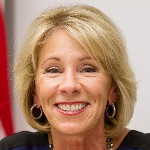
Federal Judge Holds DeVos in Contempt in Student Loan Case, Slaps Education Department With Fine

A federal judge on Thursday held Education Secretary Betsy DeVos in contempt for violating an order to stop collecting loan payments from former Corinthian Colleges students, according to a Washington Post report.

The Post‘s Danielle Douglas-Gabriel explains:

“Magistrate Judge Sallie Kim of the U.S. District Court in San Francisco slapped the Education Department with a $100,000 fine for violating a preliminary injunction. Money from the fine will be used to compensate the 16,000 people harmed by the federal agency’s actions. Some former students of the defunct for-profit college had their paychecks garnished. Others had their tax refunds seized by the federal government.”

Kim wrote that the defendants violated the preliminary injunction and those violations harmed borrowers.

Read the  Post report.


Tentative Opioid Settlement Reached in Ohio With Drug Companies

The nation’s three top drug distributors and a major drugmaker reached a $260 million settlement with two Ohio counties Monday over the deadly havoc wreaked by opioids, striking a deal just hours before they were set to face a jury at the start of the first federal trial over the crisis, reports CBS News.

“The settlement means the closely watched trial will not move forward now,” according to CBS News. “The trial involved only two counties — Cleveland’s Cuyahoga County and Akron’s Summit County — but was seen as an important test case that could gauge the strength of the opposing sides’ arguments and prod them toward a nationwide settlement that ultimately would involve billions of dollars.”

Read the CBS News article.


Opioid Negotiations Fail to Produce Deal Just Before Trial

The Associated Press reports that negotiations aimed at reaching a major settlement in the nation’s opioid litigation reached an impasse Friday.

The AP’s Geoff Mulvihill writes that one of the negotiators, North Carolina Attorney General Josh Stein, said late Friday that local governments did not accept a deal worth $48 billion in cash, treatment drugs and services.

“Paul Farrell, a lead lawyer for the local governments, told The Associated Press that one hang-up was the states’ desire to be in charge of dividing the money. They said that the deal would provide free Suboxone, a drug used to treat opioid addiction, across the country,” according to Mulvihill.

Read the AP article.


Lawyer, Self-Proclaimed as ‘The Bull,’ Pleads Guilty to Cyber-Threating Online Critics

A Wichita attorney known as “The Bull” has admitted his involvement in cyber threats against his critics, and a federal court ordered him to pay more than $425,000, reports The Wichita Eagle.

Brad Pistotnik pleaded guilty to three misdemeanor counts of being an accessory after the fact to making an extortionate threat over the internet, according to the U.S. attorney. He must pay fines and restitution.

“In his plea, Pistotnik admitted that he paid David Dorsett for ‘reputation management services,’ writes the Eagle‘s Jason Tidd. “That service included Dorsett sending a flood of emails to Leagle, RipoffReport and Jaburg Wilk demanding that negative information be removed from their websites, prosecutors said. The emails threatened to target their advertisers.”

Read the Wichita Eagle article.


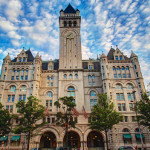
Court Agrees to Take Another Look at Emoluments Case Over Trump’s D.C. Hotel

Image by Mike Peel

A federal appeals court will reconsider a ruling from a three-judge panel that threw out a lawsuit accusing President Donald Trump of illegally profiting off the presidency through his luxury Washington hotel, reports the Associated Press.

The Richmond-based 4th U.S. Circuit Court of Appeals agreed Tuesday to hold a hearing before the full court of 15 judges. Arguments are scheduled for Dec. 12, according to the AP’s Denise Lavoie.

The state of Maryland and the District of Columbia accused Trump of violating the emoluments clause of the U.S. Constitution by accepting profits through foreign and domestic officials who stay at the Trump International Hotel.

Read the AP article.


Mossack Fonseca Law Firm Sues Netflix for Casting as Villain

Panama PapersBloomberg Law reports that the partners of Mossack Fonseca & Co., the law firm portrayed as the villains in the new movie Netflix “The Laundromat,” sued the company for libel and trademark infringement.

The firm’s complaint in U.S. district court in Connecticut claims the film “defames and portrays the Plaintiffs as ruthless uncaring lawyers who are involved in money laundering, tax evasion, bribery and/or other criminal conduct.”

The founders of the law firm implicated in the Panama Papers also say “the implications and innuendo converge to cast Plaintiffs in the light of mastermind criminals whose crimes include, but are not limited to, murder, bribery, money laundering and/or corruption.”

Read the Bloomberg Law article.


Purdue’s Choice of NY Bankruptcy Court Part of Common Forum Shopping Strategy, Experts Say

Although Purdue Pharma LP is based in Connecticut and incorporated in Delaware, the company at the center of the opioid crisis filed for bankruptcy in New York, in a court where its case would be assigned to the only judge who works there, reports The Washington Post.

Bankruptcy Judge Robert Drain, on the bench since 2002, has long experience with complicated bankruptcy cases. On Friday he heard arguments over whether to take the unusual step of halting action in about 25 lawsuits brought by various states against Purdue and members of the Sackler family, which owns the company.

The Post article quoted Lynn M. LoPucki, a professor at the UCLA School of Law: “Of course Purdue strategically picked White Plains over all other courts. That’s like asking whether a chess master has a strategy or just makes moves randomly.”

According to The New York Times, the judge on Friday cited mounting costs of litigation that are siphoning funds that could otherwise go to abate the opioid crisis and ordered a pause in legal action by states against Purdue Pharma and its owners, the Sacklers.

Read the Post article.


Five Suggestions for Drafting (and Defending) Pre-Dispute Contractual Jury Waivers

Litigation is a cost of business, but many savvy in-house counsel effectively manage that cost by including pre-dispute jury waivers in counterparty contracts, points out Bloomberg Law.

Jury waivers memorialize an agreement between contracting parties that fact-finding in disputes arising between them will be decided by judges, and not by juries, according to authors David L. Goldberg and Sean M. Akchin of Katten.

They discuss their five suggestions, under the headings Be Careful What You Wish For, Be Conspicuous, Be Specific, Don’t Be Greedy, and Don’t Be Tardy.

Read the article.


About 40 State Attorneys General Plan to Take Part in Facebook Antitrust Probe

Letitia James
Image by Thomas Good

Roughly 40 state attorneys general plan to take part in a New York-led antitrust investigation of Facebook, reflecting a broadening belief among the country’s top Democrats and Republicans that the tech giant may be undermining its social-networking rivals, reports The Washington Post.

New York Attorney General Letitia James first announced a wide-ranging probe with seven other states and the District of Columbia to explore whether, in James’s words at the time, Facebook has “endangered consumer data, reduced the quality of consumers’ choices, or increased the price of advertising,” writes the Post‘s Tony Romm.

Sources told the newspaper that New York continues to solicit support from other states, meaning the number could grow before it is formally announced.

Read the Post article.


Lessons in Drafting and Implementing an Enforceable Mandatory Arbitration Agreement

The California Supreme Court invalidated a mandatory arbitration agreement involving a former employee’s wage claims, finding the agreement was both procedurally and substantively unconscionable, according to a Ford Harrison post by partner Frederick L. Warren.

“The Court found that the arbitration agreement’s execution involved a high degree of procedural unconscionability,” explained Warren. “The Court stated that ‘the agreement appears to have been drafted with an aim to thwart, rather than promote, understanding.'”

Read the article.


Las Vegas Shooting Settlement Faces Complex Process, Experts Say

Each of the thousands affected by the Las Vegas mass shooting ultimately will receive a share of a legal settlement announced last week, but experts caution that the shares will not be equal, according to a Las Vegas Review-Journal report.

The experts said the differences for the families of the 58 who died in the shooting will depend on factors such as the victim’s level of income, how long that person was expected to live and how many children that person had, explains the Review-Journal‘s Rachel Crosby.

For the more than 800 injured in the attack, the calculation will be even more complicated. And an undetermined number of the 22,000 in attendance at the event suffered mental trauma.

Read the Review-Journal article.


As the Supreme Court Gets Back to Work, Five Big Cases to Watch

The Supreme Court could issue a number of blockbuster decisions on gay and transgender rights, immigration, abortion, guns and religion in its next term, which will begin on Monday.

New York Times reporter Adam Liptak writes that the rulings will arrive by June, in the midst of an already divisive presidential campaign.

“On Tuesday, the court will hear two hours of argument on the momentous question of whether a landmark federal civil rights law protects gay men, lesbians and transgender people from employment discrimination,” Liptak explains.

Later in the term, the court will consider the fate of nearly 800,000 “Dreamers,” hear an abortion case challenging a Louisiana law, possibly hear a case on the Second Amendment, and decide whether a state can exclude religious schools from a state scholarship program.

Read the  NY Times article.


Legal Battle Continues Over Drilling And Fracking Wastewater Well

Below-ground look at frackingThe Indiana Department of Environmental Protection is seeking the dismissal of a township’s challenge to a permit to a shale gas wastewater injection well to operate in the community, reports the Pittsburgh Post-Gazette.

“The long-running legal battle, which is being watched statewide for its potentially precedent-setting outcome, pits [Grant Township], which wants to protect water wells from contamination, against the DEP, which approved a permit for the injection well in 2014 and again in 2017,” explains the Post-Gazette‘s Don Hopey.

The town passed a community bill of rights ordinance in 2014 in an attempt to block Pennsylvania General Energy Co. from converting one of its former shale gas production wells to a 7,500-foot deep injection well for disposal of fracking waste.

Read the Post-Gazette article.


Venture Firm Says It Has Been Under Assault By Its Former General Counsel

The former general counsel of Mithril Capital Management, Crystal McKellar, has staged a multi-pronged campaign to disparage the company, according to a new legal petition filed in Texas, where Mithril has its headquarters.

McKellar was the company’s only general counsel, reports TechCrunch.

Fox Business reports that the lawsuit claims: “After leaving the business, she immediately ‘began a concerted whisper campaign to undermine Mithril, in which she would make false, anonymous complaints to Mithril’s limited partners.'”

McKellar is a Harvard-trained lawyer and former child TV star. Mithril is owned by Peter Thiel, the Silicon Valley billionaire who toppled Gawker Media.

Read the TechCrunch article.


Hyundai Secures Win in $40 Million Product Liability Suit

A Los Angeles jury returned a complete defense verdict for Hyundai Motor America and Hyundai Motor Company on Sept. 26, following a three-week trial presided over by Judge John A. Torribio.

The action was in the Norwalk Courthouse of the California Superior Court for the County of Los Angeles. Plaintiff Jorge Romo brought suit against the Hyundai defendants in January 2015, claiming that the subject 2003 Hyundai Tiburon was defectively designed and seeking an award of $40 million in economic and non-economic damages.

According to a release from Hyundai’s defense law firm: The action arose out of a motor vehicle accident that occurred in 2013, around midnight in South Gate, California. Defendant Alfred Schaer was driving his 2003 Hyundai Tiburon with another individual in the front passenger seat and plaintiff in the right rear seat. Schaer lost control of the vehicle causing it to leave the roadway, travel off the right side of the road, impact a curb and a chain-link fence, and finally collide with a steel shipping container at over 20 miles per hour. During the accident sequence, the shipping container deformed the passenger side of the Hyundai Tiburon and fractured the windshield, passenger side windows, and backlite. When the vehicle came to rest, plaintiff discovered that he had suffered a traumatic amputation of his right upper arm, according to the release.

Plaintiff filed suit against the Hyundai defendants, alleging that the Hyundai Tiburon was defectively designed because tempered safety glass — rather than laminated glass — was used in the side windows. Plaintiff also asserted a claim against Schaer for negligently operating the vehicle. At trial, plaintiff sought $40 million in economic and non-economic damages.

Plaintiff offered the testimony of numerous retained experts, including an automotive engineering and glazing expert, Stephen Batzer, Ph.D., P.E., biomechanics expert, Peter Francis, Ph.D., and accident reconstruction expert, Joseph Yates. These experts offered opinions in support of plaintiff’s theory that, if the Tiburon had been equipped with laminated glass instead of tempered safety glass in the side windows, the passenger-side, rear quarter window would have remained in place and prevented plaintiff’s injuries. Plaintiff’s automotive and mechanical engineering expert, Donald Phillips, P.E., presented a series of different litigation tests purportedly demonstrating that the properties of laminated glass were such that the use of laminated glass would have prevented plaintiff’s injuries during the accident.

In response, the Hyundai defendants offered the testimony of biomechanics and glazing expert Michael Carhart, Ph.D., as well as accident reconstruction expert Jeffrey Croteau. Carhart explained that the use of tempered safety glass is a safe and appropriate design choice for automotive side windows that complied with all applicable federal and industry standards, and accordingly that the Hyundai Tiburon was not defective or unreasonably dangerous. Moreover, Croteau prepared an extensive accident reconstruction based on 3D laser scanning and modelling and Carhart prepared a surrogate study and other 3D modeling establishing that the rear quarter glass window fractured when the vehicle impacted the edge of the 40-foot, multi-ton steel shipping container, and that the use of laminated glass in the quarter window would not have prevented plaintiff’s injuries. The Hyundai defendants also presented a complex sled crash test using an exemplar Hyundai Tiburon with laminated glass installed in the rear quarter window. This crash testing, which matched the relevant interactions in the underlying crash sequence, demonstrated that the use of laminated glass would not have prevented plaintiff’s injury, according to the release.

After deliberating over the course of three days, the jury found in favor of the Hyundai defendants on both the Strict Product Liability Consumer Expectation Test and Strict Product Liability Risk-Benefit Test. As to the claim for negligent operation of the vehicle, the jury returned a verdict against Schaer and awarded plaintiff a total of $17,270,000 in economic and non-economic damages.

Plaintiff presented the following experts at trial: automotive engineering and glazing expert Stephen Batzer, Ph.D.; automotive and mechanical engineering expert Donald Phillips, P.E.; biomechanics expert Peter Francis, Ph.D.; accident reconstruction expert Joseph Yates; economist expert Catherine M. Graves, MBA, CFA; orthopedic surgery expert Frederic Nicola, M.D.; psychology expert, Anthony Reading, Ph.D.; prosthetic expert Richard Riley, B.S.Ed., C.P., FAAOP; and psychical medical and rehabilitation expert, Khyber Zaffarkhan, D.O., FAAPMR. The Hyundai Defendants presented accident reconstruction expert, Jeffrey Croteau, and biomechanics and glazing expert, Michael Carhart, Ph.D.

Plaintiff was represented by Daniel Sheldon of Scolinos, Sheldon & Nevell, and Patrick Ardis and Kip Whittemore of Wolff Ardis, P.C., based in Memphis, Tennessee.

The Hyundai defendants were represented by Gary Wolensky, Paul Alarcon, and Taylor Brown of Buchalter, as well as Hyundai Motor America’s in-house counsel, Jamison Power.

Defendant Alfred Schaer was represented by David Gomes of Gomes Hirshik & Hummel.