SCOTUS Ranks Last for Transparency on Fix the Court List; How Did Other Courts Fare?

The ABA Journal reports that the U.S. Supreme Court is the least transparent among federal appellate-level courts, while the 9th U.S. Circuit Court of Appeals at San Francisco is No. 1 for public access, according to Fix the Court, a national nonpartisan organization based in New York City.

The organization ranked courts on such points as to whether the courts provide live or same-day audio or video of oral arguments, how promptly they release calendars and opinions, how often they post press releases, and whether they have implemented judicial wellness and workplace conduct policies, the Journal‘s Debra Cassens Weiss writes.


Read the  ABA Journal article.


2019 Case Law Mash-Up: Can You Assign Exaggerated Representations and Warranties to a Locked-In Vendor?

Several court cases in 2019 dealt with (or are still dealing with) key issues faced by parties to commercial contracts, including contracts for technology products and services, writes Eric Begun in a post for King & Fisher Law Group.

The post briefly discusses four of those cases and their corresponding issues of contract assignment, representations and warranties, and data security.

Begun’s discussion of the four cases provides take-away lessons for each.

Read the article.


Firearms Industry: Supreme Court’s Pass on Sandy Hook Gun Case Presages Litigation Onslaught

Reuters is reporting that the firearms industry is on the verge on a potentially crushing wave of litigation from the victims of gun violence — in the opinion of the firearms industry, gun owners, the National Rifle Association and states that strongly back gun rights.

Those parties warned the U.S. Supreme Court of that scenario if the justices did not grant Remington Arms’ petition for review of a 2019 ruling by the Connecticut Supreme Court in a landmark gun liability case. The court denied Remington’s petition for review in the case which involves the 2012 massacre at Sandy Hook Elementary School.

The Connecticut court found in the Remington case that the state’s unfair trade practices statute fits into the 2005 Protection of Lawful Commerce in Arms Act exception for laws “applicable to the sale or marketing” of firearms. That finding raises the specter of nationwide liability because many states have consumer protection statutes similar to Connecticut’s law, Remington warned.

Read the Reuters article.


7th Circuit Benchslap: Lawyer’s ‘Gibberish’ in Brief Draws Sanction Threat

An attorney who was brought on at the appellate state to represent a pro se litigant who claimed she was discriminated against by her former employer filed a brief that the Seventh Circuit found to be so bad that it ordered him to show cause why he shouldn’t be sanctioned.

Above the Law reports on the case, with a copy of the court’s opinion included. That opinion includes a stinging rebuke, including this passage:

“The patently frivolous nature of this appeal isn’t the only thing that troubles us. The hopelessness of [the plaintiff-appellant’s] cause didn’t deter her lawyer, Jordan Hoffman, from signing and submitting a bizarre appellate brief laden with assertions that have no basis in the record and arguments that have no basis in the law. In so doing, Hoffman violated Rule 28 of the Federal Rules of Appellate Procedure.”

The court also found the brief to be “chock-full of impenetrable arguments and unsupported assertions, and it is organized in ways that escape our understanding.”

Read the Above the Law article.


Fake Mineral Leases Thwarted by the Texas Legislature

The 2019 Texas legislature enacted a new Property Code Section 5.152 to protect mineral and royalty owners from a certain species of fraudulent transactions perpetrated on trusting and/or naïve and/or out of state mineral owners, reports Charles Sartain in Gray Reed’s Energy & the Law blog.

The change is meant to address a scam in which someone “fronting for a company with a name similar to a reputable operator, would approach the owner with an oil and gas ‘lease’ of minerals or royalty that were already subject to an existing lease. Except that the lease was actually the sale of the mineral or royalty interest at a bargain price.”

The article lists the changes addressed by the new section.

Read the article.


Breach of Contract Claim Does Not Arise Under Patent Law

The U.S. Court of Appeals for the Federal Circuit reversed a district court decision that retained jurisdiction over a breach of contract action, finding that the action did not sufficiently implicate issues of patent law and instead was simply a state law contract case for past royalties, reports McDermott Will & Emery via Lexology.

One of the parties to a case involving patents and royalties filed suit, alleging breach of contract and other equitable state law claims.

The defendant asserted counterclaims of breach of contract, fraud, negligent misrepresentation, restitution and breach of fiduciary duty. Both parties relied on diversity to establish subject matter jurisdiction.

Read the article.


Drafting Representations and Warranties in a Contract

D.C. Toedt III, writing in the On Contracts blog, offers some lessons for drafting representations and warranties in contracts.

He discusses a hypothetical case that involved the sale of a car, showing how the case could turn out differently, depending on whether the seller represented — or warranted — that the car was in good condition.

“If your client is being asked to represent and warrant some fact, then consider whether the client should only represent the fact, or whether the client should only warrant the fact,” Toedt writes in one of his drafting lessons.

Read the article.


Federal Court Sends Ominous Signal on Cannabis Contracts

Marijuana - CanabisA federal judge recently sent an ominous signal regarding the enforceability of cannabis contracts by issuing an order telling the parties have to show why the court should not dismiss the case, writes Samuel D. Méndez in Lane Powell’s Cannabis Law Advisor.

“The Order to Show Cause states that the contract at issue may be unenforceable under the federal Controlled Substances Act (“CSA”) because it concerns cannabis businesses, and cannabis remains an illegal substance under the CSA,” according to Méndez.

The judge wrote in the order that, although state law governs the breach of contract claim, where it is alleged that an agreement violates a federal statute, courts look to federal law.

Méndez offers some advice on drafting contracts that include a covenant that the parties agree not to raise the argument of enforceability in litigation.

Read the article.


Trump Flips Second Circuit With Controversial Judge

In a vote that will flip the makeup of the New York-based appeals court, the Senate on Thursday confirmed a controversial White House lawyer to a seat on the Second Circuit, reports Courthouse News Service.

The vote means that a majority of the 13 judges on the Second Circuit have been appointed by Republican presidents. Menashi is the fifth judge President Donald Trump has appointed to the court and the fourth this year alone, according to Courthouse News’ Tim Ryan.

Menashi’s dodging of questions during his confirmation hearing before the Senate Judiciary Committee, along with his position in the Trump administration and his controversial writings, stirred controversy in the Senate.

Senate Minority Leader Chuck Schumer had harsh words for Menashi’s nomination: “My Republican colleagues, in my view, rubber-stamped too many of these extreme, unqualified nominees – nominees, in Mr. Menashi’s case, who are almost craven.”

Read the Courthouse News article.


East Texas Attorneys Secure $1.9m Jury Verdict in West Texas Courtroom.

Jurors in Ward County, Texas, came back with a $1.9m verdict against Go Rhino Trucking, LLC.

The verdict was obtained by East Texas trial attorneys Stafford Davis and Shane McGuire, on behalf of their clients, Larry and Marjorie Young, the lawyers said in a release.

The plaintiffs’ lawyers aid that, in June of 2017, while travelling eastbound on I-20, the Youngs were struck from behind by a cement truck just as they entered Monahans, Texas.

During trial, it was revealed that Go Rhino failed to conduct pre-accident drug testing on the driver, and routinely violated federal regulations regarding post-accident drug testing of drivers, the lawyers said. It was further revealed that Go Rhino repeatedly violated its own safety policies.

The jury awarded the Youngs a total of $1,908,968.50, which included an award of $1.4m in punitive damages for gross negligence. The verdict was unanimous.


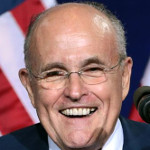
Facing Investigation, Giuliani Needed a Lawyer, but Firms Stayed Away

Image by Gage Skidmore

After a weekslong search to find a lawyer who would represent Rudolph W. Giuliani, President Trump’s personal lawyer finally found a legal team to represent him in the criminal investigation into his activities related to Ukraine, reports The New York Times.

Although Giuliani has a wide range of close associates, “at least four prominent attorneys declined for various reasons, according to people familiar with the matter. They included Mary Jo White, who also once led the United States attorney’s office for the Southern District, as well as Theodore V. Wells Jr., a trial lawyer at Paul, Weiss, according to people familiar with those discussions,” the Times reports.

He announced he will be represented by three lawyers, including his longtime friend, Robert J. Costello. Giuliani and Costello crossed paths last year during the investigation of another Trump associate, Michael D. Cohen.

Read the NY Times article.


Ex-Hershey In-House Lawyer Barred From Suing on Race, Gender Bias Claims

Bloomberg Law reports that a former Hershey Co. intellectual property lawyer can’t proceed with a suit alleging he was discriminated against when the company terminated him by saying it was eliminating his position, but then hiring “a younger, African-American woman” for the same job, the Middle District of Pennsylvania said.

Kurt L. Ehresman, a 52-year-old white man, worked as Hershey’s senior counsel for global intellectual property until Hershey told him it was eliminating his position, writes Bloomberg’s Blake Brittain. Ehresman said Hershey soon created a “Head of Intellectual Property” position and hired a younger black woman “to promote Defendant’s goal of diversity.”

The court found his claims were barred by an agreement he signed when he left the company.

Read the Bloomberg Law article.


Trump Tax Return Case Confronts Supreme Court With a Momentous Choice

In a matter of days, President Trump will ask the Supreme Court to rule on his bold claim that he is absolutely immune from criminal investigation while he remains in office, writes Adam Liptak for The New York Times.

The new case, concerning an investigation by Manhattan prosecutors into hush-money payments to two women who said they had affairs with Trump, will be the Supreme Court’s first chance to consider the president’s arguments that he is beyond the reach of the justice system.

Liptak explains the Supreme Court’s options: Announce next month whether it will hear the case and to rule by June, or simply deny review, leaving in place the appeals court ruling and effectively requiring Trump’s accountants to turn over his tax returns.

Read the  NY Times article.


O’Melveny Notches Win in Long-Running Legal Malpractice Suit

A federal judge in Los Angeles ruled in favor of O’Melveny & Myers in a case alleging the Biglaw firm was conflicted in its representation a decade ago of a now-defunct investment firm Aletheia Research and Management, reports Bloomberg Law.

The ruling let stand an arbitrator’s August finding that O’Melveny didn’t commit legal malpractice, noting that “only in very unusual circumstances” does this occur and the investment firm’s trustee didn’t meet this standard, according to Bloomberg’s Melissa Heelan Stanzione.

A Chapter 7 estate trustee for Aletheia had argued that the law firm’s failure to recommend that Aletheia hire independent counsel to review the company’s relationship with its founders contributed to the company’s ultimate downfall.

Read the Bloomberg Law article.


Conspiracy Theorist Loses Case Against Robert Mueller

A federal judge dismissed a lawsuit against former special counsel Robert Mueller, rejecting a conspiracy theorist’s claim that Mueller pressured him to commit perjury during the investigation into Russian interference in the 2016 election, according to a Courthouse News report.

Jerome Corsi alleged that Mueller violated the Federal Rules of Criminal Procedure by leaking grand jury information about him to the media to pressure him into giving false testimony.

Courthouse News’ Jack Rodgers quotes the ruling: “The article explicitly references Mueller’s ‘case,’ indicating that the information relates to his investigation and not to the grand jury’s investigation. Moreover, the article does not attribute any information to Mueller or anyone else associated with the grand jury investigation.”

Read the Courthouse News article.


Signature Page Mixing-and-Matching Leads to Trouble in Delaware Case

Contract- signatureD.C. Toedt III, writing in the On Contracts blog, describes how  parties to a contract often circulate just signature pages to be signed, and the problems that can arise with that practice.

He also explains the importance of making sure that the signed version is identified (e.g., with a running header).

He analyzes a lawsuit that involved a former vice president of a company who sued to compel the company to give her the equity that she claimed was due to her under the “signed” agreement. But the parties, after sending revised drafts back and forth, had apparently signed signature pages for different versions of the agreement.

Read the article.


NDAs Do NOT Work for China But NNN Agreements Do

The China Law Blog has published part one of an expected series of posts setting out exactly what foreign companies should do (and not do) to protect their intellectual property in China.

The author, Dan Harris of Harris Bricken, tells the story of a prospective client who sought help because a Chinese manufacturer he was working with on a product started selling a new product that happened to have the same features and functions as the product the American developer had submitted to the manufacturer.

Harris’ firm told the prospective client not much could be done because the nondisclosure agreement with the manufacturer was worthless in China. And U.S. patents won’t provide much practical protection, either.

The firm’s lawyers explained that the developer would have been better off if he had an NNN agreement —non-use, non-disclosure, and non-circumvention — that would be enforceable in a Chinese court with jurisdiction over the Chinese defendant. .

Read the article.


Court Enforces Arbitration Clause in Clickwrap Agreement

A California Court granted a defendant’s motion to compel arbitration based on a duly formed and consented arbitration clause via a “clickwrap” agreement, despite the plaintiff’s argument that no contract was ever formed because the purpose of the contract was to facilitate the selling and distribution of marijuana, which is illegal under federal law.

A post by Womble Bond Dickinson describes a case in which the defendant was hit with a putative class action in California federal court claiming it violated the Telephone Consumer Protection Act.

The defendant’s terms of service, which were hyperlinked in the sign-up box, contained a clause providing for arbitration of disputes with a class-action waiver.

Read the article.


Special Order Your Forum Selection Clause

A new post on Global Private Equity Watch discusses the continued need for vigilance in the wording of forum of selection provisions in agreements.

Author Glenn D. West takes a look at a recent Delaware ruling on an anti-suit injunction attempting to prevent a suit being prosecuted in Texas.

The court granted the injunction against the Texas suit because the fraud claims would require construction and interpretation of the agreement.

Read the article.


Another Trump Judicial Pick Rated Unqualified Advances

The Senate Judiciary Committee Thursday approved and sent to the full Senate for consideration the nomination of Sarah Pitlyk — rated unqualified by the American Bar Association — to the U.S. District Court for the Eastern District of Missouri, reports Blomberg Law.

Three other federal district court nominees also advanced, but action on two controversial appeals court picks was again deferred.

The ABA’s Standing Committee on the Federal Judiciary in September rated Pitlyk as not qualified for the lifetime appointment, saying she lacks the requisite courtroom experience to serve as a trial judge.

“The disagreement boiled over Oct. 30 when the committee clashed over the role of the ABA Standing Committee after it issued a harsh assessment of Lawrence VanDyke, who also received an unqualified rating for a seat on the U.S. Appeals Court for the Ninth Circuit,” writes Bloomberg’s Madison Alder.

Read the Bloomberg Law article.