Six Tips for Drafting Better Statements of Work

You can draft the best, most protective contract in the world, but if the statement of work (SOW) fails to adequately describe the deliverables and the services to be rendered, projects can fail, cost can overrun results and project schedules can be delayed, writes  of Foley & Lardner LLP.

He writes that he believes the primary cause for project failures is a poorly drafted SOW.

In his article, Overly discusses six tips for better drafting, covering: a plain English statement, attention to detail, using clear grammar, guesses vs. estimates, reading assumptions carefully, and ensuring consistency with the primary agreement.


Read the article.


Not So Fast: Limits of ‘Settlement Negotiation’ Protections

Padlock - contractIt’s far too simplistic to suggest that anything your company considers to be a “settlement negotiation” is going to be kept out of court, warns Joseph A. Schouten of Ward and Smith, P.A.

In an article on the firm’s website, he writes: “It’s important to understand the limits of the protections afforded to ‘settlement negotiations.’ Otherwise, your company may make a statement in what it believes to be a confidential ‘settlement negotiation’ only to have that statement used against it in court.”

In the article, he explores some of the common situations in which a company may fall into a trap if it doesn’t understand the rules regarding protections for settlement negotiations or communications.

Read the article.


Segway Competitor Rolls Away from Former CEO’s Attempt to Force Arbitration

Jason M. Knott of  Zuckerman Spaeder LLP describes a recent case in which  T3 Motion, Inc. (a Segway competitor) used a lack of mutual assent to avoid arbitration of its claims against its former CEO, William Tsumpes.

Writing in the firm’s Suits By Suits blog, Knot explains that it’s unusual for an employee to seek arbitration in a contract dispute.

“T3 wanted to litigate in court, and its former CEO, William Tsumpes, wanted to force T3 into arbitration. T3 had brought suit against Tsumpes and various corporate entities that it alleged were his alter egos, alleging that Tsumpes improperly took money from the company for his own personal use,” Knott writes.

Tsumpes presented a signed employment agreement that required arbitration, but T3 contested whether it had agreed to the written contract.

Read the article.


Enforce Arbitration Agreement or Waive Right to Arbitrate Trade Secret Misappropriation Claims

ArbitrationA recent federal court denied an employer’s motion to compel arbitration, finding that it waived its right to arbitration by engaging in litigation.

George L. Kanabe, a partner in the San Francisco office of Orrick, Herrington & Sutcliffe LLP, discusses three key lessons the ruling provides for plaintiff-employers.

Kanabe reports that the ruling noted, “[t]here is no other reasonable interpretation of plaintiff’s untimely demand for arbitration than as a deliberate tactic to test the judicial waters but then, when those waters did not flow the direction plaintiff intended, to change routes in hopes of finding a different current.”

Read the article.


Keys to Negotiating Indemnity Agreements

The effective management of indemnification and related insurance obligations is an active agenda item for top-level business leaders, including any CFO, CEO and general counsel, points out James Buldas in an article on the website of Business Insurance.

“It is, therefore, imperative, whether you are a Fortune 500 company or a small business, that your company’s risk management and legal departments strategically manage indemnification and insurance obligations to minimize the always increasing cost-of-business demands,” writes Buldas, a partner at Pietragallo Gordon Alfano Bosick & Raspanti L.L.P. in Pittsburgh.

His article covers the language of the indemnity agreeement, selecting the governing law, specificity in insurance obligations, requesting the appropriate additional insured endorsement, and communication between legal and risk management departments and brokers.

Read the article.


3 Practical Business Contract Tips From Travelzoo GC Rachel Barnett

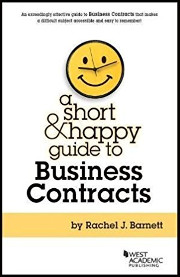
Rachel Barnett, general counsel of travel deal publisher Travelzoo, is the author of a new book, “The Short & Happy Guide to Business Contracts,” which modernizes contract law and applies legal concepts to the real corporate world.

In an article on Above the Law’s website by Olga V. Mack, Barnett discussed three of the most important clauses readers can learn from her book.

Those include “The ‘gotcha’ moment: non-solicitation clauses,” “The one to watch: termination clauses,” and “The messy edit: mutual indemnification clauses.”

Read the article.


How to Build a Solid Contractual Risk-Transfer Program

Liability risk managementThe use of subcontractors helps to ensure construction projects are completed in a timely and efficient manner, but it also creates a wide range of contractual risks, cautions Tommy Williams, USI Uniondale vice president, in an article for Property Casualty 3600.

“Without a properly structured risk-transfer program, a general contractor (GC), owner or property manager would assume financial responsibility unnecessarily for losses caused by a third party, who is contractually obligated to control or prevent those losses. The financial impact could be significant — more so in certain jurisdictions,” he explains.

His article discusses the basics of contractual risk transfer, common subcontractor policy exclusions, and the need for expert advice.

Read the article.


Creating Defensible Employment Agreements Before an Employee’s First Day

Employment contractSignificant tools in the arsenal of strategies are contracts signed by the employee, but waiting until the employee departs is too late to start thinking about them, points out Spiwe L. Jefferson in an article on the website of the Association of Corporate Counsel.

In her article, she discusses contract considerations at the beginning of the employment relationship.

She covers confidentiality agreements and nonsolicitation agreements,. Under the “noncompete agreements” heading, she discusses limiting temporal scope, protecting legitimate interests, exempted professions, timing requirements, consideration, and geographic limits.

Read the article.


Key Provisions for Supply Chain Contracts

In an article in the Manufacturing Industry Advisor published by Foley & Lardner, Nicholas J. Ellis discusses six areas that generally are the most critical points to consider when it comes to drafting a supply chain agreement.

“By paying careful attention to the terms of its supply chain contracts, a company can help to mitigate its risks while at the same time maximizing the value of its supply chain,” he writes.

The areas he discusses are critical commercial terms, quantity, duration, early termination, warranties and disclaimers, and limitation of remedies and damages.

Read the article.


Three Legal Pitfalls to Avoid in Blockchain Smart Contracts

While the use of smart contracts is tempting, this silver bullet of efficiency and lower costs doesn’t come without potential problems, warns Gregg M. Jacobson of Chamberlain Hrdlicka in an article in Bitcoin Magazine.

Among the concerns he points out are: “First, will a court even consider a computer program to be a binding contract? Second, if disputes arise, where can the parties sue? Last, do the parties have to go to court, or is the less-expensive option of arbitration available?”

In his article, he discusses each of those points.

Read the article.


6 Essential ‘TENANT’ Tips for Negotiating a Commercial Lease

Image by Nick Youngson

Real estate lawyer Laura A. Drossman uses a handy acronym to illustrate some of the issues and some tips for tenants approaching lease negotiations in a commercial setting.

In her Linkedin article, she discusses six points, keyed to the acronym TENANT.

Those are term length, exit strategy, notice and cure periods, assignment and subleasing, net or gross: rental structures, and tenant improvements.

She writes that keeping those points in mind will help commercial tenants understand how to negotiate favorable lease terms to position themselves for success before signing.

Read the article.


Defending Breach-of-Contract Claims in Data-Breach Litigation

A post on the What’s Fair? blog on the Ellis & Winters LLP website discusses a recent federal appellate decision that shows how data-breach lawsuits premised on overpayment theories — which often assert claims sounding in contract — still face an uphill battle.

Alex Pearce explains that the overpayment theory rests on the premise that the price of a product or service includes a payment for data security measures. He outlines the recent ruling in Kuhns v. Scottrade.

“In that decision—a boon for data-breach defendants—the Eighth Circuit employed a demanding test for the pleading of facts that give rise to an overpayment claim,” Pearce writes.

Read the article.


Tips For Drafting Employee Handbooks: Avoiding Breach of Contract Claims

A new post on Bryan Cave’s At Work blog explains how including certain language in an employee handbook may help an employer to defend breach of contract claims.

“To avoid breach of contract claims premised on employee handbook policies, employers should include an express contract disclaimer in their employee handbooks,” write Bill Wortel and Christy Phanthavong.

The article explains the “at will” clause, the use of a reservation of right by the employer to modify policies, and the need for the disclaimer to be conspicuous.

Read the article.


Enforcing Nursing Home Arbitration Agreements Post-Kindred

Liz Kramer, writing for Stinson Leonard Street’s Arbitration Nation, writes that a recent ruling for a state supreme court may be indicative of what litigation over nursing home arbitration agreements will look like after the U.S. Supreme Court’s ruling in Kindred Nursing Centers v. Clark.

Kramer, a partner in the firm, discusses the Wyoming Supreme Court’s reversal of a lower court’s ruling in an arbitration case. The lower court denied a nursing home’s motion to compel arbitration.

But the state’s high court reversed, following the U.S. Supreme Court’s Kindred ruling that another state’s rationale for not enforcing an arbitration agreement was preempted by the Federal Arbitration Act.

Read the article.


General Counsel – Contract Process or Risk Management?

Contract management is a distinct profession with a well understood body of knowledge, writes Mark Little of Berkman Solutions.

“Contract management is not the practice of law. That said, contracts have a life of their own which requires monitoring and nurturing. In many organizations the legal department simply throws an executed contract over the wall into the contract management department. The legal department may hear about it again when it is time to renew, amend, or terminate the contract. This approach to contractmanagement misses revenue opportunities and causes unexpected risk to materialize,” he explains.

“A shared contract management system that focuses on the contracts which are fully executed promotes collaboration between the general counsel and the management team. Effectively managing the contract portfolio together allows both general counsel and contract managers to make a measurable impact on revenue and contract risk management. No one will remember that you drafted the force majeure clause just so, but everyone will remember that you identified an opportunity to decrease prices during the term of the purchasing contract.”

Read the article.


Webinar: Implement Contract Triage in 5 Steps

LawGeexA new webinar from LawGeex will cover how to create an internal contract triage process in five steps, all the way from planning through to execution.

The complimentary 45-minute webinar will be Wednesday, Nov. 29, 2017,  at 2 p.m. Eastern time.

The event is intended to provide a practical look at building on-the-ground solutions for contract triage.

The webinar will cover:

  • What is contract triage, and how leading legal teams are implementing these solutions today.
  • How to dramatically reduce the time and cost of contract review and approval.
  • Practical steps to improve your existing triage process and streamline contract review.

Register for the webinar.


Allocation of Data Breach Risks and Costs in Vendor Contracts: Negotiate, Negotiate, Negotiate

Hacking - cybersecurity - phishingMost companies are rethinking data breach risk and cost allocations in new and existing vendor agreements, points out Anne S. Peterson in McGuireWoods’ Password Protected blog.

“Limitation of liability and indemnification clauses form the framework for reducing unforeseeable, and potentially devastating, data breach costs,” she writes. “To defend against unpredictable damages, these clauses are fast becoming the most fiercely negotiated language in service provider agreements.”

“Under most state statutes, a service provider’s obligations, and liability for costs, end with notification to the customer. Simply put, if the organization’s sensitive data is breached while under the control of a vendor, the vendor’s only obligation is to notify the organization. It is then the customer’s obligation to handle the fallout, unless the customer’s contract with the vendor provides otherwise.”

Read the article.


Join Our LinkedIn Group


Timing is Vital in a Release Clause in Any Settlement Agreement

Lawyers – particularly those representing plaintiffs – should give thoughtful attention to the timing of a release clause in any settlement agreement, advises Lisa B. Markofsky in a post for Proskauer Rose LLP.

Failure to do so, she writes, could result in the plaintiff finding that its “compromise” was nothing more than a unilateral agreement to reduce the value of its claim.

The case could turn on “whether the settlement agreement is construed to be (i) a “substituted contract” wherein Plaintiff accepted the promise to perform the compromise as satisfaction of its underlying claim or, alternatively, (ii) an ‘executory accord’ wherein Plaintiff accepted actual performance of the compromise as satisfaction of its underlying claim.”

Read the article.


Join Our LinkedIn Group


Leaving the Contractual Term ‘Voting Power’ Undefined Could Be Risky Business

Any attorney who regularly drafts stock purchase agreements, voting agreements, or other contracts that use the term “voting power” would do well to take note of a recent ruling, suggest Benjamin F. Jackson and Stephen P. Younger of Patterson Belknap Webb & Tyler LLP.

They write that the New York case Special Situations Fund III QP, LP. v. Overland Storage, Inc. raises several questions: What does the contractual term “voting power” mean? Does it refer only to the power to elect corporate directors, or does it refer to the power to vote on any fundamental matter of corporate governance? Is voting power an attribute of stock, or is it something that shareholders possess?

Leaving this term undefined in a contract could be risky business, they warn.

Read the article.


A Lesson from the 3rd Circuit on Arbitration Clauses: Say What You Mean

A recent decision by the United States Court of Appeals for the Third Circuit is a reminder that — for an arbitration clause to apply in certain situations or to certain parties — that intention must be built into the plain terms of the contract.

In a post on the Blank Rome website, partners Stephen M. Orlofsky and Deborah Greenspan discuss White v. Sunoco, Inc. The case involved the “Sunoco Awards Program,” under which customers who used a Citibank-issued “Sunoco Rewards Card” credit card were supposed to receive a 5-cent per gallon discount on gasoline purchased at Sunoco gas stations.

A dispute over the discount led to arbitration.

In its ruling the appellate court found: “[n]owhere does the agreement provide for a third party, like Sunoco, the ability to elect arbitration or to move to compel arbitration.”

Read the article.