Fight Ensues Over Body of Famed Houston Lawyer John O’Quinn

A cousin and the self-styled common-law wife of the late John O’Quinn, the man deemed “King of Torts” by Forbes after his death in a Houston car accident in 2009, are engaged in a fight over the place of interment of the litigator’s body. That fight has seen the alleged “wrongful disinternment” of his body from a gravesite on the lawyer’s 5,000-acre Texas ranch to a Louisiana cemetery, reports The Houston Chronicle.

O’Quinn’s won more than $21 billion in verdicts and settlements for his clients, estimates his charitable foundation.

O’Quinn, who died at 68, and Darla Lexington were together for more than a decade and shared his River Oaks home but never married. Lexington accuses Service Corporation International affiliate Geo. H. Lewis & Sons of failing to get her permission to move O’Quinn’s casket or inform her that he’d been buried in Louisiana.

Read the article.


An Introduction to Contract Boilerplate

“Boilerplate” is standardized language used in common documents to reduce the time spent in negotiation and document preparation, explains Brad Reid, Senior Scholar, Dean Institute for Corporate Governance and Integrity at Lipscomb University, in an article published on the HuffingtonPost. He says it would be a mistake not to analyze boilerplate, because it may vary.

His article provides a brief and incomplete educational overview of some forms of boilerplate.

He covers such topics as choice of language provision, dispute resolution provisions, arbitration or mediation provisions, waiver of a jury trial, amendment and anti-waiver language, amendment and anti-waiver language, assignments and delegations, third party beneficiaries, force majeure, and more.

Read the article.


Reducing E-Discovery Costs without Sacrificing Defensibility

ExterroExterro has published a new white paper that features e-discovery insights by Aaron Crews, Head of E-Discovery at Walmart, along with other e-discovery experts, on creating a defensible, yet cost-effective process.

The company says the complimentary white paper discusses how to leverage the recent FRCP amendments to save money, how to develop new e-discovery techniques that reduce e-discovery spend but keep your process “reasonable,” and how e-discovery search/collection/review technology should fit into your process.

Download the white paper.


Bill Cosby’s Lawyer Raised Campaign Funds for DA Who Didn’t Prosecute the Comedian

Bill Cosby’s criminal defense lawyer has admitted he hosted a fundraiser for a key witness in the comedian’s ongoing court battle in Pennsylvania, reports LawNewz. But it wasn’t illegal or shady in context, he claimed in court documents.

The report says attorney Brian McMonagle said he supported the failed 2015 reelection campaign of former Montgomery County District Attorney Bruce Castor with a March fundraiser. He personally donated $2,500 while others in his law firm put out at least $1,500.

“Castor had been District Attorney from 2000 to 2008, during which he investigated Andrea Constand’s claim that comedian Bill Cosby sexually assaulted her,” the site reports.

Read the article.


New eBook: Learn Technologies for Superior Fact-Finding

Recommind: Technology-Assisted InvestigationModern investigations turn on electronically stored evidence, which presents unique challenges both in finding critical information and scaling efforts to cull and analyze large volumes of data.

To help deal with these challenges, Recommind has prepared a new ebook titled Technology Assisted Investigation: A Quick Guide for Superior Fact-Finding.

Designed for lawyers, investigators, and compliance officers tasked with managing and executing internal and regulatory investigations, this eBook provides practical guidance on how to leverage strategic technologies to cut through data, find what matters faster, and deliver results on time and on budget, the company says.

Download the ebook.


Exotic Dancer, Venture Capitalist Locked in $40 Million Battle That Began at Dallas Strip Club

A venture capitalist who worked for Sequoia Capital for almost 20 years and an exotic dancer who has filed claims of being used as a “sex  slave” are involved in a breach of contract suit that arose from an alleged agreement for the businessman to pay her $40 million to halt a personal injury suit.

Michael Goguen and exotic dancer Amber Baptiste met at a Dallas strip club, reports The Fort Worth Star-Telegram.

“Baptiste says Goguen sexually abused her for more than a decade and then reneged on an agreement to pay her $40 million to halt a personal injury lawsuit, according to her March 8 breach-of-contract lawsuit. Six days later, Goguen countersued saying the relationship was consensual and alleging that Baptiste tried to extort him because he declined to make a greater commitment to her,” the report says.

Sequoia Capital, where Goguen worked for almost 20 years, said Goguen’s departure from the firm “was the appropriate course of action.”

Read the article.


J&J Hit With $500 Million Verdict in Hip Implant Trial

Johnson & Johnson and its DePuy unit were ordered by a Texas federal jury on Thursday to pay about $500 million to five plaintiffs who said they were injured by Pinnacle metal-on-metal hip implants, Reuters reports.

Jurors deliberated for a week before finding that the Pinnacle hips were defectively designed, and that the companies failed to warn the public about their risks. The verdict at the conclusion of the two-month trial called for about $140 million in total compensatory damages and about $360 million in punitive damages.

A J&J spokeswoman said the company will appeal.

Mark Lanier of The Mark Lanier Law Firm, with offices in Houston, New York and Los Angeles, was lead trial counsel for the plaintiffs.

Read the article.


GM Says ‘Accidents Happen’ in New Ignition Switch Flaw Trial

“Sometimes, accidents just happen,” a lawyer for General Motors Co. told a U.S. jury in defense of the carmaker at a test trial over a deadly flaw in millions of ignition switches, according to a BloombergBusiness report.

The accident involving a collision on a New Orleans bridge during a January 2014 ice storm is at the center of a case that could affect the outcome of hundreds of other GM ignition switch cases.

“The trial is the second of six bellwether cases, so called because they are used to test strategies,” Bloomberg reports. “The jury’s reaction to the evidence may push either side to settle — or battle out — hundreds of other cases and help set the size of any settlements.”

Read the article.


Bankruptcy Law and the Post-Scalia Supreme Court

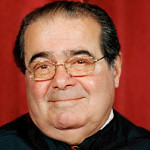
Justice Antonin ScaliaJustice Antonin Scalia’s death is big news in the larger political world, leaving a Supreme Court that may be evenly split on a wide range of politically and socially charged legal questions, writes G. Ray Warner in Greenberg Traurig’s GT Restucturing Review.

“Although one can view many bankruptcy law questions through a political or social policy lens, the Justices rarely see the cases they take in that way. Instead, they treat most of their bankruptcy appeals as technical questions of statutory interpretation,” the article says.

“Justice Scalia was very hostile to the idea of equitable powers and his opinion in Law v. Siegel threatened the very idea of bankruptcy courts as courts of equity. His departure leaves that side of the debate without a strong advocate and likely shifts the balance back towards more robust equitable powers in bankruptcy,” Warner writes.

Read the article.


Read This Before You Sign Any Contract

The hardest won rights are often the easiest to lose, and in the thickets of fine print surrounding every labor contract or credit card bill, all it takes is one careless signature to get roped into a deal with the devil — before you know it, you’ve already compromised your right to a fair trial or to speak out against an abusive boss, writes Michell Chen in The Nation.

“Despite American society’s reputation for litigiousness, there are as many things to sue over as there are ways to escape a lawsuit. In February, a coalition of lawmakers led by Senators Patrick Leahy and Al Franken introduced legislation to strengthen worker and consumer protections against binding arbitration — the obscure legal mechanism through which countless people have accidentally compromised their rights, by ensuring that a prospective future dispute with a company gets tracked into a separate legal system rigged with corporate impunity,” she writes.

In her article, Chen says the measure aims to shield access to the courts for workers and consumers by preventing corporations from trying to impose arbitration before any dispute even arises.

Read the article.


Handbook Contract Disclaimers & Mandatory Arbitration Policies

employee-handbook-765503_150A New Jersey court recently used the so-called contract “disclaimer” language in an employer’s handbook to preclude the employer from enforcing a mandatory arbitration program contained in that same handbook, reports Kevin C. Donovan in a Wilson Elser client alert.

He writes that employers who wish to enforce alternate dispute resolution procedures without falling into the same trap should consider the ruling. But, he wrote, the decision appears contrary to federal policy, enforced by a series of U.S. Supreme Court decisions that strongly favor enforcement of arbitration agreements.

In New Jersey, as in most states, employment is presumed to be “at will,” meaning that either the employer or the employee can freely terminate the employment relationship without a reason (cause) to do so. Under certain circumstances, however, express promises contained in an employer handbook can result in contractually binding terms and conditions of employment.

“While [the ruling] is a New Jersey decision, rulings in other states have also limited an employer’s ability to enforce an arbitration agreement in employee handbooks under some circumstances,” Donovan wrote.

Read the article.


How Much Will Erin Andrews Get Paid After Winning Her Lawsuit? Not $55 Million

Sportscaster Erin Andrews has triumphed in a Nashville courtroom and then ignited social media by winning a $55 million judgment against the stalker who filmed her nude and the hotel where the incident occurred, but her spectacular seeming victory will certainly turn into a far smaller payout, predicts The Hollywood Reporter.

“Her stalker, Michael Barrett, is on the hook for $28 million of that judgment, but Andrews will never see that money. ‘They can garnish his wages, but there’s essentially nothing to collect,’ says Rick Sanders, a litigator based in Nashville and a partner at Aaron & Sanders. ‘He’s a perfect example of a judgment-proof defendant,'” the report says.

The Nashville Marriott and the company that operates the hotel were held responsible for almost $27 million, but it’s unlikely that the plaintiff will collect that amount either.

Read the story.


The Plaintiffs’ Lawyer Chasing VW

VolkswagenSoft-spoken and bookish litigator Elizabeth Cabraser stood out from the cloud of alpha lawyers when made her low-key pitch to a federal judge as to why she should be selected to lead a massive consumer-fraud case against Volkswagen AG, reports The Wall Street Journal, via NASDAQ.

Her eloquence and focus on the clients contrasted with dozens of others who pitched the judge that day, bragging about their most recent newspaper awards, school credentials and trial prowess, the report says.

“U.S. District Judge Charles Breyer hours later named Ms. Cabraser to lead a team of 21 lawyers handling the plaintiffs’ cases, which consolidate more than 500 lawsuits. Volkswagen has admitted its diesel cars were installed with software meant to trick emissions tests and is working with regulators on a fix,” according to the report.

“The San Francisco Bay Area native has built a reputation for her encyclopedic knowledge of class-action law, effectiveness in oral arguments, and ability to diplomatically manage large cases, lawyers say.”

Read the story.


Prominent Long Island Lawyer Accused Of Pocketing $200,000 In Client Funds

A prominent Long Island attorney is accused of misusing up to $200,000 in funds that were awarded to his clients, reports CBS New York.

Steven Morelli, reported tolive in Manhasset and to own a home in Manhattan, is accused of pocketing settlement money meant for his clients, some of whom say they’ve been waiting for their payouts for more than a year.

“Somebody I know to be a good man and a good lawyer found himself in some trouble here,” Marc Gann, Morelli’s defense attorney, said to the news outlet. “I hope it doesn’t end this way. This is a guy who has fought for his clients for many years. I know the allegations are serious allegations, but my understanding is that everyone to this point has been made whole.”

One client was reportedly shorted $50,000 from a nearly $70,000 settlement. Irman Rubbani, a limousine driver in Brooklyn, told CBS2 that he has not seen “one penny” of the $50,000 Morelli owes him.

Read the story.


Job Applicant Waited Too Long to Sue Over Credit Report

The statute of limitations on an unsuccessful job applicant’s Fair Credit Reporting Act claim began to run when he discovered that his credit report had been pulled, not when he learned that the employer’s action was an FCRA violation, according to the U.S. Court of Appeals for the Sixth Circuit.

Richard A. Roth wrote in Wolters Kluwer‘s Law & Business website that the general rule is that a statute of limitations begins to run when the facts giving rise to a claim are discovered, and the FCRA adheres to that general rule. The case is Rocheleau v. Elder Living Construction, LLC, Feb. 18, 2016, Siler, E.

“The job applicant asserted that the two-year limit began to run not when he discovered that the background report had been ordered but rather when he discovered that doing so was an FCRA violation,” Roth explained. But the appellate court disagreed.

Read the article.


Killer Contract Clauses

ContractsBusinesspeople spend a lot of time and take a lot of pride negotiating deals, points out lawyer and author Jack Garson in the Huffington Post.

“They high-five when they get key points. But understand what it takes to win if there is a fight later. You only win a ‘feel-good’ battle in the negotiation. You win the real war in the contract. That’s where the killer contract clauses rule,” he writes.

He provides examples of contract language  that can make a contract much more favorable. “Contracts and the law are not about common sense. They’re about rules. Know them and win. Ignore them and forget about retiring on time.”

Read the article.


Texas Lawyers Sued for Allegedly Bankrolling BP Spill Scam

Two high-profile Texas attorneys were sued by a fishing boat captain who said they were involved in a scam to cheat BP Plc out of millions of dollars with false compensation claims for the Gulf of Mexico oil spill, reports Bloomberg.

Houston lawyer Tammy Tran said in a complaint Thursday that thousands of Vietnamese-American fishermen and women had their identities faked or stolen in the fraud, bankrolled by lawyers Bob Hilliard and John Cracken. Plaintiffs blame the lawyers in part for obstructing their efforts to pursue their own claims for payments under BP’s restitution program, the report says.

“Tran is seeking more than $100 million in punitive damages from Hilliard and Cracken to compensate the immigrants,” according to Bloomberg. “Many of them claim to have suffered mental anguish from “nightmarish memories” of Vietnam’s communist regime, revived by federal agents knocking on doors to investigate the identity thefts. Compensation is also sought for homes and businesses lost while waiting for BP to pay under its seafood accord.”

Hilliard denied the allegations.

Read the story.


Adversarial Cooperation – The New Legal Oxymoron?

Samantha Green, Esq.
Adam Bottner, Esq.
DTI

Cooperation - negotiation

As we move into 2016, many of us will be trying to keep the New Year’s resolutions that we made. Eat less carbs, read more, be more organized, call your parents more often, cooperate with your adversaries, etc…

Hold on, “cooperate with your adversaries”? Why would anyone ever want to do that? Well, if you’re a litigator, you may need to make this one of your resolutions for 2016. In the amendments to the Federal Rules of Civil Procedure that took effect on December 1, 2015 and apply to federal cases filed after that date, there is an acknowledgement of the role of cooperation amongst parties. That being said, several questions come to mind, with the primary thought, how far does a party need to go to be deemed cooperative?

“Cooperation”, according to Webster’s, is defined as “the process of working together to the same end”. “Adversary”, by definition, is “one’s opponent in a contest, conflict, or dispute”. So how do two adversaries cooperate? Putting these terms together is oxymoronic, kind of like jumbo shrimp. However, in order to advance the goals of the Federal Rules of Civil Procedure[1], as amended (“They should be construed, administered, and employed by the court and the parties to secure the just, speedy, and inexpensive determination of every action”), adversarial cooperation is now the standard that the judicial system is demanding. So in terms of the discovery process, how can you be a cooperative attorney without being a[n] (oxy)moron?

Cooperation is not a new concept within the framework of the FRCP. When the first uniform civil procedure rules allowing discovery were adopted in the late 1930’s, “discovery” was understood as an essentially cooperative, rule-based, party-driven process, designed to exchange relevant information. The goal was to avoid gamesmanship and surprise at trial.[2] Disciplinary Rule 7-101 of the ABA Model Rules (“Representing a Client Zealously”) states that “…a lawyer does not violate this Disciplinary Rule, however, by acceding to reasonable requests of opposing counsel which do not prejudice the rights of his client.” The overriding theme of the recent amendments to the discovery rules has been to open sharing of information by all parties to a case with the aim of expediting case progress, minimizing burden and expense, and removing contentiousness as much as practicable.[3] If counsel fail in this responsibility—willfully or not—these principles of an open discovery process are undermined, coextensively inhibiting the courts’ ability to objectively resolve their clients’ disputes and the credibility of its resolution.”[4]

Although the concept of cooperation was heavily emphasized during the rule drafting sessions, the word “cooperation” was not specifically used in the amended Rule 1. The phrase “cooperate to achieve these ends” was seriously considered, but the drafters feared collateral consequences from this verbiage, such as fostering more disagreements amongst the parties and parties blaming each other when it would lend to their respective advantage. A similar attempt at adding this type of verbiage was rejected in 1978 for the same reasons.

This time, the drafters did include a Committee Note to Rule 1 that states that “the parties share the responsibility to employ the rules” in that matter, i.e. to secure the just, speedy, and inexpensive determination of every action.[5] The Note further states that “most lawyers and parties cooperate to achieve those ends” and that it is important to discourage “over-use, misuse, and abuse of procedural tools that increase cost and result in delay.”[6] However, by declining to use the word “cooperation”, there is little guidance on where strategy and cooperation merge.

Now that we know we have to “cooperate”, the question remains of how to do so, especially with little to no guidance on what “cooperation” means. Speaking of New Year’s resolutions, many litigators resolved in 2015 to use predictive coding more in 2016 (seriously). More and more courts have stamped predictive coding as an acceptable method to cull and review data, and the judicial system has recognized the benefits predictive coding has over linear review. However, predictive coding is changing the paradigm of cooperation and work product. With the increased use of predictive coding, it seems there will be more questions about how much cooperation is enough. For example, non-responsive documents, considered work product before predictive coding, are now being requested by opposing counsel under the guise of cooperation and transparency. Does the use of predictive coding now change the definition of “work product”? With the courts strongly urging attorneys to cooperate with opposing counsel in order to streamline the discovery process, what exactly does that mean for counsel? How much information needs to be shared about the technology used or the search methodology employed in order to save costs, while still protecting counsel’s legal strategy? Can sanctions be handed down for lack of cooperation in this context?

The new federal rules do not address these questions. The drafters of the amendments to the federal rules, when discussing cooperation, took their cue from The Sedona Conference, a well-respected eDiscovery think tank frequently cited by the courts, which authored “The Cooperation Proclamation”, which does speak to predictive coding. The proclamation discusses cooperation broadly and, with regard to predictive coding, it states:

“Th[is] proclamation generally encourages that parties “reach agreement on automated search methodology…[to] locate and produce the most relevant ESI”, including keeping records and comparing results while testing different search methods in an effort to agree on the most suitable methods.”

The Seventh Circuit Electronic Discovery Pilot Program, which was formed to consider what can be done to reduce the costs of electronic discovery, and the costs of discovery and litigation more generally, also speaks to cooperation.[7] Principle 1.02 of the program states, “An attorney’s zealous representation of a client is not compromised by conducting discovery in a cooperative manner” and further “the failure of counsel or the parties to litigation to cooperation facilitating and reasonably limiting discovery requests and responses raises litigation costs and contributes to the risk of sanctions.”[8]

The courts have begun to address the issue of cooperation within the predictive coding paradigm, but with mixed results. In the Biomet case[9] the Defendant employed keyword searching and predictive coding to cull the 19.5 million documents that were originally collected. The Plaintiffs asked the Defendant to identify the entire seed set used to train the algorithm so that it could better suggest additional keyword terms. The Defendant refused to identify the seed set, representing only that all discoverable documents used to train the algorithm had already been disclosed. The Court decided that irrelevant documents used to train the system are not discoverable and the Defendant is not required to disclose these documents. However, the Court found Defendant’s refusal to cooperate troubling and urged Defendant to rethink its refusal.

Most litigators do not want to turn over non-relevant documents, but they also do not want to run afoul of the court. So, the Biomet decision creates a conundrum for counsel—it seems to be saying that the party using predictive coding does not need to turn over non-responsive documents used to train the system, but that party will then be looked upon as being uncooperative.

In Progressive Cas. Ins. Co v. Delaney, the parties “cooperatively” came together and jointly stipulated to an ESI protocol where predictive coding was not mentioned[10]. After signing the stipulation, the Plaintiff collected 1.8 million documents and applied search terms, but it only reduced the potentially responsive population to 565,000 documents. After the start of review, Plaintiff’s counsel found manual review to be too time consuming and costly so it engaged in predictive coding without consulting the Court or the Defendant. The Court said that where there has been no cooperation and little transparency in drafting a predictive coding methodology, it is reluctant to deviate from the protocol already negotiated and agreed upon. The Court required the Plaintiff to produce all 565,000 documents without review, with a clawback provision for produced privileged documents and permitted the Plaintiff to apply privilege filters to identify and withhold documents most likely to be privileged.

So, courts seem to be accepting of the use of predictive coding, especially when the parties jointly agree to an ESI protocol beforehand. However, as the Progressive case warns, one party’s unilateral deviation from the agreed upon protocol may be perceived as uncooperative. Best practice would be to always get agreement before proceeding with predictive coding.

An interesting twist to the question of cooperation in the use of predictive coding came in the Kleen Products case[11].  The Defendants used a Boolean search method, iteratively testing and refining search terms to be used, using sampling to measure the results, and validating to ensure accuracy. Almost a year after discovery began, Plaintiffs criticized specific details of Defendants’ methodologies, further arguing that “key word searching” is inherently inadequate, outdated, and flawed. Plaintiffs asked the district court to require the use predictive coding (“content-based advanced analytics”), which would have essentially required Defendants to completely start over. Emphasizing Sedona Principle 6[12], the court urged the parties to work cooperatively to consider whether the Defendants’ search methodology might be refined to satisfy Plaintiffs without disregarding all of Defendant’s work. The parties continued to meet-and-confer and, almost five months after the hearings, they reached an agreement regarding search methodology for the first phase of discovery.

So, as litigators, let’s all follow through on our common resolution for 2016 to make a sincere effort to cooperate in discovery with our opposing counsel (for those of you who did not make such a resolution, you may want to get on that). What “cooperation” means specifically in the predictive coding context has not been answered conclusively, but transparency should be paramount (as long as it doesn’t compromise strategy). While we’re at it, let’s all follow through on our resolutions to eat less carbs, read more, be more organized, and call our parents more often.

About the Authors

Samantha Green is an eDiscovery consultant for DTI. She has advised, written and spoken on all phases of the electronically stored information (ESI) life cycle. She has worked on many government investigations, second requests and litigation crossing all spectrums. Prior to DTI, Samantha was eDiscovery Attorney for Blank Rome LLP.

Adam Bottner is an attorney and director of business development for DTI. Bottner works with clients to scope and implement workflow solutions for a wide range of eDiscovery projects, including SEC and DOJ investigations and complex civil litigation matters. Bottner is a frequent author and speaker at continuing legal education programs, including programs relating to eDiscovery management and litigation readiness. Bottner chairs the Chicago Bar Association’s Cyber Law & Data Privacy Committee and is also an adjunct professor at IIT Chicago-Kent College of Law, where he is currently teaching an electronic discovery class- eDiscovery 495.

About DTI
DTI is a legal process outsourcing (LPO) company serving law firms and corporations around the globe.

[1] Federal Rules of Civil Procedure Rule 1.

[2] The Sedona Conference® Cooperation Proclamation at page 5.

[3] Board of Regents of University of Nebraska v BASF Corp. No. 4:04-CV-3356, 2007WL 3342423, at *5 (D. Neb. Nov. 5, 2007).

[4] Id.

[5] Attachment to Memorandum from John D. Bates, Sec’y, Judicial Conference of the U.S., to Hon. John G. Roberts, Chief Justice U.S. Supreme Court (Sept. 26, 2014).

[6] Id.

[7] Seventh Circuit Electronic Discovery Pilot Program, page 7.

[8] Principle 1.02 of the Seventh Circuit Electronic Discovery Pilot Program.

[9] In re: Biomet M2a Magnum Hip Implant Products Liability Litigation, 2013 WL 1729682 (N.D. Ind. Aug. 21, 2013).

[10] Progressive Cas. Ins. Co v. Delaney, 2014 WL 2112927 (D. Nev. May 20, 2014).

[11] Kleen Products LLC, et al. v. Packaging Corporation of America, et al., 2012 WL 4498465 (N.D. Illinois, Sept. 28, 2012).

[12] Responding parties are best situated to evaluate the procedures, methodologies, and technologies appropriate for preserving and producing their own electronically stored information.



Preservation Case Law – Winter 2016

Preservation Case Law– Winter 2016 Zapproved Inc. has made available for download a new publication called The Word from the Top: New Rules Amendments are a “Big Deal.” This resource covers the latest opinions and trends in preservation case law.

“As we enter 2016, it marks the beginning of a new era in the federal civil judiciary with the implementation of the revisions to the Federal Rules of Civil Procedure on December 1, 2015,” the company says. “This was the culmination of a five-year process that showed unprecedented engagement from all parties in the civil justice system.”

Download to learn more about these most recent preservation cases:

  • United States v. Vaughn
  • Warren v. AmChem Prods
  • West v. Talton
  • Cook v. Tarbert Logging, Inc
  • … and more

Download the resource.


Judge Threatens Subpoena to Force Clinton to Turn Over Entire Email Account

Photo by Marc Nozell

Photo by Marc Nozell

A federal judge questioned the Obama administration’s “good faith” in helping keep former Secretary of State Hillary Clinton’s emails secret for six years and said he may end up issuing a subpoena to force her to turn over her entire account to the government, The Washington Times reports.

Judge Emmet G. Sullivan said he will grant limited discovery to Judicial Watch, a conservative legal group that has sued to get a look at Clinton’s emails.

“That could give the group — and the broader public — answers as to who approved Mrs. Clinton’s unique arrangement, who else in government knew about it and why they shielded it for so long,” the report says. “It also could force Mrs. Clinton to answer questions about how she sorted through her account and decided which messages she didn’t want to turn over to the government.”

Read the article.