Beck Redden Attorney Passes Bar, Saves Veteran from Eviction

Joshua LeeBeck Redden associate Joshua D. Lee received news that he passed the bar on Friday, April 29, 2016, was sworn in on May 2 and almost immediately used his new license to help a veteran avoid eviction.

Lee volunteered at the Houston Bar Association’s Veterans Legal Initiative Clinic, and consulted with a veteran who had a bench trial set for the morning of May 3, whereby he was to be evicted from his rental home. The veteran participates in a program through which the government pays a significant portion towards his rent each month for the remainder of this life; however, he would become ineligible to continue receiving funds with an eviction on his record.

Read the article.


Supreme Court Rejects Challenge to Seattle Minimum Wage Law

The U.S. Supreme Court has rejected a challenge by business groups to Seattle’s law raising its minimum wage to $15 an hour, a move echoed by other locales, in a case focusing on how the ordinance affected local franchises like McDonald’s, reports Reuters.

The high court action left intact a lower court ruling backing the measure.

Reuters says supporters of the wage raise see the ruling as a defeat for “the big business lobby” that has taken aim at minimum wage hikes.

Read the article.


Quinn Emanuel Sues Hillel Chodos’ Estate

Los Angeles-based Quinn Emanuel law firm and two of its partners sued the estate of high-profile attorney Hillel Chodos, claiming the famous litigator crossed the line in one of the final cases of his career, reports Courthouse News.

Chodos, one of the highest-paid attorneys in Los Angeles, represented celebrities and politicians in a career in which he handled more than 1,000 cases before he died at 81 in 2015.

Quinn Emanuel Urquhart & Sullivan and its attorneys Steven Madison and Michael Lifrak sued Chodos’ estate and its executor, Rafael Chodos, on April 22 in Superior Court.

The complaint filed in Los Angeles Superior Court stems from a case that began in 2009, when Chodos was representing Karen Christiansen in a lawsuit against the Beverly Hills Unified School District, represented by Quinn Emanuel, the report says. Chodos filed a suit against the firm and the school district, alleging malicious prosecution, fraud and corruption. The sole purpose of the suit was to prevent Quinn Emanuel from continuing to represent the school district, giving him an advantage, the complaint says.

Read the article.


The Ultimate Expert Witness Objection Checklist

By
The Expert Institute

Being familiar with objections to expert testimony is the best way to protect the credibility of your expert’s testimony and also challenge that of the opposing expert’s. From discovery to trial, there are several occasions where objections as to an expert’s opinion are proper. Below is a list of possible objections to look over before your next case involving an expert witness.

Deposition Objections

An expert’s deposition is an important part of their overall testimony. In addition to its scientific and technical nature, it is sworn testimony that can be used to later impeach an expert witness at trial. It is important to note, however, that a deposition is still different than trial and there are a number of objections that can be properly raised with respect to an expert’s deposition testimony. For example, counsel can object when a question asks the expert for:

1. Legal analysis over factual information

Questions that ask expert witness opinions about the legal analysis of the case rather than purely factual information are objectionable on the grounds that the testimony qualifies as attorney work product protected under FRCP 26(b)(4)(C). The Advisory Committee notes “[t]he refocus of disclosure on “facts or data” [changed from “data and other information” in 1993] is meant to limit disclosure to material of a factual nature by excluding theories or mental impressions of counsel.”

2. Privileged information

It is important to note that any objection based on privilege must be made or it is waived for the party that failed to raise it on the record.

3. Testimony outside the scope of expert’s assigned task

As a general matter, questions that attempt to elicit information outside the scope of the witness’ expertise are improper. Bailey v. Meister Brau, Inc., 57 F.R.D. 11, 14 (N.D. Ill. 1972). For example, in a medical malpractice case involving a faulty device, an expert may be familiar with other similar devices and face questions about his or her opinion about devices from other manufacturers. When appropriate, counsel can make the objection that the question is outside the scope of the expert’s assigned task.

4. Confidential information protected from persons at the deposition

Under FRCP 26(c)(1), a party can move for a protective order of parts of an expert’s testimony that may require disclosure of sensitive and protected information. For example, Rule 26(c)(1)(G) says “[t]he court may, for good cause, issue an order to protect a party or person from annoyance, embarrassment, oppression, or undue burden or expense, including…requiring that a trade secret or other confidential research, development, or commercial information not be revealed or be revealed only in a specified way.” This is an important rule to remember when dealing with terms of a business contract or client medical history. The expert witness may answer when the certain persons designated in the protective order leave the deposition room.

5. Answers already provided by the expert earlier in the deposition

“Asked and answered” is a standard objection during depositions when the deponent is repeatedly asked a question they have answered. This is especially important if the question is asked for any other purpose except clarification of earlier testimony, for example if the question is repeated to harass or otherwise embarrass the witness.

6. Mischaracterization of earlier testimony

In some instances during an expert’s deposition, opposing counsel may phrase a question by misstating the expert’s earlier testimony. Especially where scientific or otherwise technical data and conclusions are concerned, it is important to clear these mischaracterizations up on the record when they occur.

7. Leading or coaching of the expert witness by opposing counsel

Another standard objection when an expert is under direct examination by opposing question. The expert is there to testify to factual matters and questions presented should not presuppose or suggest the answer. This sometimes occurs when the expert asks the interviewer for clarification about a question.

8. Improper form of a question

“Objection to form” is a vague and broad objection, commonly raised during depositions. Improper form objections can fall into many categories, where some jurisdictions require the objecting party to note a specific ground and others allow a general “objection to form.” A common example is when an expert is asked a compound question, meaning a series of multiple questions without giving the witness an opportunity to answer each individually. Whenever an objection to form is raised, the witness is still required to answer but the objection notes for the record that the form of the question was improper for being:

  • Compound
  • Prejudicial/Misleading
  • Ambiguous
  • Argumentative
  • Calling for speculation
  • Confusing

9. Opposing party’s failure to compensate the expert

The federal rules require that experts be properly compensated for providing deposition testimony under FRCP 26(b)(4)(E)(i)-(ii). When the deposition is at the request of opposing counsel, an objection is proper where an expert has not been fairly compensated for the separate time and work to prepare specifically for the deposition.

Pretrial and Trial Objections

1. Motions in limine

Typically, motions to exclude or otherwise challenge expert testimony will be raised during pretrial proceedings via motions in limine. The federal rules govern expert witness testimony under Rule 26 and provide the grounds for which an expert’s testimony can be excluded, including:

  • For failure to properly designate an expert witness
  • Failure to submit the expert’s report in a timely manner
  • Failure to submit required documents like the expert’s CV or publications
  • Failure to provide any notes or related material used by expert to form the expert opinion

2. Expert witness will not assist the trier of fact

Under the Federal Rules of Evidence 703, an expert’s opinion is admissible only if the witness’ expertise and testimony will assist the trier of fact in understanding the case.

3. Expert lacks the proper qualifications

Scope: A scientific background is not required for an expert to qualify as an expert witness. However, it is important to know the scope of expert’s knowledge as it applies to the case. For example, an individual that was a teacher for deaf children for over 30 years does not automatically render the witness an expert in deaf people’s heightened sense of sight as a general fact.

Credentials: If an expert’s particular background or expertise is not appropriate for the issues on which he or she is expected to testify, then a motion in limine is proper. Similarly, if there are issues with the representations on the expert’s CV, these are often raised pretrial as well.

4. Reliability of principle and methods (Daubert challenges)

Expert report methodology: A Daubert motion is the most direct way to challenge the reliability of an expert’s opinion. Daubert v. Merrell Dow Pharmaceuticals, Inc., 509 U.S. 579 (1993), and its progeny set the standards for the admissibility of expert reports and testimony. The Daubert Court set out factors to be considered in determining whether an expert’s report is reliable:

  1. whether the expert’s theory can and has been tested;
  2. whether the theory has been subjected to peer review and publication;
  3. the known or potential rate of error of the particular scientific technique;
  4. whether the technique is generally accepted in the scientific community

Kumho Tire Co., Ltd. v. Carmichael, 526 U.S. 137 (1999) expanded Daubert to include non-scientific expert testimony.

In 2000, the FRE 702 was changed to essentially codify the Daubert factors. For tips on successfully handling Daubert challenges, look here.

If the objections above are not raised in a pre-trial motions, they may still be raised when the expert witness is tendered at trial. Admissibility of expert witness testimony is governed by FRE Rules 702-705.

In addition to challenging the witness’ qualifications, scope of expertise and and reliability of principles and methods used to form the opinion, counsel can object when a question asked at trial:

  1. Assumes facts not in evidence
  2. Lacks the proper foundation
  3. Seeks an answer already admitted by stipulation. See FRE 403.

Expert witnesses are retained to explain technical or scientific subject matter and help the trier of fact to understand certain aspects of the case. FRCP 26 protects attorney-expert communications and governs the disclosure of expert witness testimony. FRE Rules 702-705 govern the admissibility of expert opinions.



Recommind and Hire Counsel Expand Alliance

E-discovery documentsRecommind, a leader in advanced analytics software, today announced that its alliance partner, Hire Counsel, has offered a unique fixed-price document review model to solve price uncertainty issues in eDiscovery. The new pricing model strengthens Recommind’s Alliance Partner Program, which is a global ecosystem of specialized services providers powered by Recommind’s award-winning Axcelerate eDiscovery and investigations platform.

By combining continuous machine learning, pervasive project management and relevancy predictions generated by Axcelerate, Hire Counsel has been able to deliver first pass review at a fixed price, ensuring superior results on budget, on time, Recommind said in a release. Given the successful implementation in its Detroit office, Hire Counsel will make the offering available in its review centers across the country, eliminating the risk of price overruns.

The release continues:

“Hire Counsel’s expert project management and review resources have enabled them to complete fixed-price Axcelerate document review projects with great success,” said Ellery Dyer, Vice President of Channel Development, Recommind. “Budget clarity and locked-in savings are compelling benefits of Hire Counsel‘s approach.”

“We are excited to offer this innovative pricing model to meet the needs of our clients in today’s new legal economy” said Kevin Clark, Executive Managing Director of Discovery Services, Hire Counsel. “In partnership with Recommind, we can empower corporate clients to dependably budget for eDiscovery costs.”

To learn more about this unique model, join Hire Counsel’s Kilian Connolly and Kevin Clark and Recommind’s Hal Marcus for a webinar titled People, TAR, & Predictability: Achieving Cost Certainty in Review. The webinar will take place Thursday, April 28, at 10 a.m. PT. A case study is also available for download here.

About Hire Counsel

Hire Counsel is a leading innovative services provider to law firms, corporations, and government agencies for today’s new legal economy. As your trusted provider we tailor a legal solution that delivers superior and profitable results. Hire Counsel’s portfolio of services includes temporary legal support to right-size discovery teams, secondment services, specialists in compliance, contract administration, corporate transactions, research analysis and government, or permanent hires. Founded in 1993, Hire Counsel operates in more than 20 U.S. markets from 12 legal center offices, 10 domestic interview hubs, and five discovery centers. Learn more at HireCounsel.com or follow on Twitter @HireCounsel .

About Recommind, Inc.

Recommind builds breakthrough software solutions that harness the power of information to solve concrete business problems. Our patented innovations at the nexus of law, big data, and predictive analytics help extract critical insights from massive volumes of unstructured data—for eDiscovery, contract analysis, and enterprise knowledge management. With a world-class professional services team across the globe, Recommind is trusted by renowned corporations (BMW, Cisco, Swiss Re), premier law firms (Clifford Chance, Morgan Lewis, White & Case), and key regulatory agencies (SEC, DOE, FINRA). Recommind is headquartered in San Francisco and has offices in New York, Boston, London, and Bonn, Germany. For more information go to www.recommind.com.


Agreement to Arbitrate May Not Require a Written Contract

From two different courts in two different states on two very different claims come the same concept: an agreement to arbitrate may be binding even without a signed contract, according to a report by Stan Martin on the Commonsense Construction Law website.

“One comes via an unsigned law firm partnership agreement, and the other via an agreement placed on the wrapping of a bundle of roofing shingles, held to be binding on the property owner who hired the contractor who engaged, in turn, the subcontractor purchasing the shingles,” he writes.

“These cases serve as a reminder that (1) a person or company can be bound by a contract without signing that contract, based on other actions, and (2) if that (unsigned) contract calls for arbitration, the person/company is bound to arbitrate disputes that arise under the contract.”

Read the article.


Employer’s Failure to Sign Agreement Torpedoes Its Motion to Compel Arbitration

Employment contractA fundamental principle of contract law is that a written contract is an agreement in writing that serves as proof of the parties’ obligations, writes Virginia Whitehill Guldi of Zuckerman Spaeder LLP. What happens, however, when the parties forget some of the niceties of formalizing a written contract?

For one answer, she offers the recent decision in the case of Shank v. Fiserv, Inc., in which the Eastern District of Pennsylvania addressed Fiserv’s motion to dismiss and compel arbitration at the outset of the case.

In that case, employee Shank had been dismissed after returning from a medical leave. The company cited a reorganization, but the plaintiff claimed proffered reason was pretextual and that she had been fired in violation of various federal laws, including the Americans with Disabilities Act, the Family Medical Leave Act, and Title VII.

“Fiserv sought to dismiss the case and force arbitration, citing a ‘Mutual Agreement to Arbitrate Claims’ that Ms. Shank had signed when she was hired and that would have contractually obligated her to arbitrate her claims. However, Fiserv’s argument had a flaw, said Ms. Shank, because it did not sign the agreement,” Guldi wrote.

The court agreed with the plaintiff.

Read the article.


Sandy Hook Families’ Lawsuit Against Gun Makers Gets Trial Date

A potentially precedent-setting lawsuit against gun manufacturers on behalf of families of those killed in the Sandy Hook school shooting will move forward to the discovery process, a Connecticut judge ruled Tuesday, according to a report on CNN.

The trial is set for April 3, 2018. The ruling opens the way for depositions and potential access to internal documents from Bushmaster Firearms and Remington.

CNN says this would be the first lawsuit of its kind to reach the discovery phase after the enactment of the 2005 Protection of Lawful Commerce in Arms Act, or PLCAA, according to experts.

“The companies contend they are shielded under the federal legislation, which absolves gun manufacturers from liability if a firearm is ‘misused’ in a crime to kill people.” the report says.

Read the article.


Lawyers Accused of Facebook Spying Can Face Ethics Complaint, Top NJ Court Rules

Computer security - cyber -privacy - lockThe New Jersey Supreme Court ruled Tuesday that two defense lawyers accused of spying on a plaintiff’s Facebook page can be prosecuted for attorney misconduct, according to a report in The Wall Street Journal.

The court described the case as involving a “novel ethical issue.”

“Two defense attorneys in New Jersey are accused of snooping on the private Facebook account of a plaintiff suing their client,” the report says. “The Facebook account was at first publicly viewable. But after the plaintiff tightened the settings and put his profile page behind a privacy wall, the lawyers didn’t stop monitoring it. A paralegal at their firm was able to get access by sending a Facebook friend request to the plaintiffs without revealing her employer.”

Read the article.


Legal Group Poised to Quiz Clinton Aides About Email Server

The State Department has agreed to a conservative legal group’s request to question several current and former government officials about the creation of Hillary Clinton’s private email system, reports the Associated Press.

A judge granted the group, Judicial Watch, limited discovery to ask the officials why Clinton relied on an email server in her New York home during her tenure as secretary of state.

If the judge approves of the agreement, lawyers from Judicial Watch will be allowed to depose Clinton’s top aides, including former chief of staff Cheryl D. Mills, deputy chief of staff Huma Abedin and undersecretary Patrick F. Kennedy, the report says.

Read the report.


Court Rules Insurer’s Privacy Policy Can Give Rise to Breach of Contract Claim

Terms conditions contractsA recent decision from the Northern District of Illinois illustrates the pitfalls that could arise from current insurance industry practices involving the issuance of privacy statements and insurance policies if done without the appropriate precautions, according to a report by Carol J. Gerner and Cinthia Granados Motley for Claims Journal.

“The process of issuing an insurance policy, either directly or through an employer group, requires care and deliberate action when it comes to issues of proper integration, documentation and transmittal,” they write.

“In Dolmage v. Combined Ins. Co. of Am., (No. 1:14-cv-3089, N.D. Ill. Feb. 23, 2016), the court denied the defense motion to dismiss a breach of contract claim based on a ‘Privacy Pledge’ document that was included in insurance policy documents provided to employees of Dillard’s department store (Dillard’s). The decision raises a novel theory by plaintiffs and warrants attention given the number of ‘privacy statements’ consumers receive in the mail every day from banks and credit card issuers and the use of third-party vendors in the management of personal data.”

Read the article.


Court Won’t Enjoin Physician Who Breached Non-Compete and Consented to Injunction

A physician signed a non-compete covenant, agreed to be enjoined if he breached, and allegedly did breach. But when his former employer asked a Providence, Rhode Island Superior Court judge to enter an injunction, the judge refused to prevent patients from being treated by a doctor of their own choosing, reports of Seyfarth Shaw on the firm’s Trading Secrets blog.

The case involved a physician employed by a provider of health care services principally to nursing home residents. He signed an employment agreement with a non-competition covenant but several years late, he left the employer but continued treating its clients.  The company sued him and sought an order preventing him from competing with the provider.  The judge ruled, however, that the requested order would violate Rhode Island public policy.

Read the article.


Abbott Wins in $1 Billion Trial Over Marketing of Stents

Abbott Laboratories didn’t cause medical providers to submit false payment claims to Medicare for unapproved stents, a Texas jury ruled, thwarting a whistle-blower’s lawsuit seeking as much as $1 billion, reports Bloomberg.

A former salesman for Abbott’s predecessor Guidant claimed the company pushed bile duct stents that were intended for short-term purposes for more complex vascular use. His 2006 lawsuit on behalf of the U.S. government accused the company of encouraging doctors and hospitals to code bills to Medicare falsely.

“Abbott, which acquired Guidant’s stent business in 2006, denied during the trial in Dallas federal court that it induced anyone to submit false claims to Medicare. Its lawyers told jurors the use of biliary stents for peripheral vascular or arterial disease was accepted medical practice and Medicare knowingly approved payments,” Bloomberg reports.

Read the article.


CFTC Issues $10M Whistleblower Award

WhistleblowingThe U.S. Commodity Futures Trading Commission (CFTC) Whistleblower Office announced on April 4 that it would issue an award of more than $10 million to a whistleblower whose information led to a successful CFTC enforcement action, reports Katz, Marshall & Banks on its website.

“The award was the largest the agency has ever issued. The recipient of the award and the company penalized were not disclosed — steps purposefully taken by the CFTC to protect the confidentiality of whistleblowers who are concerned about the effect that blowing the whistle may have on their career,” the firm wrote.

“Awards like this one show whistleblowers that blowing the whistle is worth the risk, and will go a long way toward solidifying the CFTC Whistleblower Program,” said Lisa J. Banks a partner in the firm.

Read the article.


Are they Worth Price of Paper They’re Printed On? – Ubersization of Arbitration Clauses

Arbitration agreements are evaluated on a case-by-case basis, writes Vanessa L. Goddard, of counsel with Steptoe & Johnson.

While many are still disfavored, they are more likely to be upheld if they are not unconscionable, she writes in an article posted on the firm’s website.

“The procedural component of the unconscionability analysis usually deals with the formation of the agreement itself. This includes the characteristics of the parties (e.g., age, literacy, sophistication), the manner and circumstances under which the contract was executed, and whether terms of the agreement are hidden or complex, among other things.  The substantive component looks at the unfairness of the agreement,” according to the article.

She provides some tips that make arbitration agreements more likely to be upheld by courts in the employment context.

Read the article.


Arbitration Under Fire: Brace for Less Contract Freedom and More Class Actions

ArbitrationEncouraged by consumer groups and trial lawyers, federal regulators are pushing for limits on arbitration provisions in consumer contracts, writes George Calhoun in IfrahLaw’s FTC Beat.

“At its core, the debate is about whether companies may compel consumers to arbitrate rather than litigate disputes and – perhaps more significantly – bar consumers from class action remedies as part of the arbitration requirement,” he writes.

“We will not be surprised to see some companies restrict their consumer offerings or increase prices to account for these new rules.” the article continues. “If you work in American business, we urge you to take notice of these changes and review how to protect your company from undue litigation in future contracts.”

Read the article.


Donald Trump Settled a Real Estate Lawsuit, and a Criminal Case Was Closed

Trump SoHo

Photo by Jay Greinsky

Donald Trump’s campaign for the Republican presidential nomination rests on the notion, relentlessly promoted by the candidate himself, that his record of business deals has prepared him better than his rivals for running the country. But an examination of legal maneuvers around a 46-story luxury Trump condominium-hotel in Lower Manhattan provides a window into his handling of one such deal and finds that decisions on important matters like whom to become partners with and how to market the project led him into a thicket of litigation and controversy, writes Mike McIntire for The New York Times.

The buyers of some units asserted that they had been defrauded by inflated claims made by Trump, his children and others of brisk sales in the struggling project. Contrary to his claims that he rarely settles litigation, he and his co-defendants settled the case in November 2011, agreeing to refund 90 percent of $3.16 million in deposits, while admitting no wrongdoing.

A separate lawsuit claimed that Trump SoHo was developed with the undisclosed involvement of convicted felons and financing from questionable sources in Russia and Kazakhstan, the report states.

Read the article.


The Plaintiff’s Attorney’s Search for Driver Fatigue to Inflate Value of Case

By Mark Perkins
Perkins & Associates, LLC

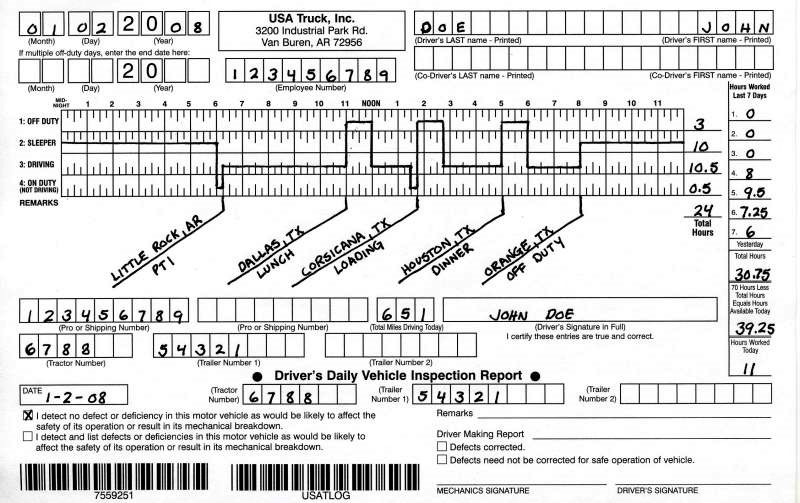
In any instance involving the tragic loss of life or serious injury in commercial truck collisions, extensive discovery is required and one of the critical areas focuses on proof of hours of service violations. It then focuses on how the proof of chronic violation of hour of service safety regulations can provide the basis for proof not only of negligence, but punitive damages against the company and driver.

drivers-log

Where the driver’s log and grid show 3.5 hours driving time, but shows a route of 300 miles being covered, one can conclude:

  • The driver has lied about the time he spent driving, or
  • The driver was flagrantly speeding throughout his route (a truck obeying speed limits on highways will average 50 miles in an hour).

If a driver shows a 24-hour period of duty and begins with “driving” as the first entry, the driver has probably cheated on listing his duty time. It usually takes from 30-60 minutes for a driver to report to duty to the yard, get all of his paperwork, inspect his load, and perform the required inspections on his rig.

Where a driver logs 11 hours of driving time for the preceding 24-hour period and fails to get or log 10 solid hours of “off duty” time before resuming duty and driving, all of his driving for the following day is illegal and in violation of the safety regulations set forth in 49 C.F.R. 395.3.

Time and location of sequential fuel receipts can be important in showing the impossibility of compliance with the hours of service regulations in 49 C.F.R. 395.3.

Plaintiff’s attorneys investigating hours of service are suspicious that hours of service have been violated and records of driver’s duty status have been falsified until proven otherwise. In evaluating and defending claims for trucking companies, the defense attorney needs to THINK like his opponent.

Review and careful analysis  of the following documents helps cross reference criteria to check for validity or invalidity of driver’s duty hours:

  1. Driver’s log as required by 49 C.F.R. 395.8 for the day of the collision.
  2. Driver’s logs for defendant driver for the 6 months preceding the collision in question.
  3. Graph Grid required by 395.8 (g) for that day and for the 6 months preceding the collision.
  4. Records of automatic on-board recording devices required by 49 C.F.R. 395.15 for the day of the collision and the 6 months preceding.
  5. All payroll, or payment logs, or records for that driver for the time period, including the collision and 6 months prior thereto.
  6. All W-2’s for the driver in question for the withholding period, which includes the collision in question, and all reporting periods for 6 months prior thereto.
  7. All fuel receipts incurred from the time the truck left the carrier’s premises until the time of the collision.
  8. All Bills of Ladings and manifests pertaining to property transported and/or delivered from the time the truck left the carrier’s premises until the time of the collision.

The reason plaintiff’s attorneys ask for six months of logs is because of the belief that driver and company’s violation of hours of service regulations fall into a pattern. Examination of the logs and data for the prior 6 month period may  reveal those patterns. Where such patterns exist, an argument will be made of flagrant disregard of safety regulations, which “needlessly endanger” the general public (for those familiar with the “reptile theory” the phrase “needlessly endanger” is common).

The following post was written by a plaintiff’s attorney and is common refrain among plaintiff’s counsel:

49 C.F.R. Part 395 protects the public from the hazard of fatigued drivers operating huge trucks in their midst.  The hours of service regulations have been written from the blood of innocent citizens massacred by huge trucks at the hands of drivers impaired from fatigue.  Where a driver and carrier intentionally violate the safety regulations designed to guard against fatigue, they have shown a conscious disregard for the safety of the public using our highways.  Where such a fatigued driver has caused injury or death, the driver and carrier have acted with conscious and reckless disregard for the life and safety of the public on the highways.  This conduct justifies a punitive damage award against them, in addition to compensatory damages.

A bill approved by Congress on  Dec. 3, 2015 calls for a Federal Motor Carrier Safety Administration study on truck drivers’ long commutes and the safety hazards they present.

The $305-billion Fixing America’s Surface Transportation Act requires that  the U.S. Department of Transportation agency to track workforce commutes of two hours or more and provide an analysis of them in 18 months.

The section of legislation inserted into the potential new law is a direct result of the crash that almost killed former Saturday Night Live cast member Tracy Morgan. It states:

“Section 5515 requires the Administrator of the FMCSA to conduct a study on the safety effects of a motor carrier operator commuting more than 150 minutes. On June 17, 2014, a tractor-trailer struck a van near Cranbury, New Jersey, killing one person and injuring several others. According to the National Transportation Safety Board, the truck driver had been awake more than 24 hours at the time of the crash. In addition, the Georgia-based driver had driven 12 hours overnight to his job in Delaware before starting his shift. The study shall address the prevalence of long commutes in the industry and the impact on safety.”

If you’re a trucking defense attorney and you don’t evaluate the case like a plaintiff’s attorney would, you are not providing diligent representation.

If   you’re a trucking company or insurance company and you get offended by your legal representative diligently looking for problems and thinking like his opponent, you need to get over it. Your defense attorney is trying to help your company survive and thrive in this litigious society.  Be grateful that your legal counsel is a looking for problems. It’s better to know in advance than to be surprised.


Day Pitney and Cohen Seglias Create Collaborative Team for Title IX Investigations

Day Pitney LLP and Cohen Seglias Pallas Greenhall & Furman PC announce the launch of their joint Title IX Investigations Initiative. This initiative will allow the firms to provide both existing and new clients greater services in the wake of a growing number of Title IX investigations, the firm says.

Title IX, enacted in 1972, prohibits discrimination on the basis of sex in federally funded educational programs and activities. This is a growing area of concern for many public and private schools, colleges and universities. Besides applying to faculty employment and sport team participation, Title IX also applies to how academic institutions are handling complaints of sexual harassment and sexual violence.

“Our collaborative practice will promptly investigate allegations and provide the results of that investigation to the academic institution – the idea is to combine the best practices from law enforcement and internal corporate investigations with experience in working within the unique setting of academia,” says Day Pitney attorney Steven Cash, who has served at the federal and state level in the executive, legislative and judicial branches, including the Manhattan District Attorney’s Investigations Division, and as Counsel on the Senate Committee on the Judiciary.

The New York Times recently reported how some colleges have increased budgets and have even hired teams within schools to handle the increasing number of cases in an article, “Colleges Spending Millions to Deal With Sexual Misconduct Complaints.”

“Our goal is to provide academic institutions with a team that has the necessary skills that are not generally found in educational facilities, including prosecutorial, investigative, and Title IX litigation experience,” said Paul Thaler, Managing Partner of Cohen Seglias’ Washington, DC office. “ In addition we understand the sensitivity required by academic institutions to oversee these investigations.”

The Title IX Investigations Initiative’s team also includes Christopher Carusone, former Chief Deputy Attorney General in the Pennsylvania Attorney General’s Office and Secretary of Legislative Affairs and Executive Deputy General Counsel in the Pennsylvania Governor’s Office; Stanley A. Twardy, Managing Partner at Day Pitney and former United States Attorney for the District of Connecticut; and Helen Harris, Day Pitney partner and White Collar group chair.


Trump’s Campaign Backs Down From Threatened Lawsuit Over Delegates

Photo by Michael Vadon

Photo by Michael Vadon

Less than 24 hours after Donald Trump threatened to sue for votes ahead of a potentially contested GOP nominating convention, a move that could foreshadow a new phase in the GOP’s ugly primary fight, his campaign backed down, reports Time.

A Trump senior advisor later said that Trump’s “lawsuit” was not in fact meant for a court of law, but for the Republican National Committee’s committee on contests — which under GOP rules hears complaints over the allocation and selection of delegates.

“It’s clear why. Election lawyers and party operatives said challenges to the arcane state-by-state delegate selection rules being used to outfox Trump would face an unwelcome reception in court,” the report says.

Read the article.