Judge Halves Jury’s $1 Billion Punitive Damages Award in J&J Hip Implant Case

Johnson & Johnson won a ruling cutting almost in half a $1.04 billion jury award to patients who accused the company of hiding defects in its Pinnacle artificial hips that had to be surgically removed, reports Insurance Journal.

The jury’s finding that officials of J&J and its DePuy unit failed to properly warn doctors and patients about the artificial hips’ flaws is intact. But U.S. District Judge Ed Kinkeade in Dallas found the panel’s punitive-damage awards to six patients were excessive and should be reduced, according to court filings.

“J&J still faces almost 9,000 lawsuits accusing the company of illegally marketing the flawed metal-on-metal hips. J&J stopped selling the devices in 2013 after the U.S. Food and Drug Administration toughened artificial-hip regulations,” according to reporter .

Read the Insurance Journal article.



Attorneys in Trump University Case Talk Strategy, Leaks and Deposing The Future President

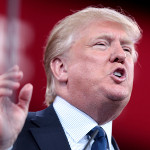
Donald Trump

Image by Gage Skidmore

The San Diego Union-Tribune has been tracking the epic class action litigation against Donald Trump and his defunct Trump University, presenting an inside look at the legal maneuvers, the document leaks, the economic and emotional pain suffered by plaintiffs, and the eventual settlement with the future president of the United States.

Reporter Kristina Davis writes that the Trump University lawsuit landed at Zeldes Haeggquist & Eck, a small downtown San Diego law firm, the way so many cases do — with a phone call.

“The class-action lawsuit she filed against Donald Trump and his defunct Trump University became a centerpiece of the presidential campaign, featured in debates and on ‘Saturday Night Live.’ The end result: a $25 million settlement by the president-elect for thousands of former students 6½ years later,” writes Davis.

The attorneys’ big break came when some former Trump University employees leaked playbooks and scripts used by instructors.

Read the Union-Tribune article.


Top U.S. Court to Consider Curbing Texas Suits by Patent Holders

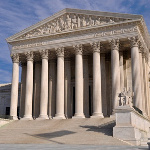
U.S. Supreme CourtThe U.S. Supreme Court has agreed to consider putting sharp new limits on where patent-infringement lawsuits can be filed, accepting a case that may undercut patent owners’ ability to channel cases to favorable courts, reports Bloomberg.

The case involves an appeal by TC Heartland LLC, an Indiana-based maker of water flavorings that says a Kraft Heinz Co. unit shouldn’t be allowed to sue it in Delaware, reports Greg Stohr.

“A victory for Heartland would also bar most patent owners from pressing cases in the Eastern District of Texas, a patent-friendly jurisdiction where more than a third of all infringement suits are now filed,” Stohr explains. “Heartland’s appeal has support from a group of internet retailers and software companies, as well as the financial-services industry.”

Read the Bloomberg article.


Join Our LinkedIn Group


Trump Ordered to Give Deposition in Washington Restaurant Suit

Image by Mike Peel

Reuters is reporting that a Washington judge has ordered Republican President-elect Donald Trump to give a deposition in a lawsuit against celebrity chef Jose Andres stemming from Trump’s disparaging remarks about Mexican immigrants.

Superior Court Judge Jennifer Di Toro on Wednesday directed Trump to testify in New York about Andres’ restaurant deal at Trump’s luxury Washington hotel. She set a time limit of seven hours on the event and ordered that it will take place during the first week of January.

“Trump is suing Andres for $10 million over breach of contract after Andres backed out of a plan to open a restaurant in the Trump International Hotel a few blocks from the White House,” writes Ian Simpson. Andres has said he canceled the project after Trump denounced Mexican immigrants in June 2015 as drug dealers and rapists.

Read the Reuters article.


Join Our LinkedIn Group


Don’t Bury Arbitration in Your Employee Handbook

Employers who don’t want employees to arbitrate employment-related claims shouldn’t bury the agreement in an employee handbook that includes a disclaimer stating that the handbook is not a contract, advises Business Management Daily.

That’s because a court could conclude that the conflicting language means the arbitration agreement isn’t binding.

The article describes a recent case in which an employer asked the court to send the case to arbitration, arguing that the employee knew about the arbitration requirement that was included in a handbook.

“The court didn’t see it that way. It reasoned that to be binding, the arbitration clause had to demonstrate clear mutual assent,” according to the article.

Read the article.


Join Our LinkedIn Group


GM Petitions U.S. Supreme Court Over Bankruptcy Shield

Image by C_osett

General Motors Co. said late Tuesday it has asked the U.S. Supreme Court to reverse a 2nd U.S. Circuit Court of Appeals decision that has opened GM to potentially billions of dollars in lawsuits related to pre-bankruptcy claims over defective ignition switches, reports The Detroit News.

Reporter Melissa Burden explains that GM was protected from some liabilities prior to its bankruptcy restructuring, but that protection did not extend to post-restructuring after 2009.

“A number of injury, wrongful death and economic loss lawsuits have been filed against GM over its faulty ignition switches and recall of nearly 2.6 million older vehicles in 2014,” she writes. “GM has admitted it knew of the defect for years but did not recall the cars for more than a decade and has paid fines to the National Highway Traffic Safety Administration and the Department of Justice.”

Read the Detroit News article.


Lawyer: Supreme Court Allows NFL Players’ Concussion Settlement to be Final

NFL football playerA lawyer for former National Football League players seeking damages and medical treatment for brain injuries suffered while playing football says the U.S. Supreme Court’s rejection of a legal challenge to a $1 billion settlement from the NFL means players can get the help they need, according to a post on the website of Androvett Legal Media & Marketing.

Matthew Matheny, a lawyer with Provost Umphrey LLP in Beaumont, who represented some of the players said:

“We are very pleased that today the United States Supreme Court rejected the appeals of a very few objectors to the NFL concussion settlement. The court’s decision should allow the settlement to become final and effective, meaning that thousands of former players will soon have the opportunity to receive the medical screening, diagnosis and treatment – as well as the compensation – they deserve. We expect the details of the baseline assessment and compensation programs to be forthcoming.”


White Paper: Top 10 E-Discovery Cases from 2016

Exterro Top 10 E-Discovery Cases of 2016Exterro has published a white paper titled “Top 10 E-Discovery Cases of 2016,” which reviews the top e-discovery cases of 2016 and their implications for practitioners.

It’s been a year since the Federal Rules of Civil Procedure were amended. That’s why reviewing some of the most defining cases in e-discovery during 2016 is vital when it comes to understanding how courts define these new amendments, according to the company.

This white paper discusses:

  • The top 10 most viewed or downloaded cases in 2016 from Exterro’s E-Discovery Case Law Library
  • Simplified case briefs with the key case takeaways and issues
  • Expert analysis and resources to help solve or prevent the same mistakes made in these cases

Download the white paper.


Texas Court Fight Over Selena TV Show Highlights Estate Law Principles

A planned TV show about the late Tejano singing star Selena has hit a legal barrier, according to a post on the website of Androvett Legal Media & Marketing. Her father Abraham Quintanilla Jr. filed a lawsuit in a Texas court to stop the new series based on a book by her husband Chris Perez. Her father argues that only Selena’s estate can authorize the TV show and that because her widowed husband made an agreement for a portion of the estate, he can’t make his own separate deal for a TV show.

Estate planning lawyer Aaron Dobbs of the Sugar Land, Texas, office of Roberts Markel Weinberg Butler Hailey PC, says:

“Family settlement agreements, such as the one outlined by Mr. Quintanilla, are highly favored by Texas courts and generally will be upheld and enforced in a court of law. It appears that Selena’s family agreed on who may use her name, voice, signature, photograph or likeness in the media, and that authority may  lie with the estate or someone other than Mr. Perez. Such a family settlement agreement is a binding contract. So unfortunately for her husband, using Selena’s likeness without authorization may result in liability for breach of contract. He could be liable for damages.

“As with an individual’s property right in a bank account or house, an individual in Texas has a property right in the use of his or her name, voice, signature, photograph or likeness after death. This property right is transferable by contract or through a last will and testament, trust or other testamentary document. If the property right has not been transferred through one of those means, then Texas law dictates who inherits the property right. Of course, this does not necessarily stop family members from fighting over the inheritance and use of a deceased person’s name, voice, signature, photograph or likeness.”


Wells Fargo Killing Sham Account Suits by Using Arbitration

While Wells Fargo’s new chief executive has responded to his company’s recent unauthorized-accounts scandal by saying his “immediate and highest priority is to restore trust in Wells Fargo,” the bank has been taking a different approach with individual customers, reports The New York Times.

“The bank has sought to kill lawsuits that its customers have filed over the creation of as many as two million sham accounts by moving the cases into private arbitration — a secretive legal process that often favors corporations,” write reporters Michael Corkery and Stacy Cowley.

Customers argue that they couldn’t have agreed to arbitration, considering they didn’t sign up for the accounts in the first place. The bank counters that the agreements in the customers’ original contracts also cover the disputed accounts.

Read the NYT article.


Johnson & Johnson Hit With Over $1 Billion Verdict on Hip Implants

A federal jury in Dallas ordered Johnson & Johnson and one of its subsidiaries to pay more than $1 billion in damages Thursday for “despicable and vile conduct” in selling Pinnacle metal-on-metal hip implants that they knew were seriously defective, reports The Dallas Morning News.

The New Jersey pharmaceutical and medical device maker and its DePuy Orthopaedics subsidiary must pay damages to six California plaintiffs who say they suffered serious chronic and painful medical problems caused by the device.

“The trial was the third in a series of bellwether cases being held by U.S. District Judge Ed Kinkeade,” reports Mark Curriden of Texas Lawbook for The Morning News. “More than 8,900 cases against Johnson & Johnson and DePuy have been filed across the U.S. The lawsuits have been consolidated in what is known as multi-district litigation.”

Read The Morning News article.


Best Practices for Litigating in the Age of Social Media

Practical Law will present a webinar discussion of the key issues and best practices surrounding social media in litigation. The webinar will be Wednesday, Dec. 7, beginning at 1 p.m. EST.

Samantha V. Ettari, E-Discovery Counsel at Kramer Levin Naftalis & Frankel LLP, will be the presenter. Lauren M. Sobel, Senior Legal Editor, Practical Law Litigation will be the moderator.

Topics will include:

  • The duty to preserve evidence, including social media.
  • Social media in discovery.
  • Service of process through social media.
  • Authenticating social media.
  • Social media at trial.

A short Q&A session will follow.

CLE credit is available in multiple states.

Register for the webinar.


Trump’s SCOTUS Shortlister Kethledge Doesn’t Mince Words

By SPDuffy527 (Own work) [CC BY-SA 3.0 (http://creativecommons.org/licenses/by-sa/3.0)], via Wikimedia Commons

By SPDuffy527 (Own work) [CC BY-SA 3.0, via Wikimedia Commons

President-elect Donald Trump and Sixth Circuit Judge Raymond M. Kethledge have something in common — blunt opinions, reports Bloomberg Law.

Some senators considering Kethledge’s 2008 nomination questioned his lack of judicial experience, but now he’s on Trump’s list of potential U.S. Supreme Court nominees to replace Justice Antonin Scalia, who died unexpectedly Feb. 13.

“Kethledge’s notable opinions at the U.S. Court of Appeals for the Sixth Circuit include a ruling in favor of a Tea Party group and against the Internal Revenue Service,” writes reporter Patrick Gregory. “The judge has written that he likes to see candidness and civility in appellate briefs.”

Read the article.


Facts in Law Firm Discrimination Suit No Bellwether on Gender Pay

The $100 million discrimination lawsuit filed against the New York-based international law firm Chadbourne & Parke over claims that female partners are paid less than their male counterparts is less about gender than employment status, according to Sarah Bradbury, senior counsel at Dallas litigation boutique Estes Thorne & Carr PLLC.

An article published by Androvett Legal Media & Marketing quotes Bradbury:

“While it is becoming increasingly easy to create an employment relationship and characterize an independent contractor as an employee, an equity partner cannot be categorized as an ‘employee,’ making it very difficult to prevail in this case. However, if a similar lawsuit were brought by income level partners, it becomes a very different case.

“Gender pay disparity may be real at this particular firm specifically or within the legal profession generally. However, even if the disparity exists, in this instance, because the attorneys are not employees of the firm, they simply have no employment discrimination route to pursue,” adds Ms. Bradbury, who is Board Certified in Labor & Employment Law by the Texas Board of Legal Specialization.


Lawyer Spared from $1M Sanction Faces $45K Fine

A Pennsylvania Superior Court panel has upheld a fine of almost $45,000 against Philadelphia insurance defense attorney Nancy Raynor, imposed for alleged witness intimidation during a medical-malpractice case that at one point also resulted in a controversial $1 million sanction against her, reports The Philadelphia Inquirer.

A separate judicial overturned the earlier sanction — imposed in 2014 by a lower court — in June.

Reporter Aswin Mannepalli writes that Superior Court judges found Raynor was responsible for the $44,993.25 in legal fees and other expenses incurred by the plaintiff in the malpractice case as a result of Raynor’s actions.

Read the Inquirer article.


Trump Nears Settlement in Trump University Lawsuit

Reuters is reporting that President-elect Donald Trump is nearing a settlement of about $20 million in fraud lawsuits relating to Trump University, a person familiar with the matter said on Friday.

Some former students of the now-defunct school claim they were they were lured by false promises into paying up to $35,000 to learn Trump’s real estate investing “secrets” from his “hand-picked” instructors.

Reporter Karen Freifeld writes that sources tell her there are three lawsuits relating to Trump University: two class actions in California and a case brought by New York Attorney General Eric Schneiderman. All would be covered in the possible settlement. One of the cases, in U.S. District Court in San Diego, is scheduled to begin Nov. 28.

Read the Reuters article.


The Five Biggest Issues Facing the New Ninth Justice

 and  of BloombergBusinessweek list some of the top issues that will be waiting for a new U.S. Supreme Court justice who is likely to nominated by Donald Trump after he moves into the White House in 2017.

The new justice will fill the seat formerly held by the late Justice Antonin Scalia, who led 5-4 corporate majorities in a series of major rulings.

The authors discuss the top five issues, which include climate change, arbitration, class actions, property rights and insider trading.

Read the BloombergBusinessweek article.


Could Presidential Election Results Usher in Federal-Level Tort Reform?

Dallas lawyer Trey Branham of Dean Omar Branham says Donald Trump’s election could mean Texas-style tort reform at the federal level. As an example, he expects a revival of the FAIR Act – Fairness in Asbestos Injury Resolution Act of 2006 – which was narrowly defeated in Congress.

“The essence of the bill was that it would end asbestos lawsuits on both the state and federal level and set up a federal ‘trust fund’ funded by industry to pay asbestos lawsuit claims. The idea was to set up a complex set of medical and factual criteria that a claimant would have to meet to be eligible for compensation and compensation levels were capped without regard to income, loss or facts,” Branham said in an article posted by Androvett Legal Media & Marketing. “Additionally, fees would be capped at 5 percent of recovery. The practical effect of this would be that asbestos victims would not be able to engage counsel and would be forced to negotiate the medical and factual criteria alone and, if they were successful, would get far less compensation than the tort system generally permits.”


Trump’s Victory Has Enormous Consequences for the Supreme Court

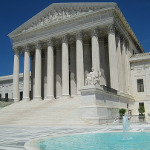
U.S. Supreme CourtThe political earthquake that hit Tuesday night has enormous consequences for the Supreme Court, swallowing up Judge Merrick Garland’s ill-fated nomination and dismantling Democratic hopes for a liberal majority on the high court for the first time in nearly a half-century, writes Robert Barnes for The Washington Post.

At some point next year, the nine-member court will be restored to full capacity, once again with a majority of Republican-appointed justices. Democrats in the U.S. Senate may try to filibuster Trump’s choice for the court, but Republicans could change Senate rules to remove that option for Supreme Court nominations.

In his article, Barnes predicts” “Trump’s upset victory likely changes the court’s docket as well: Court challenges to President Obama’s regulations regarding the Affordable Care Act and immigration, which have preoccupied the justices in recent terms, will likely disappear under a President Trump and a Republican-controlled Congress.”

Read the article in The Washington Post.


Get Judicial Insights on 10 Key E-Discovery Cases

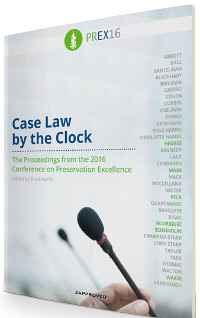
ZapprovedThe number of cases demanding electronic discovery continues to escalate. With digital media and technology becoming more mainstream in both personal and private matters, in-house legal counsel face new and complex challenges of preserving and searching electronically stored data.

At the 2016 Conference on Preservation Excellence, Zapproved asked six judges to weigh in on 10 such cases in an hour. A complete discussion summary is available for downloading.

Their discussion dissects cases in detail and offers insights on key factors impacting trends in the e-discovery age:

  • Spoliation
  • E-discovery abuse
  • Proportionality
  • Keyword searching
  • BYOD policies

See the complete discussion summary, featuring:

Moderator:

Hon. Ron Hedges (Ret.), Senior Counsel, Dentons U.S. LLP, and former United States Magistrate Judge in the United States District Court of New Jersey

Panelists:

  • Hon. Frank Maas, U.S. Magistrate Judge, United States Southern District of New York
  • Hon. Andrew Peck, U.S. Magistrate Judge, United States District of New York
  • Hon. Xavier Rodriguez, United States District Judge for the Western District of Texas
  • Hon. Shira Scheindlin (Ret.), Stroock & Stroock & Lavan LLP, Former United States District Judge of the Southern District of New York
  • Hon. David Waxse, U.S. Magistrate Judge, United States District of Kansas

Download the discussion summary.