Husch Blackwell Beats Suit Alleging It Tried to Silence Critic of Wealthy Client

A Missouri ruling is likely to end a contentious nine-year dispute between a local activist who claims that Husch Blackwell LLP, an AmLaw 100 firm — used the legal system to squelch his speech rights, according to Bloomberg Law.

Reporter Samson Habte explains that the court’s April 23 opinion highlights the difficulty of proving two types of tort claim — malicious prosecution and abuse of process — that disgruntled litigants could try to use to turn the tables on opposing parties and their lawyers.

The dispute started when John T. Impey ran for a school board seat  and campaigned against a $3 million bond proposal that L.J. Hart & Co. and its owner, Larry Joe Hart, underwrote. Husch Blackwell brought defamation and tortious interference lawsuit against Impey on Hart’s behalf.

The firm obtained a preliminary injunction that prohibited Impey from repeating some accusations against Hart; but when the campaign ended — and the bond initiative failed — Husch Blackwell advised Hart to drop the defamation case.


Read the Bloomberg article.


Is the DNC’s Lawsuit against Russia DOA?

Last week, the Democratic National Committee filed a lawsuit against the Russian Federation and the General Staff of the Armed Forces of the Russian Federation for a “brazen attack on American Democracy” in the 2016 presidential election.

The lawsuit accuses Russian intelligence of hacking into the DNC’s computer system and stealing information to use to its advantage, including interfering in the 2016 presidential election. WikiLeaks, Donald Trump Jr., and the Trump campaign are also named as defendants.

In a post on the website of Androvett Legal Media & Marketing, Dallas attorney David Coale of Lynn Pinker Cox & Hurst says the lawsuit has a lot of interesting points, but doesn’t think it will survive long-term judicial scrutiny.

“It’s flashy, but it’s hard to imagine it going very far. Civil cases are often stayed while criminal investigations are ongoing – like Mueller’s – and the damages are not obvious. But the lawsuit does force everyone to keep the DNC in the loop while everything else unfolds.”


What to Do When You’re in the Sexual Harassment Hot Seat

Meritas will present a webinar titled “When #MeToo Means #YouToo: What to do when you’re in the sexual harassment hot seat.”

The event will be Wednesday, May 2, 2018, at 1 p.m. CDT.

“The #MeToo movement has many employers uncertain about the best ways to protect themselves from sexual harassment complaints and the right way to respond after a complaint has been made,” the firm says on its website. “This seminar will explore how our definitions of sexual harassment have evolved in the age of #MeToo and the misconceptions that have formed around this issue.”

“Participants will come away with actionable advice they can put to use to avoid the damage that such claims can create, not just in terms of liability but also in workplace culture, employee attraction and retention.”

Register for the webinar.


Could Be Forced to Pay Billions Over Alleged Violations of Illinois Biometrics Law

A federal judge’s ruling means Facebook could face billions of dollars in damages if the court finds the company violated Illinois residents’ privacy rights with its facial tagging feature, reports the Chicago Tribune.

Reporter Ally Marotti explains that the potential penalty stems from a federal lawsuit filed in Illinois in 2015 that alleges the social media giant violated a state law protecting residents’ biometric information, such as data from facial, fingerprint and iris scans. Illinois has one of the strictest biometric privacy laws in the nation.

Facebook has argued that if its collection of biometric information did not harm individuals, they do not have grounds to sue under Illinois’ biometrics law. But the judge in the case determined that an alleged invasion of privacy was injury enough to allow users to sue.

Read the Tribune article.


Judge Says No to Law Firm on NFL Concussion Settlement

The Associated Press reports that a federal judge has denied a law firm’s request to be added as an administrator of the NFL’s estimated $1 billion concussion settlement.

“U.S. District Judge Anita Brody rejected an attempt from the Locks Law Firm to join the process that compensates former players for head injuries they sustained during their careers. The firm had claimed that the process was going too slowly,” according to the AP report.

Nearly 400 claims that could pay out more than $416 million have already been approved.

Read the AP report.


Trump Alleged Scandals Turn a Harsh Spotlight on This Beverly Hills Lawyer

The growing scandal involving women who were paid during the 2016 presidential race to keep them quiet about their alleged affairs with Donald Trump has turned a harsh spotlight on Beverly Hills lawyer Keith M. Davidson.

The Los Angeles Times reports that two of those women once represented by Davidson have wound up firing Davidson and hiring new lawyers to get their nondisclosure deals voided.

Reporter Michael Finnegan writes: “Affable and streetwise, he operates on the fringe of entertainment law. His niche is extracting money from celebrities for clients threatening to release sex tapes or share embarrassing stories with the media.”

Now Davidson faces lawsuits alleging extortion.

Read the LA Times article.


Sandy Hook Parents Accuse Alex Jones, InfoWars of Defamation, Seek Damages

The parents of children who died in the 2012 massacre at Sandy Hook Elementary School in Newtown, Conn., have accused conspiracy theorist Alex Jones and InfoWars of defamation and seek damages in excess of $1 million, reports the Austin Statesman.

Plaintiffs in two lawsuits filed in Austin, Texas, allege that Jones and his media organization spread false information related to the tragedy, according to reporter Mark D. Wilson.

The Los Angeles Times reports: “The lawsuits allege that Jones defamed the parents by constantly calling them ‘crisis actors’ and insisting the shooting was a ‘false flag’ operation; they also claim Jones’ accusations have led to death threats against the Sandy Hook families by Jones’ followers.”

Read the Statesman article.


Sexual Misconduct and D&O Claims

Kevin LaCroix, writing in The D&O Diary, discusses a recent scholarly article that takes a detailed look at director and officer claims arising out of allegations of sexual misconduct.

The University of Chicago Law School article examines the potential bases of liability, and considers the relative social utility of this kind of litigation, as well as the practical implications for corporate boards and their organizations.

LaCroix writes: “The authors conclude that ‘in some instances, corporate fiduciaries will indeed be liable to shareholders when workplace-sexual misconduct occurs at companies.’ In light of this conclusion, it would be prudent for companies and their executives to take steps to reduce their potential exposure to these kinds of suits.”

Read the article.


Making the Business Case for Upgrading Your Legal Hold System

An article published by Zapproved breaks down the results and explains the benefits of replacing an existing system — or lack thereof — with automated, cloud-based legal hold software.

The article can be downloaded at no charge.

Research results demonstrate a real rate of return on investment generated by automated cloud-based legal hold software, the company says on its website.

“E-discovery is expensive, but the risks of not handling it are even more costly,” Zapproved says on its website. “Many legal teams tend to focus their cost-reduction efforts on later phases of discovery, such as processing and review, overlooking the benefits of optimizing the preservation process. Yet putting in the effort to preserve and collect the right data has a trickle-down effect, saving money and time in every step that follows while minimizing potential spoliation. The question is, just how much can you save with effective preservation?”

Download the article.


JPMorgan Juror Says Doomed $8 Billion Award Was Message to Bank

Irelsie Alvarez said she and fellow jurors wanted to send JPMorgan Chase & Co. a message with their startling $8 billion verdict in a Dallas probate case — an award that’s destined to be reduced to no more than $90 million, reports Bloomberg.

The trial was in late 2017, but lawyers for the bank company were back in court on Thursday, saying the defendant is entitled to a take-nothing verdict.

The widow of deceased American Airlines executive Max Hopper sued the bank for allegedly mismanaging the estate of her late husband.

Alvarez, a 26-year-old insurance agent, said she took the suggestion of lawyers for Hopper’s family that a big damage award was needed “in order to prevent this from happening again.”

Reporter Tom Korosec writes that the jury award was the largest of 2017 and the ninth-largest in U.S. history.

Read the Bloomberg article.


Target Pays $3.7M to Settle Lawsuit Over Racial Disparity in Use of Criminal Background Checks

Image by Mike Mozart

The Minneapolis  Star Tribune is reporting that Target Corp. has agreed to pay $3.7 million to settle a lawsuit over concerns that the way it uses criminal background checks as part of the hiring process has disproportionately hurt black and Latino applicants.

Reporter Kavita Kumar quotes Sherrilyn Ifill, president of the NAACP Legal Defense and Educational Fund: “Target’s background check policy was out of step with best practices and harmful to many qualified applicants who deserved a fair shot at a good job. Criminal background information can be a legitimate tool for screening job applicants, but only when appropriately linked to relevant questions such as how long ago the offense occurred and whether it was a nonviolent or misdemeanor offense.”

As part of the settlement of the class-action complaint, independent consultants will recommend changes to Target’s current screening guidelines.

Read the Star Tribune article.


Remington Bankruptcy Leaves $500M Question Over Pending Legal Claims

Image by Mitch Barrie

Remington Outdoor Co.’s decision to seek court protection brings up the question of whether people with pre-existing legal claims against the company will be made whole.

Bloomberg reports that lawsuits over firearms defects and the use of its weapons in the Sandy Hook attack were pending when the company filed for bankruptcy, and the company has moved to suspend those cases.

As reporters Eliza Ronalds-Hannon and Polly Mosendz write: “As much as $500 million could hang in the balance. Remington, which is owned by Cerberus Capital Management, is embroiled in litigation over trigger defects on guns such as its iconic Model 700 rifle, as well as another lawsuit by survivors of the children and teachers killed in the 2012 elementary school shooting in Newtown, Connecticut. Bushmaster, owned by Remington, manufactured the firearm used in that massacre, which left 26 dead. ”

Read the Bloomberg article.


Supreme Court Prepares for Right Turn

As the White House and Congress descend deeper into turmoil, the U.S. Supreme Court is showing signs of becoming as politically fractured as the rest of Washington, with a shift to the right a real possibility, reports CNN.

CNN legal analyst Joan Biskupic explains: “Indications from the few decisions issued so far and from oral arguments in yet-to-be decided cases suggest the five conservatives on the nine-member bench may be ready to wield their majority power. Led by Chief Justice John Roberts and joined by President Donald Trump appointee Justice Neil Gorsuch, the five have already prevailed in recent ideologically charged cases regarding prisoners’ civil rights and immigrants in custody.”

Biskupic writes that a looming question since Trump took office has been whether the justices would become a check on Trump, who has flouted legal norms, criticized federal judges, and revealed disdain for the rule of law.

Read the CNN article.


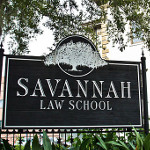
Savannah Law School Student Sues for Fraud, Breaching Trust in Planned Closing

A Savannah Law School student has sued school officials for fraud and breach of trust duties stemming from their decision to prematurely close the school in May, which she said will deprive her of the chance to become a lawyer, reports the Savannah Morning News.

The plaintiff, Jordan Crewe, alleged the school’s pending closure results “at least in part from the defendants’ mismanagement of funding for the law school.” In the suit, she also contended the defendants “established Savannah Law School to obtain federal student loan money while aiming long-term to make a profit by flipping the property.”

Reporter Jan Skutch writes that the defendants in the suit are Savannah Law School, John Marshall Law School and John Marshall University, Savannah Law School Associate Dean Keith Harrison and Michael Markovitz, law school board member and treasurer.

Crewe has completed three of the four years needed to obtain a law degree from the school.

Read the Morning News article.


Paying the Price: The Pitfalls of Ineffective Liability Waivers

Poorly drafted waivers include lawyerly language that may appear concrete on the surface but crumbles during a lawsuit, warns Hellmuth & Johnson in a blog post.

Authors Micheal D. Howard and Jason S. Raether describe a recent case involving a fitness studio  that demonstrates how a poorly drafted waiver can be as effective as having no waiver at all.

In the case, involving an injury to the customer of a fitness studio, a trial court found in favor of the studio, based on the language of an indemnity agreement. But the appellate court reversed, finding the language to be inadequate.

Read the article.


State Court Judge – Who Wouldn’t Marry Same-Sex Couples – Suspended for 3 Years

The Oregon Supreme Court on Thursday took the unusual step of suspending a sitting state court judge — Vance Day of Salem — for three years, reports The Oregonian.

The court found that the Marion County Circuit Court committed “willful misconduct” and made “willful misstatements” to investigators to cover up the truth, according to reporter Aimee Green.

The court also found that Day acted with prejudice against same-sex couples by deciding he wouldn’t marry them and he instructed his staff to employ a scheme to avoid “public detection” of his plan, the Supreme Court said.

Read The Oregonian article.


Morgan Lewis Scolded for Possible Conflict in Hotel Wage Case

A U.S. district judge in California concluded that Morgan Lewis “plainly violated” California attorney professional conduct rules by representing “both sides of the case” in a hotel workers’ class action suit, Bloomberg Law reports.

Sheraton workers in San Francisco won class action status for their claim that their employer created a culture that encouraged staff to work through breaks without pay.

Reporter Jon Steingart writes that Judge William Alsup criticized the way lawyers from Morgan, Lewis & Bockius LLP obtained statements from three former employees that were used to argue against certification of the class. The same lawyers also represented the former workers in depositions conducted later.

A Morgan Lewis lawyer responded to a show cause order with an apology and a pledge that the firm wouldn’t repeat the conduct in any court.

Read the Bloomberg Law article.


Plaintiff Lawyers See Nationwide Settlement As Only End For Opioid Lawsuits

Lawyers who met in a federal courtroom in Cleveland to discuss a settlement of opioid litigation faced the difficult task of crafting a deal that will not only pay their clients — mostly towns and cities — but include states and even the federal government while spreading the cash evenly across the country, according to Forbes.

Contributor Daniel Fisher writes that most of the attendees were private lawyers who have signed contingency-fee contracts with municipal clients.

He adds that “the sheer complexity of the litigation raises questions about how the parties will craft an agreement that ends the threat of further lawsuits against the industry while distributing cash to all the varied entities who have sued.”

But the situation for the self-funded private lawyers is complicated by the involvement of state and federal claims on some of the expected settlement funds.

Read the Forbes article.


Ten-Week Telecommute Reasonable for In-House Counsel, Sixth Circuit Holds

PregnantAffirming a jury verdict, the U.S. Court of Appeals for the Sixth Circuit found that ten weeks of telecommuting was a reasonable accommodation for a pregnant lawyer put on bed rest, reports Manatt Phelps & Phillips LLP.

The Manatt article explains:

Due to complications from pregnancy, in-house counsel Andrea Mosby-Meachem was put on bed rest. Pursuant to the Americans with Disabilities Act (ADA), she requested to work from home during that period. Memphis Light, Gas & Water denied the request, taking the position that in-person attendance was an essential function of her job. Mosby-Meachem sued, and a jury awarded her $92,000 in compensatory damages on her claim of disability discrimination. The employer appealed, but the federal appellate panel upheld the verdict. The plaintiff presented sufficient evidence for a reasonable jury to conclude that in-person attendance was not an essential function of her job for the ten-week period she requested to work from home, the court said.

Read the article.


Berkshire’s National Indemnity Ordered to Pay $43 Million for Asbestos Settlement

Berkshire Hathaway Inc.’s National Indemnity Co. has to pay more than $43 million of Montana’s asbestos-related settlement costs, a state judge has ruled. according to a MarketWatch report.

Reporter Nicole Friedman explains: “Montana had reached a $43 million settlement in 2009 with people injured by asbestos at a vermiculite mining operation in Libby, Mont. The victims claimed the state had knowledge of unsafe conditions at the mine for decades and failed to protect workers.”

National Indemnity  provided general liability insurance to the state at the time of the alleged exposure, but it had argued those insurance policies didn’t cover the asbestos-related claims.

Read the MarketWatch report.