Conflict Resolution Group Blasts Trump’s Statement on Judge

The International Institute for Conflict Prevention and Resolution (CPR), an organization that works for fair and effective alternative dispute resolution (ADR) practices worldwide, has spoken out against Donald Trump’s attacks on adjudicators.

In a release, CPR said it took this position in response to recent statements made by Trump questioning the impartiality of Judge Gonzalo P. Curiel because of his Mexican heritage, and also questioning whether a Muslim judge could fairly preside over a case involving him.

“Those who sit as judges and adjudicate cases have a well-established responsibility to be fair and impartial,” said CPR President and CEO Noah Hanft. “This obligation is one that all adjudicators, including neutrals on CPR’s own panel of distinguished neutrals that includes many former Judges, take with extreme seriousness. Indeed, it is critical to maintaining both the integrity and stability of the dispute resolution process. Therefore, accusations that judges are biased, based solely upon factors such as their ‘heritage,’ are both dangerous and irresponsible and anathema to basic precepts of justice.”

Hanft concluded, “As an organization committed to improving the way disputes are resolved and driving diversity within the profession, we consider the implication that one’s family background renders him or her biased and unable to adjudicate a matter fairly and without conflict to be a great affront. We call upon other ADR providers, and the legal and business community that relies upon a fair and stable judicial framework, to similarly condemn these statements.”



Drugs in the Workplace: Tread Lightly, Navigate Carefully

Cocaine - drugs - narcoticsFisherBroyles, LLP has a warning for employers dealing with an employee who is doing — or is suspected of doing — illegal drugs: Situations of this kind are fraught with potential for large legal fees, company embarrassment, and major diversion of management time if you become involved in formal proceedings — even if you eventually win.

Drugs permeate our society. It’s on the news, in social media, and all over movies and television. It may also be in your workplace when you discover that your awesome SVP Frank Fantastic’s belief-suspending prior year’s sales record might be due to — or despite — a little cocaine habit combined with his daughter’s ADHD meds.

Some questions you want to consider — do you know this hotshot is doing illegal drugs or abusing alcohol or prescription drugs, or do you just suspect? Is Frank’s employment terminable at will or only for cause if he is a party to an employment contract? Is a substance addiction a “disability” under the Americans with Disabilities Act?

While the answers to such questions depend on the particular facts in each situation, one thing we can tell you is tread lightly, navigate carefully. You want to minimize involvement in such proceedings if at all possible.

The firm offers advice on how to proceed: maintain a clear anti-drug policy, manage the situation with care, review employment agreement, remember that the ada protects recovering addicts, and be proactive in future employment agreements. The article expands on each of those points.

Read the article.


Judge Tosses $200M Patent Verdict; Cites In-House Lawyer Misconduct

A federal judge found a pattern of misconduct by Merck & Co., including lying under oath and other unethical practices, freeing Gilead Sciences Inc from paying any damages for infringing Merck’s patents with its lucrative treatments for hepatitis C, Sovaldi and Harvoni, according to a Reuters report.

The ruling follows a March 24 jury verdict that ordered Gilead to pay $200 million in damages, based on findings that Merck’s patents were valid.

In this week’s ruling, U.S. District Judge Beth Labson Freeman said Merck deceptively used confidential information from Pharmasset, Inc, a company Gilead bought in 2011.

“Freeman also said Merck cannot enforce the patents because Merck’s own lawyer gave inconsistent and untruthful testimony during the trial. ‘Merck’s acts are even more egregious because the main perpetrator of its misconduct was its attorney,’ she said,” reports .

Read the article.


Damage Control: Common Errors in Contractually Limiting Damages

Contractual provisions for liquidated damages, indemnification, or other limitations on liability are a few of the most commonly used “damage control” tools, points out Theresa Y. Kananen for Arnall Golden Gregory LLP.

“In too many cases, however, drafting errors transform the very provisions intended to provide for clear-cut remedies, or clear-cut limitations on remedies, into sources of prolonged and expensive litigation,” she writes.

She lists and discusses three of the most common pitfalls to avoid when using one of these “damage control” provisions in a contract, including liquidated vs. actual damages, indemnity clauses and conspicuous limitations.

Read the article.


These Two Decisions Highlight How Scalia’s Absence Has Affected the Court

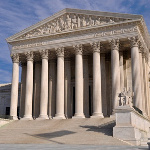
U.S. Supreme CourtAs the U.S. Supreme Court enters the last month of its term, the impact of having only eight justices already is clear. Some of the most high-profile cases of the year are not being decided, or perhaps even worse, are being resolved on narrow grounds that create more confusion than clarity in the law, writes Erwin Chemerinsky in the ABA Journal.

Chemerinsky is Dean and Distinguished Professor of Law at the University of California, Irvine School of Law.

“A 4-4 tie, which affirms the lower court without opinion by an evenly divided high court, is not a problem when there is no split among the lower courts and there already is a clear prior decision on point. In fact, in a couple of cases, the justices divided 4-4 on whether to overrule a precedent,” writes Chemerinsky.

He discusses Friedrichs v. California Teachers Association, which raised the issue of whether to overrule Abood v. Detroit Board of Education, which held that non-union members of a public employees’ union can be required to pay the share of the union dues that go to support the collective bargaining activities of the union. The article also considers Franchise Tax Board of California v. Hyatt, in which one of the questions presented was whether to overrule Nevada v. Hall, which held that a state may be sued in the courts of another state.

Read the article.


Trump’s Personal, Racially Tinged Attacks on Federal Judge Alarm Legal Experts

Donald Trump’s attacks on a federal judge overseeing a pair of lawsuits against him have set off a wave of alarm among legal experts, who worry that the ­Republican presidential candidate’s vendetta signals a remarkable disregard for judicial independence, reports The Washington Post.

say that attitude, many argue, could carry constitutional implications if Trump becomes president.

U.S. District Judge Gonzalo Curiel, who is handling two class-action lawsuits against Trump University in San Diego, has been a Trump target since the judge ordered the release of embarrassing internal documents detailing predatory marketing practices at the for-profit educational venture; that case is set to go to trial after the November election.

“Having a presidential candidate embroiled in litigation totally unrelated to the political system . . . that is what is so novel about this. And then you add to this the personal criticism,” Arthur Hellman, a law professor at the University of Pittsburgh, told the Post. “It’s personal all the way, and that’s what makes this different.

Read the article.


North Carolina Blue Cross and Blue Shield Sues U.S. Over Health-Care Payments

Blue Cross and Blue Shield of North Carolina sued the federal government, becoming the latest health insurer to claim it is owed money under the Affordable Care Act, according to a report in The Wall Street Journal.

“The suit, filed on Thursday in the U.S. Court of Federal Claims in Washington, D.C., says the U.S. failed to live up to obligation to pay the insurer more than $147 million owed under an ACA program known as “risk corridors,” which aimed to limit the financial risks borne by insurers entering the new health-law markets,” reports Anna Wilde Mathews.

The insurer’s suit claims the federal government violated the language of the health law, as well as a contractual obligation.

Read the article.


Discrimination Lawsuit Against Mintz Levin Can Move Forward, Judges Rule

A discrimination lawsuit brought against high-powered Boston law firm Mintz Levin by one of its former attorneys can move forward after a decision by the state’s highest court, reports The Boston Globe.

“In overruling a lower court judge who had thrown out the discrimination claims, Supreme Judicial Court justices said evidence supporting the ex-associate’s allegations of sexism and double standards inside the politically connected firm is substantial enough to warrant a jury trial,” writes .

The court also ruled that employers are in some circumstances barred from retaliating against workers who search for, copy, and share with their attorneys confidential company documents that may help them prove discrimination claims. The decision could affect other employment cases.

Read the article.


Litigating the Meaning of Contract Language? Consider Retaining an Expert

Contract with penA new article published by Ken Adams, president of Adams Contracts Consulting LLC, explains how to reduce the chances of the confusion that results when a judge or litigator without a grounding in the subject analyzes ostensibly ambiguous contract language.

The article is posted on Thomson Reuters’ Legal Solutions Blog.

“A problem with resolving disputes over ambiguous, or allegedly ambiguous, contract language is that ambiguity is a complex topic—it arises in different ways, many of them far from obvious. So when a judge or litigator without a grounding in the subject analyzes ostensibly ambiguous contract language, confusion often results,” he writes.

His article cites some examples of courts resolving disputes over the meaning of contract language in ways that don’t make sense, including how the Second Circuit Court of Appeals invoked a principle of interpretation that’s markedly at odds with English usage, how the Third Circuit Court of Appeals opted for an unreasonable interpretation of an or, and how the Federal Circuit misanalyzed the phrase at least one of X and Y.

Read the article.


These Gawker Jurors Don’t Care That a Billionaire Funded Hulk Hogan’s Lawsuit

The outrage following last week’s revelation that Silicon Valley billionaire Peter Thiel had funded Hulk Hogan’s lawsuit against Gawker Media LLC wasn’t just about a rich guy throwing his money around; it was about a rich guy secretly throwing his money around, writes Joshua Brustein for Bloomberg Technology.

The information about Thiel’s financial involvement was kept from the jurors in the case.

“It turns out that the jurors wouldn’t have cared, anyway,” Brustein writes. “At least, that is what two of them said when asked about Thiel’s involvement. In a conflict involving an aggrieved professional wrestler and a snarky gossip website, a plot twist involving a shadowy technology billionaire didn’t seem that shocking.”

Read the article.


Viacom Board Members Vow to Fight Removal Attempt

Gearing up for a battle for control of media company Viacom, board members took the unusual step of vowing to fight an expected campaign by Sumner Redstone and his family to shake up the board, the Los Angeles Times reports.

“Sumner Redstone this month added to his legal team a prominent Los Angeles litigator, Michael Tu, who specializes in securities law – raising the possibility of a legal campaign to dump Viacom Chairman and Chief Executive Philippe Dauman and other members of the board,” according to the newspaper.

Viacom’s stock value has dropped more than 45 percent in the last two years. Redstone and his family control 80 percent of the Class A voting shares of Viacom, but their economic stake in the company is about 10 percent.

Read the article.


Get the Complete Guide to Preservation Case Law 2008-2016

Zapproved Case Law SummariesZapproved has published its updated Preservation Case Law Summaries 2008-2016, the definitive guide to preservation case law with summaries tagged by venue, sanction and topic.

The guide can be downloaded from Zapproved’s website.

Zapproved says courts are analyzing preservation cases for spoliation with a high bar to determine if awarding sanctions is appropriate. The standards set forth in proposed changes to Rule 37(e) require that in order to impose an adverse inference, spoliation must have (i) caused substantial prejudice in the litigation and the result of  willfulness or bad faith; or (ii) irreparably deprived a party of any meaningful opportunity to present or defend against the claims in the litigation.

The new version contains these most recent preservation cases:

  • Noble Roman’s, Inc. v. Hattenhauer Distrib. Co.
  • Living Color Enters. v. New Era Aquaculture, Ltd.
  • First Fin. Sec., Inc. v. Lee
  • Brown Jordan Int’l, Inc. v. Carmiclet
  • In re Takata Airbag Prods. Liab. Litig.
  • Best Payphones, Inc. v. The City of New York

Download the guide.


Takata Hires Lazard, Seeks Cash Infusion After Air Bag Deaths

Takata Corp. has confirmed it has hired investment bank Lazard Ltd. to lead a financial restructuring in an effort to resolve costs stemming from its recall of tens of millions of faulty air bags linked to at least 13 deaths and more than 100 injuries worldwide, Reuters is reporting.

“Takata’s board of directors in February named an outside steering committee to develop a comprehensive restructuring plan to address the financial and operational issues related to its recall of the defective inflators,” swrites . “Takata’s outside committee said it retained Lazard as it is ‘expeditiously seeking new investment for Takata,’ the committee said in a statement.”

Takata posted a net loss of $120 million for the year ended in March and could potentially could face billions of dollars in costs related to the recall.

Read the article.


New Judge, Same Result – $81 Million CWA Civil Penalty Appealed

Water dropsU.S. District Court Judge Dee Drell  of the Western District of Louisiana recently denied a motion to alter or amend the court’s judgment against CITGO Petroleum Corp. – allowing an $81 million judgment against the oil company to stand, report on the Energy Law Blog of Liskow & Lewis.

The article reports that the judgment is the latest in a suit the EPA filed against CITGO under the Clean Water Act for a 2006 spill at the oil company’s St. Charles refinery.

“Given that in 2015 all civil enforcement actions by the EPA yielded penalties totaling $205 million (excluding settlements), the CITGO judgment stands out as unusually large,” the authors write. … “The Fifth Circuit’s response to CITGO’s second appeal may provide guidance on whether these types of judgments could be a trend in future Clean Water Act enforcement actions.”

Read the article.


Q&A on SCOTUS and Arbitration

In an article posted on their firm’s website, Matthew T. Furton  and Julie L. Young, partners in Locke Lord, discuss some recent rulings on arbitration by the U.S. Supreme Court, particularly as they apply to insurance and reinsurance.

The questions and answers discuss why the court has taken on more cases involving arbitration, which arbitration cases are currently under consideration by the court, why it matters that the circuits are split as to whether to stay or dismiss an action after compelling arbitration, and what the current state of the “manifest disregard” standard is.

Read the article.


Google Beats Oracle on Copyright, Defeating $9 Billion Claim

Smartphone - AndroidGoogle won a jury verdict that ends Oracle’s claim to a $9 billion slice of the search giant’s Android phone business, reports The Washington Post.

“Oracle contended that Google needed a license to use its Java programming language to develop Android, the operating system in 80 percent of the world’s mobile devices,” writes . “Jurors in a federal court in San Francisco rejected that argument Thursday and concluded that Google made fair use of the code under copyright law.”

Stakes were high for Google. A loss could have given more weight to software copyrights and to spur litigation to protect those added rights. “Oracle — which started the trial at an advantage with the judge explaining that it had already been established that Google had infringed Oracle’s copyrights — plans to appeal, although legal experts said overturning a jury verdict will be difficult,” according to the report.

Read the article.


Judge: Video of Clinton Aides’ Depositions to Be Kept Secret

Videos of Hillary Clinton’s former aides and others giving depositions in a lawsuit related to her private email set-up will be kept secret, at least for now, a federal judge ruled Thursday, according to a report by Politico.

wrote that U.S. District Court Judge Emmet Sullivan granted a request from former Clinton Chief of Staff Cheryl Mills that the deposition recordings be kept from the public because of the potential they could be used for partisan purposes or perhaps used in attack ads against Clinton, the frontrunner for the Democratic presidential nomination.

“The public has a right to know details related to the creation, purpose and use of the clintonemail.com system. Thus, the transcripts of all depositions taken in this case will be publicly available. It is therefore unnecessary to also make the audiovisual recording of Ms. Mills’ deposition public,” the judge wrote.

Read the article.


Beck Redden’s Pfeiffer Leads Charge to Overturn Fifth Circuit Decision

Connie PfeifferWhen Beck Redden partner and appellate specialist Connie Pfeiffer led the charge to overturn a Fifth Circuit decision, the path to victory was nearly certain to be long and arduous, the firm said in a release.

The Fifth Circuit had just decided a critical question interpreting the Texas Constitution, holding that homeowners with constitutionally defective liens on their homestead must file suit to set the lien aside within four years of originating a home equity loan.  (See Priester v. JP Morgan Chase Bank, N.A., 708 F.3d 667, 674 (5th Cir. 2013).  Yet overturning Priester would prove challenging, because out-of-state lenders could usually remove Texas homeowner suits to federal court, where Priester was binding.

The release continues:

Beck Redden was first hired to handle a homeowner’s Fifth Circuit appeal immediately following Priester and to seek the Fifth Circuit’s certification of the Texas constitutional questions, even though the Fifth Circuit rarely certifies a question it has already decided.  The Fifth Circuit adhered to that policy, holding that it could not revisit Priester or seek the Texas Supreme Court’s guidance.  In the wake of Priester, nearly all homeowner suits were removed to federal court and promptly dismissed.

Beck Redden was then hired in one of the few cases remaining in state court.  It stepped in mid-way in an appeal before Houston’s Fourteenth Court of Appeals, but the court fell in step with the growing line of cases following Priester and dismissing homeowner claims as time-barred.

At last in the Texas Supreme Court, Beck Redden handled every aspect of the briefing, argument, and strategy.  Connie Pfeiffer authored the briefs and presented oral argument, working with her appellate partner Russell S. Post and trial lawyers Chip Lane and Anh Thu Dinh of The Lane Law Firm.

The Texas Supreme Court voted 6 to 3 to overturn the Fifth Circuit’s decision in Priester and five Texas appellate decisions reaching the same holdings (See Wood v. HSBC Bank USA, N.A. ___ S.W.3d ___ (Tex. May 20, 2016).   The Majority followed the Constitution’s plain text to hold “that liens securing constitutionally noncompliant home-equity loans are invalid until cured and thus not subject to any statute of limitations.”  The practical effect of the Supreme Court’s decision is that homeowners will not face foreclosure unless their lender has complied with the Texas Constitution to create a valid lien.  The decision upholds the Constitution’s careful protections for homeowners by ensuring that invalid liens do not become valid and enforceable merely with the passage of time.


China’s Huawei Files Patent Suits Against Samsung Over Smartphone Tech

Huawei Technologies sued Samsung Electronics on claims of infringement of smartphone patents, the Chinese firm’s first intellectual property challenge against the world’s top mobile maker, reports Reuters.

“Huawei has filed lawsuits in the United States and China seeking compensation for what it said was unlicensed use of fourth-generation (4G) cellular communications technology, operating systems and user interface software in Samsung phones,” according to the report.”

“The lawsuit marks a reversal of roles in China where firms have often been on the receiving end of patent infringement disputes. In smartphones, makers have grown rapidly in recent years but different intellectual property laws outside of China have slowed overseas expansion,” writes .

Read the article.


Judge: Substantial Progress in Volkswagen Emissions Talks

VolkswagenThe Associated Press is reporting that Volkswagen and attorneys for vehicle owners affected by the company’s emissions cheating scandal are on target to meet a June deadline for a final settlement proposal, a federal judge said Tuesday.

A federal judge in San Francisco said the parties have made substantial progress in reaching a deal for that could affect more than 480,000 owners of polluting Volkswagens in the U.S.

Many questions remain unanswered, including how much money owners can expect in a buyback and how much additional compensation beyond repairs and buybacks they’ll receive,” according to the report.

Read the article.