Truck Accident Lawyer Steve Laird Scores Two More

Steven C. LairdFort Worth lawyer Steve Laird has once again been recognized by his peers and independent researchers, who have named him to the Top 100 Super Lawyers in Texas and Best Lawyers in America.

On his website, Laird has published articles with headlines such as “Study Shows Incredible Benefits of Collision Avoidance Systems,” “Texting and Driving Accidents on the Rise,” “Speed Limiter Delay Raises Danger on Highways,” “Questions Created by Catastrophic Injury, Wrongful Death,” “New Highway Law Allows Too-Low Insurance, Hides Safety Scores” and “Tractor-Trailer Cameras Benefit Safety.”

His firm, the Law Offices of Steven C. Laird, P.C., is located at 1119 Pennsylvania Ave., Fort Worth, Texas 76104.

Read more.


A Reminder of the Seriousness of Drafting and Interpreting Contracts

Constant vigilance, skilled lawyering and good deal-making skills remain critical to the proper drafting of contractual arrangements, points out .

He discusses the seriousness of drafting and interpreting contracts, and the care required in doing so, in light of the recent decision by the United States Court of Appeals for the Second Circuit in Chesapeake Energy Corp. v. Bank of N.Y. Mellon Tr. Co., No. 15-2366-cv (7th Cir. Sept. 15, 2016). The appellate court affirmed the judgment of the district court awarding damages in favor of the noteholders against Chesapeake Energy for $438,717,561.67 for redeeming notes at par after the period specified for redemption at par, the second time the Second Circuit has addressed Chesapeake’s of its $1.3 billion in notes based on the company’s interpretation of the Notes’ Supplemental Indenture.

The actual subjective intent of an  agreement “may well have been to provide Chesapeake a four month period in which to provide the required 30-60 days’ notice of redemption rather that to complete the actual redemption, but the Second Circuit, reading the actual words used to convey that intent, concluded that the words unambiguously conveyed a contrary meaning,” according to West.

Read the article.


Which Firms Give In-House Counsel Nightmares?

BTI Consulting Group has published the results of its 2017 “Fearsome Foursome” survey, in which 300 general counsel named which law firms they would least like to see as opposing counsel.

Michael Rynowecer, CEO of BTI Consulting Group, described what it takes to make the list:

General counsels who responded to the survey pointed to a few things that the four firms named most-feared in the courtroom have in common, the first of which is an unrelenting approach, Rynowecer said.

“They have several strategies in place at once and keep coming at the issue,” he said. “Not only do they overturn every rock, but they find new rocks to overturn and keep coming up with new ways to act in their clients’ interests.”

The firms on the list are Dentons, Jones Day, Kirkland & Ellis, and Skadden.

The survey also includes 11 firms that made the “Awesome Opponents” list and 55 firms named to the honor roll of most-feared law firms.

Read the list.


Wells Fargo Customers May Never See Their Day in Court, Experts Say

Courthouse - bankNBC News reports that a class-action lawsuit filed against Wells Fargo might be hamstrung at the starting line, legal experts say.

Martha C. White writes that mandatory arbitration contract clauses may protect the bank from class-action suits brought by customers who had bank or credit card accounts opened in their names without their knowledge.

“Five years ago, a Supreme Court ruling said it was legal for companies to shield themselves from lawsuits by requiring that customers address grievances through a private arbitration system. Since then, consumers seeking redress from banks, even earlier cases against Wells Fargo in California, have been effectively stopped at the courthouse door,” according to the report.

“There’s no question that it’s very difficult to overturn an arbitration clause, although the facts in this case are pretty damning,” said Ed Mierzwinski, consumer program director for U.S. PIRG.

Read the article.


Folksy SC Lawyer Stares Down Duke Energy, Other Utility Giants

Frank Holleman never thought he’d become a nationally recognized authority on coal ash, a toxin-riddled waste that has power companies under scrutiny across the country, but five years after taking a job with a regional conservation group, Holleman is perhaps the one person utilities hate to see coming, writes Sammy Fretwell for The State of Columbia, S.C.

He has taken on such big foes as Duke Energy, Santee Cooper and SCE&G, successfully brokering agreements to clean out coal ash waste ponds along South Carolina rivers. And he has obtained legislative help for people who had to fight for the right to sue companies that pollute rivers with coal ash waste.

He is an attorney with the Southern Environmental Law Center.

Holleman says working full-time as an environmental lawyer resulted from his long-time interest in conservation and public service.

Read the article.


Facebook and Its Lawyers Slammed by Judge in Terrorism Suits

FacebookA federal judge slammed Facebook Inc., saying the social media giant might not be doing enough to deter terrorists from using its platform, Bloomberg reports. The judge also chewed out the company’s law firm, saying “it is outrageous, irresponsible and insulting” for sending a first-year associate to handle the hearing.

U.S. District Judge Nicholas Garaufis in Brooklyn, New York, accused Facebook’s lawyers of not taking seriously lawsuits with implications of international terrorism and the murder of innocent people. He ordered Kirkland & Ellis LLP, the law firm representing Facebook, to send a more senior lawyer to the next hearing on Sept. 28 because he wanted to “talk to someone who talks to senior management at Facebook.”

“Garaufis is overseeing two lawsuits in which more than 20,000 victims of attacks and their families accused Facebook of helping groups in the Middle East such as Hamas,” reports . “The judge noted similar suits haven’t been successful under U.S. law which insulates publishers from liability for the speech of others. But he said that doesn’t mean Facebook shouldn’t take it seriously and try to address the issue.”

Read the article.


Just CRAZY About Tiffany’s? Don’t Use Their Name

Engagement ringThe iconic jewelry store Tiffany & Co. is a model for trademark enforcement by aggressively and successfully policing its brand in the courts. Last year Tiffany & Co. filed litigation against Costco, claiming that the warehouse giant sold more than $6 million of ersatz Tiffany engagement rings and improperly used the jeweler’s name on at least 200,000 in-store signs. That trial began this week in federal court in New York, according to an article posted by Androvett Legal Media & Marketing.

Chris Schwegmann, a partner at Lynn Pinker Cox Hurst in Dallas, who focuses his practice on intellectual property litigation, says:

“This type of litigation not only discourages counterfeiters, but also ensures that Tiffany’s luxury brand doesn’t get diluted over time. I find it interesting that Costco argued that ‘Tiffany’ represents a generic term used to describe a ring setting, and not just a brand name. That’s a tough case to make against a company that aggressively defends its brand.

“If this case goes as I expect, it is unlikely that other companies in the industry will try to make the same the same arguments against Tiffany & Co., which is a benefit of aggressive trademark enforcement.”

Read more about the case here.


Big Law Business Summit – West

Bloomberg Law will present a half-day program and networking event called the Big Law Business Summit – West, designed as a unique forum for legal industry professionals to uncover new opportunities and solve for challenges to their businesses.

The event will be in Los Angeles on Oct. 27, 2016.

The Big Law Business Summit – West will feature keynote interviews, presentations and conclude with a networking event, the company says. The summit will explore trends, opportunities and challenges, and new developments that are impacting the business of big law – how services are delivered, how value is created for clients, and how firms and legal departments are evolving.

Register for the event.


Patent Enforcement Company Slams Apple with $22M Verdict After East Texas Trial

AppleAcacia Research Corp., the largest publicly traded patent-assertion entity, won a $22.1 million verdict against Apple, reports Ars Technica.

An East Texas jury found that Apple infringed US Patent No. 8,055,820, owned by Acacia subsidiary Cellular Communications Equipment LLC. Reporter  writes that the patent describes a method of how cell phones can use “buffer status reporting” so that phone networks can optimize data usage. The patent originated at Nokia, which sold the patent to Acacia in 2013.

Acacia, in the class of companies that critics refer to as “patent trolls,” buys patents from others, splits the proceeds from litigation with the original patent owner. Acacia-related entities have filed hundreds of lawsuits.

“The company used to advertise a 50/50 split with patent owners and inventors, but its specific arrangement with Nokia is unknown,” according to the report. “The verdict, reached last week, is a validation of Acacia’s increasing interest, announced a few years back, in buying portfolios of patents from large companies, rather than individual inventors.”

Read the article.


Texas-Sized Business: Critics, Lawyers Discuss Controversy Behind Personal-Injury Attorneys

The ABC affiliate in San Antonio reports that in the last six years, lawyers working in the Greater San Antonio area have tripled the number of commercials they run on TV from about 50,000 to more than 180,000 a year, according to data from Nielsen AdIntel.

The flashy commercials have given some South Texas personal-injury lawyers a unique reputationm writes Josh Skurnik, citing the example of Jim Adler, who bills himself as the “Texas Hammer.” Adler can be seen in TV spots standing on semitrucks telling viewers he “will hammer the big trucking companies down to size.”

Adler told KSAT 12 how his script writers and directors helped him come up with the character:

“He agreed with them that he needed a more memorable character than his predecessor ‘Jim Adler, the smart tough lawyer.’ Through acting lessons, an eye for production and bilingual showmanship Adler said he became the grandfather of the unique style of personal injury advertising found in South Texas.”

And it worked.

Read the article.


New Comparator Apps Compare Courts, Judges, Law Firms

Lex Machina, a LexisNexis company, announced two new applications – Courts & Judges Comparator and Law Firms Comparator – designed to compare courts, judges and law firms.

Courts and Judges Comparator enables attorneys to compare up to four federal districts and judges to gain critical insights regarding caseloads, timing to key milestones, case resolutions, specific findings, and damages, the company said in a release. Plaintiffs’ attorneys can use the app to compare multiple districts prior to filing, to select the one most likely to provide the most favorable outcome in the shortest amount of time. Defense counsel can use the app to make data-driven decisions about whether or not to pursue a transfer of venue and, if so, to which district.

Law Firms Comparator enables powerful side-by-side comparison of up to four law firms, with instant display of a broad range of case-specific data. Companies choosing outside counsel, and law firms competing for new business, can now compare actual results produced by law firms in their open and terminated cases.


Bankruptcy Trustee Dismisses Case After Expert Fails On Cross Examination

The trustee for a bankrupt company decided to drop his lawsuit after watching his expert witness cross examined by an attorney from Ahmad, Zavitsanos, Anaipakos, Alavi & Mensing P.C.(AZA), clearing AZA’s clients of claims that they received fraudulently transferred company assets, the firm reports in a news release.

Rodney Tow, trustee for the estate of the Peterson Group Inc., a Houston real estate development company, had watched AZA’s John Zavitsanos examine his expert witness over whether Peterson Group was solvent and what company assets remained. The legal dispute involved a series of shopping centers and other properties worth more than $30 million.

The night of the expert’s failed testimony Tow informed Zavitsanos that he was completely dropping the case, which was in the third week of trial to a jury in the 269th District Court in Harris County.


See a video and read about the case.


Key E-Discovery Concepts: Processing 101 for Attorneys

E-discovery documentskCura offers a close look at key concepts behind processing — a technical but critical aspect of any e-discovery project. The article, written by Rene Laurens, is posted on The Relativity Blog on kCura’s website.

“When client data begins to arrive, processing is necessary to convert the native files into searchable information, ensure the integrity of your data, and prepare it for review,”
Laurens writes. “While you will likely spend most of your time in review and might not be as involved during processing, it can be helpful to understand what happens during this phase—especially if you’re getting regular updates from your case team and want to put some context around the steps they’re taking to make your data visible.”

She discusses such processing terms as normalizing data, flattening data, parent and child documents, de-duplication, de-nisting, control number and time zones.

Read the article.


Freedom of Contract? An Agreed Damages Clause May Not Actually Be Agreed

The celebrated “freedom of contract” is not absolute, writes .

“The right of contracting parties to obligate themselves to one another has always been subject to certain statutory limitations, as well as those imposed by the common-law principles that govern the enforcement of contracts generally. A recent decision by the United States Court of Appeals for the Seventh Circuit, Caudill v. Keller Williams Realty, Inc., 2016 WL 3680033 (7th Cir. July 6, 2016), serves as a reminder of one of those common-law principles—the idea that, as a general rule, parties should not be penalized for breaching a contract,” he writes.

“Parties relying on agreed damages clauses on both sides of the Atlantic should continue to draft such provisions based upon the current interpretation, in the applicable jurisdiction, of the ancient principle of the common law that abhors a penalty for a contractual breach,” West advises.

Read the article.


Federal Circuit Affirms Disqualification of Counsel, Dismissal of Patent Complaint

The Federal Circuit has affirmed a Western District of Texas decision disqualifying counsel for plaintiff Dynamic 3D Geosolutions LLC and dismissing its patent infringement complaint Schlumberger Ltd. without prejudice, reports IPWatchdog.

Dynamic alleged that defendant Schlumberger’s “Petrel” software infringed Dynamic’s ‘319 Patent, for systems and methods of combining seismic and well log data into a real-time, interactive three dimensional display.

But Schlumberger raised a potential conflict of interest and filed a motion to disqualify Dynamic’s counsel, Charlotte Rutherford. Rutherford previously was deputy general counsel for intellectual property at Schlumberger. The district court found that Rutherford’s work at Schlumberger was substantially related to her current work and “the evidence created an irrebuttable presumption that she acquired confidential information requiring her disqualification,” according to the report by Joseph Robinson and Robert Schaffer.

Read the article.


House Democrats Ask for Justice Investigation as New York AG Looks Into Trump Foundation

Donald Trump

Image by Gage Skidmore

Democrats on the House Judiciary Committee are asking the Justice Department to investigate the circumstances surrounding a $25,000 donation the Donald J. Trump Foundation made to Florida Attorney General Pam Bondi at a time when her office was considering whether to open a fraud investigation of Trump University, according to a Washington Post report.

The committee’s Democrats allege that the donation in 2013 “may have influenced Mrs. Bondi’s official decision not to participate in litigation against Mr. Trump,” and asks Attorney General Loretta E. Lynch to explore whether federal bribery or other laws might have been violated, report Matt Zapotosky and David A. Fahrenthold.

In a separate case, New York Attorney General Eric Schneiderman said on CNN Tuesday that his office was “concerned that the Trump Foundation may have engaged in some impropriety” and had “been looking into the Trump Foundation to make sure it’s complying with the laws that govern charities in New York.”

Read the article.


SEC Takes Aim at GC for Response to DOJ Investigation

The Securities and Exchange Commission has filed civil fraud charges against the general counsel of Ohio-based chemical company RPM for allegedly mishandling the response to a U.S. Department of Justice investigation, Bloomberg Law reports.

Edward W. Moore, RPM general counsel and chief compliance officer oversaw the company’s response in 2011 when the DOJ started investigating whether its subsidiary, roofing materials company Tremco, had overcharged the government by millions of dollars on certain contracts,according to the SEC complaint.

The SEC accuses Moore of failing to disclose the investigation to RPM’s shareholders, along with his CEO, CFO and internal audit committee and auditors, in a timely manner, writes .

Read the article.


Oil Producers Can Avoid Earthquake Potential over Disposal Wells

Below-ground look at frackingWhen a 5.8 magnitude earthquake centered in Oklahoma shook that state and several others over Labor Day weekend, regulators in the Sooner State ordered 37 oil and gas wastewater disposal wells to shut down because of previous connections to quakes, according to a report by Androvett Legal Media and Marketing.
There also have been earthquakes in Texas that some researchers believe are tied to disposal wells used for wastewater fluids resulting from hydraulic fracturing/fracking operations. While state regulators continue to question a definitive link between these wells and earthquakes, some major oil and gas producers are already taking steps to try to avoid problems.

“The more sophisticated producers are already beginning to use technologies to recycle water used in fracking and to develop new formulas that substantially reduce both water usage and the amount that must be disposed by subsurface injection. Those changes will provide numerous benefits, which may include reducing the potential for seismic activity,” said Leonard Dougal, an environmental lawyer with Jackson Walker LLP in Austin who is also a former petroleum engineer.

“In most cases, however, the disposal of wastewater is contracted out to other service companies, and many producers aren’t involved in decisions about where those wells are drilled or how they are operated. But that separation may not totally free producers from a potential lawsuit given the recent widespread publicity about earthquakes. Producers also should take steps to reduce liability by avoiding use of disposal wells or contractors working in areas of known seismic activity.”


What Clinton Won’t Say: Whether Garland Is Her High Court Pick

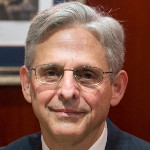
Merrick Garland

Merrick Garland

Hillary Clinton has started talking to reporters again, but Bloomberg Law reports there’s still a big question she hasn’t answered: Would she re-nominate Merrick Garland to the open seat on the Supreme Court?

Senate Republicans have refused to hold hearings on Garland’s nomination, saying the next president should be the one to select a nominee to replace the late Justice Antonin Scalia.

The Democratic presidential candidate has studiously avoided saying whether she would renominate Garland for the vacancy if it is still pending next year, writes Bloomberg’s Greg Stohr.

“Clinton’s decision would shape both the direction of the court and tone of her presidency. She could stick with Garland, a 63-year-old moderate whose nomination has languished since March. Garland would shift the court to the left but not as far as some liberals would like,” Stohr writes. “Or she could opt for a younger, more progressive nominee, as well as the bigger confirmation fight that would invite.”

Read the article.


After the Storm – Key Force Majeure Issues in Contracts

A “force majeure” clause is a contract provision that relieves the parties from performing their contractual obligations when certain circumstances beyond their control arise, making performance commercially impracticable or impossible, write Raedtha A. Vasquez and Edward Hart Bergin, partners in Jones Walker LLP.

In their article, they explain, that, in Louisiana, absent agreement to the contrary, force majeure excuses parties from liability when they fail to perform due to a fortuitous event that makes performance impossible.

“So, in determining whether the doctrine applies, it is necessary to determine (1) whether performance is impossible and (2) whether the impossibility was caused by a fortuitous event.”

They discuss some of the points to consider when confronting force majeure issues.

Read the article.