Litigation is Inevitable: Update on Recent Advertising Class Actions

Kelley Drye & Warren will present a complimentary webinar Wednesday, Feb. 22, 2017, to update participants on recent advertising class actions. The event is part of the firm’s Advertising & Privacy Law Webinar Series. The 60-minute webinar will begin at noon Eastern time.

Consumer class action suits continue to be a growing source of concern to marketers and income for plaintiffs’ law firms. This webinar will provide an update on recent consumer class action cases across a range of industries and provide guidance and strategies on how to knock out a consumer class action.

Kelley Drye partners August Horvath and Jeff Jacobson will lead the discussion.

The webinar will include a discussion of developing cases, the post-Spokeo standing on class actions, and hot-button issues such as the economic models in support of class certification. Speakeers also will discuss the types of cases that are receiving the most traction.

The webinar also will be available later on-demand.

Kelley Drye is an accredited provider of NY & CA CLE. This non-transitional continuing legal education program has been approved for 1.0 NY Professional Practice credit, 1.0 Illinois credit, and 1.0 CA General credit. The firm will apply for CLE credit in other jurisdictions, upon request.

Register for the webinar.


Join Our LinkedIn Group


Voluntary Standard Development Organizations Prevail in Copyright Litigation

Copyright with padlockA federal judge has found that Public.Resource.Org infringed upon the copyright of educational standards developed by the American Educational Research Association (AERA), the American Psychological Association (APA) and the National Council on Measurement in Education (NCME).

Judge Tanya S. Chutkan of the U.S. District Court for the District of Columbia found that standards developed by the three organizations retained their copyright even when incorporated by reference into government regulation, and ruled that Public Resource is liable for copyright infringement, according to a release from Quarles & Brady LLP, the firm representing the agencies in the litigation.

The release continues:

Since the early 1950s, a volunteer committee of experts chosen, sponsored and overseen by the AERA, APA and NCME, have developed and published the Standards for Educational and Psychological Testing. The result of enormous deliberation, vetting and authoritative consensus, these standards represent a set of best practices in the development, administration and scoring of tests that are widely relied upon by educational and psychological testing professions across the country. In mid-2012, however, after the standards were incorporated by reference into state and federal education agency regulations, Public Resource posted an unauthorized copy of the entire 1999 edition to the Internet, taking the position that the standards had become law and therefore lost their copyright protection. When Public Resource refused to remove the copy, AERA, APA and NCME brought suit for copyright infringement. With the court’s ruling, the creative efforts, time, and resources expended by voluntary standards development organizations like AERA, APA and NCME are secured from unauthorized replication by copyright protection, regardless of whether state or federal agencies choose to incorporate the resulting standards by reference into agency regulations.

“We are gratified that the court protected the standards, a valuable resource of the testing professions, from the brazen actions of a deliberate copyist,” said AERA Executive Director Felice Levine.

In the view of APA Interim CEO Cynthia D. Belar, PhD, “protracted litigation was not our first choice, as nonprofit organizations focused on the contributions of our disciplines to the public welfare. Public Resource’s refusal to stop harming the value of our publication left us with no alternative.”

NCME President Mark Wilson said that “the testing professions rely on the standards as the premier source of guidance for the work we do. We appreciate that the court saw the value in protecting the standards from infringement.”

About AERA, APA, and NCME

AERA is the major national scientific society for research on education and learning. AERA’s mission is to advance knowledge about education, to encourage scholarly inquiry related to education, and to promote the use of research to improve education and serve the public good.

APA is the largest scientific and professional organization representing psychology in the United States. APA’s membership includes nearly 115,700 researchers, educators, clinicians, consultants and students. Through its divisions in 54 subfields of psychology and affiliations with 60 state, territorial and Canadian provincial associations, APA works to advance the creation, communication and application of psychological knowledge to benefit society and improve people’s lives.

NCME is a professional organization for individuals involved in assessment, evaluation, testing and other aspects of educational measurement. NCME’s members are involved in the construction and use of standardized tests; new forms of assessment, including performance-based assessment; program design; and program evaluation. NCME’s members include university faculty; test developers; state and federal testing and research directors; professional evaluators; testing specialists in business, industry, education, community programs, and other professions; licensure, certification, and credentialing professionals; graduate students from educational, psychological, and other measurement programs; and others involved in testing issues and practices.

AERA. APA and NCME were represented in the litigation by Jonathan Hudis, Nikia Gray and Jonathan Labukas of the Washington, D.C. office of Quarles & Brady LLP. For more than 120 years, Quarles & Brady has provided quality legal services to a wide range of industries on a national stage. The firm is a multidisciplinary AmLaw 200 legal services provider with 10 offices across the United States.


Join Our LinkedIn Group



Download: The Comprehensive Guide to E-Discovery Data Collections

ExterroExterro has published an e-discovery guide examining must-have and new data collection best practices, which will empower a legal team to create streamlined and cost-saving data collection policies.

The guide is available for free downloading.

The guide includes:

  • 19 pages of best practices and innovative, new data collection/processing tips from e-discovery experts.
  • 6 chapters on everything you need to know about e-discovery data collections/processings.
  • 1 checklist to ensure you are creating an effective, proportional collection process.

Download the guide.


Join Our LinkedIn Group


Data Processing Benchmark Report Reveals the Next Big Trends

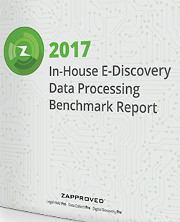
Zapproved Zapproved has published its new 2017 In-House E-Discovery Data Processing Benchmark Report, detailing the most satisfying and concerning aspects affecting data processing for e-discovery.

These insights can offer a roadmap to create better, more efficient data processing and review approaches in the year ahead, the company said on its website.

Each year, Zapproved produces a report on the the state of in-house e-discovery, based on a short survey. Participants include a range of in-house e-discovery professionals, from IT personnel to legal operations staff. The 2017 In-House E-Discovery Data Processing Benchmark Report reveals participant satisfaction with data processing speed, cost, ease of use, security and risk reduction. These attributes are correlated with business criteria, such as case types, matter sizes, data sources and future trends.

The resulting report illustrates what really impacts data processing decisions today and how to plan for the future.

It covers:

  • What most influences speed, cost, ease of use, security and risk reduction
  • When to use in-house versus external solutions
  • Why spending more in-house can make sense
  • Which data sources are the next big trend

Download the study findings.


Court Finds Contract and Arbitration Clause Unenforceable Due to Fraud in the Inception

The Ninth Circuit, in an unpublished opinion, has found that a contract, and therefore an arbitration clause within it, was unenforceable due to fraud in the inception, despite the fact that both parties had ample opportunity to review the contract in its entirety, reports Reinsurance Focus, a publication of Carlton Fields Jorden Burt, P.A.

“This result was required, the court found, because, assuming the allegations of the complaint to be true, the plaintiff did not know that by signing the contract it was agreeing to be a victim of defendants’ scheme,” writes Jason Brost.

The court cited a California Court of Appeals decision for the proposition that it was enough that defendants, as the party drafting the contract, drafted the contract “‘in such a way as to not apprise’ the other party of its intentions.”

Read the article.


Mark Lanier Named Trial Lawyer of the Year by National Trial Lawyers Group

Mark LanierMembers of an invitation-only organization of top trial lawyers have singled out attorney Mark Lanier as its Trial Lawyer of the Year, while recognizing The Lanier Law Firm among the Top 25 most influential litigation firms in the United States.

Lanier accepted the awards at The National Trial Lawyers’ February 2017 Trial Lawyers Summit in South Beach, Florida. In addition, members elected Lanier to the position of president-elect of The National Trial Lawyers; he will serve as president in 2018.

“Lawyers have an awesome charge in our society today and an obligation to use our courts to provide individuals with a level playing field,” Lanier said. “I’m proud of the justice that our firm has been able to attain for our clients, and I’m honored that our efforts have been recognized by ours peers in this way.”

In a release, the firm said:

The national honors for Lanier individually and the firm as a whole follow a string of large, high-profile jury verdicts on behalf of individuals and business interests. Most recently, the firm secured a second significant jury verdict in multidistrict litigation (MDL) against Johnson & Johnson and its subsidiary DePuy Orthopedics for injuries caused by defective metal-on-metal hip implants. Jurors returned a verdict of more than $1 billion for six patients who were injured by the defective DePuy implant in December 2016. A fourth MDL bellwether trial, which will involve 10 patients, has been scheduled by U.S. District Judge Ed Kinkeade in Dallas for September 2017.

The National Trial Lawyers summit included guest speakers addressing legal and business trends and a keynote address by NFL legend Joe Montana.


Jury Awards Ousted General Counsel $8M

A federal jury awarded the former general counsel of BioRad Laboratories $8 million in back pay and damages — which will increase to $11 million — for whistleblower retaliation involving potential bribery in China, according to a Courthouse News article.

Sanford “Sandy” Wadler won $2.96 million for economic losses and $5 million in punitive damages. Because the Dodd-Frank Act allows double back pay damages for whistleblower retaliation, the back pay award will increase to $5.92 million, bringing the total to nearly $11 million, explains reporter Nicholas Iovino.

Wadler sued Hercules, California-based BioRad Laboratories and its CEO Norman Schwartz in May 2015. He alleged he was fired in June 2013 for reporting potential bribery in China, a violation of the Foreign Corrupt Practices Act.

This case implicates a number of key issues confronting companies and their in-house legal teams, including:  (1) protections and scope of the attorney-client privilege; (2) what constitutes protected activity from an in-house attorney or compliance officer; (3) the importance of consistent and timely performance critiques; and (4) preparing adverse employment decisions to be scrutinized by a judge, jury, or arbitrator.  The case also highlights the existing split among federal courts regarding what constitutes a “whistleblower” under the DFA.

Read the Courthouse News article.

Read the Jackson Lewis blog item.


Join Our LinkedIn Group


Judge Wants Review of Legal Bills After Firms Reveal 9,000 Hours Of ‘Inadvertent’ Double-Billed Times

A federal judge plans to appoint a special master to investigate whether prominent law firms in Boston and other cities padded their legal bills by millions in a class-action lawsuit against State Street Bank, saying the lawyers may have to pay up to $2 million, in advance, to fund the investigation, reports The Boston Globe.

U.S. District Court Judge Mark L. Wolf said he wants a review legal bills submitted by Thornton Law Firm of Boston, Labaton Sucharow of New York, and seven other firms to justify the fees they received from the case last year, writes .

A Boston Globe review of the records submitted to justify the legal bills showed that three law firms submitted bills for the same lawyers, and often with different hourly rates. And the hourly rates claimed in the firms’ filings, which ranged from $335 to $500 an hour, were often 10 times more than what the lawyers normally earned.

Read the Boston Globe article.


Invitation: General Counsel to Discuss Cost Control

Bloomberg Big Law Business and CatalystBloomberg Big Law Business, in partnership with Catalyst, will convene corporate counsel to discuss the need to control rising legal costs particularly related to litigation at the complimentary event, Controlling Litigation Costs – Managing Your Legal Department for Success.

The event will be Thursday, Feb. 23, 2017, 3-5:30 p.m. Central time, at University Club of Chicago, Northwestern Room, 76 E Monroe St., Chicago, IL 60603.

Technology provides important solutions, but only if implemented effectively and as part of an overall strategy to manage litigation, Bloomberg says on its website. Top general counsel will talk about the ways they are managing litigation and the expectations they set with law firms and technology vendors.

Corporate counsel speakers include:

  • Susan Lees, Executive Vice President & General Counsel, Allstate Insurance
  • Leslie McKnew, VP, Litigation, CISCO
  • Matt Miller, VP, Deputy General Counsel – EMEA, APAC and Global Litigation, Groupon
  • Sharyn Procaccio, Vice President and Assistant General Counsel, Hunt Companies

Register for the event.


Join Our LinkedIn Group


Federal Judges Survey: Featured E-Discovery Case Law Report

magnifyer-investigate-search-puzzleFor the third consecutive year, federal judges do not feel the typical attorney has the required knowledge to be effectively counseling clients on e-discovery matters, according to Exterro’s Third Annual Judges Survey.

Exterro has compiled a report on the survey, which can be downloaded.

The report covers:

  • E-Discovery advice from 22 federal judges on how to improve e-discovery practices
  • Expert commentary from retired judges and e-discovery thought leaders, interpreting the results and how they should effect practices
  • Judicial insight on the new FRCP rules and the role judges should play under them

Download the report.


Neil Gorsuch: Scalia’s Views Mixed With Kennedy’s Style

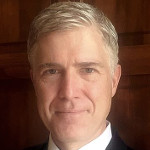
Neil GorsuchPresident Trump’s pick to replace the late Antonin Scalia on the U.S. Supreme Court is seen by many on the right as a fitting replacement for the iconic jurist that Gorsuch considered a “lion of the law,” reports The Los Angeles Times.

At the same time, Neil Gorsuch also evokes the qualities of Justice Anthony M. Kennedy, for whom Gorsuch worked as a law clerk, writes reporter David G. Savage.

“He may be more conservative than Kennedy when it comes to expanding individual rights, but he seems to lack Scalia’s fervor for overturning liberal precedents from decades past,” Savage writes.

Read the LA Times article.


Join Our LinkedIn Group


Recovery of Contractual Attorneys’ Fees for Tort and Contract Claims

A report on the website of Low,  Ball & Lynch discusses a case in which the California Court of Appeal addresses whether attorneys’ fees can be awarded when a plaintiff alleges both tort and contract causes of action and dismisses the entire complaint before trial.

In the case, Neeshat S. Khan v. Michael Shim, “The Court of Appeal concluded that when a plaintiff voluntarily dismisses an action involving both contract and tort claims, Civil Code § 1717(b)(2) does not preclude a defendant from recovering attorneys’ fees if the fee provision is broad enough to cover the tort claims.”

The article concludes that parties need to pay particular attention when drafting fee provisions when contract and tort claims may be brought together. “For cases with a fee provision, a liability analysis regarding the impact of attorneys’ fees should be assessed when determining whether to voluntarily dismiss a case,” in says.

Read the article.


Join Our LinkedIn Group


When an Arbitration Clause Sounds Permissive But Is Not: Does ‘May’ Really Mean ‘Must’?

“Is an arbitration clause mandatory or permissive when it provides that either party to the contract may elect to submit a dispute to binding arbitration? What if the contract also provides that the right to arbitrate is not exclusive of any other rights that a party has to pursue legal action in an appropriate forum? Such an arbitration clause certainly sounds permissive. But courts have invested a lot of ink addressing the question, and (spoiler alert!) they have more or less consistently come to the conclusion that such a clause makes arbitration mandatory if any party chooses it,” she writes.

She explains that many litigants and their lawyers misinterpret the real meaning fo the word “may” in this context.

Read the article.


Exterro Survey of Federal Judges Shows Gain in E-Discovery Competency

Exterro Inc. has released the results of its Third Annual Federal Judges Survey: E-Discovery Advice for Becoming a Better Attorney, yielding key takeaways on e-discovery competency, areas for improvement, and new FRCP rules — one year later.

Twenty-two federal judges completed this year’s survey, conducted by Exterro, answering 25 questions about the state of e-discovery. In addition to data from each question, the published report includes expert commentary from retired federal judges and industry thought-leaders, Exterro says in a release.

On the question of e-discovery competency, most respondents said that the typical attorney does not possess the subject matter knowledge required to counsel clients effectively on e-discovery matters.

Most respondents indicated that applying the principles of cooperation and proportionality is the area that offers the greatest potential for improvement among counsel.

And 82% of the judges surveyed believe that the new FRCP rules have helped solve many current e-discovery problems.

Download the report.


Join Our LinkedIn Group


Paul McCartney Wants ‘Yesterday’ Back, Sues Sony

Paul McCartneyBeatle Paul McCartney has sued Sony/ATV in federal court in New York to get his songs back to where they once belonged, according to a post on the website of Androvett Legal Media & Marketing.

The Beatles songs were sold to Michael Jackson in 1985 and then to Sony, but U.S. laws have changed since that happened. That could mean “Ticket to Ride” and “Hey Jude” revert to Sir Paul in 2018. But the band Duran Duran is having some trouble in the U.K. invoking the same rule, so Mr. McCartney filed a lawsuit hoping to make it clear he gets the tunes back.

“When Lennon and McCartney sold their copyrights, some might not have imagined that Beatles music would still be popular – much less still under copyright – by the second decade of the next millennium,” said lawyer Steve Mitby, a partner in the Houston law firm Ahmad, Zavitsanos, Anaipakos, Alavi & Mensing P.C., or AZA.

“In the 1998 copyright extension, Congress tried to give the original artists and authors the benefit of the longer 95-year term. But it is far from clear that Congress can modify private contracts – like those between the Beatles and Sony – through that retroactive legislation,” Mitby said.

McCartney followed the congressional rules to reclaim his music and served advance notice to the U.S. Copyright Office starting back in 2008 that he was coming for “She Loves You” and more.


Former FDA Criminal Investigations Director Joins DLA Piper in Miami

George Karavetsos has joined DLA Piper in the firm’s litigation practice as a partner in the Miami office.

Karavetsos most recently served as the director of the U.S. Food and Drug Administration’s Office of Criminal Investigations, where he helped develop FDA enforcement initiatives. He also oversaw more than 300 agents and administrative personnel in the investigation of criminal violations of the Federal Food, Drug, and Cosmetic Act and related laws.

Prior to his role with the FDA, Karavetsos spent more than 12 years as an assistant U.S. attorney in the Southern District of Florida, rising to executive assistant US attorney, the third-highest position in the office. Karavetsos was responsible for prosecuting complex white collar and international narcotics and money laundering cases.

In a release, the firm said Karavetsos will focus on pharmaceutical, medical device, food, dietary supplement, tobacco and healthcare matters, advising the firm’s broad array of clients in these sectors.

The news release continues:

“George has a very unique combination of white collar and FDA regulatory experience,” said Loren Brown, co-chair of DLA Piper’s global and US Litigation practices. “We’re excited to add someone with George’s reputation and talents to our team, and he will immediately enhance our trial bench, white collar and investigations platform, and FDA regulatory practice.”

Earlier this month, Louis Ramos, formerly an assistant US attorney and assistant general counsel at Pfizer, joined DLA Piper’s Litigation practice in Washington, DC. Ramos, like Karavetsos, brings extensive expertise in the life sciences and healthcare areas.

“We look forward to involving George in several sectors that are important in this region and beyond,” said Joshua Kaye, DLA Piper’s managing partner of the Miami office. “His extensive experience trying healthcare fraud cases will prove invaluable to our clients and will help reinforce our Firm’s commitment to assisting clients in meeting their compliance goals through prevention, compliance and advocacy services.”

Karavetsos earned his J.D. from Suffolk University Law School and his B.A. from the Virginia Military Institute.


Join Our LinkedIn Group


E-Sign: Reducing Risk & Strengthening Enforceability Webinar

Esignature - contract -signingeSignLive by Vasco will present a complimentary one-hour webinar providing practical evidentiary considerations of electronic records and signatures and guidance on how to reduce your risk.

The event will be Tuesday, Feb. 7, 2017, beginning at 2 p.m. Eastern time.

Organizations undergoing digital transformation often have legal questions related to moving paper-based business processes online without introducing new risks. Beyond the minimum requirements for electronic and digital signatures set forth in the laws, addressing the risk of fraud, repudiation and compliance is of utmost importance as well. In the event of a regulatory audit or legal dispute, avoiding fines and ensuring admissibility is dependent on a company’s ability to produce convincing, reliable evidence.

Presenters will be Pat Hatfield, Partner at Locke Lord LLP, and Andrea Masterton, Corporate Marketing Director at eSignLive.

Highlights will include:

  • A brief overview of e-sign legislation
  • Insights gained from relevant case law
  • How e-signature laws overlay with existing commercial and industry regulations
  • The challenges of defending electronic transactions
  • A live demonstration of ‘best practice’ e-signature audit trails & process evidence

Register for the webinar.


Join Our LinkedIn Group


Painful Verdicts for Johnson & Johnson

The Lanier Law FirmIn 2016, two federal juries in Dallas delivered significant verdicts on behalf of the victims of serious medical complications caused by defective metal-on-metal hip implants made by Johnson & Johnson and its subsidiary DePuy Orthopaedics Inc., according to a post by the plaintiffs’ legal counsel, The Lanier Law Firm.

Although the court has reduced the amount of punitive damages awarded by the juries in each case, and those judgments are under appeal by The Lanier Law Firm, the two verdicts still total almost $700 million in actual and punitive damages assessed against Johnson & Johnson and DePuy.

In the post, the firm said these verdicts marked the second and third bellwether trials among thousands of similar lawsuits nationwide that have been consolidated in multidistrict litigation (MDL 3:11-md-0244) in the U.S. District Court for the Northern District of Texas. A bellwether trial is one that is typically representative of all the issues involved in the litigation of a mass tort case.

Read the article.


White Paper: Top 6 Legal Risks When Adopting E-Signatures

eSignLive by VascoMoving business processes online without introducing new risks is not a simple task. The fraud, repudiation, admissibility and compliance risks are challenging enough to address when executing transactions on paper. If not done properly in the electronic world, these risks can be far greater. This paper discusses how a well-designed process, supported by new-generation electronic signature technology, can actually reduce risk and increase the enforceability of e-transactions compared to paper processes. (See the download form below.)

This paper explains how eSignLive addresses the top six risks of bringing processes online as identified by leading
e-commerce law firm, Locke Lord LLP, which has guided Fortune 500 companies in the design and implementation of
electronic signature processes:

  1. User Authentication Risk: “This Isn’t My Signature”
  2. Repudiation Risk: “That’s Not What I Signed”
  3. Admissibility Risk: “Objection, Your Honor”
  4. Compliance Risk: “I Never Saw That”
  5. Adoption Risk: “Am I Done Yet?”
  6. Relative Risk: “How Does It Compare to PAPER?”


Join Our LinkedIn Group


Apple Adds to Qualcomm’s Troubles, Filing Lawsuit Over Rebates

Apple sued Qualcomm, its longtime partner,  over what it said was $1 billion in withheld rebates on Qualcomm’s smartphone technology, according to The New York Times.

Apple said the money had been promised in conjunction with an agreement not to buy chips from other suppliers or to divulge ualcomm’s intellectual property licensing practices, writes reporter Quentin Hardy.

The suit follows the Federal Trade Commission’s accusation that Qualcomm used anticompetitive practices to guarantee its high royalty payments for advanced wireless technology.

“The commission cited Qualcomm’s deals with Taiwanese companies that manufacture Apple iPhones over semiconductors it sells for the iPhone,” writes Hardy.

Read the NYT article.


Join Our LinkedIn Group