National Ranking Guide Names AZA to Best Law Firms List for Sixth Year

For the sixth year in a row, the commercial litigation and intellectual property firm Ahmad, Zavitsanos, Anaipakos, Alavi & Mensing P.C., or AZA, is being recognized among the nation’s Best Law Firms by U.S. News & World Report and The Best Lawyers in America.

“Ahmad, Zavitsanos, Anaipakos, Alavi & Mensing is our go-to firm for any high-stakes litigation. They are smart, tough and effective,” one C-Suite client executive told the publications’ researchers.

Houston’s AZA is listed in the 2018 top tier of area metropolitan law firms for commercial litigation. The selection of Best Law Firms is based on a rigorous process that includes client and lawyer evaluations and peer review from other attorneys in the same practice areas.

Read details of the award.


A Twist in Oil Patch Arbitration

Delegating a $12 million arbitration to accountants rather than lawyers in Apache v. YPF SA was the right call, writes Charles Sartain in the Gray Reed Energy & the Law blog. The problem was in the procedures and protections for a party believing the accountants got it wrong.

Sartain provides background: “Apache sold its entire business in Argentina to YPF for $700 million. The Sale and Purchase Agreement allowed for adjustments to the consideration based on a variety of factors. The parties traded accounting statements, and a dispute arose over a ‘Lock Box Working Capital’ amount and ‘Leakage.’ YPF contended that Apache owed $12 million.”

The parties submitted the dispute to KPMG, which found that Apache owned $98. million. Apache challenged the finding.

Read the article.


Is It Time for People to Breach Their NDAs and Speak Truth to Power?

Confidential - nondisclosureElie Mystal, writing for Above the Law, discusses some top factors to remember when dealing with a sexual predator who has signed you to a non-disclosure agreement.

Among those factors are: the need for the predator to show actual injury, the information disclosed has to be secret and confidential, courts will consider public policy, and courts will consider unequal bargaining power.

“If you’ve signed a non-disclosure agreement, it’s a risk to violate it. You might get sued, you might be forced to pay back some money,” she warns. “Or you might set liberating case law that allows more of these claims to come forward.”

Read the article.


Ex-Akin Partner Guilty of Trying to Sell Secret U.S. Whistleblower Lawsuits

Reuters is reporting that a former partner at a major law firm in Washington pleaded guilty on Wednesday to charges that he tried to sell copies of sealed whistleblower lawsuits against corporations that he obtained while working at the U.S. Justice Department.

Reporter Nate Raymond writes that Jeffrey Wertkin was working at Akin Gump Strauss Hauer & Feld LLP when he was arrested in January trying to sell an undercover federal agent one of the lawsuits while wearing a wig as a disguise, according to court papers.

As a former employee of the Justice Department, he had access to lawsuits filed by whistleblowers against companies on the government’s behalf to recover taxpayer funds paid out based on fraudulent claims. Prosecutors said he copied several whistleblower complaints and then tried to sell them for a “consulting fee.”

Read the Reuters article.


Judge to Trump Firms: Save Records for AGs’ Emoluments Lawsuit

Twenty-three Trump businesses including his Mar-a-Lago Club must retain records after they receive subpoenas from the attorneys general in Maryland and the District of Columbia as part of a lawsuit accusing the president of profiting from his office, Bloomberg reports.

A U.S. district judge granted the Democratic officials’ request to serve so-called preservation subpoenas, which require the businesses to retain documents but not to immediately produce them, accordingn to reporter Andrew W. Harris.

The AGs claim that the president’s continued ownership of his business empire allows him to make money from foreign and domestic governments.

Read the Bloomberg article.


Judge Blasts Uber Lawyers, Delays Trade Secrets Trial

Image by Grendelkhan

Explosive evidence alleging that a covert Uber unit stole trade secrets and hid internal communications emerged in federal court on Tuesday in the bitter intellectual-property dispute between Waymo and Uber, reports the San Francisco Chronicle.

Reporter Carolyn Said writes that a visibly angry U.S. District Judge William Alsup postponed the high-profile case’s trial, which had been set for next week, saying Waymo needs time to review the new evidence.

“We’re going to have to put the trial off,” Alsup said. “If even half of what’s in that letter is true, it would be a huge injustice to force Waymo to go to trial and not be able to prove the things said in that letter.”

He was referring to a letter from lawyers for Uber’s former manager of global intelligence. The U.S. Attorney’s office had provided the letter to the judge.

Read the Chronicle article.


Law Firm Partners’ Battle: ‘Burn the Place to the Ground’

The scorched earth legal battle over the Cellino & Barnes law firm has escalated, with one of the partners threatening to “burn the place to the ground,” according to court papers.

The New York Daily News reports that Stephen Barnes argued that his estranged partner Ross Cellino’s effort to dissolve the firm spells “financial suicide” for both of them, according to documents filed last week in a Buffalo court.

The move, Barnes says in papers, would kill one of the most successful personal injury firms in the country,” writes reporter Stephen Rex Brown. “The Buffalo-based firm will earn Cellino and Barnes $12 million each in 2017 alone, papers say.”

Read the NY Daily News article.


Not So Fast: Limits of ‘Settlement Negotiation’ Protections

Padlock - contractIt’s far too simplistic to suggest that anything your company considers to be a “settlement negotiation” is going to be kept out of court, warns Joseph A. Schouten of Ward and Smith, P.A.

In an article on the firm’s website, he writes: “It’s important to understand the limits of the protections afforded to ‘settlement negotiations.’ Otherwise, your company may make a statement in what it believes to be a confidential ‘settlement negotiation’ only to have that statement used against it in court.”

In the article, he explores some of the common situations in which a company may fall into a trap if it doesn’t understand the rules regarding protections for settlement negotiations or communications.

Read the article.


Two Burns Charest Lawyers to Lead Hurricane Harvey Flooding Class-Action Claims

The U.S. Court of Federal Claims has appointed two attorneys from the firm of Burns Charest LLP to lead proposed class-action claims arising from flooding in Houston that resulted from Hurricane Harvey.

Trial lawyers Daniel Charest and Larry Vincent of Burns Charest were appointed co-lead counsel, along with Charles Irvine of Irvine & Conner PLLC, to manage discovery and dispositive motions. Vincent was also appointed co-lead counsel for jurisdictional discovery and motions to dismiss.

The plaintiffs in the case are Houston homeowners whose properties were ravaged by floodwater releases from the Addicks and Barker reservoirs, which were designed for flood control.

During the massive rains that resulted from Hurricane Harvey, the Army Corps of Engineers performed controlled releases of floodwater from the reservoirs out of concern the dams would break. But the retention of flood water and subsequent releases inundated many neighborhoods, leading to hundreds of millions of dollars in damage both upstream and downstream of the reservoirs. The homeowners claim that by intentionally flooding the area, the government took their land without providing compensation in violation of the Fifth Amendment to the U.S. Constitution.

“Our clients suffered enormous damages as a result of the government’s design of the reservoirs and actions during Hurricane Harvey,” said Charest. “We are committed to helping the people of Houston receive just compensation.”

Burns Charest represents homeowners whose properties are in the flood zone upstream of the reservoirs. There are currently hundreds of upstream lawsuits pending before the U.S. Court of Federal Claims, but the attorneys estimate that number could eventually grow to more than 15,000. The court has laid out an aggressive schedule, with dispositive motions due by June 15, 2018.

“We are very pleased that the court recognizes the urgency in resolving these claims and the need to help residents who are desperate to move forward with plans to recover, rebuild or relocate,” said Charest.

Burns Charest has brought claims throughout the United States, and is currently leading the national class action litigation against EpiPen manufacturer Mylan, and against 3M Co., based on claims of defective dental crowns.

The Houston case is In re Addicks and Barker (Texas) Flood-Control Reservoirs, Master Docket No. 17-3000L, U.S. Court of Federal Claims.


Virtual Data Rooms for Litigation

Virtual data rooms have led to a paradigm shift in how communication between parties is done, according to Firmex, which provides a cloud-based solution for sharing large volumes of confidential documents. This online repository of information has been efficiently used by various enterprises and individuals to store their data and later to distribute it. Various providers have come up with their virtual data rooms which people can use to access multiple services.

One area where virtual data rooms are increasingly becoming popular is in litigation. Lawyers are taking advantage of this technology to be able to communicate not only with their clients but also counsel they work together with, experts and counsel on the opposing side. It has promoted due diligence.

Firmex provides the following information:

How is Virtual Data Rooms used in litigationBefore the invention of the virtual data room, litigators would use the conventional physical data room. However, the many shortcomings and technological advancement led to the invention of the virtual data rooms which are more efficient.

On a frequent basis, lawyers are involved in exchanging and sharing a lot of documents as that is the most used basis of communication. Therefore, it is unsurprising that there are many ways litigators use the virtual data rooms. Some of them include;

1. Communication in a class action lawsuit.
These types of lawsuits differ from the traditional suit in that in this kind; a plaintiff brings a matter before a court on behalf of a group or class of people who are absent from the court proceedings. You can only imagine the amount of documentation present in this type of case. It is a lot. However, with virtual data rooms storage and sharing of this documents has been made easy.

With this tool, people can be able to set up profiles which they can save their information or exchange information with everyone within that group. This way, instantaneous communication between the plaintiffs and counsels is achieved.

2. Sharing of documents following a subpoena request
When the opposing party acquires a subpoena for documents from the court, this might mean the counsels have to go searching for the documents. Also once they find them, they have to put them in order so that they are as per the subpoena.

When a firm uses virtual data room, the process will become relatively faster. Virtual data room tools will allow one to store documents. They can then be easily be retrieved or accessed when need be. Also, given that the subpoenas will be uploaded this tool, litigators can therefore easily copy and paste the required documents onto the subpoena.

3. Easy organization and derivability of documents
As much as having a proper filing system is good, it might not be easy to find use and share documents. For instance, if you want to analyze documented evidence with co-counsels or witnesses, it is easier when you have a virtual data roaming system. You can quickly go through all the documents without having to leave a mess.

What are some of the benefits of using virtual data room?

As already stated, it provides a more organized system through which attorneys can share and store documents with other people he is working with. Other than that, other benefits include;

• It is cost efficient
With virtual data rooms, there is less of everything which was inconveniencing. There will be fewer people working on documents and sharing also will not be a long process. This saves the firm a lot of money.

• Security
Virtual data rooms provide a safe digital tool to share information. Given there is the lawyer-client confidentiality, it is paramount to make sure that a client’s information does not get to unauthorized people. Systems such as emails can easily be hacked thus not the best way to share information. However, virtual data rooms have made security a top priority. They have measures such as multi-factor authentication and allowing users to be able to restrict the people who can access specific files.

• Convenience
Who said a counsel has to be at the office for them to be able to go through documents as they prepare their case? Virtual data rooms allow you to access information on the go regardless of where you are. The same convenience is seen in the ease to share information with colleagues.

To conclude, virtual data rooms have entirely changed how information is handled in litigation. It has resulted in a lot of ease and convenience. Choosing which virtual data room to go by might be hard. However, you should consider factors such as how good their security is, the different tools that come with and the costs involved. That will help you make the right decisions.



Trump Adds Five Names to List of Potential Supreme Court Justices

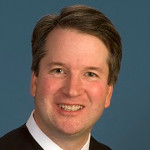
Judge Brett Kavanaugh

President Trump has added five names to his list of potential Supreme Court justices in a move that precedes the possible, but still unannounced, retirement of Associate Justice Anthony Kennedy, reports USA Today.

Reporters Richard Wolf and Gregory Korte write that the biggest new name was that of Brett Kavanaugh, a judge on the powerful U.S. Court of Appeals for the District of Columbia Circuit.

“Like Justice Neil Gorsuch of Colorado, who was confirmed to the high court in April, Kavanaugh is a conservative who once clerked for the more moderate Kennedy,” they write. “When Trump selected Gorsuch for the late Justice Antonin Scalia’s empty seat, it was viewed as a move that might entice Kennedy, 81, to step down.”

Read the USA Today article.


Enforce Arbitration Agreement or Waive Right to Arbitrate Trade Secret Misappropriation Claims

ArbitrationA recent federal court denied an employer’s motion to compel arbitration, finding that it waived its right to arbitration by engaging in litigation.

George L. Kanabe, a partner in the San Francisco office of Orrick, Herrington & Sutcliffe LLP, discusses three key lessons the ruling provides for plaintiff-employers.

Kanabe reports that the ruling noted, “[t]here is no other reasonable interpretation of plaintiff’s untimely demand for arbitration than as a deliberate tactic to test the judicial waters but then, when those waters did not flow the direction plaintiff intended, to change routes in hopes of finding a different current.”

Read the article.


Prominent Trial Lawyer Dead After ‘Battle With a Mental Health Issue’

Steve Mostyn, a top Democratic donor and prominent Houston trial lawyer who made his fortune suing insurance companies on behalf of homeowners after hurricanes, has died at 46.

Amber Mostyn, his wife, released a statement saying her husband died after “a sudden onset and battle with a mental health issue.” She did not disclose the cause of death,” reports The Texas Tribune.

KTRK, the Houston ABC television affiliate, reports that Mostyn died at his home Wednesday night, and, according to authorities, he took his own life.

Tribune reporters Morgan Smith and Jay Root write that Mostyn and his wife, also an attorney, have long been considered the state’s most powerful Democratic backers, spending millions on Democratic campaigns in Texas and beyond.

Read the Texas Tribune article.


Another Client Close to Firing Boies After Weinstein Revelations

Now even a pro bono client feels compelled to fire David Boies after revelations of the famed litigator’s role in attempting to hide Harvey Weinstein’s alleged history of sexual harassment and assault.

The Tampa Bay Times reports that the City of St. Petersburg, Florida, is heading toward ending its relationship with Boies.

Charlie Frago writes that Boies and his firm Boies Schiller Flexner had offered their services to the city in a challenge to Citizens United v. Federal Elections Commission, the 2010 U.S. Supreme Court ruling that removed restrictions on how much outside groups can spend on elections.

One city council member reacted to the revelations of Boies’ actions: “I find this reprehensible and will absolutely NOT vote to accept Boies’ offer to represent the city of St. Petersburg pro bono on the campaign finance issue.”

Read the Tampa Bay Times article.


Ware, Jackson, Lee, O’Neill, Smith & Barrow on 2018 Best Law Firms List

Ware, Jackson, Lee, O’Neill, Smith & Barrow, LLP has been named in U.S. News and World Report and Best Lawyers list of “Best Law Firms for 2018.”

According to U.S. News and World Report, “Firms included in the 2018 ‘Best Law Firms’ list are recognized for professional excellence with persistently impressive ratings from clients and peers. Achieving a tiered ranking signals a unique combination of quality law practice and breadth of legal expertise.”

The firm received recognition for a variety of litigation areas, including construction, mass torts, commercial, labor and employment, environmental, and trusts and estates.

Read more about the recognition.


Here’s How Trump Is Rapidly Reshaping the Judiciary

The New York Times lays out the plan the Trump team devised to fill the federal appeals courts with young and deeply conservative judges — a strategy that has started to show results.

Reporter Charlie Savage describes the plan: “Start by filling vacancies on appeals courts with multiple openings and where Democratic senators up for re-election next year in states won by Mr. Trump — like Indiana, Michigan and Pennsylvania — could be pressured not to block his nominees. And to speed them through confirmation, avoid clogging the Senate with too many nominees for the district courts, where legal philosophy is less crucial.”

He predicts that the consequence of the transformation of the judiciary will yield an appellate court system as ideologically split as Congress is today, after the Democrats regain power and use the same playbook.

Read the NYT article.


An Overview of Recent Production Deduction Cases

Courts in several states recently have addressed questions about post-production cost deductions in petroleum production, according to an on-demand webcast from Steptoe & Johnson.

In this webcast, Andrew S. Graham reviews the state of the play in the Appalachian Basin, as well as other oil and gas producing states, on the source of the deduction problem and where the states stand on this notoriously thorny issue.

Among the topics for discussion:

  • What does the Leggett case mean for West Virginia producers in light of Tawney?
  • Why did the Supreme Court of Ohio decide to not decide a case on post-production deductions?
  • Has the marketable product rule reached a high-water mark in Colorado?

Watch the on-demand webinar.


PREX17 Insights on Building a Preservation Game Plan That is Litigation-Ready

Zapproved has published “Building Your Preservation Responsive Playbook,” illustrating ways to adopt, monitor and document a preservation process that is litigation-ready.

The guide can be downloaded at no charge.

Providing insights in the publication are:

  • Cortney Starble, E-Discovery Specialist at CBRE, Inc.
  • Leslie Kendrick, Litigation Counsel at Daimler
  • Bryan Dearinger, Associate General Counsel at University of Oregon

The guide is intended to provide practical tips aimed at helping legal operations teams preserve relevant data, release legal holds and manage clear preservation workflows.

Download the guide.


Super Lawyer Boies Entangled in Intrigue Over Weinstein; Times Fires His Firm

Image by David ShankboneThe sexual-assault scandal that brought Harvey Weinstein’s career to an abrupt halt and started a national conversation about the treatment of women has led to scrutiny of tactics used by his former attorney, David Boies, one of America’s most-famous litigators, according to Bloomberg Big Law Business.

Boies hired private detectives who sought to identify accusers and undermine news coverage of their claims. Reporter Erik Larson writes that a primary target was the New York Times, which published an article in which the Hollywood producer was accused of raping an actress. At the same time, Boies’ firm, Boies Schiller Flexner LLP, was representing the Times in various legal matters, raising concerns about conflict of interest.

The newspaper fired the firm, and Boies admitted that he participated in the hiring of private investigators who targeted the Times‘ reporters.

Read the Bloomberg article.


JPMorgan Judge Upends $1.1 Million Whistle-Blower Verdict

A U.S. district judge says she saw prejudice in a jury’s verdict Tuesday that would have awarded $1.13 million in damages to a former JPMorgan Chase & Co. employee over her dismissal, according to Bloomberg.

The Manhattan jury deliberated for five hours to find the former wealth manager has been fired illegally. The jury awarded her $563,000 in back pay and $563,000 for emotional damage.

Reporter Bob Van Voris quoted Judge Denise Cote:

“The award of emotional damages says to me that the jury was prejudiced against the bank. That undermines the entire verdict.”

Read the Bloomberg article.