Ten-Week Telecommute Reasonable for In-House Counsel, Sixth Circuit Holds

PregnantAffirming a jury verdict, the U.S. Court of Appeals for the Sixth Circuit found that ten weeks of telecommuting was a reasonable accommodation for a pregnant lawyer put on bed rest, reports Manatt Phelps & Phillips LLP.

The Manatt article explains:

Due to complications from pregnancy, in-house counsel Andrea Mosby-Meachem was put on bed rest. Pursuant to the Americans with Disabilities Act (ADA), she requested to work from home during that period. Memphis Light, Gas & Water denied the request, taking the position that in-person attendance was an essential function of her job. Mosby-Meachem sued, and a jury awarded her $92,000 in compensatory damages on her claim of disability discrimination. The employer appealed, but the federal appellate panel upheld the verdict. The plaintiff presented sufficient evidence for a reasonable jury to conclude that in-person attendance was not an essential function of her job for the ten-week period she requested to work from home, the court said.
Read the article.


Global Warming Public Nuisance Actions Will Stay in Federal Court

A U.S. District Court has rejected motions filed by the cities of Oakland and San Francisco to remand two global warming public nuisance lawsuits filed by the cities in state court against several large energy companies, reports  in Pillsbury’s Gavel2Gavel blog.

The companies are BP P.L.C., Chevron Corporation, ConocoPhillips Company, Exxon Mobil Corporation and Royal Dutch Shell plc). The case is The People of the State of California v. BP P.L.C., et al.

“The complaints filed by the City of Oakland and the City of San Francisco are based on the premise that, despite knowing of the risks associated with climate change and global warming, these companies continued to produce and sell their products to the public that uses fossil fuels in their day to day operations,” Cavender writes. “The complaints seek an abatement fund to pay for seawalls and other infrastructure to address rising sea levels.”

Read the article.


Berkshire’s National Indemnity Ordered to Pay $43 Million for Asbestos Settlement

Berkshire Hathaway Inc.’s National Indemnity Co. has to pay more than $43 million of Montana’s asbestos-related settlement costs, a state judge has ruled. according to a MarketWatch report.

Reporter Nicole Friedman explains: “Montana had reached a $43 million settlement in 2009 with people injured by asbestos at a vermiculite mining operation in Libby, Mont. The victims claimed the state had knowledge of unsafe conditions at the mine for decades and failed to protect workers.”

National Indemnity  provided general liability insurance to the state at the time of the alleged exposure, but it had argued those insurance policies didn’t cover the asbestos-related claims.

Read the MarketWatch report.


Wynn Resorts Settles Lawsuit for $2.4B Over Forced Redemption of Shares

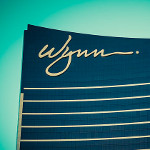
Image by Tony webster

The Associated Press is reporting that Wynn Resorts has agreed to pay $2.4 billion in a settlement with a Tokyo casino game maker and its U.S. unit over the forced redemption of their shares in the Las Vegas-based casino operating company in 2012.

The report by Regina Garcia Cano says the company settled with Universal Entertainment Corp., which previously held an almost 20 percent stake in Wynn Resorts through its subsidiary Aruze USA Inc.

“The legal fight between the companies dates back to 2012, when Wynn Resorts pushed out Universal’s founder Kazuo Okada after finding the Japanese tycoon made improper payments to overseas gambling regulators,” she writes. “The actions by Wynn Resorts stemmed from a separate casino resort project Okada was undertaking in the Philippines.”

Wynn Resorts said it found more than three dozen instances over a three-year period in which Okada and his associates engaged in “improper activities for their own benefit.” Wynn Resorts forcibly redeemed Azure’s shares in February 2012 and issued a 10-year, $1.9 billion promissory note, leading to the lawsuit.

Read the AP article.


Add One Line in Employment Contracts to Reduce Exposure to Misclassification Liability

An employee misclassification lawsuit can be difficult to dismiss early because plaintiffs are afforded great latitude in crafting factual disputes that can only be resolved at trial, points out a post in the Labor Days blog for Kelley Drye.

Special counsel Michael D. Yim offers a suggestion: one simple sentence in employment contracts, handbooks and policies for salaried employees that would likely reduce exposure by approximately two-thirds in FLSA cases.

He presents the wording of the sentence and then illustrates the  financial impact and disparity of the two calculation methods — first without the “magic words” in the agreement and then with the “magic words.”

Read the article.


Dead Law Firm’s Estate Can’t Collect Fees, California Court Says

The California Supreme Court has ruled that failed law firms are not entitled to fees earned on legal matters that are in progress – but not completed – at the time the firm closes its doors, reports Bloomberg Law.

“Any expectation the law firm had in continuing the legal matters cannot be deemed sufficiently strong to constitute a property interest allowing it to have an ownership stake in fees earned by its former partners, now situated at new firms, working on what was formerly the dissolved firm’s cases,” according to the court’s opinion.

Reporter Elizabeth Olson writes that the estate of bankrupt Heller Ehrman LLP “brought suit against 49 law firms to recover millions of dollars it said were owed from legal work that the firm’s former partners had taken with them to their next legal workplace. But this ruling appears to let the law firms off the hook.”

Read the Bloomberg article.


Litigator Len Wade Joins Jackson Walker

Jackson Walker announced that Len A. Wade has joined the firm as a partner in the Fort Worth office. Wade has experience as a trial lawyer, mediator, arbitrator, and judge.

“The knowledge and experience Len brings to the Fort Worth office, and to the firm as a whole, will add a whole new dynamic to our litigation practice,” said William R. Jenkins, managing partner of the Fort Worth office.

“We are excited to bring in an attorney of Len’s quality who can enhance the team, which in turn will help us better serve our clients.”

In a release, the firm said Wade’s practice focuses on complex litigation, mediation, and arbitration. He received training from the Attorney-Mediators Institute in Dallas. He is a member of the Association of Attorney-Mediators and the Commercial Panel of Neutrals for the American Arbitration Association. Prior to serving as a judge for the 141st District Court for the State of Texas from 2003 to 2009, Wade represented both plaintiffs and defendants in state and federal court litigation for 15 years.

Wade has also served as an adjunct professor at the Pepperdine University School of Law. He received an AV Preeminent rating by Martindale-Hubbell Peer Review Ratings and was also listed in the Martindale-Hubbell Bar Register of Preeminent Lawyers before his judicial election.

Wade graduated cum laude from Baylor University Law School, where he served as executive editor of the Baylor Law Review.

He joins Pamela Madere and Scott A. Schepps as Jackson Walker’s third partner hire in 2018.


Dear Employer, You Could Owe the IRS Millions of Dollars

The first batch of employers are getting estimates from the IRS of penalties they owe for not providing health coverage to employees in 2015. Some of the estimates are in the millions, reports Bloomberg.

Kristen Ricaurte Knebel writes that the IRS won’t say how many “226-J” letters have gone out or who’s getting them.

“But some practitioners expect Industries like trucking, restaurant, and staffing to see a high proportion of them,” she explains. “That’s because there is a high turnover rate inherent in those industries, which makes it challenging to keep track of workers, Alden J. Bianchi, a member at Mintz, Levin, Cohn, Ferris, Glovsky & Popeo PC in Boston, told Bloomberg Law.”

The Affordable Care Act in 2015 required employers with 100 or more full-time employees to offer minimum essential coverage to at least 70 percent of full-time workers. Failure to do so could result in a penalty of $2,080 for every full-time employee, with penalties sometimes reaching $10 million.

Read the Bloomberg article.


Assault Allegations Highlight Home Service Call Vulnerabilities, Plaintiff’s Attorney Says

A lawsuit has been filed against cable company Charter Communications and its third-party cable installation partner DCOMM after the alleged sexual assault of a 72-year-old Dallas woman during a cable installation visit, according to a post on the website of Androvett Legal Media & Marketing.

The woman, who is not named in the filing in order to protect her privacy, was sexually assaulted by the technician sent to set up television, internet and telephone service, according to her family’s attorney, Michael Lyons of the trial firm Deans & Lyons, LLP. The technician, Moises Cabrera, is facing criminal charges of aggravated sexual assault.

“Calling the cable person to come to your house — that’s not something you ordinarily associate with the threat of criminal danger,” Lyons told Dallas ABC affiliate WFAA.

There is a false sense of safety because these workers are viewed as representatives of a company that is trusted to properly screen, train and supervise its employees.

“But in reality, you don’t know who you are allowing into your home,” he said. “Consumers need to recognize that most of these workers are contractors who may not always be properly vetted, well-trained or supervised. That can result in dangerous consequences, especially for vulnerable customers who are home alone. Service companies need to be held accountable for the people they hire to go into residents’ homes.”


Antitrust Litigation: How an Amicus Brief Can Win an Appeal

The Antitrust Update of Patterson Belknap Webb & Tyler discusses a Federal Trade Commission case in which it appears an amicus brief may have been dispositive to the outcome of an appeal.

In Federal Trade Commission v. Penn State Hershey Medical Center, a group of 36 economists affiliated with top universities across the country filed an amicus brief explaining that the lower court used a faulty economic theory when it ruled against the FTC. The appellate court cited the brief when it reversed the district court.

Authors Jake Walter-Warner and Jonathan H. Hatch examine the brief’s influence on the appellate court and show how the court laid out the issues with the district court’s analysis just as the amicus brief did.

Read the article.


Biglaw Firm Could Pay $1.4 Million After Malpractice Verdict

A jury in a legal malpractice case has found Alston & Bird 32 percent responsible for a former company manager’s theft from a client, according to a report at Above the Law.

Kathryn Rubino writes, “Their (now former) client, family-held Hatcher Management Holdings LLC, took a loss after former manager, Maury Hatcher, cashed out of the business, allegedly at an inflated price in addition to hundreds of thousands of dollars in self-dealing fees. Hatcher Management Holdings alleged Alston & Bird partners assisted the departed Maury Hatcher from providing company members access to financial records and documents after he left the company.”

The Atlanta jury also awarded up to $1.1 million in fees and expenses, which the law firm could be required to cover in full, according to the report.

Read the Above the Law article.


Harvey Weinstein’s Insurer Refuses to Pay for Legal Defense

Variety is reporting that Harvey Weinstein’s insurance company is refusing to defend him against 11 sexual harassment lawsuits, saying that his alleged misconduct is not covered under his personal liability policies.

Chubb Indemnity Insurance Co. sued on Wednesday, asking the New York Supreme Court for a declaration that it is not obliged to fund the disgraced producer’s legal defense, according to reporter Gene Maddaus.

The suit says that some of Weinstein’s policies cover damages he is obligated to pay “for personal injury or property damage.” The damages must arise from “an accident or offense” to be covered.

But Chubb’s position is that Weinstein’s alleged pattern of sexual assault and harassment does not qualify.

Read the Variety article.


Indemnification Clauses and Defining the Relationship

An attorney client-relationship can arise from something far less definite than an explicit agreement between the attorney and his or her client, warns Robert J. Glowacki Jr. in a post for Poyner Spruill LLP.

He explains:

“In the recently decided Friday Invs., LLC v. Bally Total Fitness of the Mid-Atl., Inc., the North Carolina Supreme Court found the existence of an attorney-client relationship under circumstances where neither party explicitly discussed legal representation. There, the central question was whether an attorney-client relationship exists between a defendant to a lawsuit and a non-party that contractually agreed to indemnify that defendant and, if so, whether correspondence between the two is protected by the attorney-client privilege.”

Read the article.


Landman Contract Defeated by the Statute of Frauds

Charles Sartain and Chance Decker, writing in Gray Reed & McGraw’s Energy & the Law blog, describe a contract case in which an oil and gas landman found out that the contract he signed with a purported agent for a client was unenforceable.

The independent landman signed a contract with the purported agent of the plaintiffs, in which the producers were to pay Moore “$600 per mineral acre for for leases signed. The plaintiff said he helped secure numerous leases, but defendants refused to pay.

The authors explain that the court found that the contract didn’t specify the properties it applied to, this violating the Statute of Frauds. Sartain and Decker then offer some ways the contract could have been written so it would have been enforceable.

Read the article.


Long-Running Construction Defect Fight in Texas Ends With Defense Win

A decade-long construction defect battle involving a South Padre Island, Texas, luxury condominium complex damaged during Hurricane Dolly has been resolved in a take-nothing defense win secured by attorneys of the West Mermis law firm for the general contractor, G.T. Leach Builders.

The condominium developer, Sapphire, initially sued its insurance brokers for negligence for allowing the builder’s risk insurance policy to expire, leading to claims for extensive damage to the Sapphire condominium project from the 2008 storm. Nearly three years later, G.T. Leach and several of its subcontractors were added to the $30 million lawsuit.

The trial team, led by Lawrence J. West, presented evidence proving that the developer’s allegations of multiple breach of contract claims were unsupported, according to the firm. They demonstrated that the contract contained express provisions that prevented the Developer from recovering the $30 million it was demanding.

Read details of the case.


States to Forego Most of $650M Legal Settlement With Takata

The Associated Press is reporting that Japanese air bag maker Takata Corp. has reached a $650 million deal to settle consumer protection claims from 44 states and Washington, D.C., but only a fraction of the money will be paid due to Takata’s financial problems and bankruptcy.

Plaintiff states agreed not collect the settlement so that victims of Takata’s faulty air bag inflators can get a bigger piece of the company’s remaining money. But South Carolina, which led the states, will get more than $139,000 to cover costs of the investigation.

Reporter Tom Krisher explains that Takata air bag inflators can explode with too much force and spew shrapnel into drivers and passengers. At least 22 people have died worldwide and more than 180 have been hurt.

Read the AP article.


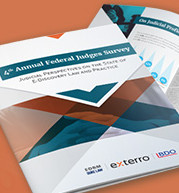
4th Annual Federal Judges Survey – Full Report Released

Exterro Inc., a provider of e-discovery and legal software, has released the 4th Annual Federal Judges Survey, produced in partnership with BDO Consulting and EDRM at Duke Law.

The survey report can be downloaded from Exterro’s website at no charge.

The report is a compilation and analysis of the responses of 30 judges to questions about attorney and judicial e-discovery proficiency, recommendations for improvements, and their thoughts on how legal teams are using new e-discovery rules.

It includes:

  • 33-pages of quantitative data analysis on where attorneys need to improve their e-discovery skills — and how to do so
  • Op-ed commentary from judges on the practical implications of the survey results
  • Access to the raw data, showcasing how the judges responded to  each of the 27 questions we asked them

Download the survey report.


Do Architects and Engineers Owe a Legal Duty to Non-Contracting Parties?

A recent unpublished Michigan Court of Appeals opinion provides some guidance with respect to the architect’s and engineer’s common law duty when processing pay applications, according to a post on the website of Clark Hill.

Jeffrey M. Gallant and Scott D. Garbo explain that the court held that the owner of a construction project could not maintain a professional negligence claim against the architect for failing to adequately review payment applications.

“While you may only have a contract with one of many project participants, Michigan courts continue to elaborate on the potential obligations owed to all other participants, including architects, engineers, contractors, subcontractors, owners, and lenders,” they write.

Read the article.


Detours on the Way to Your Contractually Selected Forum

Glenn West, writing in Weil, Gotshal & Manges LLP’s Global Private Equity Watch, writes about a case in which a cut-and-pasted forum selection clause from an unrelated contract made its way into the wrong document.

The cut-and-pasted text declared that “any action pertaining to this agreement shall be the State of Illinois.” When the plaintiff sued the defendant in Florida, where the defendant’s headquarters were located, the defendant moved to dismiss on the basis that the contract required choice of Illinois as the forum.

The Florida appellate court said that mandatory forum selection clauses mean what they say, even when what they say was the result of a supposed cut and paste error. Accordingly, the case was dismissed for being filed in an improper forum.

West sees the ruling as good news for the careful transactional lawyer and bad news for those who fail to draft a bespoke clause.

Read the article.


Claim of Fraudulent Inducement of a Construction Contract Does Not Invalidate Arbitration Clause

Pepper Hamilton LLP’s Constructlaw blog discusses an Ohio case in which a plaintiff sued a building company and attempted to have the arbitration clause in a construction contract declared unenforceable.

The contract identified the builder in the case by a name that was a fictitious name for a similarly named company and was not registered with the Ohio secretary of state, writes Emily D. Anderson. The trial court denied plaintiffs’ motion to invalidate the arbitration clause.

The appellate court agreed with the trial court, observing that the builder did not initiate the action but was merely defending it.

Read the article.