Target Pays $3.7M to Settle Lawsuit Over Racial Disparity in Use of Criminal Background Checks

Image by Mike Mozart

The Minneapolis  Star Tribune is reporting that Target Corp. has agreed to pay $3.7 million to settle a lawsuit over concerns that the way it uses criminal background checks as part of the hiring process has disproportionately hurt black and Latino applicants.

Reporter Kavita Kumar quotes Sherrilyn Ifill, president of the NAACP Legal Defense and Educational Fund: “Target’s background check policy was out of step with best practices and harmful to many qualified applicants who deserved a fair shot at a good job. Criminal background information can be a legitimate tool for screening job applicants, but only when appropriately linked to relevant questions such as how long ago the offense occurred and whether it was a nonviolent or misdemeanor offense.”

As part of the settlement of the class-action complaint, independent consultants will recommend changes to Target’s current screening guidelines.

Read the Star Tribune article.


Facebook Privacy Scandal Unleashes Nationwide ‘Litigation Swarm’

Facebook Inc. finds itself in the eye of a rapidly building legal storm over the disclosure of user data to political research firm Cambridge Analytica as lawsuits stack up from users and investors, and regulatory agencies pile on, Bloomberg Technology reports.

Reporter Christie Smythe quotes Marc Melzer, a New York-based attorney: “Facebook’s having to fight on multiple fronts, with potentially conflicting strategies and obligations, is what will make this ‘litigation swarm’ problematic.” The company will likely “want to move slowly and withhold as much as they can without antagonizing regulators or the courts that are presiding over the suits.”

“Damages could be substantial for shareholders, with one group of investors estimating that at least $50 billion in the company’s market capitalization has been wiped out as a result of the disclosure, which affected 50 million users,” Smythe reports.

Read the Bloomberg Technology article.


Holland & Knight Wins Reversal of $34.5M Malpractice Verdict

Bloomberg Law reports that a wealthy investor who accused Holland & Knight of facilitating a Ponzi scheme was not entitled to the $34.5 million verdict that a jury awarded him in 2012, a California appeals court ruled April 2.

Plaintiff Rahim Sabadia claimed that he lost $16 million in cash, and incurred an additional $18 million in loan obligations, in a series of real estate investments that H&K structured on behalf of Atlanta developer M. Shi Shailendra. Shailendracame under SEC scrutiny for defrauding investors and was permanently barred from selling securities in 2014.

“Sabadia filed this suit against H&K in 2010, accusing the firm of malpractice and fraud and alleging that it helped Shailendra with a series of transactions that bore the ‘classic elements of a Ponzi scheme,’ in the words of a fraud examiner.” writes Samson Habte.

The appeals court said that verdict couldn’t stand because “Shailendra’s dishonest acts broke the causal connection” between H&K’s alleged misconduct and the plaintiffs’ claimed investment losses.

Read the Bloomberg article.


Arbitrability Basics: An Illustration of the ‘Autonomy’ Principle

When considering an arbitration clause in a contract, one must always bear in mind the “separability” or “independence” of the arbitration agreement — the autonomy principle, writes Narges Kakalia in the ADR: Advice From the Trenches blog of Mintz Levin.

She asks: “For example, should a plaintiff be compelled to arbitrate a dispute if the contract containing the ADR clause has expired? What if the contract containing the arbitration clause is unconscionable as a matter of public policy? A plaintiff may nonetheless be compelled to arbitrate in order to resolve his dispute, as illustrated recently in a decision by the U.S. District Court for the Northern District of Texas.”

She discusses Athas Health, LLC v. Giuffre and explains how the court reached its decision.

Read the article.


Judge Dismisses Exxon’s Lawsuit, Letting Multi-State Fraud Investigation Continue

Exxon Mobil Corp.’s attempt to derail a multistate fraud investigation into the company’s public comments about climate change flamed out in a New York court, according to wire services, via The Dallas Morning News.

The report says a U.S. district judge in New York on Thursday dismissed Exxon’s lawsuit claiming officials in New York and Massachusetts conspired with environmental groups in planning the securities-fraud probe and made up their minds about its outcome before it started.

Judge Valerie Caproni said in her ruling that Exxon’s tactic of suing in federal courts in New York and Texas to stop the state probes “running roughshod over the adage that the best defense is a good offense.”

Read the Dallas News article.


Barclays Wins Its DOJ Gamble With $2 Billion Mortgage Settlement

Bloomberg is reporting that Barclays Plc agreed to pay $2 billion to settle a probe into how it sold the sort of mortgage bonds that fueled the financial crisis, securing a penalty less than half of what U.S. authorities originally demanded.

Reporters Stephen Morris and Gavin Finch explained: “The British lender was the only bank to push back against the size of the settlement demanded by the Justice Department, prompting the prosecutor to file a lawsuit in the waning days of the Obama administration in 2016. The DOJ wanted a fine of about $5 billion, but the bank refused to pay any more than $2 billion, Bloomberg news reported in 2016.”

Two former executives at the bank, Paul Menefee and John Carroll, also settled Thursday and agreed to pay $2 million to resolve claims without admitting wrongdoing.

Read the Bloomberg article.


An Indemnity Agreement Means What it Says

Charles Sartain offers a reminder that a court will (if it’s doing its job) enforce an agreement according to what it actually says, not by that which one party or the other would have liked it to say or imagines that it said.

Writing in Gray Reed’s Energy & the Law blog, Sartain discusses Claybar v. Samson Exploration. That case involved an agreement over an indemnity clause in a contract for the drilling of petroleum wells and related operation on property owned by Claybar.

Sartain presents the facts of the case, including a break-down of both side’s positions.

“Generally, indemnity agreements do not apply to claims between the parties but apply to claims made by others who are not parties to the agreement,” Sartain writes. “However, the parties can write an agreement to indemnify one another against claims they later assert against each other. To do so, the parties must expressly and specifically state that intention.”

Read the article.


Remington Bankruptcy Leaves $500M Question Over Pending Legal Claims

Image by Mitch Barrie

Remington Outdoor Co.’s decision to seek court protection brings up the question of whether people with pre-existing legal claims against the company will be made whole.

Bloomberg reports that lawsuits over firearms defects and the use of its weapons in the Sandy Hook attack were pending when the company filed for bankruptcy, and the company has moved to suspend those cases.

As reporters Eliza Ronalds-Hannon and Polly Mosendz write: “As much as $500 million could hang in the balance. Remington, which is owned by Cerberus Capital Management, is embroiled in litigation over trigger defects on guns such as its iconic Model 700 rifle, as well as another lawsuit by survivors of the children and teachers killed in the 2012 elementary school shooting in Newtown, Connecticut. Bushmaster, owned by Remington, manufactured the firearm used in that massacre, which left 26 dead. ”

Read the Bloomberg article.


Supreme Court Prepares for Right Turn

As the White House and Congress descend deeper into turmoil, the U.S. Supreme Court is showing signs of becoming as politically fractured as the rest of Washington, with a shift to the right a real possibility, reports CNN.

CNN legal analyst Joan Biskupic explains: “Indications from the few decisions issued so far and from oral arguments in yet-to-be decided cases suggest the five conservatives on the nine-member bench may be ready to wield their majority power. Led by Chief Justice John Roberts and joined by President Donald Trump appointee Justice Neil Gorsuch, the five have already prevailed in recent ideologically charged cases regarding prisoners’ civil rights and immigrants in custody.”

Biskupic writes that a looming question since Trump took office has been whether the justices would become a check on Trump, who has flouted legal norms, criticized federal judges, and revealed disdain for the rule of law.

Read the CNN article.


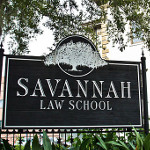
Savannah Law School Student Sues for Fraud, Breaching Trust in Planned Closing

A Savannah Law School student has sued school officials for fraud and breach of trust duties stemming from their decision to prematurely close the school in May, which she said will deprive her of the chance to become a lawyer, reports the Savannah Morning News.

The plaintiff, Jordan Crewe, alleged the school’s pending closure results “at least in part from the defendants’ mismanagement of funding for the law school.” In the suit, she also contended the defendants “established Savannah Law School to obtain federal student loan money while aiming long-term to make a profit by flipping the property.”

Reporter Jan Skutch writes that the defendants in the suit are Savannah Law School, John Marshall Law School and John Marshall University, Savannah Law School Associate Dean Keith Harrison and Michael Markovitz, law school board member and treasurer.

Crewe has completed three of the four years needed to obtain a law degree from the school.

Read the Morning News article.


AT&T Wants to Buy Time Warner To ‘Weaponize’ Its Content, Government Says in Antitrust Trial

Image by Mike Mozart

The biggest U.S. antitrust case of this century kicked into high gear Thursday as a government lawyer warned that AT&T Inc. wants to buy media giant Time Warner Inc. to “weaponize” its must-have content — a move that would raise prices for consumers and hinder innovation, according to the Los Angeles Times.

In opening arguments, Justice Department lawyer Craig Conrath said AT&T could use Time Warner’s content as a weapon against competitors that rely on the programming.

Reporter Jim Puzzanghera writes: “AT&T’s added leverage over pay-TV competitors to withhold content from some of the most valuable assets in entertainment — including HBO, CNN, TBS, TNT and Warner Bros., Hollywood’s largest TV and film studio — would cause prices to rise by more than $400 million a year for Americans, Conrath said.”

Read the LA Times article.


Judge Stunned by Ex-Rolls-Royce Counsel Switching Sides in Litigation

A magistrate judge in the U.S. Western District of Texas has disqualified a former counsel to Rolls-Royce from representing a client in litigation against his former employer, reports Bloomberg Law.

“Donald Little represented Rolls-Royce as in-house counsel from 1997-2008 and as outside counsel in a 2010 case where Rolls-Royce was alleged to have made false statements about ‘suspect’ airplane parts,” explains reporter Mindy L. Rattan. “Rolls-Royce hired George Gage as an expert in that case.”

Then, when Gage sued Rolls-Royce North America Inc. in a qui tam case that involved the explosion of a U.S. Air Force plane, Little represented him.

The magistrate judge who heard the defendant’s motion to disqualify Little said it was “stunning” that Little took that position.

Read the Bloomberg article.


Patent Lawyer Honored by Federal Court

East Texas trial lawyer Clyde M. Siebman of Siebman, Burg, Phillips & Smith, LLP, recently was honored by Chief Judge Ron Clark of the U.S. District Court for the Eastern District of Texas based on his years of work benefitting the district.

In a surprise ceremony attended by U.S. District Judge Amos Mazzant, U.S. Magistrate Judge Christine Nowak and local dignitaries, Judge Clark announced that Siebman’s portrait will now hang in the attorney conference rooms at the Paul Brown Federal Courthouse in Sherman.

Siebman is a former law clerk to the late Judge Brown and the founding president of the Eastern District of Texas Bar Association. He is a member of the American Board of Trial Advocates and has been attorney of record in hundreds of Eastern District cases.

Chairman of the Eastern District of Texas Bench Bar Conference since 2009, he also has served on the Eastern District’s Local Rules Advisory Committee, Non-Appropriated Fund Committee, and U.S. Magistrate Judge Merit Selection Committees.

In another honor, Siebman was selected as the Dallas/Fort Worth Lawyer of the Year for patent trials in the 2018 edition of The Best Lawyers in America.


Paying the Price: The Pitfalls of Ineffective Liability Waivers

Poorly drafted waivers include lawyerly language that may appear concrete on the surface but crumbles during a lawsuit, warns Hellmuth & Johnson in a blog post.

Authors Micheal D. Howard and Jason S. Raether describe a recent case involving a fitness studio  that demonstrates how a poorly drafted waiver can be as effective as having no waiver at all.

In the case, involving an injury to the customer of a fitness studio, a trial court found in favor of the studio, based on the language of an indemnity agreement. But the appellate court reversed, finding the language to be inadequate.

Read the article.


Whistleblower Says Walmart, Eyeing Amazon, Cheated on E-Commerce

Walmart Inc. was sued on Thursday by a former executive who accused the world’s largest retailer of issuing misleading e-commerce results, amid growing pressure from Amazon.com Inc,, and firing him for complaining about it, reports Reuters.

In his complaint, former director of business development Tri Huynh alleges various wrongdoing, including the mislabeling of products, enabling Walmart to charge excessive sales commissions, and failure to properly process customer returns, enabling it to boost results, according to the report by Jonathan Stempel and Nandita Bose.

“Wal-Mart cut corners and cheated in a race to expand and gain market-share,” having been “desperate to gain the ground it had long lost to Amazon,” Huynh said in his complaint filed in U.S. District Court in San Francisco.

Walmart called Huynh a disgruntled former employee who was let go during a restructuring.

Read the Reuters article.


Dallas Judge Denies Toyota Request to Seal Safety, Product Defect Documents

A Dallas judge has rejected an attempt by Toyota to seal documents describing the automaker’s history of withholding information about its defective and dangerous products in connection with consumer lawsuits, often involving injured victims, according to a post on the website of  Androvett Legal Media and Marketing.

In his March 5 ruling, state District Court Judge Dale Tillery said that it is in the public interest to keep such documents open for review because they detail issues involving public health and safety. In a separate ruling, Judge Tillery ordered Toyota to make a representative available to describe how the company manages and stores databases of hundreds of thousands of documents that may contain information about safety and design issues of Toyota products.

Attorneys from The Law Offices of Frank L. Branson obtained the records as part of a lawsuit on behalf of a Dallas family whose two children were seriously injured in 2016 when seatbacks in their Lexus ES300 failed during a rear-end collision.

“The implications of this ruling go far beyond our case,” said Branson. “Toyota has a track record of not producing information in American courts.”

The judge’s order also applies to internal correspondence from a former Toyota corporate lawyer who complained that the automaker routinely refused to comply with information requests from lawyers in product defect cases. The Androvett post says in-house lawyer Dimitrios Biller left Toyota in 2007, citing his objections to Toyota’s lack of transparency and its efforts to avoid releasing proprietary internal documents to plaintiffs in injury lawsuits. Biller’s correspondence specifically describes Toyota’s efforts to settle injury lawsuits rather than turn over a safety database known within Toyota as the “Books of Knowledge.”

The case is Reavis et al. v. Toyota Motor Sales USA et al., Cause No. DC-16-15296.

Branson, who represents the Reavis family along with Branson firm attorneys Chip Brooker and Eric Stahl, said the public deserves access to court files, particularly when the records document safety and design issues.




Houston Trial Lawyer Courtney Ervin Joins Hicks Thomas as a Partner

Trial lawyer Courtney Ervin has joined commercial litigation boutique Hicks Thomas LLP, the firm announced.

“Courtney is a highly skilled and effective trial lawyer” said Hicks Thomas co-founder John B. Thomas. “She is an exceptional advocate and has great instincts. Her addition enhances our diversity and positions us to serve our client needs well into the future.”

Ervin was profiled as one of the leading energy litigation lawyers in the U.S. in 2016 by The Legal 500 and has repeatedly earned a place on the Texas Rising Stars list recognizing up-and-coming lawyers, the firm said in a release.

She earned her law degree from the University of Houston Law Center, magna cum laude, and her bachelor’s degree from Colorado State University.

Read details of the announcement.


Morgan Lewis Scolded for Possible Conflict in Hotel Wage Case

A U.S. district judge in California concluded that Morgan Lewis “plainly violated” California attorney professional conduct rules by representing “both sides of the case” in a hotel workers’ class action suit, Bloomberg Law reports.

Sheraton workers in San Francisco won class action status for their claim that their employer created a culture that encouraged staff to work through breaks without pay.

Reporter Jon Steingart writes that Judge William Alsup criticized the way lawyers from Morgan, Lewis & Bockius LLP obtained statements from three former employees that were used to argue against certification of the class. The same lawyers also represented the former workers in depositions conducted later.

A Morgan Lewis lawyer responded to a show cause order with an apology and a pledge that the firm wouldn’t repeat the conduct in any court.

Read the Bloomberg Law article.


5 Steps to Creating the Most Defensible Legal Hold Audit Process

Zapproved has published “Audit Trail Checklist: Set Yourself Up for Success,” a guide that presents five steps to a defensible legal hold audit process.

The guide can be downloaded from Zapproved’s website at no charge.

“Litigation is inevitable — and all too often, so are accusations of lost, destroyed or withheld evidence,” the company says on its website. “Yet many companies aren’t prepared. They may not have a clear record of when a legal hold was issued or who received it — meaning they have to scramble to put notices together when litigation arises. Out-of-date legacy systems of complicated spreadsheets or confusing email read receipts are expensive, time-consuming and risky.”

Zapproved’s audit trail checklist provides five simple steps to create a customized litigation response plan. It includes an outline of where to start, which is where discovery obligations begin, with the Federal Rules of Civil Procedure. It goes on to discuss tips on assessing your current approach and selecting automated, cloud-based tools based on today’s best technologies. The guide also includes suggestions on how to get a team on board.

Download the guide.


Plaintiff Lawyers See Nationwide Settlement As Only End For Opioid Lawsuits

Lawyers who met in a federal courtroom in Cleveland to discuss a settlement of opioid litigation faced the difficult task of crafting a deal that will not only pay their clients — mostly towns and cities — but include states and even the federal government while spreading the cash evenly across the country, according to Forbes.

Contributor Daniel Fisher writes that most of the attendees were private lawyers who have signed contingency-fee contracts with municipal clients.

He adds that “the sheer complexity of the litigation raises questions about how the parties will craft an agreement that ends the threat of further lawsuits against the industry while distributing cash to all the varied entities who have sued.”

But the situation for the self-funded private lawyers is complicated by the involvement of state and federal claims on some of the expected settlement funds.

Read the Forbes article.