State Supreme Courts Increasingly Face Partisan Impeachment Threats

Courthouse - bankAttacks on judicial independence are becoming more frequent and more partisan, according to a Governing report.


Reporter Alan Greenblatt explains, that “while ‘threats of this nature have been going on for years,’ says William Raftery of the National Center for State Courts, articles of impeachment are now being filed more often and for more reasons. Over the past decade or so, judges have become targets of criticism not only from politicians but cable talk-show hosts. In the past, grounds for impeachment have typically been treason, high crimes or malfeasance. That’s changing. These days, lawmakers’ partisan disapproval of rulings appears to be a strong motivator for ousting judges.”

Read the Governing report.


2 Firms Each Sanctioned $500 After Defendant Complains of ‘Egregious Discovery Gamesmanship’

A federal judge in Seattle has ordered the law firms of Baker Donelson and Corr Cronin to pay $500 each for trying to use an apparent misunderstanding as a litigation “weapon,” reports the ABA Journal.

The judge said the law firms had filed a frivolous motion for partial summary judgment that claimed their opponent, software maker Medstreaming, missed a discovery deadline by responding to a request for admissions by email.

Baker Donelson and Corr Cronin had claimed that a request for admissions that the defendant’s software performed improperly was automatically deemed admitted because the response was improperly served via email. Those “admissions,” they claimed, entitled the plaintiffs to a ruling on their breach of contract claims.

The judge said the plaintiffs’ lawyers had tried “to use as a weapon in this litigation whatever misunderstanding occurred regarding how discovery requests and/or responses would be exchanged.”

Read the ABA Journal article.


Online Quiz Scores Maturity of E-Discovery Process

Exterro has posted an online quiz to quickly find out how mature an e-discovery process is when compared to EDRM Duke Law’s e-discovery maturity scale. The complimentary quiz takes about 10 minutes to complete.

The quiz consists of 20 multiple choice questions based on best practices ranging across the Electronic Discovery Reference Model (EDRM) from information governance through matter closing.

It will help participants:

  • Understand your organization’s e-discovery maturity
  • Improve your in-house e-discovery process
  • Learn more about what mature e-discovery operations look like

Take the quiz.


SEC Says Biotech Billionaire CEO Took Part in Pump-and-Dump Schemes

Economy - stock exchangeA biotechnology billionaire faces charges from the Securities and Exchange Commission of being part of pump-and-dump schemes that netted $27 million and left retail investors holding the bag, reports MedCity News.

In a lawsuit filed in federal court in New York, the SEC alleged OPKO Health chairman and CEO Phillip Frost took part in three pump-and-dump schemes between 2013 and 2018.

Reporter Alaric Dearment explains that the complaint alleges that Frost was involved in schemes to promote the stock of some companies on the crowd-sourced investment content site Seeking Alpha, on which articles would appear promoting their shares and touting Frost’s involvement in the companies. After the stock prices were pumped up, the defendants would sell it off, the SEC alleges.

Read the MedCity article.


MGM to Shooting Survivors: $500 Donation to Charity If They Waive Notice of Suit

The Associated Press is reporting that MGM Resorts International drew criticism Tuesday for saying hundreds of survivors of the Las Vegas mass shooting, who are being sued by the casino operator, could opt to have the money that will be used to serve them a lawsuit instead donated to a charity.

The company, which sued more than 1,900 victims of the Oct. 1 mass shooting, has been working to notify them as it faces a standard 90-day deadline, explains AP reporter Regina Garcia Cano.

Attorney Robert Eglet, part of a group representing most of the victims, said the company is just trying to “spin” its attempt to save money on serving legal notices, Cano writes.

Read the AP article.


Brett Kavanaugh’s Expert Evasions, Learned From Past Masters

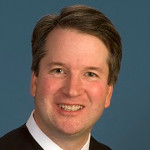
Judge Brett Kavanaugh

In the midst of the discord surrounding his confirmation hearings, Judge Brett M. Kavanaugh was a placid presence. Even as he deflected most questions about legal issues, he was quick to say he was alert to the real-world consequences of his rulings, reports The New York Times.

“He gave the same answers countless times, explaining, for instance, that Roe v. Wade had in 1973 established a constitutional right to abortion and that the Supreme Court had repeatedly reaffirmed it, notably in 1992,” writes Adam Liptak. “But he would not say whether he was prepared to overrule it.”

“The Democrats made a fairly strong case that Judge Kavanaugh is very partisan and loyal to the president,” said Paul M. Collins Jr., a political scientist at the University of Massachusetts, Amherst. “The nominee’s refusal to criticize the president in his attacks against the judicial branch didn’t help his case.”

Read the NY Times article.


Former Dewey Chairman Reaches Agreement With SEC to Pay Six-Figure Civil Penalty

The ABA Journal reports that former Dewey & LeBoeuf chairman Steven Davis has reached an agreement with the U.S. Securities and Exchange Commission to pay a $130,000 civil penalty.

The SEC alleged that some executives of Dewey & LeBoeuf, which closed in 2012, misled lenders and bond buyers about the firm’s financial condition.

Dewey’s former finance director former controller also agreed to pay civil penalties.

Read the ABA Journal article.


JPMorgan Chase Will Pay $24 Million to End Lawsuit From Black Advisers

JPMorgan Chase has reached a settlement with financial advisers who say they were treated poorly because they’re black, reports Bloomberg News via the Chicago Tribune.

Reporter Max Abelson explains: “Six current and former employees at the largest U.S. bank filed what they asked to be a class action, alleging discrimination that’s ‘uniform and national in scope.’ Instead of fighting it in court, the bank agreed to pay $19.5 million to the members of the class, according to Friday filings. It will also put $4.5 million into a fund that will back recruitment, bias training, a review of branch assignments and a coaching program for black advisers.”

In the settlement, the bank denied any “wrongdoing of any kind whatsoever.”

Read the Bloomberg article.


Roy Moore Sues Sacha Baron Cohen for $95M Over ‘Who Is America?’ Appearance

Sacha Baron Cohen is being sued for defamation by Roy Moore over his appearance on the actor’s controversial Showtime series — and the embattled former Alabama Supreme Court Chief Justice is seeking $95 million in damages, reports The Hollywood Reporter.

“Cohen, as the character Erran Morad, interviewed the judge and demonstrated a fictional device meant to detect pedophiles — a reference to Moore’s alleged sexual misconduct with an underage girl that surface during his failed campaign for Alabama’s U.S. Senate seat,” writes reporter Ashley Cullins.

Moore’s complaint claims he was deceived and was defamed by “the false and fraudulent routine.”

Read The Hollywood Reporter article.


State Farm Ducks Racketeering Trial With $250 Million Accord

State Farm agreed to pay $250 million on the brink of a trial to customers who claimed the company tried to rig the Illinois justice system to wipe out a $1 billion jury verdict from 19 years ago, Bloomberg reports.

“The customers were seeking as much as $8.5 billion in damages in a civil racketeering trial that was set to start Tuesday in federal court in East St. Louis, Illinois. A judge granted preliminary approval to the accord and set a final fairness hearing for December,” according to the report.

Policyholders had accused the company of leading an effort to recruit a judge friendly to its cause for the Illinois Supreme Court, secretly funding Judge Lloyd Karmeier’s 2004 election campaign by funneling money through advocacy groups that didn’t disclose donors. Under the federal Racketeer Influenced and Corrupt Organizations Act, any damages would have been tripled.

Read the Bloomberg article.


Registration Open for 2018 Eastern District of Texas Bench Bar Conference

Registration has begun for the 2018 Eastern District of Texas Bench Bar Conference, which is being held in conjunction with The Center for American and International Law’s Patent Trial and Appeal Board Bench Bar Conference.

Hosted by the Eastern District of Texas Bar Association, the annual event is one of the largest of its kind nationally, bringing together practicing lawyers, general counsels, in-house counsels, respected judges, and industry experts from across the globe to discuss the latest issues in patent law and intellectual property litigation. Topics will also include Corporate Cyber Threats, Qui Tam litigation, Trade Secret Theft and Protection, and many others.

The Honorable Andrei Iancu, U.S. Under Secretary of Commerce for Intellectual Property and Director of the United States Patent and Trademark Office (USPTO), will be the keynote speaker.

The 22nd annual EDTX Bench Bar Conference is set for October 17-19 at the Marriott Legacy Town Center in Plano, and registration information is available here.

Contact Andrea Williams-McCoy for more information on conference programs, registration and lodging at 903-870-0070 or andrea@siebman.com.


Check Those ‘Choice of Law’ Provisions

“Choice of law” clauses in contracts are often overlooked in their potential importance, as the parties and counsel concentrate on the more immediate matter of the explicit commercial terms, write Val H. Stieglitz and R. Bruce Wallace for Nexsen Pruet.

“When the deal goes sour, however, and it comes time for the parties to assert and enforce their contractual rights, the spotlight often turns to the ‘choice of law’ provision – which perhaps no one had paid much attention to previously,” the authors explain.

Their article examines a recent case experience highlighted how “choice of law” distinctions can become significant once matters enter litigation.

Read the article.


Warren Burns Appointed Interim Lead Counsel in Online Price-Fixing Class Action

A federal judge in the U.S. District Court for the Southern District of Texas has appointed Warren Burns of Dallas-based Burns Charest LLP as sole interim lead class counsel in a nationwide antitrust class action. The litigation alleges a conspiracy by online retailers, including Houston-based Zaapaaz, to fix prices for customized silicone wristbands and lanyards.

In 2017 the defendants in the class action pleaded guilty to a range of federal charges of price-fixing in violation of Section 1 of The Sherman Act.

In appointing Burns as sole interim lead counsel, the court explained:

This appointment is warranted for several reasons. First, at oral argument, Mr. Burns was the only counsel who offered the Court substantive, detailed explanations on how he structures and runs his large case litigation teams.

Of particular note were Mr. Burns’ explanations of his and his firms’ billing practices in prior class action litigation, and his representations that he will use those practices, such as not permitting billing for file and correspondence review, and other mechanisms to ensure efficient prosecution of this case.

Second, the balance of the Rule 23(g) factors support appointment of Mr. Burns and Burns Charest as sole interim lead counsel. Burns Charest has made extensive efforts in these matters to date, Mr. Burns and his firm have significant experience in antirust class actions, and he and his firm have knowledge of the applicable law.

The court concluded that “Burns Charest is uniquely positioned to prosecute this case in the most cost effective and efficient manner possible.”

The case is Kjessler v. Zaappaaz, Inc. et al., Case No. 4:17-cv-3064 (S.D. Tex).


NBC News Faces New Accusations Its GC Threatened Reporter Over Weinstein Reporting

Harvey Weinstein

Image by David Shankbone

NBC News’ handling of allegations of sexual harassment against powerful men is once again under scrutiny over its alleged failing to follow through on a credible probe of accusations levied against Harvey Weinstein, according to Variety.

The magazine’s latest article on the controversy also refers to a Daily Beast report alleging that NBC News general counsel Susan Weiner made multiple phone calls to the reporter, Ronan Farrow, threatening to smear him if he continued his reporting on Weinstein.

“This is a ridiculous claim by all measures. Susan is a person of tremendous integrity, is respected by all her peers and would never, ever threaten someone,” said an NBC News spokesperson.

Much of the criticism comes from  Rich McHugh,  the NBC News former supervising producer of investigative reporting.

Read the Variety article.


Ken Starr’s Next Role Will Be With The Lanier Law Firm

Bloomberg Law is reporting that Kenneth W. Starr, the former independent counsel, appeals court judge, and U.S. solicitor general, is going to be practicing law again.

Starr, the former Baylor University president, will join the Houston trial firm The Lanier Law Firm, which is involved in some of the country’s biggest civil disputes, including over hip replacements and talcum powder, writes Elizabeth Olson.

“Starr already has been working with the Lanier firm’s appellate litigation team on multi-million-dollar hip implant litigation against Johnson & Johnson and its subsidiary DePuy Orthopaedics Inc.,” according to the report.

Read the Bloomberg Law article.


Senate Confirms Trump ‘Not Qualified’ Nominee and Obama Pick

The Senate reached a deal Tuesday to swiftly confirm seven federal district court judges, helping President Donald Trump put an enduring stamp on the U.S. judiciary, reports Bloomberg.

One of the Trump nominees, Charles Barnes Goodwin in the Western District of Oklahoma, had been rated “not qualified” by the American Bar Association. Goodwin’s “work habits, including his frequent absence from the courthouse until mid-afternoon,” raised doubts among a majority of the members of the ABA Standing Committee on the Federal Judiciary.

Susan Paradise Baxter, whom President Barack Obama also nominated but who was stalled by the Republican-controlled Senate, was confirmed to the Western District of Pennsylvania.

The Senate is scheduled to vote on a second failed Obama nominee to the same court, Marilyn Jean Horan, along with seven other district court nominees, “at a time to be determined next week.”

Read the Bloomberg article.


Former Barnes & Noble CEO Sues Over His Firing

Image by Mike Mozart

Demos Parneros, former CEO of Barnes & Noble, is suing the bookseller in federal court over his firing last month.

CNN reports that Parneros says in the complaint that Barnes & Noble fired him without cause and “irrevocably damaged” his reputation.

Julia Horowitz writes that the suit alleges breach of contract and defamation and asks for severance, lost wages and other damages. The lawsuit says he was not paid severance due under his contract and was removed from the board immediately, after serving as chief executive since April 2017.

Parneros also complained that a Barnes & Noble press releaseon his termination included language that it “knew full well was false but would be read as reporting that Parneros had engaged in serious sexual misconduct.”

Read the CNN article.


‘Evasive Discovery Tactics’ Cost Lead Plaintiff Against Sanofi

Bloomberg Law reports that a plaintiff in a bellwether products liability case involving the chemotherapy drug Taxotere was sanctioned for withholding information about her medical history.

Plaintiffs in the case claim Sanofi-Aventis U.S. LLC failed to warn patients that Taxotere could cause permanent hair loss.

Reporter Michael Greene explains: “Dr. Kelly Gahan, a bellwether plaintiff in the multidistrict litigation, used evasive discovery tactics to avoid revealing information about medical treatment she had received, Judge Jane Triche Milazzo, of the U.S. District Court for the Eastern District of Louisiana, said.”

Gahan did not reveal all the physicians who provided treatments to her over an eight-year period and whether she used any over the-the-counter medications. Now she must pay Sanofi expenses and attorneys’ fees incurred in obtaining the records.

Read the Bloomberg Law article.


7th Circuit Tosses $3M Verdict in Suit Blaming Antidepressant Labeling for Biglaw Partner’s Suicide

The ABA Journal reports that a federal appeals court has overturned a $3 million award to the widow of a Reed Smith partner who blamed antidepressant labeling for her husband’s suicide.

“The Chicago-based 7th U.S. Circuit Court of Appeals ruled Wednesday against the widow, Wendy Dolin, in an appeal by GlaxoSmithKline, the maker of the antidepressant Paxil. Dolin’s husband, Reed Smith partner Stewart Dolin, was taking paroxetine, a generic version of Paxil, when he committed suicide in 2010,” writes reporter Debra Cassens Weiss.

Dolin’s widow had maintained the drug labels should have warned of an increased suicide risk, but the court found that the wording on the drug labels was mandated by the Food and Drug Administration, and Dolin’s labeling claim under Illinois law was pre-empted by federal law.

GSK countered that Stewart Dolin committed suicide because of job concerns. He had been a partner at Sachnoff & Weaver before it was acquired by Reed Smith in 2007. He was named chair of Reed Smith’s corporate and securities group, before becoming co-chair along with another lawyer in 2010, the ABA Journal reports.

Read the ABA Journal article.


Third Quarter IADC Defense Counsel Journal Dissects Trending International Law Topics

Following its recent annual meeting held in Lisbon, Portugal, the International Association of Defense Counsel (IADC) has published its third quarter 2018 Defense Counsel Journal (DCJ) with articles that focus on trending international law issues. Topics range from product liability in Latin America, to global business compliance with the European Union’s new General Data Protection Regulation (GDPR), to the consequences of data breaches in Europe compared to the United States.

In a release, the IADC said the DCJ is a quarterly forum for topical and scholarly writings on the law, including its development and reform, as well as on the practice of law in general. DCJ articles are written by members of the IADC, which is a 2,500-member, invitation-only, worldwide organization that serves its members and their clients, as well as the civil justice system and the legal profession.

The current DCJ issue is available for free and without a subscription via the IADC’s website.

Also in the current DCJ issue, the IADC’s immediate past president, Andrew Kopon Jr., looks back at his year leading the organization while heralding the many talented lawyers who serve the IADC as members and active participants as committee leaders and members.

“What distinguishes the IADC from the pack of quality professional bar associations around the world? I believe the answer lies with the caliber of our members that continuously forge the extraordinary character of the IADC,” Kopon wrote in his DCJ letter.

In a separate article, IADC member Michael Franklin Smith reflects on the end to his two years serving as the DCJ’s editor, thanking IADC members whose articles helped him personally delve deeply into many vital subjects, also helping to inform his own law practice.

The third quarter 2018 issue of the DCJ includes the following articles:

— “Re-Examining ‘Carbon Copy’ Prosecutions: A Look Back and Spring Forward” – Explores the transnational trend of “carbon copy” prosecutions, which is when one jurisdiction files charges based on a guilty plea or similar charging document from another jurisdiction. The article explains why duplicative, serial enforcement actions are now part and parcel of the enforcement landscape, and have joined the international vernacular dealing with cross-border corruption matters.

— “Cyber Liability: Data Breach in Europe” – Looks at the consequences of data breaches in Europe and compares the situations in Europe and the United States with regard to the major features of such an event. The article’s authors review developing case law in this area, in particular in the UK where there have been some landmark decisions, as an indicator for where Europe seems to be heading. With recent regulatory changes in the European Union, the approach to dealing with data breaches in Europe and the United States is becoming more aligned.

— “Product Liability in Latin America” – Analyzes product liability in Latin America where the recent shift to a market-friendly approach in politics has made the region attractive for business development in a reduced players’ market. The article goes on to suggest that product defects present complex cross-border situations that require a product liability risk management team with knowledge of the relevant laws across the jurisdictions at play.

— “The General Data Protection Regulation – Another Key Compliance Area for Global Business” – Examines key provisions of the European Union’s recently implemented General Data Protection Regulation (GDPR), as well as what lessons may be drawn from the development and enforcement of Foreign Corrupt Practices Act-style provisions when considering the potential impact of the GDPR.