Are Contractor Agreements Not Worth the Paper They’re Printed On?

A recent ruling in an Alabama federal court illustrates how having a valid independent contractor agreement is not necessarily an impenetrable magic shield automatically rendering misclassification claims null and void, according to Fisher Phillips’ Gig Employer Blog.

Partner Richard Meneghello describes the case in which a company’s former worker claimed that he faced discrimination on account of his race, gender, and age during his three months on the job. The company, however, countered that the plaintiff had been an independent contractor and did not have legal standing to bring employment discrimination claims under Title VII or the ADEA.

The company also citied an independent contractor agreement, confirming that the worker was a contractor and had no employment rights. The plaintiff cited work requirements that would have been appropriate for an employee.

“When the two were compared—the world contained in the contractor agreement against the reality as alleged by Nemo’s complaint and evidence—the court found inconsistencies that led it to rule in [the plaintiff’s] favor,” Meneghello writes.


Read the article.


Judge Hears Arguments for Tossing Neiman Marcus Fraud Lawsuit

Lawyers for Neiman Marcus tried Thursday to convince a district court judge in Dallas to dismiss a lawsuit that alleges the luxury retailer’s owners fraudulently transferred its European subsidiary out of reach of creditors, reports The Dallas Morning News.

Neiman Marcus’ is dealing with an unsustainable debt of $5 billion.

“One of Neiman Marcus’ debtholders, Marble Ridge Capital, sued in December to reverse the transfer of the Munich-based MyTheresa e-commerce division, valued at $1 billion, to private equity owners Ares Management and the Canada Pension Plan Investment Board.” according to the NewsMaria Halkias.

Read the Dallas News article.


Lawsuit: Trump Family-Planning Rule ‘Politicizes’ Medicine

A new Trump administration rule for family-planning grants could trigger a national public health crisis, the American Medical Association and Planned Parenthood said in a lawsuit Tuesday challenging the rule, reports the Associated Press.

In addition to the AMA/Planned Parenthood lawsuit, the rule is being challenged in a lawsuit filed Monday by California officials and another filed Tuesday by officials in 20 other mostly Democratic controlled states.

The Department of Health and Human Services rule would prohibit family planning clinics funded by the federal Title X program from making abortion referrals — a provision that critics denounce as a “gag rule.”

“Pregnancies that are unintended, and thus riskier, will increase. The number of abortions will also increase. And there will be fewer tests for sexually transmitted infections and cancer screens — putting patients and their partners at great health risk,” the lawsuit said.

Read the AP article.


Zapproved Introduces Proportionality Volume of Ediscovery Case Law Summaries

Zapproved’s latest ediscovery case law summary volume shows how courts are interpreting the amended Federal Rules of Civil Procedure as they relate to the scope of discovery and the limits of proportionality. The new volume can be downloaded from Zapproved’s website.

The publication covers a range of cases from the last year, encompassing plaintiffs who might regret putting their lives under the microscope as well as a few overreaching litigants who seem to want to continue endless discovery rather than ever getting to trial. As usual, there are a few cases involving woefully unsupported arguments, illustrating what the courts wish they’d heard about. And forensic examinations came up several times, with courts ruling both for and against them.

This volume includes 17 cases analyzing the boundaries of the scope of discovery and proportionality under the amended Federal Rules of Civil Procedure.

Download the new volume.


California Attorney in Hot Water for Sexist Insult of Judge

Update: Pavone & Fonner have filed a federal lawsuit seeking to invalidate B&P 6068(b) as in violation of fundamental First Amendment principles.

A California attorney is in professional trouble for calling the ruling of the female judge in his case “succubustic,” among a host of other insults, according to Bloomberg Law.

A state appellate court announced it would report Benjamin Pavone of Pavone & Fonner LLP to the state bar, writes Bloomberg’s Brian Flood.

The trial court had denied Pavone’s request for an award of $146,634 in attorneys’ fees in an employment law suit. In his notice of appeal, he said the  ruling was “disgraceful,” “succubustic,” validated the defense’s “pseudohermaphroditic misconduct,” and “prompt[s] one to entertain reverse peristalsis unto its four corners.”

The use of a form of the word “succubus” drew a rebuke from the appellate court: “We publish this portion of the opinion to make the point that gender bias by an attorney appearing before us will not be tolerated, period.”

Read the Bloomberg Law article.


‘Just What Was Needed’: Another Way to Waive a Right to Arbitrate

In a post on the Mintz, Levin, Cohn, Ferris, Glovsky and Popeo website, Gilbert A. Samberg discusses the question: What if a contracting party fails to appear to seek enforcement of an enforcement clause?

“At least two New York State trial courts tell us that your unexcused default in responding to a summons and complaint can be deemed a waiver of a contractual right to arbitrate,” he writes.

Courts in those cases granted default judgments on contract claims in such circumstances notwithstanding that the contracts in question contained arbitration clauses.

Read the article.


Lead Lawyer in Roundup Trial Draws Quick Sanction for Opening Statement ‘Misconduct’

Image by Mike Mozart

The San Francisco judge overseeing a string of federal jury trials over whether Monsanto’s Roundup weed killer causes cancer on Tuesday sanctioned a lead trial attorney for discussing prohibited evidence in opening statements to the jury, reports Courthouse News Service.

CNS reporter Helen Christophi explains:

U.S. District Judge Vince Chhabria imposed $500 in sanctions on plaintiff attorney Aimee Wagstaff, of Colorado-based Andrus Wagstaff, ruling she intentionally violated court orders not to reference evidence blocked from the first part of the trial while delivering her opening statement Monday. He said he might also sanction the rest of the lawyers representing California man Edward Hardeman, but will defer ruling until after the four-week trial has wrapped.

Read the Courthouse News Service article.


New Survey Results: 264 Federal Judges Report on Litigation Practices

More than 250 active and recently retired federal judges responded to a recent Exterro survey on how they would like legal teams to manage litigation/e-discovery processes in their courtrooms.

Exterro has made the report available from its website.

An example of the type of information revealed is that that 47 percent of the judges have taken an action to remedy e-discovery problems three or more times in the past year.

The report covers such topics as:

  • What judges expect of the attorneys appearing before them
  • How often and why judges issue discovery warnings and sanctions
  • What judges consider the most important e-discovery/litigation practices

Download the report.


Texas Supreme Court Ruling on Attorney-Client Privilege Can Benefit Insurers

The Supreme Court of Texas recently ruled in favor of the Texas Windstorm Insurance Association (TWIA) regarding attorney-client privilege in a decision that can benefit insurance companies involved in litigation, reports Androvett Legal Media & Marketing.

The justices determined that attorney-client privilege extended to communications between a TWIA employee and counsel when the employee was serving as an expert witness for the company. The case involved a dispute between the city of Dickinson and TWIA.

Dallas insurance litigator Meloney Perry of Perry Law P.C. says the ruling is significant to Texas because it aligns the state with the federal rules on expert disclosure and production. She notes it also may be of particular benefit to insurance companies.

“This ruling means that underwriters, auto damage personnel and claims handlers may serve as experts without exposing attorney-client communications, even though they are employed by an insurance company involved in litigation,” said Perry. “One side benefit is this could cut costs from having to hire an outside expert.”

Perry says an insurance carrier employee designated with expert knowledge or who signs an affidavit attesting to certain expertise will not have to produce communications with counsel when Texas law applies. However, certain work product documents may not be protected.

“Work product is still subject to being produced, so parties will need to make the determination on a document-by-document basis. If the witness is provided an investigative report which is work product that may not be protected, but the email between the witness and counsel will be.”

Perry adds that if a federal question is being litigated in federal court, the attorney-client privilege is a question of federal common law. In state court and diversity cases filed in federal court, the attorney-client privilege is controlled by that forum’s state law.


Court Agrees General Counsel Was Fired for Whistle-Blowing; Upholds $8 Million Verdict

A federal appeals court upheld about $8 million in damages Tuesday to the former general counsel of a Bay Area laboratory who was fired after telling company officials about possible bribery and records falsification by the lab’s employees in China, according to the San Francisco Chronicle.

Bio-Rad Laboratories fired general counsel Sanford Wadler in 2013, claiming poor performance. The company also claimed it found no evidence of wrongdoing by its employees.

The Ninth U.S. Circuit Court of Appeals on Tuesday found evidence to support the 2017 verdict by a federal court jury in San Francisco that Wadler had acted as a whistle-blower and was dismissed in retaliation for reporting conduct that he “reasonably believed” to be illegal, according to the Chronicle‘s Bob Egelko.

Read the SF Chronicle article.


Law Firm Sues Associate Who Quit After 1 Year

Above the Law reports on a law firm’s breach-of-contract lawsuit against an associate who wants to leave the firm.

Senior editor Kathryn Rubino describes the suit filed by the Preis PLC law firm:

The firm recently sued Jane “Megan” Daily, a soon-to-be former associate leaving after a year at the firm. The petition alleges a breach of contract and damages — the firm says it lost $10,000 by training Daily for the year because “more experienced attorneys must take time away from other tasks to supervise and mentor new hires, further costing the firm significant lost billing time.”

Read the Above the Law article.


U.S. Supreme Court Asked to Review Zero Emissions Credit Schemes

High power - electric- gridIn two related cases, petitioners are asking the U.S. Supreme Court to strike down state generator subsidies that petitioners argue distort competitive wholesale power markets that are under the exclusive jurisdiction of the Federal Energy Regulatory Commission under the Federal Power Act, reports Verrill Dana in its Energy Law Update.

Associate Brian Marshall of Portland, Maine, explains:

Both cases concern “zero emission credits” (ZEC) schemes, one in Illinois and one in New York, that subsidize nuclear power plants. These ZEC subsidies allow otherwise uncompetitive nuclear plants to stay profitable and continue to operate, even if they fail to receive sufficient compensation in wholesale power auctions. Both the Second and Seventh Circuits have upheld the ZEC nuclear power subsidies.

Read the article.


Contracting to Avoid Tort-Based Punitive Damages Awards

While the rule denying the award of “punitive” or “exemplary” damages for breach of contract is subject to certain limited exceptions, it appears to enjoy wide-spread acceptance in most states and in virtually all common-law countries, according to Glenn West, writing in Weil, Gotshal & Manges’ Global Private Equity Watch.

But one of the well-recognized exceptions that can sometimes threaten to swallow the rule is that which permits punitive or exemplary damages anytime ‘the conduct constituting the breach is also a tort for which punitive damages are recoverable.’ And a ‘dog’s breakfast of tort-based fraud claims can frequently accompany a breach of contract claim.” West writes.

He discusses the case of Bombardier Aerospace Corp. v. SPEP Aircraft Holdings, LLC, in which the Texas Supreme Court upheld the liability-limiting provisions waiving punitive damages, even for fraud.

Read the article.


Turbulence on Breach of Employment Agreement, Trade Secret Misappropriation

Addressing a bench trial decision concerning a former employee’s retention of confidential information and violation of a non-compete provision, the U.S. Court of Appeals for the Fourth Circuit found no abandonment of the employer’s breach claims, and concluded that while certain flowcharts contained protectable trade secrets, there was no breach of the non-compete.

In an article for McDermott Will & Emery, posted at JDSupra.com, Mary Hallerman describes the case of an employee who was subject to an employment agreement requiring him to return to his employer all work documents upon leaving the company. The former employee breached his agreement by retaining these documents after he left the company and misappropriated trade secrets, the plaintiff company alleged.

The Fourth Circuit found that the ex-employee had not breached the non-compete clause because his role at his new employer was not sufficiently similar to constitute a breach.

Read the article.


$43M Awarded to Intellectual Ventures I LLC in Patent Infringement Trial

A Texas jury awarded $43 million to Intellectual Ventures I LLC after finding telecom heavyweights T-Mobile and Ericsson Inc. infringed on the company’s patents used for wireless services for the LTE network. The jury awarded $34 million against T-Mobile and $9 million against Ericsson, according to a post on the website of Androvett Legal Media & Marketing.

The jury also determined T-Mobile and Ericsson failed to provide convincing evidence that Intellectual Ventures’ claims involving the patents were invalid. The case was decided on Feb. 8 following a one-week trial in the U.S. District Court for the Eastern District of Texas in Marshall.

“We are grateful for the jurors’ attention in this case and their decision in favor of our client,” said Johnny Ward of Ward, Smith & Hill PLLC, who represented Intellectual Ventures. “This verdict shows you can’t infringe on another company’s patents and expect to get away with it.”

The patents-in-suit trial included U.S. Patent Nos. 6,628,629, 7,412,517 and RE46,206 owned by Intellectual Ventures for wireless transmissions. Bellevue, Washington-based Intellectual Ventures is a global invention and investment business that creates, incubates, and commercializes impactful inventions.

Also representing Intellectual Ventures were Ward, Smith & Hill partners Claire Abernathy Henry and Andrea Fair, along with co-counsel Martin J. Black and Kevin M. Flannery of Dechert LLP.

The case is Intellectual Ventures I LLC v. T-Mobile USA, Inc., T-Mobile US, Inc., Ericsson Inc., Telefonaktiebolaget LM Ericsson, case number 2:17-cv-577, in the U.S. District Court for the Eastern District of Texas.


Army Vet Files Lawsuit Over Hearing Damage from Defective 3M Earplugs

An Army combat veteran in Utah has filed a lawsuit against 3M, seeking damages for permanent hearing loss caused by defective earplugs and alleging that the manufacturer doctored test results to win a government contract.

The lawsuit filed by Dallas-based Fears Nachawati Law Firm on behalf of Nathan Fortie seeks economic damages for permanent hearing loss and tinnitus allegedly caused when 3M Combat Arms Earplugs failed to protect him from loud combat noises including impulse noises and gunfire, mortar and cannon explosions. The suit also contends that 3M failed to provide key safety information to the soldiers.

“This company took advantage of the U.S. government by profiting from an inferior and defective product. But more significantly, it took advantage of U.S. troops who put their lives on the line to serve their country,” said Fears Nachawati cofounder Bryan Fears.

Originally created by Aearo, which was acquired by 3M in 2008, the “selective attenuation earplugs” were issued to soldiers between 2003 and 2015. In 2018, 3M paid more than $9 million to resolve Justice Department claims that it violated the False Claims Act by knowingly selling the earplugs without disclosing defects, according to a release from Fears Nachawati.

Fortie’s suit says the earplugs are too short for proper insertion. Combined with a separate defect, they are prone to loosen, making them ineffective at protecting soldiers from harmful noises.

The Hearing Health Foundation estimates that 60 percent of returning Iraq and Afghanistan veterans suffer from tinnitus or hearing loss. Tinnitus is the No. 1 service-related disability, affecting more than 1.5 million veterans, according to the American Tinnitus Association.

The case is Nathan Fortie v. 3M et al., Case No. 1:19-cv-00011-EJF in the U.S. District Court for the District of Utah. Similar lawsuits on behalf of injured veterans have been filed across the country. The Judicial Panel on Multidistrict Litigation is now considering a motion to transfer all related lawsuits to the U.S. District Court for the District of Minnesota where 3M is based.


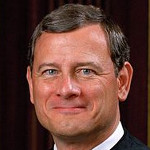
Roberts Again Sides With Liberal Supreme Court Justices in Disagreeing With Lower Court Interpretations

For the second time in as many weeks, Chief Justice John G. Roberts Jr. has sided with liberal Supreme Court justices to disagree with how lower courts have interpreted Supreme Court precedent, reports The Washington Post.

“On Tuesday, Roberts was pointed in saying the Texas Court of Criminal Appeals has ‘misapplied’ a 2017 ruling that instructed that court to reconsider its analysis of whether death-row inmate Bobby James Moore was intellectually disabled, and thus ineligible for execution.” writes the Post‘s Robert Barnes.

And less than two weeks ago Roberts joined in blocking a Louisiana law that tightened restrictions on abortion providers.

Read the Post article.


Judge Dismisses Pipeline Operator’s Racketeering/Defamation Suit Against Greenpeace

A federal judge in North Dakota has dismissed a $900 million defamation and racketeering suit against Greenpeace filed by Energy Transfer Partners, operator of the Dakota Access Pipeline.

Greenpeace was represented in the matter by Lance Koonce, Laura Handman, Lisa Zycherman, and Thomas R. Burke of Davis Wright Tremaine, the law firm said in a release.

District Judge Billy Roy Wilson wrote in his order dismissing the case that, “Posting articles written by people with similar beliefs does not create a RICO enterprise,” and that, “Donating to people whose cause you support does not create a RICO enterprise.”

Last month, the same Davis Wright Tremaine team won dismissal of similar RICO claims lodged against Greenpeace by Resolute Forest Products. That case was heard in the Northern District of California.

“The dismissal of these cases is of enormous importance not just to our clients but to watchdog and advocacy groups of all stripes,” said Koonce. “Because if companies criticized by such organizations were able to bring claims under the guise of RICO, with its treble damage provision, that are really designed to chill speech, it would put critical discourse on issues of public significance at great risk.”


MoFo Faces Overbilling Lawsuit Alleging ‘A Billing Feeding Frenzy’

A lawsuit filed in the U.S. District Court for the Western District of Texas against Morrison & Foerster accuses the firm of expending “an exorbitant and excessive amount of time” running up the bill for clients, reports Above the Law.

The five plaintiffs hired the firm to handle the winding down of the entities.

They allege that MoFo had 34 different timekeepers bill 669 hours at a cost of $484,321 during a two-month period.

“The complaint also says while the firm had arranged for $625,319 to be paid to its trust account, it also “unilaterally decided to pay itself from these funds—although this was never authorized. This left $170,978 in the trust account,” according to Above the Law senior editor Kathryn Rubino.

 Read the Above the Law article.


Dallas Quadriplegic Crash Victim Wins $37.6 Million in Seat Belt Suit

A jury has awarded $37.6 million to a Dallas woman who was left paralyzed from injuries caused by a poorly designed seat belt system in a Honda minivan that rolled over in a collision in Dallas in 2015, according to a post on the website of Androvett Legal Media.

Sarah Milburn, 27, was a passenger in a Honda Odyssey that was hit broadside by a pickup truck on Nov. 15, 2015, causing the van to roll over onto its side and top. Milburn, who was a passenger in the third-row middle seat, suffered a broken neck and was left a quadriplegic, with very limited use of her arms and hands.

Milburn sued American Honda Motor Co. Inc. of Torrance, California, a subsidiary of Honda Motor Co., Ltd., claiming Honda’s design for the seat belt in the third row’s middle seat is defective. Specifically, the seat belt is a two-part system requiring the user to grasp a detachable shoulder strap from the van’s ceiling, anchor it to the seat and then pull the belt across the user’s hips and buckle it.

In independent testing, an expert showed the jury that fewer than 10 percent of people who were unfamiliar with the van’s two-part seat belt system were able to use it properly.

“What the jury understood is that it’s not enough to just equip a car with seat belts. The carmaker also has to make sure people can and will use them safely,” said attorney Charla Aldous of Aldous\Walker in Dallas, who along with Brent Walker represented Milburn at trial. “Sarah put the seat belt on the same way 50 out of 53 people in our studies did and wearing it that way was actually more dangerous than having no seat belt at all.”

Milburn also was represented by attorney Jim Mitchell of the PayneMitchell Law Group in Dallas.

The jury verdict includes a finding that the regulations governing seat belts in passenger cars were inadequate to protect the public from harm. The family is hopeful the finding will lead to the creation of “Sarah’s Law,” which would forbid automakers from using this seat belt system in the future, according to the Androvett post.

The case is Sarah Milburn v. American Honda Motor Co. Inc., number DC-16-16470 in the 116th Civil District Court in Dallas County, Texas.