In Roundup Case, U.S. Judge Cuts $2 Billion Verdict Against Bayer to $86 Million

Image by Mike Mozart

A California judge on Thursday reduced a $2 billion jury verdict, slashing the award for a couple who blamed Bayer AG’s glyphosate-based weed killer Roundup for their cancer to $86.7 million, according to a Reuters report.

A California Superior Court judge in Oakland said the jury’s billion-dollar punitive damages awards were excessive and unconstitutional, but rejected Bayer’s request to strike the punitive award outright, writes Reuters’ Tina Bellon.

The order could result in plaintiffs Alva and Alberta Pilliod receiving $17 million in compensatory and $69 million in punitive damages, down from $55 million and $2 billion, respectively.

Read the Reuters report.


Suspended Lawyer Ordered to Pay $3.4M in Attorney Fees to Chevron As Contempt Sanction

A suspended lawyer who was found in contempt of court for stonewalling Chevron’s efforts to collect a money judgment against him has been ordered to pay $3.4 million in attorney fees to the oil company, reports the ABA Journal.

A federal judge ordered New York lawyer Steven Donziger to pay the attorney fees for “intransigence” that blocked Chevron’s “considerable efforts” to get at the facts.

The Journal‘s Debra Cassens Weiss writes that Donziger told the publication that $3.4 million is the highest sanction in the history of New York courts. And it’s not his total liability—court fees, attorney fees and fines add up to about $10 million.

Read the ABA Journal article.


Equifax Data-Breach Settlement: Get Up to $20,000 If You Can Prove Harm

Cybersecurity - hacking - hackerTwo years after a major data breach exposed the personal information of around 147 million Americans, the credit bureau Equifax has agreed to pay at least $650 million to resolve consumer claims and multiple state and federal investigations stemming from the episode, according to The New York Times.

At least $300 million of that amount will go to consumers, with an additional $125 million available if the initial fund is exhausted.

Times reporter David Yaffe-Bellany writes that individual victims may be able to claim as much as $20,000 in compensation for losses resulting from the breach if they can prove they were harmed.

Read the NY Times article.


Law Offices of Frank L. Branson Honored with 2019 Elite Trial Lawyers Award

The National Law Journal has honored The Law Offices of Frank L. Branson as a top law firm in the nation for product liability litigation based on the firm’s large jury verdicts and track record of excellence going back more than three decades.

The firm founded by Frank L. Branson was chosen for the prestigious Elite Trial Lawyers award based on exceptional product liability litigation work. The award was presented at a reception in New York on July 18. The firm was honored as part of a three-way tie in the product liability category.

The NLJ recognition follows a string of high-profile legal victories for Branson and his team, including:

A $242 million product liability jury verdict against Toyota in August 2018. Jurors agreed Toyota was grossly negligent for failing to correct or warn consumers about seatback design flaws in the Lexus ES 300. The award included $144 million in punitive damages awarded a Dallas family whose two young children suffered serious injuries in a collision. The verdict was recognized as the No. 1 product liability verdict in Texas in 2018.

A $10.9 million jury verdict resulting from the crash of a charter bus en route to the Choctaw Casino & Resort in Oklahoma. The 2016 verdict was affirmed on appeal and settled recently. The firm represented the estate and children of an 83-year-old woman who was killed in the accident. The verdict was awarded to Mr. Branson’s client and a second victim who was represented by separate counsel and who joined the case as an intervenor.

Branson also has won multimillion-dollar verdicts and settlements in all types of transportation crashes. He has been recognized for top verdicts multiple times by VerdictSearch and the NLJ – four alone in the last six years.

“I feel honored every day to have the opportunity to put our clients on a level playing field with corporate America,” said Mr. Branson. “The results we’ve been able to secure reflect decades of hard work and our team of great lawyers.”


Martin Walker Honored for Winning Texas’ Largest Medical Malpractice Verdict in 2018

Trial law firm Martin Walker has earned honors for winning the largest medical malpractice verdict in Texas in 2018 for the $43.32 million jury award against Tyler-based East Texas Medical Center and one of its doctors. The editors of Texas Lawyer included the verdict in the magazine’s listing of Top Verdicts and Settlements, 10th Edition, based on research gathered by VerdictSearch.

A jury found ETMC grossly negligent for allowing Dr. Gary Boyd to treat 61-year-old Billy Pierce, despite having been placed on probation by the Texas Medical Board. Pierce was admitted in April 2014 with stomach pain and vomiting.

During the trial, Martin Walker attorneys argued the hospital bylaws should have prevented Boyd from practicing at the facility. Testimony showed that Boyd diagnosed Pierce with an abnormality he said would make surgery to remove bile duct stones impossible. For more than a month, the firm said, Pierce was in a medically induced coma during which time Boyd and the hospital abandoned him, according to testimony. Once the hospital sought a second opinion, a new doctor rejected Boyd’s diagnosis and operated without complication.

Jurors agreed that Boyd’s improper care led to the loss of Pierce’s quality of life and his ability to provide for his family. The $43 million verdict included $18.57 million for past and future pain, anguish, loss of earning capacity, and medical care and expenses. The jury also awarded $25 million in punitive damages, after concluding the hospital’s conduct involved an extreme risk of potential harm to others.

Pierce was represented by Martin Walker name partners Reid Martin and Jack Walker and attorney Marisa Schouten. The case is Billy Pierce v. East Texas Medical Center and Dr. Gary Boyd and the ETMC Digestive Disease Center, Cause No. 16-0853-C in the 241st District Court in Smith County.

The firm is based in Tyler, Texas.

Each year, VerdictSearch conducts a comprehensive review to produce the list of top verdicts in Texas. The full list is published in the July 2019 issue of Texas Lawyer.




Boeing Has Friends in High Places, Thanks to Its 737 Crash Czar/General Counsel

Several Trump administration officials have personal or professional ties to Boeing’s man at the center of the 737 Max jetliner crash drama. He’s J. Michael Luttig, the longtime general counsel whom the company reassigned to lead its 737 response, reports Bloomberg.

“When he was a federal appellate court judge, Luttig brought on dozens of promising young clerks who are now spread throughout the judiciary and beyond,” explain Bloomberg’s Tom Schoenberg, Julie Johnsson and Peter Robison. “In more than a decade at Chicago-based Boeing, he stocked his department with ex-government lawyers. He also tapped Kirkland [& Ellis LLP], which has a big Chicago presence, for matters as varied as acquisitions and contract disputes.”

Luttig also is wired into the Supreme Court. He was a groomsman at the wedding of U.S. Chief Justice John Roberts.

Read the Bloomberg article.


Duke Energy Sued for 2014 Coal Ash Spill Environmental Harm

The Associated Press reports that federal, North Carolina and Virginia governments asked a court Thursday to declare the country’s largest electricity company liable for environmental damage from a leak five years ago that left miles of a river shared by the two states coated in hazardous coal ash.

The AP’s Emery P. Dalesio writes: “Government lawyers sought to have Charlotte-based Duke Energy declared responsible for harming fish, birds, amphibians and the Dan River bottom. Hazardous substances like arsenic and selenium poured into the river at levels high enough to harm aquatic life, according to a complaint filed in the North Carolina federal court district near the site of the 2014 disaster.”

Duke Energy pleaded guilty to federal environmental crimes in 2015 and agreed to pay $102 million.

Read the AP article.


Wright Close & Barger Wins 9-0 US Supreme Court Decision

Appellate lawyers with Houston-based Wright Close & Barger scored a 9-0 decision from the U.S. Supreme Court in a closely watched religious discrimination case that made national headlines and carried big implications for employers and state and local governments.

The ruling in Fort Bend County vs. Davis united both conservative and liberal justices with an interpretation signaling that employers must be expeditious when challenging a worker’s claim of job bias. The opinion also cemented the authority of the courts in discrimination cases like this one, the firm said in a release.

“We are grateful for this important decision, which ensures a fairer system for all victims of employment discrimination. It also clarifies the process for employers and governments,” said appellate specialist Raffi Melkonian who delivered oral arguments on behalf of plaintiff Lois Davis. The case marked his first time making oral arguments before the Supreme Court.

Read details about the case.


Census Plaintiffs Seek Sanctions Against Trump Administration for Trial ‘Fraud’

Reuters reports that civil rights groups who successfully blocked the Trump administration from adding a citizenship question to the 2020 U.S. census are seeking sanctions against government officials, saying they brazenly hid the truth about the inquiry’s origins during trial.

The American Civil Liberties Union asked a New York court to grant new discovery into the alleged misconduct, as well as monetary sanctions for the government’s “concerted campaign of delay and obfuscation” during trial last November.

Reuters’ Nick Brown writes that the plaintiffs cited a list of “false or misleading” testimonies that amounted to “fraud on the court,” perpetrated by officers of the U.S. Department of Commerce, DOJ and Census Bureau.

Read the Reuters article.


Lawyers Can Be Sued for Allegedly Violating Confidentiality Deal in Monster Energy Suit

The ABA Journal reports that a lawyer who sued Monster Energy in the cardiac death of a teenager can be sued for allegedly violating a confidentiality clause that was part of the case settlement.

The California Supreme Court has ruled that Monster Energy could sue Bruce Schechter and his firm, the R. Rex Parris Law Firm, based on language in the agreement that could be construed to bind the attorneys, reports the Journal‘s Debra Cassens Weiss.

Schecter argued that he and the firm weren’t bound by the confidentiality clause because he signed the agreement under the preprinted notation “approved as to form and content.” Schechter said the notation meant he was approving the agreement only for his clients’ signatures.

Read the ABA Journal article.


Two Provost Umphrey Jury Awards Earn Top Verdicts Recognition

Two verdicts won by Provost Umphrey Law Firm earned recognition among the Top Texas Verdicts & Settlements for 2018 based on a comprehensive review by VerdictSearch.

A $6.34 million Harris County negligence verdict against a suburban Houston apartment complex in connection with the 2014 murder of a 15-year-old girl was the largest premises liability verdict in Texas last year. Testimony showed Corriann Cervantes was tortured and murdered, her body left in an abandoned apartment in a Clear Lake area complex. Two young men were convicted of capital murder for their roles in the attack. Provost Umphrey attorneys Joe Fisher, Guy Fisher and Taylor Thompson as well as Andrew Bender of The Bender Law Firm prevailed in the civil suit filed by the girl’s family against the apartment complex owners.

Also last year, jurors in Denton County returned a $4.8 million verdict against ladder manufacturer Werner Co., after finding the company liable for the faulty design and marketing of an aluminum ladder that collapsed and permanently injured John DeVallee’s hand. The verdict is the fourth-largest product liability award and ranked 33 overall on the Top Verdicts list. Provost Umphrey’s Joe Fisher and Edward Fisher were on the trial team with attorney Brian Zimmerman of Zimmerman, Axelrad, Meyer, Stern & Wise, P.C. and David L. Cook of Harris Cook LLP.

The Texas Top Verdicts annual list is developed from research compiled by VerdictSearch, a recognized leader in U.S. verdict information. The full list will be published in the July 2019 edition of Texas Lawyer.


Plaintiffs’ Counsel Appointed in Price-Fixing Claims Against Cedar Shake and Shingle Manufacturers

A federal court in Seattle has appointed Christopher J. Cormier and a legal team at Burns Charest LLP as co-lead counsel in a proposed federal class action against a group of manufacturers of cedar shakes and shingles, and the industry’s trade association.

The lawsuit, filed in the U.S. District Court for Western District of Washington, alleges that the companies conspired to artificially inflate the price of Certi-Label cedar shakes and shingles sold to indirect reseller plaintiffs, such as contractors, construction companies and roofers, in the U.S. The litigation includes detailed evidence of improper pricing discussions among the defendants as well as detailed economic analysis showing that the price of the materials has increased substantially since early 2011.

“The public must be protected when companies conspire to fix prices because this conduct harms not only cedar shake and shingle purchasers in particular but also fundamental principles of fair competition in general,” said Mr. Cormier. “We allege that the proposed class we represent has been forced to pay inflated prices for already expensive building materials for a number of years, and we are eager to roll up our sleeves and get to work in seeking recovery for them in this case.”

The class action claim, originally filed in April 2019, alleges that the price increases cannot be explained by ordinary market forces and instead are a result of the defendants’ anticompetitive pricing conspiracy. The lawsuit also claims that the companies conspired with the Washington-based Cedar Shake & Shingle Bureau, the industry’s trade association, to muscle out upstart and discount competitors from the market, thus preserving the defendants’ ability to charge artificially high prices for their products.

U.S. District Judge Marsha Pechman has also appointed the firm of Portland-based Stoll Berne to serve as co-lead counsel for the plaintiffs with the Burns Charest team.

The case is Fraser Construction Company et al v. Cedar Shake & Shingle Bureau et al. Case No. 2:19-cv-00451-MJP in the U.S. District Court for the Western District of Washington.

The firm has offices in Dallas, Denver, and New Orleans.


Understanding Contractual Limitations on Liability

The overwhelming majority of contracts and purchase orders are fulfilled without a major issue, but contractual limitation on liability can have significant impact for a business, warns Glen W. Price of Best Best & Krieger.

He discusses the two types of limitation of liability.

“The first limitation is on the type of damages you can claim if there is a breach of contract. The most common damages to be waived or limited in contracts are indirect or consequential damages and lost profits,” Price writes.

The second type of limitation on liability he discusses is a dollar limitation or cap.

Read the article.


Web Scraping Decisions Consider Contract Cause of Action

Jeffrey Neuburger of Proskauer writes that two recent web scraping disputes highlight some important issues regarding whether a website owner may successfully allege a breach of contract action against a commercial party that has scraped website content contrary to “clickwrap” and “browsewrap” website terms of use.

Writing in the New Media and Technology Law Blog, West describes a Texas case in which a court declined to dismiss Southwest Airlines Co.’s breach of contract claim against an entity that scraped airfare data from Southwest’s site in violation of the website terms of use.

He also discusses a similar case in the Southern District of New York, in which the court granted the plaintiff’s request for a default judgment on some scraping-related claims.

Read the article.


Court Holds Delta’s Privacy Policy Isn’t a Contract

Delta Air Lines scored a victory when a California federal court granted the company’s motion to dismiss a putative class action based on a data breach, primarily by arguing that its publicly posted privacy policy is not a contract and Delta did not have any enforceable obligation to keep the plaintiff’s data secure, reports Manatt, Phelps & Phillips.

A Delta passenger sought to represent a nationwide class of consumers alleging breach of contract after the airline suffered a data breach, explains Jesse M. Brody.

The court found that the plaintiff could not assert a breach of contract based on Delta’s privacy policy, because it expressly disclaimed that it constitutes a contract, stating, “This Privacy Policy is not a contract and does not create any legal rights or obligations.”

Read the article.


‘Express Written Consent’ Means Express Written Consent—No More, No Less

The Supreme Court of Texas delivered a reminder that when drafting contracts, you should say what you mean and mean what you say, and reliance on oral representations directly contrary to the terms of a written agreement between sophisticated parties is not justifiable, reports Carrington Coleman Sloman & Blumenthal’s Sua Sponte blog.

Derrick Ward explains that the case considered a farmout contract between Barrow-Shaver Resources Company and Carrizo Oil & Gas for Barrow-Shaver to build a well on a lease held by Carrizo in exchange for an interest in the mineral rights. When Barrow-Shaver raised  concerns about the consent-to-assign provision and sought to add language that would prohibit Carrizo from withholding consent unreasonably, Carrizo’s representative allegedly offered assurances that Carrizo would work cooperatively if the assignment became an issue.

When it became an issue, litigation resulted. The court ultimately concluded the consent-to-assign provision “unambiguously allowed Carrizo to refuse its consent for any reason,” Carrizo’s refusal to consent to the assignment could not constitute a breach of contract as a matter of law.

Read the article.


Download: Driving Down the Cost of Ediscovery

A new guide published by Zapproved details a series of real-world best practices for getting ediscovery costs under control. The new guide can be downloaded from the Zapproved website.

The company says the cost of ediscovery is skyrocketing as data volumes and complexity expand. At the same time, your team is being asked to do more with less.

Driving Down the Cost of Ediscovery” will show readers how to create a comprehensive litigation response plan, preserve and collect the right data from the right places, conduct early case assessment (ECA), reduce the volume of documents for review, and improve the efficiency of the process from end to end.

Download the guide.


Clickthrough Litigation Trends 2002-2018: White Paper

PactSafe’s legal experts — after studying more than 1,000 cases from 2002 to 2018  — have identified trends and best practices for defending clickthrough terms of service in court.

The results of that research are available from PactSafe in a free download from the company’s website.

As the rate of litigation around terms of service increases (notably 626% from 2002 to 2018) businesses are increasingly aware of what they need to cover, PactSafe says on its website. While the content of online legal terms may be bulletproof, the way that companies currently track acceptance may leave them at risk.

The report covers:

  • Aggregate data complied from the last 15 years of clickthrough cases
  • The three different ways of forming online contracts and the success rate of each type.
  • The factors that influence the court’s decision as to the validity of an online agreement.
  • The types of evidence you should be prepared to bring to court

Download the report.


Webinar – Not So Obvious: Secondary Considerations at the PTAB

WebinarFitch, Even, Tabin & Flannery LLP will present a free webinar, “Not So Obvious: Secondary Considerations at the PTAB,” featuring Fitch Even attorneys Dave A. Gosse and Evan Kline-Wedeen.

The event will be on Thursday, July 18, 2019, at 9 am PDT / 10 am MDT / 11 am CDT / 12 noon EDT. It will also be available as an on-demand webinar after presentation.

Objective evidence of non-obviousness can overcome a prima facie case of obviousness, both in district court litigation and at the Patent Trial and Appeal Board. These “secondary considerations” are an important tool that patent owners can use to defeat obviousness challenges. Historically, the PTAB has not often been persuaded by such evidence. But in recent years, patent owners have found some success when presenting compelling objective evidence of commercial success, copying, long-felt need, and other secondary considerations.

During this webinar, presenters will discuss the following:
• Developing trends at the PTAB concerning secondary considerations
• How to insulate your petition from secondary considerations
• Best practices for patent owners developing evidence related to secondary considerations

Register for the webinar.


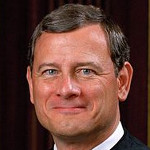
U.S. Chief Justice’s ‘Swing’ Role Shown in Census, Gerrymandering Rulings

U.S. Chief Justice John Roberts cemented his new role as the Supreme Court’s swing vote, angering people on the political left and right in the process, as he decided the outcomes of major rulings on the census and electoral map manipulation, according to a Reuters report.

In two 5-4 votes, Roberts sided with his fellow conservative justices in rejecting challenges to a practice called partisan gerrymandering but joined the court’s liberals in dealing to a damaging blow to President Trump’s plan to add a contentious citizenship question to the 2020 census.

The votes illustrate how Roberts now is the court’s center, a role he inherited following the retirement last year of Justice Anthony Kennedy, writes Reuters’ Lawrence Hurley.

But seeing a chief justice taking the middle road hasn’t gone down well with some “deeply disappointed right-leaning lawyers and pundits who had been counting on near-certain victory from a court now stocked with a pair of Trump-appointed justices handpicked by conservative legal activists,” according to a Politico report.

Read the Reuters article.