O’Melveny Notches Win in Long-Running Legal Malpractice Suit

A federal judge in Los Angeles ruled in favor of O’Melveny & Myers in a case alleging the Biglaw firm was conflicted in its representation a decade ago of a now-defunct investment firm Aletheia Research and Management, reports Bloomberg Law.

The ruling let stand an arbitrator’s August finding that O’Melveny didn’t commit legal malpractice, noting that “only in very unusual circumstances” does this occur and the investment firm’s trustee didn’t meet this standard, according to Bloomberg’s Melissa Heelan Stanzione.

A Chapter 7 estate trustee for Aletheia had argued that the law firm’s failure to recommend that Aletheia hire independent counsel to review the company’s relationship with its founders contributed to the company’s ultimate downfall.

Read the Bloomberg Law article.



Davis Polk Hit With Bias, Retaliation Suit by Black Lawyer

Bloomberg Law reports that Davis Polk & Wardwell LLP is accused in a new lawsuit in New York of discriminating and retaliating against a black former associate because of his complaints about racial bias at the law firm.

Kaloma Cardwell alleges the firm denied him job assignments — causing him to go from billing more than 100 hours per month to zero billable hours for four consecutive months. The firm then fired him, according to his complaint filed in federal court in Manhattan.

Cardwell was the only black attorney hired in the firm’s 2014 class of more than 120 new associates, and one of only four black attorneys at the entire firm, the complaint says.

Read the Bloomberg Law article.


Download: Nine Best Practices for Early Case Assessment

Zapproved has published a new guide discussing nine best practices that will refine early case assessment process to make it as cost-effective and efficient as possible.

The goal, the company says, is to get the insights needed to form a powerful case strategy and drive down discovery costs.

The guide can be downloaded at no cost from Zapproved’s website.

Download the guide.


Conspiracy Theorist Loses Case Against Robert Mueller

A federal judge dismissed a lawsuit against former special counsel Robert Mueller, rejecting a conspiracy theorist’s claim that Mueller pressured him to commit perjury during the investigation into Russian interference in the 2016 election, according to a Courthouse News report.

Jerome Corsi alleged that Mueller violated the Federal Rules of Criminal Procedure by leaking grand jury information about him to the media to pressure him into giving false testimony.

Courthouse News’ Jack Rodgers quotes the ruling: “The article explicitly references Mueller’s ‘case,’ indicating that the information relates to his investigation and not to the grand jury’s investigation. Moreover, the article does not attribute any information to Mueller or anyone else associated with the grand jury investigation.”

Read the Courthouse News article.


Louisiana Operator’s Bad Faith Does Not Preclude Recovery

A post on Gray Reed’s Energy & the Law blog discusses the question: Under Louisiana law, does the operator’s bad faith preclude recovery for the non-operator’s breach of a joint operating agreement if the operator caused the non-operator to breach the JOA but did not itself breach?

Charles Sartain summarizes the background of Apache Deepwater, LLC v. W&T Offshore, Inc., a conflict between parties to a joint operating agreement for operations on offshore deepwater wells.

The case was complicated by conflicting provisions in the JOA.

Read the article.


Signature Page Mixing-and-Matching Leads to Trouble in Delaware Case

Contract- signatureD.C. Toedt III, writing in the On Contracts blog, describes how  parties to a contract often circulate just signature pages to be signed, and the problems that can arise with that practice.

He also explains the importance of making sure that the signed version is identified (e.g., with a running header).

He analyzes a lawsuit that involved a former vice president of a company who sued to compel the company to give her the equity that she claimed was due to her under the “signed” agreement. But the parties, after sending revised drafts back and forth, had apparently signed signature pages for different versions of the agreement.

Read the article.


NDAs Do NOT Work for China But NNN Agreements Do

The China Law Blog has published part one of an expected series of posts setting out exactly what foreign companies should do (and not do) to protect their intellectual property in China.

The author, Dan Harris of Harris Bricken, tells the story of a prospective client who sought help because a Chinese manufacturer he was working with on a product started selling a new product that happened to have the same features and functions as the product the American developer had submitted to the manufacturer.

Harris’ firm told the prospective client not much could be done because the nondisclosure agreement with the manufacturer was worthless in China. And U.S. patents won’t provide much practical protection, either.

The firm’s lawyers explained that the developer would have been better off if he had an NNN agreement —non-use, non-disclosure, and non-circumvention — that would be enforceable in a Chinese court with jurisdiction over the Chinese defendant. .

Read the article.


Court Enforces Arbitration Clause in Clickwrap Agreement

A California Court granted a defendant’s motion to compel arbitration based on a duly formed and consented arbitration clause via a “clickwrap” agreement, despite the plaintiff’s argument that no contract was ever formed because the purpose of the contract was to facilitate the selling and distribution of marijuana, which is illegal under federal law.

A post by Womble Bond Dickinson describes a case in which the defendant was hit with a putative class action in California federal court claiming it violated the Telephone Consumer Protection Act.

The defendant’s terms of service, which were hyperlinked in the sign-up box, contained a clause providing for arbitration of disputes with a class-action waiver.

Read the article.


Special Order Your Forum Selection Clause

A new post on Global Private Equity Watch discusses the continued need for vigilance in the wording of forum of selection provisions in agreements.

Author Glenn D. West takes a look at a recent Delaware ruling on an anti-suit injunction attempting to prevent a suit being prosecuted in Texas.

The court granted the injunction against the Texas suit because the fraud claims would require construction and interpretation of the agreement.

Read the article.


Another Trump Judicial Pick Rated Unqualified Advances

The Senate Judiciary Committee Thursday approved and sent to the full Senate for consideration the nomination of Sarah Pitlyk — rated unqualified by the American Bar Association — to the U.S. District Court for the Eastern District of Missouri, reports Blomberg Law.

Three other federal district court nominees also advanced, but action on two controversial appeals court picks was again deferred.

The ABA’s Standing Committee on the Federal Judiciary in September rated Pitlyk as not qualified for the lifetime appointment, saying she lacks the requisite courtroom experience to serve as a trial judge.

“The disagreement boiled over Oct. 30 when the committee clashed over the role of the ABA Standing Committee after it issued a harsh assessment of Lawrence VanDyke, who also received an unqualified rating for a seat on the U.S. Appeals Court for the Ninth Circuit,” writes Bloomberg’s Madison Alder.

Read the Bloomberg Law article.


‘Patent Death Squad’ Judges Can Be Fired, U.S. Appeals Court Says

A U.S. appeals court ruled Thursday that judges on a patent review panel were unconstitutionally appointed, casting a cloud over some of its work, according to a Bloomberg report.

The court ordered a new hearing before different judges at the U.S. Patent and Trademark Office’s review board in a dispute over a surgical device. The court suggested other pending patent challenges may suffer the same fate, report Bloomberg’s Susan Decker and Greg Stohr.

“The Court of Appeals for the Federal Circuit said that, under a 2011 law that created the reviews before the panel, called the Patent Trial and Appeal Board, judges had so much authority they should have been appointed by the president and confirmed by the Senate.”

Read the Bloomberg article.


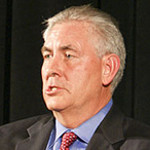
Rex Tillerson Back in Spotlight at Exxon Climate Trial

Image by William Munoz

Former secretary of state Rex Tillerson is again at the center of the climate change debate, as the former Exxon Mobil CEO prepares to take the witness stand regarding allegations his former company deceived shareholders about the financial risks posed by climate change, reports the Houston Chronicle.

Tillerson is scheduled to make an appearance at the New York Supreme Court Wednesday to answer questions about missing emails and varying carbon pricing schemes amid a growing wave of climate change litigation against the oil industry, according to the Chronicle‘s James Osborne.

The New York attorney general wants to answer the question of whether Exxon defrauded investors when it used one carbon price to estimate the potential taxes or fees the company might have to pay on greenhouse gas emissions from oil drilling projects and another in the economic modeling it presented to investors regarding future oil and gas demand.

Read the Houston Chronicle article.


DLA Piper Turns Sex-Assault Probe Back on Accuser: Cites Alleged ‘Flirtation’

DLA Piper, fighting a sexual-assault claim against a former partner, filed a response to the accusation Tuesday, saying the lawyer who filed the complaint orchestrated a “flirtation” to advance her career, reports Bloomberg News.

DLA and former partner Louis Lehot parted ways after his colleague Vanina Guerrero accused the star Silicon Valley lawyer of sexually assaulting her.

The firm said it conducted an “impartial investigation” of the matter.

“Ms. Guerrero was a willing participant in a lengthy emotional flirtation with Mr. Lehot that she orchestrated to advance her career,” DLA Piper said in a letter to the U.S. Equal Employment Opportunity Commission, citing Guerrero’s emails.

Read the Bloomberg Law article.


Jones Day Women Point to Managing Partner’s ‘Totalitarian Grip’

Jones Day’s “hypercentralized,” subjective decision-making process places final control over pay, promotion, and other significant decisions “unchecked in the hands of one man,” six female former lawyers told the U.S. District Court for the District of Columbia.

That man is managing partner Stephen J. Brogan, claim Nilab Tolton and the five other lead plaintiffs. They filed a supplemental memorandum Oct. 24  opposing Jones Day’s motion for partial judgment on the pleadings in their proposed class action, filed in April, according to a Bloomberg Law article.

Brogan backs his “totalitarian grip” on Jones Day with a “no whining policy” under which women aren’t allowed to raise sex-based inequities, they say.

Read the Bloomberg Law article.


Federal Government Contract Modifications: Pay Attention

A recent case decided in the Court of Federal Claims serves as a stark reminder that any time a contract with the Federal government is amended or modified, the parties must pay particular attention to any release language contained in the amendment, or they run the risk of releasing potential claims that are unrelated to the modification, according to the Murtha Cullina Family Business Perspectives blog.

Mark J. Tarallo discusses the case of Meridian Engineering Co. v. US, a dispute a contested release and waiver of payments for the work at issue.

“Any release document (including releases with parties other than the government) should be narrowly drawn and clearly articulate those claims that are being released,” Tarallo advises

Read the article.


SCOTUS Clarifies Vague Arbitration Clauses Affecting Class Disputes for Growing Businesses

Employment contractTo reduce the risk of a class action disrupting business operations and impacting revenue, businesses may want to consider including arbitration clauses in their employment and consumer agreements, advises Patrick K. Burns in a blog post for PilieroMazza PLLC.

Many businesses include arbitration clauses in employment and consumer agreements in an attempt to shield themselves from class action lawsuits, he explains. “The success of these types of clauses in accomplishing the same largely depends upon its wording, the respective jurisdiction, and the nature of the underlying agreement.”

In his post, he demonstrates how, if class arbitration is not explicitly addressed in an arbitration agreement, it cannot be compelled.

Read the article.


When is a Contract Provision a Liquidated Damages Clause?

Two recent court of appeals cases address the enforceability of liquidated damages clauses, writes John McFarland in the Graves, Dougherty, Hearon & Moody Oil and Gas Lawyer Blog.

“A liquidated damages clause is a provision in a contract specifying a dollar amount (‘liquidated damages’) to be paid by a party if the party breaches the contract. Such clauses are common in all types of contracts, particularly in the oil and gas industry,” McFarland explains.

In his post, he discusses some recent cases that address the issue.

Read the article.


Federal Judge Holds DeVos in Contempt in Student Loan Case, Slaps Education Department With Fine

A federal judge on Thursday held Education Secretary Betsy DeVos in contempt for violating an order to stop collecting loan payments from former Corinthian Colleges students, according to a Washington Post report.

The Post‘s Danielle Douglas-Gabriel explains:

“Magistrate Judge Sallie Kim of the U.S. District Court in San Francisco slapped the Education Department with a $100,000 fine for violating a preliminary injunction. Money from the fine will be used to compensate the 16,000 people harmed by the federal agency’s actions. Some former students of the defunct for-profit college had their paychecks garnished. Others had their tax refunds seized by the federal government.”

Kim wrote that the defendants violated the preliminary injunction and those violations harmed borrowers.

Read the  Post report.


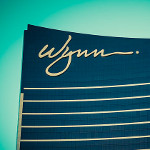
Suit Accuses Former Casino Company General Counsel of Approving ‘Secret Undercover Operation’

Image by Tony webster

The ABA Journal reports that an invasion-of-privacy lawsuit claims that the former general counsel of Wynn Resorts approved a “secret undercover operation” to gather derogatory information about a former salon employee who provided information to the Wall Street Journal.

Plaintiffs claim that former Wynn general counsel Kim Sinatra was part of a civil conspiracy targeting Jorgen Nielsen, the former artistic director of a salon at Wynn Las Vegas.

The Journal‘s Debra Cassens Weiss reports: “The suit alleges that Sinatra and two other defendants participated in a plan to send ‘an undercover operative’ posing as a client to the new salon that employed Nielsen. The place was the salon at Palms Casino Resort.”

Read the  ABA Journal article.


Tentative Opioid Settlement Reached in Ohio With Drug Companies

The nation’s three top drug distributors and a major drugmaker reached a $260 million settlement with two Ohio counties Monday over the deadly havoc wreaked by opioids, striking a deal just hours before they were set to face a jury at the start of the first federal trial over the crisis, reports CBS News.

“The settlement means the closely watched trial will not move forward now,” according to CBS News. “The trial involved only two counties — Cleveland’s Cuyahoga County and Akron’s Summit County — but was seen as an important test case that could gauge the strength of the opposing sides’ arguments and prod them toward a nationwide settlement that ultimately would involve billions of dollars.”

Read the CBS News article.