What Do — And Should — In-House Lawyers Think About The Biglaw Pay Raises?

David Lat of Above the Law muses on the effect the most recent round of pay increases for BigLaw associates could have on the people who ultimately make the pay raises possible: the clients.

Cravath, Swaine & Moore recently announced it will start paying first-year associates annual salaries of $180,000, and some other firms have followed suit.

The article quotes some current and former in-house counsel with reservations about the Biglaw pay raises. “I understand that junior attorneys need training, but considering how much money these large firms make, why should the client have to pay for it?,” asks one in-house lawyer.

Another in-house lawyer said, “clients don’t notice the change, if at all, until the next negotiation over rates.”

“If firms try to pass too much of their increased overhead on to clients, the clients will balk — and in this day and age, with competition from great boutiques and alternative legal services providers, clients have significant leverage,” writes Lat.

Read the article.


Drugs in the Workplace: Tread Lightly, Navigate Carefully

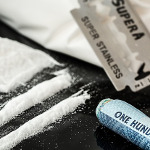
Cocaine - drugs - narcoticsFisherBroyles, LLP has a warning for employers dealing with an employee who is doing — or is suspected of doing — illegal drugs: Situations of this kind are fraught with potential for large legal fees, company embarrassment, and major diversion of management time if you become involved in formal proceedings — even if you eventually win.

Drugs permeate our society. It’s on the news, in social media, and all over movies and television. It may also be in your workplace when you discover that your awesome SVP Frank Fantastic’s belief-suspending prior year’s sales record might be due to — or despite — a little cocaine habit combined with his daughter’s ADHD meds.

Some questions you want to consider — do you know this hotshot is doing illegal drugs or abusing alcohol or prescription drugs, or do you just suspect? Is Frank’s employment terminable at will or only for cause if he is a party to an employment contract? Is a substance addiction a “disability” under the Americans with Disabilities Act?

While the answers to such questions depend on the particular facts in each situation, one thing we can tell you is tread lightly, navigate carefully. You want to minimize involvement in such proceedings if at all possible.

The firm offers advice on how to proceed: maintain a clear anti-drug policy, manage the situation with care, review employment agreement, remember that the ada protects recovering addicts, and be proactive in future employment agreements. The article expands on each of those points.

Read the article.


More Firms Follow Cravath’s Lead to $180,000 Starting Associate Pay

Money-payment-cashJust one day after Cravath, Swaine & Moore announced an increase in associate salaries, bringing first-years’ pay up to $180,000, BigLaw firm Milbank, Tweed, Hadley, & McCloy told its associates that it would match the new scale, according to Above the Law.

The site also reports that California litigation boutique Hueston Hennigan matched the new salaries only about four hours after Cravath’s announcement.

David Lat, Above the Law managing editor, wrote that Milbank Tweed has more than 600 lawyers and $700 million in annual revenue.

Read the article.


Rogue Trader Who Cost His Bank $7B Wins $500K for Wrongful Dismissal

A French labor court Tuesday awarded Jérôme Kerviel, the Société Générale SA rogue trader convicted in 2010 of bringing the bank to the brink of collapse, a total of €450,000 ($511,000) because he was fired without “real or serious cause,” reports The Wall Street Journal.

According to the report: “Société Générale ‘could not pretend it hadn’t long been aware of the unauthorized trades conducted by Mr. Kerviel,’ judges wrote in their ruling. The bank therefore can’t argue that Mr. Kerviel was at fault when it ‘previously tolerated similar practices,’ they added.”

In a previous trial, Kerviel was found guilty on charges of forgery, breach of trust and unauthorized computer use and sentenced to three years in prison. He was ordered to repay his former employer €4.9 billion.

Read the article.


Cravath Raises Associate Base Salaries to $180,000

Banking - investing - money - advisorsAbove the Law is reporting that BigLaw firm Cravath, Swaine & Moore has hiked annual salaries for associates — ranging from $180,000 for first-year associates to $315,000 for eighth-years.

The report cites a memorandum, which Above the Law received from multiple Cravath sources, as saying, “The increase is effective July 1, 2016, and will be reflected in paychecks commencing on July 8, 2016.”

The author, , also says the news raises several questions, such as How did this event come to pass? Will other firms match the new Cravath scale? How fast will the matching happen? Will any other firm beat the new Cravath scale? and What does this mean for bonuses? He offers his opinions on each of those points.

Read the report.


Alcohol-Related Workplace Injuries Recordable, OSHA Says

Employers are not exempt from the Occupational Safety and Health Administration’s reporting rule for on-the-job injuries linked to alcohol intoxication even though the injured employee’s consumption of alcoholic beverages took place off the job, reports Bradford T. Hammock of Jackson Lewis.

Amanda Edens, head of OSHA’s Technical Support and Emergency Management Directorate, outlined the interpretation in a later that was released April 18.

“According to Edens, OSHA health care professionals concluded the exception for self-medication does not apply because consuming alcohol ‘does not treat the disorder of alcoholism. Instead, drinking alcohol is a manifestation of the disorder,’ ” the article says.

Read the article.


Discrimination Lawsuit Against Mintz Levin Can Move Forward, Judges Rule

A discrimination lawsuit brought against high-powered Boston law firm Mintz Levin by one of its former attorneys can move forward after a decision by the state’s highest court, reports The Boston Globe.

“In overruling a lower court judge who had thrown out the discrimination claims, Supreme Judicial Court justices said evidence supporting the ex-associate’s allegations of sexism and double standards inside the politically connected firm is substantial enough to warrant a jury trial,” writes .

The court also ruled that employers are in some circumstances barred from retaliating against workers who search for, copy, and share with their attorneys confidential company documents that may help them prove discrimination claims. The decision could affect other employment cases.

Read the article.


Effective Conciliation and Demystifying Intervention in EEOC Cases

Practical Law will present a free webinar in which management attorney Christopher J. Collins of SheppardMullin, plaintiff’s attorney Kalpana Kotagal of Cohen, Milstein Sellers & Toll, and EEOC trial attorney Justin Mulaire discuss conciliation and intervention under the federal anti-discrimination statutes.

The event will be Thursday, June 9, beginning at 1 p.m. Eastern time.

The webinar will address obligations on the part of employers, charging parties and the EEOC in conciliating and litigating EEOC cases.

Presenters:
Christopher J. Collins, Partner, SheppardMullin Richter & Hampton LLP
Kalpana Kotagal, Partner, Cohen, Milstein, Sellers & Toll, PLLC
Justin Mulaire, Trial Attorney, US Equal Employment Opportunity Commission

CLE credit is available for Arizona, Calif ornia, Colorado, Georgia, Hawaii, Illinois, Indiana, Missouri, New Hampshire, New Jersey, New York, North Carolina, Pennsylvania, Vermont, Washington. CLE credit is being sought for Minnesota, Oregon, Tennessee, Texas, Virginia. CLE credit can be self-applied for in Florida.

Register for the webinar.


The DOL’s Final FLSA Overtime Exemption Rule: What Employers Must Do Now

Practical Law and the Wage & Hour Defense Institute (WHDI) will present a free, 75-minute webinar providing guidance on the U.S. Department of Labor’s final rule, updating the regulations governing white collar exemptions under the federal Fair Labor Standards Act (FLSA).

The webinar will be Wednesday, June 1, beginning at 1 p.m. EDT.

The rule, which takes effect Dec. 1, 2016, doubles the minimum weekly salary threshold required for the exempt classification of executive, administrative, professional, and computer professional employees. In addition, the new rule increases the minimum annual compensation and weekly salary requirements for exempt highly compensated employees (HCEs), and the special salary levels for employees in the motion picture industry and employees in American Samoa.

Moderator Paul Bittner of Ice Miller LLP (Columbus, OH), and speakers Susan N. Eisenberg of Cozen O’Connor (Miami) and Francis X. Neuner, Jr. of Spencer Fane (St. Louis), all members of the Wage & Hour Defense Institute, will discuss what employers must do now to ensure compliance with the final rule, including:

Counting bonuses and incentive payments toward satisfying the new minimum salary.

  • Reclassifying exempt employees who no longer satisfy the salary threshold.
  • Communicating reclassification decisions.
  • Planning for scheduled adjustments to the salary threshold.
  • Addressing pay increases and the effect on an employee’s exempt status.
  • Evaluating the risk of improper classification.
  • Understanding what the DOL’s final rule does not change.

A short Q&A session will follow.

Presenters:

  • Paul Bittner, Partner, Ice Miller LLP (Columbus, OH)
  • Susan N. Eisenberg, Member, Cozen O’Connor (Miami)
  • Francis X. (Frank) Neuner, Jr., Partner, Spencer Fane (St. Louis)
  • Suzanne K. Brown, Senior Legal Editor, Practical Law Labor & Employment (Moderator)

CLE credit is available for: Arizona, California, Colorado, Georgia, Hawaii, Illinois, Indiana, Missouri, New Hampshire, New Jersey, New York, North Carolina, Pennsylvania, Vermont, Washington. CLE credit is being sought for: Minnesota, Oregon, Tennessee, Texas, Virginia CLE credit can be self-applied for in: Florida

Register for the webinar.


Bank Regulators Revive Restrictions on Incentive-Based Compensation

RegulationFinancial regulators have proposed new rules limiting the incentive pay of employees and other service providers at financial institutions, report Mark Jones and Robert L. Tian of Pillsbury Winthrop Shaw Pittman LLP.

“The new rules seek to establish general requirements applicable to the incentive-based compensation arrangements of covered persons working in covered institutions. Covered persons are any executive officers, employees, directors or principal shareholders who receive incentive-based compensation at a covered institution. Additional restrictions apply to senior executive officers and significant risk-takers,” they write.

Their article discusses the prohibition of excessive compensation, appropriate performance measures, effective controls, approval by the board of directors, and disclosure and record-keeping.

Read the article.


Dealing With New FLSA Rule Raising Minimum Salary Overtime Exemption

As a result of changes to regulations that define which white collar workers are exempt from the overtime provisions of the Fair Labor Standards Act (FLSA), millions of workers will lose their current FLSA-exempt status on Dec. 1, 2016, reports Ropes & Gray LLP.

“The hardest hit industries are likely to be education, retail, health services, leisure/hospitality, and business and professional services. Before the Final Rule goes into effect, employers should assess which employees will be affected, and how the employer will want to respond. One approach would be to raise the salaries/compensation of these employees to meet the new salary/compensation thresholds,” the firm writes. “Following this path may impose not only direct costs, but also indirect costs by creating pressure to raise salaries for other employees higher up on the organizational chart, or causing disgruntlement for those employees if the salary differential is compressed.”

Or, a company could reclassify these employees as nonexempt and pay them overtime in accordance with the FLSA. With this approach, employers could limit hours of nonexempt employees to 40 per week or reduce the employees’ hourly rate in light of their expected future overtime earnings, according to the firm’s alert.

Read the article.


America’s Top CEOs Pocket 340 Times More Than Average Workers

Masimo Corp. founder and CEO Joe Kiani

Masimo Corp. founder and CEO Joe Kiani

The top 500 chief executive officers in American companies earned 340 times the average worker’s wage last year, taking home $12.4m on average, according to an analysis by the AFL-CIO, reports The Guardian.

The union’s analysis found that the pay of executives leading the S&P 500 index of top companies actually dipped last year. The figure in 2014 for the same group was 373 times more than their workers, earning on average $13.5m.

“The marginal drop in pay comes despite some eye-watering payouts for the three highest-paid CEOs – Masimo Corporation’s Joe Kiani, Timothy Walbert of Horizon Pharma and Gamco Investors’ Mario Gabelli – who took home nearly $3bn between them, according to the AFL-CIO,” the Guardian story says.

The average production worker who does not hold a supervisory role,earned about $36,900 a year in 2015.

Read the article.


$100M Uber Settlement Attacked By Drivers Saying Lawyer Sold Out

The lawyer who struck a $100 million deal with Uber Technologies Inc. is being accused of greed by some of the drivers covered by the accord who want her bumped, reports Bloomberg News.

“She has single-handedly stuck a knife in the back of every Uber driver in the country,” Hunter Shkolnik, a New York lawyer who’s pursuing his own cases against the ride-share service, said Friday in a phone interview with Bloomberg. “The entire class was thrown under the bus and backed over.”

Shkolnik asked the San Francisco federal judge who presides over the class-action settlement to remove Shannon Liss-Riordan as lead attorney. He says she sold out her clients by accepting a payout for California and Massachusetts drivers that’s less than 10 percent of the value of their claims “while she walks away with $25 million.”

Liss-Jordan labeled the claims as “uninformed,” “untrue and malicious.”

Read the article.


9th Circuit Extends Non-Compete Term Beyond Contractual Period

The 9th U.S. Circuit Court of Appeals ruled in Ocean Beauty Seafoods v. Pacific Seafood Acquisition Company that the doctrine of equitable extension can be used to tack on a non-compete period to an employment agreement after the original period had run, according to an article by of Mintz, Levin, Cohn, Ferris, Glovsky and Popeo, P.C.

They write that the case illustrates what can happen when: “employee disregards a non-compete and joins a competitor; former company calls foul and initiates a lawsuit; parties fight it out, but by the time litigation has run its course, the non-compete period in the underlying contract has expired.”

Read the article.


Can ‘Love Contracts’ Govern Your Inter-Office Romance?

Many couples sign prenuptial and postnuptial agreements to cover division of property and other assets in the event of a divorce — there are even cohabitation agreements for partners who are not married but live under the same roof, reports Observer.

A “love contract” is a customized set of lifestyle clauses that can be inserted into any prenup, postnup or cohabitation agreement.

“A different kind of love contract applies when the two parties not only live together, but work together,” the report says. “When the legal document is signed in an office setting, the co-working couple promises that their consensual attraction will not lead to distractions or conflicts of interest in the workplace.”

Read the article.


Choice-of-Law Provision in Employment and Non-Compete Agreement Disregarded

A Dallas appellate court considered whether California law governed contract and tort claims against California-based former employees who signed employment agreements containing a choice-of-law clause stating that Texas substantive law would apply, according to a report by Neil R. Burger in Carrington Coleman Sloman & Blumenthal, L.L.P.’s Sua Sponte blog.

“Applying the applicable provisions of the Restatement (2d) of Conflicts, the Dallas Court of Appeals affirmed the trial court’s ruling that California law would apply to the claims for breach of the non-competition provision and related tort claims, because of California’s more significant relationship to the dispute and because application of Texas law would contravene a fundamental policy of California,” he wrote.

The case is Merritt, Hawkins & Associates, LLC v. Caporicci.

Read the article.


70 Percent of 2015 Law Grads Working Full-Time in Legal Field

Results of a study released by the American Bar Association show that 70 percent of the 39,984 graduates of the 205 ABA-accredited law schools last year now have full-time, long-term employment in positions that require or prefer a JD.

“Among the class of 2015, 1.7 percent had solo practices, 40.7 percent worked for law firms and 14.6 percent had ‘business & industry’ positions, 11.6 percent worked in government, 4.7 percent had public interest jobs, 8.4 percent were doing clerkships and 1.6 percent reported education positions,” the ABA reported. “Almost 9.7 percent — 3,871 graduates — were unemployed and seeking employment.”

Read the article.


Burned Out BigLaw Lawyer Says ‘Woman’s Card’ Only Held Her Back

Kristen Jarvis Johnson, 33, says she “encountered blatant gender discrimination, sexual harassment, and a very clear glass ceiling” as she climbed the ladder as a $400,000 a year senior associate at Squire Patton Boggs, in its Qatar office.

As a story in The Washington Post put it, “she had enough of being one of the few women in the upper ranks of her white-shoe law firm. She’d had enough of hitting or exceeding all her targets and being told she didn’t need a bonus. She’d had enough of being told she had to work harder after advising on a case in between contractions as she was in labor.”

So she left the firm.

A Squire Patton spokesman said that 13 of the 29 lawyers promoted to partner globally this year were women, and during the period when Johnson was in Doha, the firm had four partners in the office, two of whom were women.

Read the article.


Supreme Court Rejects Challenge to Seattle Minimum Wage Law

The U.S. Supreme Court has rejected a challenge by business groups to Seattle’s law raising its minimum wage to $15 an hour, a move echoed by other locales, in a case focusing on how the ordinance affected local franchises like McDonald’s, reports Reuters.

The high court action left intact a lower court ruling backing the measure.

Reuters says supporters of the wage raise see the ruling as a defeat for “the big business lobby” that has taken aim at minimum wage hikes.

Read the article.


Employer’s Failure to Sign Agreement Torpedoes Its Motion to Compel Arbitration

Employment contractA fundamental principle of contract law is that a written contract is an agreement in writing that serves as proof of the parties’ obligations, writes Virginia Whitehill Guldi of Zuckerman Spaeder LLP. What happens, however, when the parties forget some of the niceties of formalizing a written contract?

For one answer, she offers the recent decision in the case of Shank v. Fiserv, Inc., in which the Eastern District of Pennsylvania addressed Fiserv’s motion to dismiss and compel arbitration at the outset of the case.

In that case, employee Shank had been dismissed after returning from a medical leave. The company cited a reorganization, but the plaintiff claimed proffered reason was pretextual and that she had been fired in violation of various federal laws, including the Americans with Disabilities Act, the Family Medical Leave Act, and Title VII.

“Fiserv sought to dismiss the case and force arbitration, citing a ‘Mutual Agreement to Arbitrate Claims’ that Ms. Shank had signed when she was hired and that would have contractually obligated her to arbitrate her claims. However, Fiserv’s argument had a flaw, said Ms. Shank, because it did not sign the agreement,” Guldi wrote.

The court agreed with the plaintiff.

Read the article.