The General Counsel Bringing Home the Big Bucks

Above the Law reports that a new ranking of compensation of general counsel shows that each of the GCs in the top 10 made more than $3 million in 2017.

Eric Grossman of Morgan Stanley tops the list with compensation last year of nearly $7 million.

Other companies in the top 10 in GC pay include American Express Co., Twenty-First Century Fox, Walt Disney, Leucadia, CBS, Halliburton, Microsoft, HRG Group and Netflix.

Corporate Counsel created the ranking, which considered base salary, cash bonus, and nonequity incentives.

Read the Above the Law article.


Invention Assignment Agreements – How to Avoid Pitfalls

An employee invention assignment agreement is a crucial tool for protecting intellectual property, but the laws governing them contain traps for the unwary, warns Jeffrey A. Simmons in Foley & Lardner’s Labor & Employment Law Perspectives.

“If the agreement is too narrow or ambiguous, it may allow inventions to slip away. Further, if the agreement fails to include certain provisions, it may be invalid in certain states,” he explains.

Patentable inventions and copyrightable works are the most significant forms of employee-created intellectual property, but the default rules for those creations are polar opposites, Simmons writes.

Read the article.


Perkins Coie Adds Former Amazon Counsel to Labor and Employment Group

Perkins Coie announced that Andrew Moriarty has joined the firm’s Labor & Employment group as a partner in the Seattle office. He joins from Amazon, where he was senior corporate counsel. Moriarty was previously with Perkins Coie from 1998 to 2013.

The firm said Moriarty focuses on a wide range of labor and employment matters, including contractor classification, labor relations, class action claims, litigation, and claims brought before various state and federal agencies. He also has credentials dealing with the labor and employment law nuances associated with third-party vendor relationships, discrimination and contract actions, and contractor misclassification cases in Washington and California.

“We’re thrilled to welcome Andrew back to the firm,” said James Williams, Perkins Coie’s Seattle Office Managing Partner. “He is a highly regarded attorney with excellent technical skills and a great aptitude for mentoring junior lawyers. He will be a valuable addition to our team in the Pacific Northwest.”

Upon his re-entry into private practice, Moriarty will counsel clients across a variety of industries including tech, telecom, transportation, food and beverage, education and aerospace, the firm said.

“Andrew’s in-house experience provides him an exceptional understanding of our clients’ needs and the employment challenges they face day-to-day,” said Ann Marie Painter, Chair of Perkins Coie’s Labor & Employment group. “He is a passionate attorney with the desire to dig deep into the issues, and he will serve as a vigorous advocate in the courtroom.”

Moriarty earned his J.D., magna cum laude, from Georgetown University Law Center and his B.A., magna cum laude, from Boston University.



Non-Compete: Who is the Bad Actor?

The Labor & Employment Law Perspectives blog of Foley & Lardner discusses the increased attention paid to restrictive covenants and the increase in litigation as employers seek to protect their confidential information and prevent a loss of business.

Don Schroeder asks and answers the question: What does this mean if you are considering a new hire who is saddled with an employment agreement that contains non-competition and/or non-solicitation provisions?

“As a threshold matter, you should know that regardless of the states where you operate, if you are faced with litigation by the former employer, the judge assigned to the case will look very closely at your new employee’s pre-hire conduct as he/she exited the former employer,” Schroeder explains.

Read the article.


States Look for New Angle to Fight No-Poach Agreements

Attorneys general in 10 states and the District of Columbia have recently launched an investigation into the employment practices of eight fast-food franchises, according to the Fisher & Phillips Non-Compete and Trade Secrets Blog.

Associate Liane Dublinski Kozik writes that the group sent a joint letter to the companies requesting information on the companies’ use of restrictive covenants including “‘employee non-competition,’ ‘no solicitation,’ ‘no poach,’ ‘no hire,’ or ‘no switching’ agreements (collectively referred to as ‘No Poach Agreements’).”

“No-poach agreements should be limited in scope and duration, and if no-hire provisions are included, they should be limited to upper-level management,” she advises. “State-level scrutiny from legislators and attorneys general is not going away and likely to only increase.”

Read the article.


Abuse Allegations Arise in Wake of Lionsgate GC’s 2017 Departure

The former general counsel of Lionsgate Entertainment left the company amid allegations of sexual misconduct and abuse, reports Variety, citing a story in The Wall Street Journal.

“Wayne Levin resigned from the company in November of last year,” writes Gene Maddaus. “A former subordinate, Wendy Jaffe, told the Journal that Levin mistreated her for more than a decade, including non-consensual sexual conduct in 2002 and 2003. Jaffe left the company in 2016, and received a $2.5 million settlement.”

Jaffe said Lionsgate had violated a non-disclosure agreement, giving her the opportunity to speak about her experiences.

Jaffe was executive vice president of legal affairs and reported to Levin during her tenure.

Read the Variety article.


After One Month in Role, Texas Instruments CEO Ousted for Personal Conduct

The Dallas Morning News is reporting that Texas Instruments chief executive and president Brian Crutcher has been removed from his position after violations of the company’s code of conduct.

Reporter Melissa Repko writes: “The Dallas-based semiconductor company said in a news release Tuesday that the violations were related to personal conduct and did not affect the company’s operations or its finances. It did not give details about the violation. But it appears the board acted after receiving a claim that it investigated, according to a video shared with employees.”

The company’s chairman and former CEO, Rich Templeton, has reassumed the role vacated with Crutcher’s sudden departure.

The Morning News also published a commentary titled “Why won’t Texas Instruments say more about CEO’s exit? It could be legal, cultural or worse.”

Read the Dallas News article.


Employers at Higher Risk of Age-Discrimination Litigation with Changing Worker Demographics

Diversity - employmentAccording to a report released by the Equal Employment Opportunity Commission, employers are at an increased risk of age-discrimination litigation due to changing workforce demographics, according to a Miller, Canfield, Paddock and Stone post.

“The State of Age Discrimination and Older Workers in the U.S. 50 Years After the Age Discrimination in Employment Act” highlights a number of important considerations for employers with regard to older workers.

“The report notes that older workers, specifically those in the 65+ category, are expected to remain in the workforce for longer, at greater numbers, and are the segment of the workforce expected to grow the fastest through 2024,” the post reports. “As a result of the increased presence of older workers in the workforce, the EEOC report warns against employment discrimination based on age, representing that ‘[u]nfounded assumptions about age and ability continue to drive age discrimination in the workplace.'”

Read the article.


Does Your Employee Agreement Address These Three Often-Overlooked IP Provisions?

One area of an employee agreement that can be over-looked, or perhaps misunderstood, is intellectual property, according to a post by John E. Munro on the website of Harness, Dickey & Pierce. Intellectual property, however, can be one of the most valuable assets of a company and should not be glossed over.

In the post, Munro discusses three provisions of an employee agreement that may be missing or could use a tune-up.

These are: the present invention assignment clause, the invention assignment carve-out, and a whistleblower provision.

Read the article.


Fifth Circuit Overturns Arbitration Order Where Employer Failed to Countersign Agreement

The 5th U.S. Circuit Court of Appeals has reversed a Texas federal court’s order compelling arbitration in a sexual harassment and discrimination case because one party failed to sign an agreement to arbitrate, reports Karl Bayer in the Disputing blog.

Writing for the blog, Beth Graham describes the case in which the plaintiff, Huckaba, signed an arbitration agreement that waived her right to sue Ref-Chem L.P. prior to beginning employment with the company.

“The agreement included a signature box for Ref-Chem and also required that the company reciprocate by giving up its right to sue Huckaba. After the woman signed the contract, however, Ref-Chem failed to have an officer of the company countersign the document.”

When Huckaba later filed a sexual harassment, discrimination, and retaliation lawsuit against Ref-Chem, the company responded by filing a motion to compel arbitration. The district court granted Ref-Chem’s motion.

The 5th Circuit concluded “there is not a valid agreement to arbitrate in this case,” reversed the district court’s order compelling the dispute to arbitration, and remanded the lawsuit back to the district court, Graham writes.

Read the article.


Elite Firm Blows Right Through Going Market Rate for Associates

California litigation boutique Dovel & Luner waited more than a month after big law firms started raising salaries for associates before topping everyone else with a first-year pay rate of $215,000.

Above the Law reports that the firm is “a California litigation boutique that specializes in plaintiff-side litigation on a contingency fee basis. The firm has eight lawyers (two of whom are associates), but if you look at their bios, you’ll see a glittering array of top law schools, elite clerkships, and leading Biglaw firms in their backgrounds.”

Their rate for sixth-year associates is $330,000, according to editor Staci Zaretsky.

And Dovel & Luner associates can count on bonuses based on the firm’s success, sometimes rising to as much as $700,000.

Read the Above the Law article.


How Important are Irreparable Injury Provisions in Non-Compete Agreements?

Employers who use non-compete agreements take note: Minnesota courts want to see more than just words in a contract before they will grant injunctive relief against a former employee, warns a post on the website of Dorsey & Whitney LLP.

The article discusses St. Jude Medical, Inc. v. Carter, which arose after Heath Carter left his employer to work for a competitor. The employer filed suit against Carter and the competitor, alleging violations of Carter’s non-compete agreement. The employer sought an order enforcing the terms of the non-compete agreement and prohibiting Carter from working for a competitor in his then-current position. Although the jury found that Carter had breached his non-compete agreement, the court refused to enter an injunction, finding that the employer failed to establish that it had been harmed.

The Minnesota Court noted that “[a] private agreement is just that: private,” and concluded that such contractual language does not, by itself, entitle an employer to an injunction after proving the breach of a non-compete.

Read the article.


Webinar: Best Practices for Impactful Compliance Training

NAVEX Global will present a complimentary webinar titled “Deep Dive: State of Ethics & Compliance Training in 2018” on Thursday, July 19, 2018, at 10 a.m. PDT / 1 p.m. EDT.

The event is designed to show how companies are using their training programs to change employee behavior and positively impact corporate culture. Participants will discuss the most important compliance training benchmarks to use when measuring a program and offer best practices to improve efforts and show ROI to management.

Some of the questions to be explored include:

  • How do I maximize the impact of my (limited) available training hours?
  • How do I gain leadership and audience buy-in, participation and comprehension?
  • What elements and topics are necessary to my training program?

Register for the webinar.


3 Ways Trump’s Supreme Court Pick Could Transform U.S. Labor Law

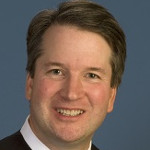
The Washington Post reports that  President Trump’s nominee for the Supreme Court may prove a crucial conservative vote in cases defining protections for gay and lesbian workers, the scope of union organizing and the rights of workers to take their grievances to court, according to labor law experts.

The president selected Brett M. Kavanaugh, a federal judge on the U.S. Court of Appeals for the District of Columbia Circuit.

Reporter Jeff Stein quotes Benjamin Sachs, a labor law expert at Harvard University: “This last term was horrendous for workers. If you are to have imagined a nightmare scenario for workers and workers rights, this would be it. But in those cases, the ruling justices also planted seeds that could lead to further damage against workers.”

Read the Washington Post article.


Halliburton Accused by Government of Harassing Muslim Workers

Energy giant Halliburton failed to act as two Muslim workers in North Texas were regularly harassed about their religion by supervisors and co-workers, the federal government alleges in a lawsuit.

Bloomberg Law reports the Equal Employment Opportunity Commission alleges Hassan Snoubar and Mir Ali were harassed and otherwise discriminated against because of their national origin. Snoubar is from Syria, and Ali is from India. Both worked for Halliburton Energy Services Inc. as operator assistants, the EEOC says.

Reporter Patrick Dorrian  writes: “The lawsuit continues the agency’s crackdown on employer practices or other workplace behaviors that target workers who are Muslim or Sikh, or of Arab, Middle Eastern, or South Asian descent. Eliminating such discrimination is one of the federal job rights watchdog’s top enforcement priorities.”

Read the article.


Working In-House And Want To Switch Companies? Good Luck!

The playbook for moving between in-house and Biglaw is well known and pretty straightforward, points out Above the Law.

“But if you are working in-house and want to move to an in-house role in another company, well, the playbook is not as clear and the path is a little more obscure. Even though you may be more marketable given your previous in-house experience, the application process can be a challenge,” writes columnist Stephen R. Williams, in-house counsel with a multi-facility hospital network.

He offers a sampling of some of the most common interview questions and some possible honest answers, which could run afoul of attorney-client privilege.

Read the Above the Law column.


O’Melveny Tops in Survey for Firm Culture, Job Satisfaction

Bloomberg Law reports that O’Melveny & Myers has won the “best law firm to work for” in Vault’s 2019 annual quality of life rankings.

Vault polled about 20,000 associates to rate peer firms and their own experiences, writes Bloomberg reporter Elizabeth Olson. They were asked about satisfaction and firm culture, as well as compensation, hours and informal training and mentoring.

Fried, Frank, Harris, Shriver & Jacobson held onto its No. 2 ranking in the poll.

Associates described O’Melveny as having a “laid back culture” and “super interesting work,” according to comments.

Read the Bloomberg article.


Port of Seattle Ousts GC Over Workplace Complaint – and Gives Him $500,000 Payout

The Port of Seattle will pay half-a-million dollars to its longtime chief lawyer to leave the agency after investigating a workplace complaint lodged against him, according to The Seattle Times.

Craig Watson had been with the Port for 28 years, serving as general counsel for the past 13 years.

The Port commission voted unanimously to fire him and give him $500,000 as part of a settlement agreement to avoid a potential legal battle over his employment status, reports Mike Rosenberg.

The Port’s executive director wrote in a memo to commissioners that an investigation had been launched after “a recent internal workplace complaint about Craig Watson.” The findings showed “the incident was insufficient to support” the firing, but the executive director and the commissioners “have lost trust and confidence” in Watson’s ability carry out his duties and responsibilities, the director wrote.

Read the Seattle Times article.


Supreme Court Deals Big Setback to Public Unions

Conservatives on the Supreme Court said Wednesday that it was unconstitutional to allow public employee unions to require collective bargaining fees from workers who choose not to join the union, a major blow for the U.S. labor movement, reports The Washington Post.

Reporter Robert Barnes writes that the 5-to-4 decision overturned a 40-year-old precedent and said that compelling such fees was a violation of workers’ free speech rights. The old rule could force the workers to give financial support to public policy positions they oppose, the court said.

“States and public-sector unions may no longer extract agency fees from nonconsenting employees,” Justice Samuel A. Alito Jr. wrote for the majority. “This procedure violates the First Amendment and cannot continue.”

Read the Post article.


Female Attorneys Harassed at Big and Small Firms, Survey Shows

Bloomberg Law reports on a survey of mostly female lawyers that sexual harassment, including unwelcome texts, physical contact and bullying, exists at big and small law firms.

The Women’s Bar Association of Massachusetts and the Rikleen Institute for Strategic Leadership conducted the study.

“Nearly 38 percent of respondents said they’d been the recipient of an unwanted sexual email, text or instant message at work. Approximately 21 percent said they’d experienced or witnessed unwelcome physical contact at work,” reported Stephanie Russell-Kraft. “More than two-thirds of those who said they had experienced or witnessed unwelcome physical contact said they didn’t report it.”

Read the Bloomberg article.