Arbitration Provisions, Unconscionability, and Employment Contracts

In a recent case out of California, Yeotis v. Warner Pacific Insurance Services Inc., No. B245770, the agreement in question was found to be unconscionable in places, but that didn’t doom the arbitration provision contained within it, writes Stacey Lantagne in ContractsProf Blog.

The court concluded that the contract was an adhesion contract, because the plaintiff was required to sign it in order to keep her job. There was, therefore, some procedural unconscionability attached to the formation of the contract,” she explains. “Additionally, there was some substantive unconscionability in the contract’s provisions that gave the court pause.”

Read the article.


McDonald’s Under Fire for Labor Violations in Landmark Joint Employer Case

McDonald's signOpening arguments kicked off Thursday in a long-awaited National Labor Relations Board case that could, for the first time ever, put McDonald’s on the hook for labor violations committed by the company’s franchised restaurants, reports International Business Times.

The case could determine whether McDonald’s is a so-called joint employer of workers at its franchisees, the independently-owned businesses that make up 90 percent of the company’s roughly 13,000 stores in the U.S and employ the vast majority of its 420,000 workers, explains reporter Cole Stangler.

“In addition to making the company more liable for labor violations, a decision from the NLRB that McDonald’s is a joint employer would open the door for a union formed by workers at franchised stores to bring the parent company to the bargaining table,” according to the report. “Such a ruling could also set a precedent for other fast-food franchises, according to industry observers and legal experts.”

Read the article.


Lingering in Lexmark’s Wake, Uncertainty About Limits of Patent Exhaustion

According to 10 judges of the Federal Circuit, a patent owner’s right to sue for infringement in the United States is not exhausted by sales of products abroad or by sales subject to valid post-sale contractual restrictions on use, write David Tellekson, Stefan Szpajda and Phillip K. Decker of Fenwick & West LLP.

The case is Lexmark Int’l, Inc. v. Impression Prods, Inc., Nos. 2014-1617, slip op. (Fed. Cir. Feb. 12, 2016).

In a 10-2 en banc decision, the Circuit court held that U.S. patent rights need not be expressly reserved in foreign sales transactions to preserve the right to sue for infringement if the goods enter the United States downstream of the point of sale.

“Although the Federal Circuit’s decision purports to maintain the status quo regarding patent exhaustion, Lexmark has immediate implications for patentees, licensees, and downstream consumers alike,” the authors write.

Read the article.


Contract Terms Associated with Data Breaches – It’s a Balancing Act

Information securityCompanies’ increased awareness of the substantial costs and exposure associated with data breaches has motivated them to beef up their data security requirements in vendor contracts, write Emily R. Lowe and Susan Milyavsky of Morgan Lewis & Bockius in an article posted on Lexology.com.  They write that companies should consider some basic issues that frequently arise when negotiating data security provisions.

“Because customers want the maximum protection, vendors should carefully consider how broad a requested representation is. It’s a balancing act, because vendors need to be able to be able to provide certain security controls to win business, but they also need to also understand the difference between providing an adequate degree of protection for their customers and an insurance policy,” the authors explain.

And cyber-liability insurance may be a mechanism for a company to mitigate its exposure with respect to damages associated with security breaches.

Read the article.


Read This Before You Sign Any Contract

The hardest won rights are often the easiest to lose, and in the thickets of fine print surrounding every labor contract or credit card bill, all it takes is one careless signature to get roped into a deal with the devil — before you know it, you’ve already compromised your right to a fair trial or to speak out against an abusive boss, writes Michell Chen in The Nation.

“Despite American society’s reputation for litigiousness, there are as many things to sue over as there are ways to escape a lawsuit. In February, a coalition of lawmakers led by Senators Patrick Leahy and Al Franken introduced legislation to strengthen worker and consumer protections against binding arbitration — the obscure legal mechanism through which countless people have accidentally compromised their rights, by ensuring that a prospective future dispute with a company gets tracked into a separate legal system rigged with corporate impunity,” she writes.

In her article, Chen says the measure aims to shield access to the courts for workers and consumers by preventing corporations from trying to impose arbitration before any dispute even arises.

Read the article.


Handbook Contract Disclaimers & Mandatory Arbitration Policies

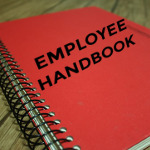
employee-handbook-765503_150A New Jersey court recently used the so-called contract “disclaimer” language in an employer’s handbook to preclude the employer from enforcing a mandatory arbitration program contained in that same handbook, reports Kevin C. Donovan in a Wilson Elser client alert.

He writes that employers who wish to enforce alternate dispute resolution procedures without falling into the same trap should consider the ruling. But, he wrote, the decision appears contrary to federal policy, enforced by a series of U.S. Supreme Court decisions that strongly favor enforcement of arbitration agreements.

In New Jersey, as in most states, employment is presumed to be “at will,” meaning that either the employer or the employee can freely terminate the employment relationship without a reason (cause) to do so. Under certain circumstances, however, express promises contained in an employer handbook can result in contractually binding terms and conditions of employment.

“While [the ruling] is a New Jersey decision, rulings in other states have also limited an employer’s ability to enforce an arbitration agreement in employee handbooks under some circumstances,” Donovan wrote.

Read the article.


eSignLive Will Present E-Signature Legal FAQ Webinar

Margo TankTuesday, March 29, 2 p.m. EST
(register below)

eSignLive by Vasco is sponsoring an online presentation featuring one of the foremost e-signature law experts, Margo Tank, partner from BuckleySandler LLP, offering a unique look at e-signatures and answering the most frequently asked legal questions on the topic.

The complimentary webinar will be Tuesday, March 29, at 2 p.m. Eastern time.

Andrea Masterton, Corporate Marketing Director of eSignLive, will be featured.

The event will cover:

  • Are electronic signatures and records legal across the United States?
  • What legal and compliance requirements do we need to consider?
  • Are there any exclusions or exceptions?
  • What have we learned from e-signature case law?
  • What special considerations should global companies be aware of when using e-signatures in other countries?

Register for the webinar here:


Some of the Surprising Ways Technology Will Affect Future Negotiations

There has been a lot of discussion about how new technologies such as online negotiation and contract management software are changing the process of getting deals done – either from a legal, sales or procurement perspective, ContractRoom says on a post on its website. Most of this has focused on how it’s accelerating the process and making it more streamlined.

But how will new technology transform future negotiations in situations where companies do not want to move more quickly and for various reasons want to use various different negotiation techniques?

Some companies prefer to take a manual approach because they perceive this provides them with a strategic advantage – by “slow-rolling” the process they believe it makes it more likely they will secure a better deal.

ContractRoom had a discussion with Stanford Law School Professor David Johnson, an expert in negotiation practice, theory and training (https://law.stanford.edu/directory/david-johnson/), and asked him for his thoughts on how technology is changing the negotiation space. He was of the view that contract management software “is changing the way negotiation is done because policy can be more uniformly implemented across contract admins or your point person.”

Read the article.


SpringCM Opens Office in San Francisco to Accommodate Customer Growth

SpringCM, provider of sales contract management solution for Salesforce customers, has announced opening a new office in San Francisco’s Financial District.

“SpringCM’s next-generation sales contract lifecycle management (CLM) platform streamlines sales contract processes to accelerate revenue growth, reduce costs and increase efficiency by bridging the gap between sales and legal toward fulfilling a faster contracts process,” the company said in a release.

The move brings SpringCM closer to the headquarters of some of its key strategic partners, namely Salesforce and DocuSign.

“San Francisco is an ideal location for us to get closer to our customers and partners,” said Greg Buchholz, CEO of SpringCM. “We’ve grown our West Coast accounts by 45 percent, translating to 50 percent growth in annual recurring revenue, so the new office is a milestone in the next stage of our development.”

The company said SpringCM grew its Salesforce contract management customers by 400 percent in Q4 2015, driven by five CLM product releases in 2015.


Killer Contract Clauses

ContractsBusinesspeople spend a lot of time and take a lot of pride negotiating deals, points out lawyer and author Jack Garson in the Huffington Post.

“They high-five when they get key points. But understand what it takes to win if there is a fight later. You only win a ‘feel-good’ battle in the negotiation. You win the real war in the contract. That’s where the killer contract clauses rule,” he writes.

He provides examples of contract language  that can make a contract much more favorable. “Contracts and the law are not about common sense. They’re about rules. Know them and win. Ignore them and forget about retiring on time.”

Read the article.


Negotiating Software Contracts – Successfully Negotiating a Limitation of Liability

By Stephen Pinson
Scott & Scott, LLP

Limitation of Liability ranks as one of the most important contract provisions in a software contract. The limitation of liability limits each party’s liability for all sorts of harm. A software provider’s liability is usually limited to the amount of fees paid to the vendor or a fraction thereof. The risk in not negotiating these terms is that the licensee is capped at the amount of damages. A “cap” is the aggregate upper limit for direct damages associated with a party’s liability. The cap on liability can be a specific dollar amount, but in many contracts the “cap” is tied to the amounts paid for the products or services purchased. This cap may not equate to the actual amount of harm of the licensee. Therefore, successfully negotiating a limitation of liability becomes the key point in finalizing the contract. But, what exactly are the pitfalls when negotiating a limitation of liability, and how do you successfully navigate them?

One of the major pitfalls in negotiating a limitation of liability is contained in the structure of the contract provision. Many contracts include boilerplate limitation of liability language. Thus, contract negotiators must develop a systematic way to review the language and then develop a strategy to address the liability concerns for their side of the deal. To do this, the parties must first understand the risks involved with a particular deal and negotiate for the specific risk type.

The best way to put this into action is to review the boilerplate language and put the language into more concrete roadmap to negotiate the contract by asking the following questions: (1) what damage provisions are typically included in the limitation of liability, (2) what damages will be capped, (3) what claims will be carved-out of the contract (or excluded from the limitation of liability) that will not have a cap, and (4) what type of insurance should be negotiated.

Included and Excluded Provisions:

The following is a list of commonly included “boilerplate” exclusion of damages language in a limitation of liability section of a contract:

* Incidental damages
*Special damages
*Consequential damages
*Exemplary Damages
*Punitive Damages
*Loss of use, data, profits, business, goodwill, or opportunity costs
*Computer failure or malfunction
*Costs, expenses or other losses

Capped & Uncapped Damages:

The following is a brief list of common limitation of liability damages, and whether they are capped, uncapped, or subject to insurance from the perspective of the software publisher.

*Negligence – Capped
*Personal injury – Not Capped
*Physical property damage – Insurance coverage
*Lost Data subject to failure of adequately having an onsite backup solution – Capped
*Lost profits – Capped
*Lost revenue – Capped
*Consequential damages – Capped
*Infringement of intellectual property – Not capped because they are considered direct damages
*Gross Negligence, willful misconduct, and fraud – Not Capped

Carve-outs:

For those damages that are considered capped to the amount of products of services offered, a successful negotiator will seek to carve these provisions out of the contract by making exceptions to the limitation of liability, making them subject to insurance for different claims scenarios:

*Breach of obligations to comply with laws
*Breach of the parties confidentiality or confidential information / materials
*Breach of data security or privacy obligations
*Indemnification obligations
*Intellectual property infringement
*Gross negligence, willful misconduct, and fraud
*Violations of certain terms to the agreement or payment schedules
*Claims subject to insurance
*Claims for death or personal injury
*Any other forms of liability which by law cannot be limited or excluded

Insurance:

The following is a brief list of insurance provisions that could be negotiated in a software or services contract in excess of the cap for the different types of claims scenarios. Individual and aggregate limits must be negotiated for the types of risks involved:

*Automobile Liability
*General Commercial Liability
*Umbrella Liability Insurance
*Workers’ Compensation
*Employer’s Liability Limits
*Network Security and Privacy Liability
*Professional Liability Insurance, Errors and Omissions, including Cyber Liability
*Data Breach, Data Loss, Regulatory Response
*Evidence of Insurance Policies

Remember, it is always important to seek advice from experienced counsel when negotiating a limitation of liability provision in software and service contracts to make sure the risks are adequately assessed and your interests are protected.



Review Of Arbitration Awards: Lessons for the Construction Industry from the Tom Brady Case

An article published on the Pepper Hamilton website considers the instance of an appeal of an arbitration award that involved the successful appeal by All-Pro Quarterback Tom Brady and the NFL Players Association of Brady’s four-game suspension based on accusations of complicity in a scheme to gain an unfair competitive advantage in an NFL playoff game.

Richard W. Foltz, Jr. and James M. Kwartnik, Jr. discuss whether members of the construction industry contemplating review of arbitration awards can draw any lessons from the Brady matter.

Based on the discussion of the case, “there are a few takeaways from this case for construction matters,” the write. “Most importantly, a party should not rely on the opinion as establishing expectations for review of arbitration awards.  It appears to be the zenith of aggressive appellate review, and unlikely to be closely followed in situations where it could be factually distinguished.”

Read the article.


Smart Contracts May Create Significant Innovative Disruption

Smart contracts today may be similar to e-commerce in the 1990s – poised for widespread adoption and explosive growth even though it may still be a few years off, writes Oliver Herzfeld, chief legal officer of  Beanstalk, in an article published on Forbes.com. So, to avoid surprises or missed opportunities, it may be worthwhile to start now to consider and explore the possible applications of smart contracts to your industry and business.

“Essentially, a smart contract is software that executes commercial transactions and/or enforces legal agreements in a manner that eliminates the need for intermediaries and their associated transaction costs,” he explains.

Herzfeld adds that this system could have “a huge disruptive effect on (i) car manufacturers, since use optimization would presumably reduce sales; (ii) insurance companies, that would sell fewer car policies; (iii) financial institutions, that would underwrite fewer car loans; and (iv) taxi and ride hail companies, parking facilities and other businesses, that would all be displaced by this process. The resulting commercial and social disruption could be huge.”


Read the article.


American Rule Prevails on Petition to Vacate Arbitration Award

Some contracts, including insurance and reinsurance contracts, include provisions providing that the successful party’s damage award will include all costs of the suit or arbitration, including attorney fees, writes in Squire Patton Boggs’ Insurance and Reinsurance Law Blog.

“This type of clause modifies the traditional default American Rule of costs and fees, in which each litigant pays its own attorney fees, win or lose,” he explains. “What happens when this type of contract clause bumps up against the Federal Arbitration Act (‘FAA’) and the ability of a party to petition a court to seek to vacate an arbitration award? Is the prevailing party entitled to costs and attorney fees defending the vacatur proceeding?”

He describes a recent ruling in the 2nd U.S. Circuit Court of Appeals, in which the court was asked to review a district court order confirming an arbitration award and awarding costs and attorney fees to the prevailing party.

Read the article.


Under Contract Law, Court Says Retirees Have No Vested Right to Lifetime Benefits

insurance-911819_150The 6th U.S.  Circuit Court of Appeals has issued a sweeping decision that confirms that “ordinary principles of contract law” rarely will require a company to freeze outdated lifetime health coverage benefits in place, write Nancy G. Ross and Brian D. Netter, partners in Mayer Brown.

“Until recently, courts had a practice of interpreting benefits arrangements in collective-bargaining agreements (‘CBAs’) to ensure lifetime coverage—often defying the company’s expectations in the process,” they write. “But the legal environment has changed. Now is the time for companies to press ahead in reducing legacy costs on their balance sheets.”

They discuss the case of Gallo v. Moen Inc., in which a class of retirees who had worked at a shuttered Ohio factory alleged that they had been promised lifetime health benefits.

Read the article.


Fortune 500 Companies Losing Revenue from Inadequate Insight into Contracts

ContractWhen companies understand exactly where their contracts are and, even more importantly, what is buried within them, they can make more informed decisions in order to maximize revenue opportunities, mitigate risk and reduce expenses, according to an article from Seal Software. But sometimes even Fortune 500 companies have no idea what is lurking in their contracts.

The company collected a top 10 list of actual examples of what Seal has found in customers’ contracts after five years of working with leading organizations across a variety of industries.

The examples illustrate problems in such areas as unnecessary costs, missed opportunity, increased legal risk, increased legal risk, contract inefficiency, legal exposure and more.

In one example, for instance, a large energy company three years after a takeover discovered it was auto-renewing a lease costing $400,000 per year on property it didn’t need.

And in another case, five years after a telecommunications company purchased a major competitor, it still had no idea of the liabilities contained within the 500,000 contracts it had acquired in a takeover.

Read the article.


New Federal Bill Seeks to Limit Use of Arbitration Agreements

Employers are advised to follow developments in the legislature and government agencies to curtail the use of arbitration agreements, writes James G. Ryan on the website of Cullen and Dykman LLP.

“Employers should also monitor decisions issued from federal agencies such as the NLRB and stay current with laws involving arbitration agreements in order to ensure compliance with both state and federal law,” according to the article.

The article also discusses a bill introduced by U.S. Senator Patrick Leahy, titled “Restoring Statutory Rights and Interests of the States Act of 2016,” that would limit the use of arbitration agreements in civil rights cases, employment disputes, and other lawsuits.

Read the article.


Clickwrap, Browsewrap and Mixed Media Contracts

Terms conditions contractsCourts have generally categorized online agreements into two types: “clickwrap” agreements and “browsewrap” agreements, write Joshua R. Stein and J. Alexander Lawrence of Morrison & Foerster LLP in an article posted on Lexology.com.

The explain:

Clickwrap agreements—which require a user to check a box or click an icon to signify agreement with the terms—are usually enforceable under U.S. law, even where the terms appear in a separate hyperlinked webpage but where language accompanying the box or icon indicates that checking the box or clicking the icon indicates assent to such terms.

On the other hand, browsewrap agreements—where the terms are passively presented to users in a hyperlink somewhere on a webpage, often at the very bottom of the page in small font—are often unenforceable because it often cannot be proved the user knew the terms existed or even was aware of the hyperlink.

They describe a case in which a signed contract did not include an arbitration clause, but instead included an Internet link to terms and conditions that included arbitration conditions.

Read the article.


The Standardization of Contract Language – The Pros and Cons

An article posted on the ContractRoom website discusses the arguments for and against standardizing contractual language, covering such topics as cost, efficiency, lack of variation, legal issues, risk mitigation and productivity.

With many differing opinions about how to draft a contract how do people feel about contract standardization?

“When you talk about standardization of contact language,” the article continues, “you will usually encounter two types of people:

  1. those who are for it and for whom standardization cannot come soon enough; and,
  2. those who are more hesitant and concerned about the possible negative impact of such a change.”

“It will be interesting where contract standardization goes in the next decade and how the development of contract management software technologies influences this,” the article concludes.

Read the article.


Patent Exhaustion Can Be Avoided By Lawful Post-Sale Contractual Restrictions

The en banc Federal Circuit by a vote of 10-2 held that patent exhaustion can be avoided by otherwise lawful post-sale contractual restrictions and that foreign sales of a patented item are not presumed to exhaust patent owner’s rights in the United States, according to a report posted by Dentons.

The case is Lexmark Int’l, Inc. v. Impression Products, Inc., No. 14-1617, -1619 (Fed. Cir. Feb. 12, 2016) (en banc).

“The dissent would have found post-sale restrictions invalid and that foreign sales exhaust patent owner’s rights in the United States absent an express reservation. The Federal Circuit’s 99-page majority decision may not be the last word on these issues if the Supreme Court is asked to grant certiorari later this year,” wrote Joel N. Bock, Joshua D. Curry and Heather Khassian.

Read the article.