2016 Year in Review: Trade Secrets and Non-Compete Developments

Practical Law and Epstein Becker Green attorneys will present a free, 75-minute webinar providing insights into recent developments and expected trends in the evolving legal landscape of trade secrets and non-competition agreements on Wednesday, Nov. 30, 2016, at 1 p.m. EST. This webinar will focus on how to navigate this developing area and effectively protect client relationships and proprietary information.

Epstein Becker lawyers Peter A. Steinmeyer, Robert D. Goldstein and Anthony J. Laura will be presenters.m The moderator will be Barbara J. Harris, Senior Legal Editor, Practical Law Labor & Employment.

Topics will include:

  • The Defend Trade Secrets (DTSA), including the new federal remedies available to employers and the steps they need to take to fully benefit from them.
  • Newly passed state statutes addressing restrictive covenants, including who can enter into them, industry restrictions, and temporal restrictions.
  • Recent decisions regarding what constitutes adequate consideration for a non-compete.
  • Interesting developments determining choice of law issues, including a new California statute restricting choice of law provisions.
  • Administrative agency developments, including agency enforcement actions cracking down on non-competes.

A short Q&A session will follow.

Register for the webinar.


Mike Pence in Legal Fight to Keep Email Secret

Image by Gage Skidmore

Image by Gage Skidmore

Vice president-elect Mike Pence is the latest Washingtonian found at the cross-hairs of an email controversy that could provide a glimpse into how a Trump administration would respond to issues of government transparency, CBS News reports.

CBS News’ Justice Correspondent Paula Reid explains that an email belonging to the former Indiana governor the core of the privacy debate.

The email is the subject of  a public records lawsuit filed by William Groth, a lawyer, in an effort to reveal the contents of the message, which allegedly shows how a group of 17 states planned to legally dismantle President Obama’s executive orders on immigration.

The Indianapolis Star originally reported on the story.

Read the CBS News article.


U.S. Consumer Financial Agency Could Be Defanged Under Trump

CFPB - Consumer Financial Protection BureauThe U.S. Consumer Financial Protection Bureau, already in legal limbo after an October court decision, could find its powers scaled back by President-elect Donald Trump and a Republican-led Congress, according to members of both political parties, lobbyists and lawyers, Reuters reports.

The agency, created in response to the 2007-09 financial crisis, is a target for some critics for such proposals an attempt to stop companies from blocking customers from class action lawsuits and another one to limit payday lending.

“Many Republicans opposed the agency’s creation. They now say they dislike its structure and believe it oversteps its authority in enforcement,” writes reporter Lisa Lambert.

Read the Reuters article.


Energy Outlook: Platts U.S. Election Webinar

S&P Global Platts has posted a free on-demand webinar taking a look at the potential impact the recent presidential election could have on petroleum, natural gas, power and metals.

The webinar covers:

  • Impact on oil and gas markets
    • Arctic and Atlantic Coast production
    • The future of fracking
    • Pipeline projects – will they get built?
    • Supply/demand implications
  • Impact on metals markets
    • US infrastructure impact on steel
    • What to do about “steel dumping”?
    • Economic uncertainty and gold
  • Impact on renewables and environmental regulations
    • Is the War on coal over?
    • Buildout of renewable power generation
    • The future of biofuels

View the on-demand webinar.


ISO 37001 Prompts Review of FCPA-Based Anti-Corruption Policies

By Patty P. Tehrani
Lawyer and Founder of Policy Patty Toolkit

iso-logoNot surprisingly, most U.S. organizations base their anti-corruption policies on the U.S. Foreign Corrupt Practices Act (“FCPA”). At first, the FCPA was designed to combat bribery by U.S. companies conducting business worldwide. Over time its reach has extended beyond just U.S. companies. With the expansion of the FCPA and anti-corruption laws coming out of other countries, organizations that operate globally must now contend with various and possibly conflicting anti-corruption requirements.

Some good news may be on its way. Last month, the International Organization for Standardization (ISO) finalized and approved ISO 37001 (click here). ISO is an international standard-setting body that issues standards that are designed to meet expectations of enforcement authorities around the world. ISO 37001 outlines requirements for anti-bribery management systems using a risk-based approach that specifies required procedures and controls. By defining global minimum requirements for such systems, the new standard should help organizations with their policies. How? Organizations can use ISO 37001 to either assess their anti-corruption policies and related programs or review existing ones to make sure they meet these new standards.

To help with this review, consider the following key points:

• What’s the purpose of ISO 37001? It was developed to help organizations establish, operate, and improve their anti-bribery compliance programs. It does this by outlining requirements and guidance for establishing, implementing, maintaining and improving an anti-bribery management system.

• Why take notice? ISO 37001 will most likely serve as the global standard for anti-bribery management systems.

• Who is subject? The requirements of ISO 37001 are intended to apply to all organizations in all sectors across all jurisdictions and covers public, private and not-for-profit sectors. Since it is a risk-based standard, organizations can adapt the requirements based on size, structure, location, industry, scale and complexity of its activities as well as the risks it faces.

• What are the requirements? ISO 37001 outlines global practices for preventing, detecting, deterring, and remediating corruption risks. Key measures and controls include:
o anti-bribery policies and procedures communicated to employees and third parties;
o vetting and training employees;
o management and leadership commitment and support (“tone at the top”);
o risk assessments;
o third party compliance certifications, due diligence and contractual controls including termination rights;
o reporting, monitoring, investigation and whistleblower protections; and
o periodic review and improvement of anti-corruption compliance controls.

• What are the possible outcomes? ISO 37001 provides organizations with:
o a checklist for their existing anti-corruption policies or those to be established;
o context to help make more informed decisions about third parties through ISO 37001 certifications;
Note: Third parties can certify compliance with the standard in the same way they do for other ISO standards.

o potential leverage with regulators during reviews, investigations and possible enforcement actions; and
Note: It remains to be seen whether U.S. enforcement authorities will rely on ISO 37001 as a checklist to evaluate compliance programs. But organizations with anti-corruption programs that achieve ISO 37001 certification will most likely be better positioned during regulatory reviews.

o basis to promote and strengthen brand and reputation by sending a strong message to both internal and external stakeholders about an organization’s commitment to internationally recognized anti-bribery controls and measures that it has instituted to prevent bribery.

In conclusion, make sure you review ISO 37001 against your anti-corruption policies and controls as it will most likely play an important role in the future regarding anti-corruption efforts.


The Five Biggest Issues Facing the New Ninth Justice

 and  of BloombergBusinessweek list some of the top issues that will be waiting for a new U.S. Supreme Court justice who is likely to nominated by Donald Trump after he moves into the White House in 2017.

The new justice will fill the seat formerly held by the late Justice Antonin Scalia, who led 5-4 corporate majorities in a series of major rulings.

The authors discuss the top five issues, which include climate change, arbitration, class actions, property rights and insider trading.

Read the BloombergBusinessweek article.


White House Continues Attack on Non-Compete Agreements

“State Call to Action on Non-Compete Agreements” is the White House’s latest in a series of Executive Branch missives decrying the purported misuse of non-competition agreements by employers across the country, according to an article posted on the website of Jackson Lewis P.C.

Authors Clifford R. Atlas, David M. Walsh and Erik J. Winton write that the latest call to action repeats some of the Administration’s earlier conclusions on the subject: “including the view that use of non-compete agreements artificially restrict competition, restrict worker mobility, create barriers to changing jobs and weaken employees’ bargaining power. The stated goal of the White House issuances on non-competes is to address wage stagnation and boost the economy.”

“Many attorneys who represent companies in restrictive covenant litigation find the Administration’s conclusions and stated concerns about the evils of non-compete restrictions puzzling,” they write.

Read the article from Jackson Lewis.


Trump’s Victory Has Enormous Consequences for the Supreme Court

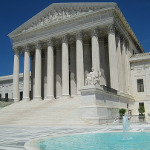
U.S. Supreme CourtThe political earthquake that hit Tuesday night has enormous consequences for the Supreme Court, swallowing up Judge Merrick Garland’s ill-fated nomination and dismantling Democratic hopes for a liberal majority on the high court for the first time in nearly a half-century, writes Robert Barnes for The Washington Post.

At some point next year, the nine-member court will be restored to full capacity, once again with a majority of Republican-appointed justices. Democrats in the U.S. Senate may try to filibuster Trump’s choice for the court, but Republicans could change Senate rules to remove that option for Supreme Court nominations.

In his article, Barnes predicts” “Trump’s upset victory likely changes the court’s docket as well: Court challenges to President Obama’s regulations regarding the Affordable Care Act and immigration, which have preoccupied the justices in recent terms, will likely disappear under a President Trump and a Republican-controlled Congress.”

Read the article in The Washington Post.


London Calling: The Law and Politics of Brexit

EU- BrexitYou may not have heard, above the hubbub of Tuesday’s election, about a very significant judicial decision on Brexit and issues of constitutional law that was handed down last week. But before I look at it more closely, there’s some background to the recent High Court decision that you need to know.

Leaving the EU

There is a mechanism set out in Article 50 of the Lisbon Treaty, whereby a member state can leave the EU.  First, the state makes the decision to withdraw “in accordance with its own constitutional requirements”. It then notifies the European Council of its intention (known as “triggering Article 50”). After that, there is a two-year period for the departing state to negotiate the arrangements for withdrawal, including future relations between the state and the EU. Whether or not any such negotiations have been concluded, the departing state ceases to be an EU member at the end of that two-year period (unless all member states agree, unanimously, to extend the period).

This bit is really important: once Article 50 is triggered, there appears to be no way back; the state’s membership of the EU will end, as night follows day, and there is nothing anyone – not the EU, not the departing state, no-one – can do about it. (It has been pointed out that whether triggering Article 50 is reversible is a question of European law; but I can’t see the UK government testing the point – that would require a reference to the Court of Justice of the European Union. Politically, not a smart move.)

Of course, a state can, having left, apply to rejoin; but (a) there’s a queue; and (b) every state that joins must adopt the single currency and the borderless free movement of people (the “Schengen Agreement”). Oh, and the EU has made it crystal-clear that it will not begin to negotiate with the UK until after Article 50 is triggered. There’s no “wait and see”, or “negotiate, then decide” option.

The referendum – the law and the politics

The UK is a parliamentary, representative, democracy; laws are not made by referendum. When Parliament voted to give the British people a referendum on leaving the European Union, the legislation didn’t say what the effect of the vote would be. The vote could only have had any legal effect if the legislation had said so; so the referendum was purely advisory, nothing more.

With hindsight, it is deeply regrettable that that this was not explained to the electorate at the time. It was explained perfectly clearly to Members of Parliament before they legislated for the referendum; the (politically independent) House of Commons Library briefing paper on the Bill said this:

“This Bill requires a referendum to be held on the question of the UK’s continued membership of the EU before the end of 2017. It does not contain any requirement for the UK government to implement the results of the referendum, nor set a time limit by which a vote to leave the EU should be implemented. Instead, this is a type of referendum known as pre-legislative or consultative, which enables the electorate to voice an opinion which then influences the government in its policy decisions. …. The UK does not have constitutional provisions which would require the results of a referendum to be implemented …” (page 25)

The referendum: as history shows, 51.9% of those who voted agreed with the proposition that the UK should leave the EU; 48.1% agreed with the proposition that it should remain. (So that the irony may strike you later, I mention here that one of the main planks of the “leave” campaign was returning sovereign power to the UK Parliament.)

This was on a turn-out of 72.2%.  As mathematics shows, 37.5% of the total electorate voted for change; 62.5%, therefore, did not.

Here’s the politics:

Theresa May, who was a “remainer”, has replaced David Cameron as Prime Minister – although as she achieved the post without winning any contested election, her mandate is a weak one. She is now eager to be seen to be pressing on with withdrawing the UK from the EU.  She said this weekend:

“While others seek to tie our negotiating hands, the government will get on with the job of delivering the decision of the British people. It was MPs who overwhelmingly decided to put the decision in their hands. The result was clear. It was legitimate. MPs and peers who regret the referendum result need to accept what the people decided.”

(Spot the differences between this and the briefing to MPs; and between this and the referendum numbers.)

What this means is that the PM has taken the referendum result as a mandate – nay, an instruction – to trigger Article 50 by executive action, with no further input from Parliament.  Indeed, the Government has been very resistant to any suggestions that it should be (in any significant way) accountable to Parliament for its negotiations post-Article 50, saying explicitly that it does not intend to give a running commentary on those negotiations. The PM’s mantra is “Brexit means Brexit” – which is about as meaningful as saying that “breakfast means breakfast”: syntactically obvious, but semantically vacuous. Merely saying it doesn’t mean that a croissant and a sausage are the same thing.

And here’s a problem. There’s no single package of arrangements, labelled “Brexit”, for the UK to simply pick up. Some favour the croissant of “soft Brexit” – a departure from the structures of the EU, but maintaining full membership of the single market in goods and services; some favour the sausage of “hard Brexit” – severing all formal links with the European single market, and prioritising control on immigration over free trade with the EU. So actually, Brexit does not necessarily mean Brexit, after all. And the Government hasn’t even begun to tell us which is its preferred aim in the negotiations to come.

So where is the role of Parliament in all this? It has been suggested that once the negotiations have been concluded, the package could then be brought to Parliament for ratification; or even be the subject of a second referendum. But this is plainly inconsistent with the structure of Article 50, as I said at the top: “negotiate, then decide” is not an option.

As a political imperative, therefore, Parliament must be engaged before, not after, Article 50 is triggered. (And as I said, it was, after all, a main plank of the leave campaign that sovereign power should be returned to Parliament.) But this was not what the Government planned; it maintained that it had the power to trigger Article 50 by executive action (in particular, the exercise of the “royal prerogative” – the ancient powers of the Crown that have not been overtaken by legislation).

It’s worth just explaining why the Government might want this to be the case. Research published the day before the referendum showed that, of those who had publicly declared a position, 24 cabinet ministers supported the remain campaign, and 6 supported leave. Of Members of Parliament, 479 supported remain, and 158 supported leave. (It’s thought that a majority of the unelected House of Lords also supported remain, although for various reasons, the upper house could not or would not stand in the way of the House of Commons.  It would create a constitutional crisis that could lead to its abolition; its flooding with appointed pro-Brexit peers; or, simply its overruling by the House of Commons under the Parliament Acts. If you want more detail on this, see me after class.) The Government is, therefore, fearful that MPs might vote with their consciences and declared beliefs, and not permit Article 50 to be triggered at all; or, more likely, legislate to constrain the Government’s negotiating position, for example by requiring the Government to prioritise access to the single market over immigration control (or vice versa).

But – does the Government actually have the power to do proceed in this way? That, my friends, is a legal question, and therefore to be litigated; and litigation is what we have: an application for judicial review, brought by various campaigning individuals and groups.

The litigation – the law and the politics

The High Court heard argument over three days in October on whether the royal prerogative gave the Government the power to do what it proposed to do; or whether legislation was required. This was no ordinary sitting of the High Court; there were, unusually, three judges – the Lord Chief Justice; the Master of the Rolls (the head of civil justice); and Lord Justice Sales (who, as a barrister, had served as First Treasury Counsel – the distinguished position of the member of the Bar called on to advise and represent the Government in its most serious cases). There could not be a stronger or more heavyweight tribunal. Unusually, complete transcripts of the proceedings have been published already. Then, on Thursday of last week, judgment was handed down – the judgment is here (pdf) and a court-approved summary is here (pdf). The headline? The Government lost. Quite comprehensively.

It’s worth noting what the parties – that is, the campaigners and the Government – agreed on. First, it was agreed that this was a justiciable question. That’s worth emphasising: the Government did not argue that this was not a question for the courts (contrary to much of the hysterical press comment the followed the decision). Secondly, that the question was about process, not about the merits or demerits of Brexit (again, contrary to, etc etc). And thirdly, it was common ground that notice under Article 50 cannot be conditional (for example, on a Parliamentary or popular vote), and cannot be withdrawn once given. Finally, the sovereignty of Parliament was, I am relieved to say, not in dispute: that is, as Dicey put it in his Introduction to the Law of the Constitution, Parliament has

“… the right to make or unmake any law whatever; and, further, that no person or body is recognised by the law … as having a right to override the legislation of Parliament.”

As to the substance of the dispute, it was accepted that the making and unmaking of treaties, occurring as it does on the plane of international law, can be done by the exercise of the royal prerogative, and is not justiciable. But – and this was where the Government lost its ground – this principle goes hand-in-hand with the principle that individuals gain no rights and suffer no obligations under international law; and it is only because of that that the courts have no need to exercise any jurisdiction. The European treaties do give rights and impose obligations on individuals – but in the UK, they do not do so of their own brute force; they do so because they are allowed to by the European Communities Act 1972.

The principle that the Crown, or the Government, cannot undo what Parliament has done was set out by the courts in the Case of Proclamations of 1610; fought over bloodily in the Civil War; and enshrined in section 1 of the Bill of Rights 1688. But by initiating the departure of the UK from the EU by an exercise of the royal prerogative, this is precisely what the Government was setting out to do: triggering Article 50 would, without legislative authority, pre-empt the ability of Parliament to decide on the EU rights and obligations of individuals.

The Government’s argument – that nothing in the 1972 Act indicated that the Government did not have the power to use the prerogative in this way, was “flawed at [a] basic level”, because it gave no value to the principle that, unless Parliament legislated to the contrary, the Crown should not have the power to vary the law of the land through the exercise of prerogative powers.

The court therefore concluded that it was clear that Parliament intended to legislate by the 1972 Act so as to introduce EU law into domestic law in such a way as could not be undone by the exercise of Crown prerogative power; and the challenge succeeded.

And what of the politics?

Here is not the place to go into detail into the political and media outrage that followed the judgment. But I cannot pass by without mentioning, with appalled sadness, the vicious personal attacks on the three judges by sections of the press.  This included the Daily Mail, which used the headline “Enemies of the People” – ironically, for a paper that was pro-Hitler in the 1930s, resurrecting a phrase (in German, Volksfeinde) which was used to describe Jews, Bolsheviks and other “outsiders” in pre-war Germany – including judges. Equally shocking was the complete lack of understanding of the rule of law shown by a cabinet minister, Sajid Javed, who said on television that the judgment was “… an attempt to frustrate the will of the British people and it is unacceptable.”  And the Lord Chancellor, Liz Truss MP, who has a statutory duty to uphold the independence of the judiciary, allowed this barrage to continue unchecked for two days before bowing to pressure to make some kind of statement – and a pretty half-hearted, milk-and-water thing it was when it came.

What we have here is the clearest example yet, on this side of the pond, of ochlocracy – the tyranny of the majority, mob rule.  It is a scary descent from reason to passion, from debate to demagoguery, from respect to disdain.  You may recognise this.  It will take a particularly strong kind of politician to pin their colours to principles of fundamental rights of the individual and the rule of law in the face of what is being bandied around now.  Who and when that will be, or whether it will happen at all, we will have to wait and see.

What happens next? The law and the politics

As far as the legal proceedings are concerned, the case is – and always was going to be – headed straight for the Supreme Court, where it will be heard in early December. For the first time, the Supreme Court will sit in plenary session, with all 11 Justices of the Supreme Court taking part.  While judgment may be delivered before Christmas, early January is perhaps more likely.

In theory, a further challenge could be taken to the Court of Justice of the European Union on the interpretation of Article 50 itself. I think it’s unlikely that the Government would take that step to find out whether triggering Article 50 is reversible; but I can see the scope for a challenge by campaigners, seeking a ruling on whether an exercise of the prerogative power following an advisory referendum is, in the terms of Article 50(1), “in accordance with [the UK’s] own constitutional requirements.”

And as for the politics?

It is commonly suggested that MPs should not try to block the passage of any Bill enabling the Article 50 trigger; and the Labour Party – the vast majority of whose MPs were in favour of remain – has indicated that it will facilitate the passage of the necessary legislation to precede Article 50. But is that the right thing for them to do?  After all, MPs no more speak with one voice as to the preferred form of Brexit than the Government does.

Straying into the realm of political theory, I would like to think it’s possible we may see, for the first time in a generation or more, a proper debate on the role of a Member of Parliament. An MP, elected by a single constituency, should not aim unthinkingly to reflect the views of the population of a whole, however the great the majority. Nor, I think, should they aim unthinkingly to reflect the majority of views expressed in their own constituency. That would reduce the role of MP to that of a mere cypher or conduit – and of diffuse, incoherent and inconsistent views (and how, in any event, is an MP to properly represent a 55:45 split of views, when they only have one vote in Parliament?); and, in failing to represent those who have not expressed a view, they would be in dereliction of their duty to serve all their constituents.

I share the view of Edmund Burke, expressed in his speech to the electors of Bristol, that an MP should pay high regard to the wishes, opinions and business of his constituents; but not sacrifice to them his unbiased opinion, his mature judgement and his enlightened conscience. An MP owes his constituents, not his industry only, but his judgement; and he betrays them, instead of serving them, if he sacrifices it to their opinion.  Amen to that.

Meanwhile, the PM is still saying – to the EU, to Germany, to anyone who will listen – that the Government will win the appeal, and that Article 50 will still be triggered by the end of March 2017. This date is seen as desirable, as it would mean that the two-year negotiation process would end before April 2019, when there will be further EU parliamentary elections; but it is looking increasingly unattainable. Probably so, in the unlikely event that the Government wins the appeal; definitely so, if it loses.

It is said that one way of breaking any political deadlock would be for the Government to call a snap general election, to gain a truer mandate for its political path ahead. There is one, significant, stumbling block: the Fixed Term Parliaments Act 2011. This provides for general elections only in certain circumstances: the expiry of a five-year term; a motion for an earlier election being passed by a two-thirds majority of the House of Commons; or the Government losing a no-confidence vote (which would be by a simple majority). To call an early election therefore, the Government would have to be confident of securing that two-thirds majority; and if it were not, it would have to face the calamitous option of proposing a motion of no confidence in itself, and then successfully ensuring the motion against itself is carried. What murky waters we are in.

There is, always, the option of simply repealing the Fixed Term Parliaments Act; and and indeed a Bill to achieve that has already been introduced. All this achieves, though, is opening up another front of parliamentary warfare. And all this at a time when the Government could do with as few distractions as possible from the business of actually governing.

Conclusion

The imprecation “may you live in interesting times” may not actually be an ancient Chinese curse, but in this troubled period in our history, one can understand why it could be thought to be so. What is certain is that the interesting times will continue; and I’ll report on this topic again when the Supreme Court considers the appeal.

Submitted by High Performance Counsel
Author: David Willink, Barrister, Lamb Chambers


U.S. Charges in Generic-Drug Probe to Be Filed by Year-End

Pills on tableU.S. prosecutors are bearing down on generic pharmaceutical companies in a sweeping criminal investigation into suspected price collusion, a fresh challenge for an industry that’s already reeling from public outrage over the spiraling costs of some medicines, reports Bloomberg.

David McLaughlin and Caroline Chen write that the antitrust investigation by the Justice Department spans more than a dozen companies and about two dozen drugs. A grand jury is examining whether some executives agreed with one another to raise prices, and the first charges could emerge by the end of the year, sources told the reporters.

“Among the drugmakers to have received subpoenas are industry giants Mylan NV and Teva Pharmaceutical Industries Ltd. Other companies include Actavis, which Teva bought from Allergan Plc in August, Lannett Co., Impax Laboratories Inc., Covis Pharma Holdings Sarl, Sun Pharmaceutical Industries Ltd., Mayne Pharma Group Ltd., Endo International Plc’s subsidiary Par Pharmaceutical Holdings and Taro Pharmaceutical Industries Ltd.,” according to the report.

Read the article.


Wells Fargo to Pay $50 Million to Settle Home Appraisal Overcharges

In the latest hit to the battered bank, Wells Fargo has agreed to pay $50 million to settle a class-action lawsuit that accused the bank of overcharging hundreds of thousands of homeowners for appraisals ordered after the homeowners defaulted on their mortgage loans, reports The New York Times.

Under the settlement, Wells Fargo will mail checks to more than 250,000 customers whose home loans were serviced by the bank between 2005 and 2010.

“The checks will typically be for $120, according to Roland Tellis, a lawyer with Baron & Budd, the law firm that represented Wells Fargo’s customers,” writes Stacy Cowley. “If a judge signs off on the settlement, as expected, the checks will be distributed next year.”

The settlement is the latest blow for Wells Fargo, after a scandal involving the creation of millions of unauthorized accounts for existing customers.

Read the article.


From the Source: A Discussion with the TTAB About Changes to its Rules

Practical Law will present a free 60-minute webinar that will address the recent amendments to the Trademark Rules of Practice and how they affect TTAB practice and procedure.

The event will be Thursday, Nov. 10, 1-2 p.m. EST.

The program will cover:
* critical amendments to TTAB procedure.
* a discussion about the TTAB’s reasoning behind the amended rules.
* the TTAB’s expectations for compliance with the amended rules.
* a Q&A with senior representatives from the TTAB.

Presenters:

Cheryl Butler, Senior Counsel, USPTO Trademark Trial and Appeal Board
Cheryl Butler is Senior Counsel for TTAB Policy and Procedure and the TBMP Editor. Ms. Butler previously served as an Interlocutory Attorney and, prior to that, as a Trademark Examining Attorney. Ms. Butler received her J.D. from George Mason University School of Law and her B.S. in Geosciences from the University of Arizona.

Michael Webster, Interlocutory Attorney, USPTO Trademark Trial and Appeal Board
Michael Webster currently serves as an Interlocutory Attorney at the TTAB. Prior to joining the Board, Mr. Webster was a Trademark Examining Attorney at the USPTO for over fifteen years. He is a graduate of Regent University School of Law and earned his bachelor’s degree in Economics from Indiana University and an M.B.A. from Robert Morris University.

Uli Holubec, Senior Legal Editor, Practical Law Intellectual Property & Technology (Moderator)
Uli Holubec joined Practical Law from Quinn Emanuel Urquhart & Sullivan LLP, where she was a senior associate and handled a variety of trademark and other intellectual property matters. Uli previously was an intellectual property attorney at White & Case LLP and an intellectual property litigation associate at Lieberman & Nowak, LLP.

Michael Chiappetta, Senior Legal Editor, Practical Law Intellectual Property & Technology (Moderator)
Michael Chiappetta joined Practical Law from Fross Zelnick Lehrman & Zissu, PC, where he was counsel focusing on trademark and copyright litigation. Previously, he was an entertainment litigation associate at Troop Meisinger Steuber & Pasich, LLP in Los Angeles.

Register for the event.


Embraer Settles Bribery Charges With SEC and DOJ

Embraer Phenom 300

Image by Bidgee

The U.S. Securities and Exchange Commission, along with the U.S. Department of Justice and Brazilian authorities, have reached a global settlement that requires aircraft manufacturer Embraer S.A. to pay more than $205 million to resolve alleged violations of  the Foreign Corrupt Practices Act, reports 24/7 Wall St.

The SEC alleged Embraer made more than $83 million in profits as a result of bribe payments from its U.S.-based subsidiary through third-party agents to foreign government officials in the Dominican Republic, Saudi Arabia and Mozambique, including $3.52 million in bribes to a Dominican Republic air force official to secure a military aircraft contract in that country. Another allegation claimed Embraer paid $1.65 million in bribes to an official in Saudi Arabia.

“Under the settlement, Embraer must pay a $107 million penalty to the DOJ as part of a deferred prosecution agreement, as well as more than $98 million in disgorgement and interest to the SEC., reports .

Read the article.


Narrowing Down Clinton’s Choices For Supreme Court Nominee

Sri Srinavasan

Sri Srinavasan meets all the criteria on Empirical SCOTUS’ list for USSC nominees.

Empirical SCOTUS takes a look at the leading prospects who may be on the list of possible nominees for a Hillary Clinton selection for the U.S. Supreme Court — assuming she ends up in the White House and Donald Trump doesn’t.

Adam Feldman points out that his speculation also assumes that Obama nominee Merrick Garland will not be confirmed by the Senate in a lame-duck session.

All judges on the list aside from Garland are less than 60 years of age. The other criteria were that they had an initial ABA Qualifications rating of “well qualified” and the judge must have gone to a top-five ranked law school.

Feldman singles out Sri Srinivasan of the DC Circuit as the only judge to meet all of the list’s criteria. The India-born Stanford graduate worked in the Office of the Solicitor General, is ranked “highly qualified” and is 49 years old.

Read the article.


Alabama Supreme Court Justices Recuse Themselves in Roy Moore’s Fight to Return to Office

The Alabama Supreme Court will recuse itself from suspended Chief Justice Roy Moore’s appeal of his ethics convictions, and defer to a special court to hear the appeal, according to a report by the Montgomery Advertiser.

Reporter  wrote that a public lottery will be held in the Alabama Supreme Court chambers Thursday afternoon, where the names of seven justices drawn from a pool of retired appellate court, circuit court and district court judges will take place.

Moore was suspended last month for the remainder of his term after he urged state probate judges to defy the federal courts on gay marriage, telling probate judges that a state order to refuse marriage licenses to gay couples remained in “full force and effect.” His advice came six months after the U.S. Supreme Court ruled gays and lesbians have a fundamental right to marry.

Read the article.


Is Claustrophobia a Disability? Yes, Says the EEOC

By Cortney Shegerian
Shegerian & Associates

The Americans with Disabilities Act protects disabled individuals from discrimination and harassment in the workplace, but what health conditions are considered disabling? According to the EEOC, claustrophobia is a disability that must be accommodated in the workplace.

Regis Corporation will pay $60,000 to former hair stylist Nora Jacquez to settle a disability discrimination suit filed by the EEOC. Jacquez told her employer she could not work in a station “if it was in a confined space located between others,” because of her claustrophobia. The employer initially gave in to her request and placed her in an open station, but later, she was moved in between two other stylists. Her requests to move back into an open station were denied, and as a result, she suffered anxiety attacks that led to her hospitalization.

Jacquez then requested up to two months off to treat her claustrophobia, but the company failed to assist her with the required paperwork. Regis Corporation eventually fired Jacquez from the SmartStyle salon in Midland, Texas.

On top of the $60,000 settlement, the company must also provide ADA training to district leaders, salon managers and hair stylists in the region. They are also required to provide their employees with information regarding disability discrimination in the workplace and how it can be reported.

An EEOC attorney commented on the case, “Claustrophobia is a serious matter. When we discovered management refused to give this employee some space, our investigation closed in on what amounted to intolerance by management.”

Some employers may be surprised to learn claustrophobia is considered a disability. According to the Americans with Disabilities Act, a person can prove he or she has a disability by meeting one of the following conditions:

• Having a physical or mental condition that substantially limits a major life activity (such as walking, talking, seeing, hearing, or learning).
• Having a history of a disability (such as cancer that is in remission).
• Believed to have a physical or mental impairment that is not transitory and minor.

Disabled employees are legally allowed to request that their employers make reasonable accommodations in the workplace for their disability, which is what Jacquez did by asking to be moved to an open station. As long as the accommodation does not severely hurt the business, employers are required to follow through and make the necessary changes.

But, employers often have a hard time determining what mental conditions are disabling, since there are rarely observable, physical signs of the disability. Even those employers who are more aware of mental disabilities may be under the impression that conditions such as depression, anxiety and bipolar disorder are the only ones considered to be disabling. But, as long as the condition can impair the ability to perform a “major life activity,” it is covered under the ADA. Because the definition of a major life activity is broad and can include everything from eating, hearing and standing to thinking, working and concentrating, many mental health conditions do qualify as disabilities.

The lesson here? Employers should never discount an employee’s health condition just because they don’t think it is serious. This case should also serve as another reminder that employers should never brush off an employee’s request for reasonable accommodations in the workplace. Just because you can’t see the signs and symptoms of a disability does not mean it doesn’t exist or deserve your attention.

Author Bio: Cortney Shegerian is an attorney with Los Angeles based Shegerian & Associates. Shegerian’s practice areas of expertise include discrimination, harassment, whistle blower retaliation and wrongful termination, among others. Her work includes all aspects of case management, with a particular emphasis on mediation, trial preparation and jury trial litigation.


Chicago Lawyer Has Filed More Than 900 Qui Tam Actions Against Internet Retailers

Attorney Stephen B. Diamond of Chicago has filed at least 911 qui tam actions in Cook County Circuit Court under the Illinois False Claims Act (FCA) and has racked up almost $30 million in settlements over 15 years, a new analysis by Bloomberg BNA reveals.

But the analysis shows that Chicago’s “king of qui tam” could be facing tougher sledding in the enterprise that has brought him $11.6 million.

“Bloomberg BNA’s analysis, drawn from hundreds of previously confidential settlements collected though a Freedom of Information Act request on the Illinois Attorney General’s Office, provides the first clear picture of Diamond’s false claims business model and the financial impact it has had on hundreds of defendants,” Bloomberg reports.

Read the article.


U.S.-Asia Cross Border White Collar Crime Series: Dec. 6 in NYC

InnoXcell IAS 2016The Innoxcell Annual Symposium – The US -Asia Cross Border White Collar Crime Series will be on Dec. 6, 2016, in New York at the Warwick New York Hotel.

Complimentary passes are available for General Counsel, Corporate Compliance, Head of Audit, Head of M&A, IP and Head of Risk. Contact Jeffrey Teh at Jeffrey.teh@innoxcell.net for more information on passes.

The Innoxcell Annual Symposium (IAS) is the world’s largest and most comprehensive white-collar crime and regulatory compliance conference, focusing on cross-border business legal relations between the US and Asia.

In 2016, the Innoxcell Annual Symposium (IAS) has been held in Hong Kong, Shanghai, Singapore, Australia, the United Kingdom and now, the United States. This is the only event of its kind, featuring multiple streams covering the great diversity of cross-border issues, including:

  • US – Asia eDiscovery judiciary panel
  • US-China anti-corruption best practices
  • Financial Crime Compliance
  • Employee Misconducts
  • China outbound investment and merger review best practices
  • Cross-border fraud investigation and litigation
  • One belt, one road – risk and legal considerations

Register for the symposium.


More Lifesaving Valves to Stop Gas Leaks Will Be Required in 2017

Starting next year, the federal government will require that all new or replaced gas lines for hundreds of thousands of apartments and small businesses across the U.S. must be equipped with special valves that can shut off gas automatically when a line is ruptured.

In a post on its website, Androvett Legal Media & Marketing reports that the government’s Oct. 11 announcement expands the mandatory installation of excess flow valves beyond new single-family homes. The valves, priced at around $30, don’t prevent gas lines from being ruptured, such as when a backhoe accidentally hits one. But by limiting the amount of gas that escapes, federal regulators say the valves can prevent a buildup of fuel that can contribute to explosions or fires.

“These simple and inexpensive devices can save dozens of lives and millions of dollars in property damage each year,” says Dallas attorney Tom Carse. “But gas companies, contractors and consumers need to understand how and where the valves should be located. Otherwise the devices will provide very little or no protection.”

In August, Carse filed suit against Atmos Energy on behalf of 20 people who suffered physical and emotional injuries and property damage after a 2015 gas explosion destroyed four homes and heavily damaged nine others in their Waxahachie, Texas, neighborhood.

The lawsuit claims that Dallas-based Atmos Energy was negligent in how it located and installed the excess flow valves during construction of the subdivision. Court documents claim that the explosion occurred when an Atmos gas line was cut by contractors who were working to install underground fiber-optic cable.


Court Rules CFPB Structure Unconstitutional But Can Continue Operating

CFPB - Consumer Financial Protection BureauA federal appeals court has found the structure of the U.S. Consumer Financial Protection Bureau to be unconstitutional but has left the agency in place to “continue to operate and perform its many duties.”

The court said the way the CFPB is organized violates the Constitution’s separation of powers because it limits the president’s ability to remove the agency’s director, currently Richard Cordray, reports James Peltz for the Los Angeles Times.

The court said the law that now allows the bureau’s director to be removed only “for cause” conflicted with the Constitution, which allows the president to remove executives for any reason.

In his written ruling, Judge Brett Kavanaugh of the U.S. Court of Appeals for the District of Columbia, rejected the notion of shutting down the CFPB and said that the bureau instead “will continue to operate and perform its many duties,” Peltz reports.

Read the article.