Obamacare Repeal: 18 Million Lose Insurance, Premiums Soar: Report

NBC News is reporting that about 18 million people would lose or drop their health insurance in the first year after Obamacare is repealed, the Congressional Budget Office reported Tuesday.

“The nonpartisan federal agency also found that health insurance premiums would spike another 20 to 25 percent, according to the new report. Within 10 years, 32 million more people would be without health insurance, the CBO projects,” writes Maggie Fox.

The report’s projections are based on the repeal law passed in the House of Representatives last year, using a budget-based process called reconciliation, the same process that Congress is working on now.

Read the NBC article.


Join Our LinkedIn Group


A Chicago GC’s Journey From Mortgages to Medical Marijuana

It turns out a law degree is just as helpful in launching a medical marijuana business as it is dealing with mortgages, according to a report in The Chicago Tribune.

Charlie Bachtell, CEO and co-founder of medical marijuana company Cresco Labs, was general counsel at Chicago-based mortgage company Guaranteed Rate before he moved into the legal cannabis business, reports Ally Marotti.

In a question-and-answer session, he discusses how he decided to switch fields, the stigma that can be attached to his new business, securing financing, and growing the business.

Read the Chicago Tribune article.


Join Our LinkedIn Group


Utility-Scale Battery Storage Systems: Legal Issues and Opportunities

battery and plugAs with any energy project,utility-scale battery storage projects present land use, permitting and environmental and health and safety issues, and developers need to anticipate and address these issues to successfully meet project development timelines and goals, according to an article published by Farella Braun + Martell LLP.

“Development-related concerns for utility-scale BESS projects include site consistency with land use and zoning laws, worker safety, security and community safety measures, hazardous waste management and disposal, potential impacts on species and habitat, visual impacts, storm water management, and coordination with generation and transmission facilities,” write David J. Lazerwitz, Chris Locke and Brennan Quinn Bentley. “As with any new project-based technology, the myriad of issues relating to BESS projects are still evolving.”

Read the article.


Join Our LinkedIn Group


Online Lenders Seeking to Boost Their Influence Under Trump

money-currency-loan-cash-payOnline lending companies are seeking to exert more influence in Washington under President-elect Donald Trump and a Republican-controlled Congress, reports Bloomberg.

Lenders are joining lobbying groups working toward laws that will make it easier for them to attract new borrowers and investors as they look for ways to grow and limit future regulatory scrutiny, writes Elizabeth Dexheimer.

Among the groups she cited are the Marketplace Lending Association, consumer lenders Avant Inc. and Affirm Inc. ,as well as student lender CommonBond Inc., backed by former Citigroup Inc. Chief Executive Officer Vikram Pandit. Founding members include LendingClub Inc. and Prosper Marketplace Inc., according to the report.

Read the Bloomberg article.


Join Our LinkedIn Group


Takata to Pay $1 Bln to Settle U.S. Air Bag Probe – Sources

Reuters is reporting that Japan’s Takata Corp is expected to plead guilty to criminal wrongdoing as Friday as part of a $1 billion settlement with the U.S. Justice Department over its handling of air bag ruptures linked to 16 deaths worldwide, sources said.

David Shepardson writes that the settlement includes a $25 million criminal fine and $125 million in victim compensation. He added that his sources told him the settlement also will include  $850 million to compensate automakers who have suffered losses from massive recalls.

“The company is poised to plead guilty to wire fraud, or providing false test data to U.S. regulators, according to the sources, who were not authorized to discuss the settlement publicly,” according to the report.

Read the Reuters article.


Join Our LinkedIn Group


2017: An Evolving Landscape for Third Party Risk Management – Webinar

Navex Global will present a free webinar discussing how a new administration and anticipated enforcement and regulatory changes will impact third party due diligence programs.

The event will be Thursday, Jan. 26, at 1 p.m. EST (10 a.m. PST).

Topics will include:

  • Potential impacts of the Trump administration on compliance
  • Changes to FCPA enforcement approaches
  • Disgorgement trends
  • Yates Memo impacts
  • Upcoming regulatory changes

Participants also will techniques and technology to help mitigate political and regulatory turmoil with a risk-based approach to modernizing due diligence.

Speakers will be Michael Volkov, CEO, Volkov Law Group, LLC; and Tim Morss & Chris Bailey, of NAVEX Global.

Register for the webinar.


Join Our LinkedIn Group


Tillerson’s $180M Exxon Exit Plan Has $72M Tax Advantage

Image by William Munoz

The exit package Exxon Mobil Corp. has agreed to pay Rex Tillerson if he’s confirmed as secretary of state is structured to preserve roughly $180 million in deferred compensation for him — and might let him avoid an immediate federal income tax bill of as much as $72 million, reports Bloomberg.

Reporter Lynnley Browning talked to tax specialists who have reviewed the plan.

“Under the plan, Exxon would make a cash payment into an independent trust managed by Northern Trust Corp. for Tillerson,” explains Browning. “In exchange, Tillerson, 64, would give up his rights to more than 2 million restricted shares and restricted stock units that haven’t vested yet.”

Read the Bloomberg article.


Join Our LinkedIn Group


Obamacare Replacement May Look Like Existing Law, Without Mandate

It’s hard to predict exactly what President-elect Donald Trump wants in a new health care law, but a repeal of the Affordable Care Act (ACA) is rapidly on track in Congress, according to a report published on the website of Androvett Legal Media & Marketing. Dallas health care lawyer Jeff Drummond of Jackson Walker LLP, who represents doctors, hospitals and other health care facilities, has some predictions about what to expect:

“Repeal is almost entirely certain, and will be near immediate with the new Congress. It will be done using the same reconciliation technique that allowed ACA to pass in the first place, thus avoiding the filibuster and the need for 60 votes in the Senate.

“The changes likely will be phased in over time, with very few, if any, immediately repealed. That will allow the new Congress time to fashion replacement parts. And those replacement parts will mostly resemble the old law.

“For example, the new law will allow insured parents to keep their children on their policies until age 26. It also will likely preserve the ban on lifetime limits.

“The new law will drop the individual mandate to buy health insurance. But coverage for pre-existing conditions will be more like the portability requirement under the Health Insurance Portability and Accountability Act (HIPAA). That law requires insurers to accept people with existing health problems only when they previously had coverage, such as from their current or former employer. So people with pre-existing health conditions now covered under individual policies through the ACA would be eligible for coverage under the new law, but individuals who did not previously have coverage would be subject to potential exclusion for pre-existing conditions.”


Join Our LinkedIn Group


The Major Potential Impact of a Corporate Tax Overhaul

Taxes - IRS - Internal Revenue ServiceWith the U.S. House, Senate and presidency all soon to be in Republican hands and with all agreeing that a major tax bill is a top priority, some kind of change to the American taxation system appears likely to happen, according to The New York Times.

Writer Neil Irwin says that change may turn out to be “a very big deal, particularly if a tax plan that House Republicans proposed last summer becomes the core of new legislation.”

That plan is known as a “destination-based cash flow tax with border adjustment.” Supporters of the plan say it could address the situation of companies using overseas holding companies and corporate inversions to lower taxes, Irwin writes.

Read the NYT article.


Join Our LinkedIn Group


Are We Dialing Down Nuclear Power at Precisely the Wrong Time?

Nuclear power plantNuclear plants, which today provide 20 percent of U.S. electric power and 62 percent of U.S. carbon-free electric power, are disappearing – through closures and early retirement – at a faster rate than the EPA forecasted due to a variety of economic, regulatory and political factors, according to an article published by FTI Consulting Inc.

Compliance with the federal Clean Power Plan would require increased reliance on new natural gas, wind and solar capacity will need to be installed to replace the dwindling nuclear power capacity, resulting in higher electricity prices.

A study by FTI Consulting found that current nuclear capacity would need to be preserved for the CPP’s goals to be achieved without a significant rise in wholesale electric prices, especially in the Eastern Interconnection.

Read the article.


Equifax and TransUnion Fined $23 Million for Misrepresenting Credit Products

CFPB - Consumer Financial Protection BureauTwo of the nation’s largest credit reporting bureaus, TransUnion and Equifax, will together pay more than $23 million in fines and refunds to settle charges from a federal consumer watchdog that they misled consumers about the pricing and value of credit products, according to a Washington Post report.

The Consumer Financial Protection Bureau said the companies deceived consumers by suggesting that the credit scores they provided were the same scores used by financial firms to make lending decisions when in fact, the scores “were not typically used by lenders,” reports

Some of the companies’ products offered as free, or as costing $1, in fact incurred monthly charges adding up to almost $200 a year, the CFPB claimed.

Read the Washington Post article.


Join Our LinkedIn Group


GOP Banking Chair: Dodd-Frank Dismantling is First-Year Priority for Trump

Jeb Hensarling
Image by Gage Skidmore

Dismantling President Obama’s financial reform law is not a priority for President-elect Trump’s first 100 days, the author of GOP legislation to undo the law said Thursday, but it is a task for Trump’s first year, reports The Washington Examiner.

Jeb Hensarling, the chairman of the House Financial Services Committee, said he’s discussed ditching the law with Trump, writes Joseph Lawler.

“The president-elect committed to dismantle Dodd-Frank. It’s going to happen in the first year.”

Hensarling has said that some of the law could be dismantled through executive action and more could be undone using budget reconciliation.

Read the Examiner article.


Join Our LinkedIn Group


When Does a Contract Release Release a Claim? Classic Contract Tongue Twister

A recent decision in Perry Bartsch Jr., Constr. Co. v. Dept. of the Int., CBCA 4865, 5071 (December 8, 2016) helps contractors understand the scope and contours of a release of claims in a contract, reports Covington & Burling LLP in an article published in the firm’s Inside Government Contracts blog.

 case offers  important guidance about how to draft a release in an effective and narrow way, and the types of factors that the CBCA will consider when interpreting a release. Bartsch discusses the issue of whether an apparent global release of claims, contained in just one of many contract modifications, can extinguish all potential claims against the government.

The authors describe the case in detail and conclude with three points that contractors can consider to help ensure they are entering into a release that reflects their intention.

Read the article.


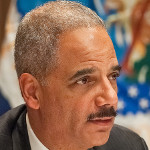
California Hires Eric Holder as Legal Bulwark Against Donald Trump

Eric Holder

Image by U.S. Dept. of Agriculture

Democratic leaders of the California Legislature announced Wednesday that they had hired Eric H. Holder Jr., who was attorney general under President Obama, to represent them in any legal fights against President-elect Donald J. Trump, reports The New York Times.

“The decision by the Legislature to retain Mr. Holder, who is now a prominent Washington lawyer, is the latest sign of the ideological battle that may play out over the next four years between this predominantly Democratic state and Washington,” writes Adam Nagourney. “Hillary Clinton, the Democratic candidate for president, defeated Mr. Trump by more than four million votes [in California].”

The report says Kevin de León, Democratic leader of the Senate, said he expected California to challenge Washington on issues including the environment, immigration and criminal justice.

Read the NYT article.


Join Our LinkedIn Group


Employees Who Sell: Understanding the FLSA’s Exemptions for Sales Employees

Practical Law and the Wage & Hour Defense Institute will present a free 75-minute webinar providing guidance on minimum wage and overtime pay exemptions applicable to sales employees under the Fair Labor Standards Act.

The event will be Wednesday, Jan. 25, at 1 p.m. Eastern time.

Speakers Paul Bittner of Ice Miller LLP (Columbus, OH) and Lawrence Peikes of Wiggin and Dana LLP (Stamford, CT), both members of the Wage & Hour Defense Institute, will discuss the sales exemptions, how to properly classify and compensate employees with sales duties, and the impact of improper classification, including:

  • Understanding key elements of the exemptions.
  • Defining “outside” sales.
  • Distinguishing sales and sales-related activities.
  • Defining a “retail or service establishment.”
  • Structuring compensation.
  • Identifying compensation “representing commissions.”
  • Revisiting pharmaceutical sales and auto service advisors.
  • Dealing with misclassified employees.
  • Complying with differing state law.

A short Q&A will follow.
Presenters:
Paul Bittner, Partner, Ice Miller LLP (Columbus, OH)
Lawrence Peikes, Partner, Wiggin and Dana LLP (Stamford, CT)

Moderator:
Suzanne K. Brown, Senior Legal Editor, Practical Law Labor & Employment

Register for the event.


Government Contracts Legislative and Regulatory Update – December 2016

Dentons has published the latest edition of its “Government Contracts Legislative and Regulatory Update,” a summary of the relevant changes that took place during November.

Highlights of the report include:

  • Compromise version of the National Defense Authorization Act for FY 2017 nears completion
  • FAR Council issues a final rule requiring representation of contractor greenhouse gas emission disclosures
  • BIS issues a final rule to remove arms embargoes against certain countries
  • DoD proposes a rule that would increase contractors’ evaluated bid prices by including allowable IR&D expenses

See the complete report.


Join Our LinkedIn Group


South Korea Fines Qualcomm $854 Million for Violating Competition Laws

South Korea’s antitrust regulator fined Qualcomm Inc $854 million for what it called unfair business practices in patent licensing and modem chip sales, a decision the U.S. chipmaker said it will challenge in court, reports Reuters.

The Korea Fair Trade Commission ruled that Qualcomm abused its dominant market position and forced handset makers to pay royalties for an unnecessarily broad set of patents as part of sales of its modem chips, according to the report by Se Young Lee and Stephen Nellis.

The commission also claimed Qualcomm restricted competition by refusing or limiting licensing of its standard essential patents related to modem chips to rival chipmakers. Those action negatively affected the rivals’ sales and left their products vulnerable to lawsuits, according to the complaint.

Read the Reuters article.


Join Our LinkedIn Group


If Republicans Repeal Health Law, Paying For A Replacement Could Be Tough

Health insuranceLeading Republicans in Congress have vowed that even if they repeal most of the Affordable Care Act early in 2017, a replacement won’t hurt those now receiving benefits, reports NPR.

Reporter Julie Rovner  writes that Republicans will seek to ensure that “no one is worse off,” quoting House Speaker Paul Ryan. “The purpose here is to bring relief to people who are suffering from Obamacare so that they can get something better.”

“But that may be difficult for one big reason: Republicans have also pledged to repeal the taxes that Democrats used to pay for their health law. Without that money, Republicans will have far less to spend on whatever they opt for as a replacement.” writes Rovner.

Read the NPR article.


Join Our LinkedIn Group


Event – A Wake-Up Call: Antitrust Compliance in the U.S.

Bloomberg BNA will present a complimentary event to discuss the widespread corporate apathy towards antitrust risks — and why the business community needs a collective wake-up call.

The event will be at the Bloomberg LP offices at 731 Lexington Ave. in New York on Thursday, Jan. 19, 2017, 8-10 a.m.

Robins Kaplan LLP is an underwriter of the event, will carries up to 1.5 CLE credits.

“Companies rely on their sales personnel to drive business growth and generate new revenue, while the in-house compliance team must prevent, detect, and report actions that could draw scrutiny from antitrust enforcement agencies,” Bloomberg says on its website. “But what if those employees don’t even know what types of conduct is problematic under the antitrust laws?”

Bloomberg BNA and Robins Kaplan LLP conducted a survey of corporate sales and compliance professionals, and the results show a widespread lack of awareness of antitrust guidelines. Among the alarming findings: 25% of respondents are engaged in pricing activities that could rise to the level of illegality.

The event is designed for in-house counsel, compliance and business executives responsible for antitrust compliance.

Register for the event.


Join Our LinkedIn Group


For Trump Tax Cuts, Pay Legal and Other Bills In 2016

Taxes - IRS - Internal Revenue ServiceIf President Elect Trump follows through on his promise of big tax cuts, it would be a good idea to defer income into next year if you can, advises Robert W. Wood in an article for Forbes.

“Conversely, Trump’s plans make paying expenses in 2016 especially attractive if you can deduct them. The deductions may be worth a lot less in 2017. One good example is legal fees. No one likes paying legal fees, but tax deductions can make them a lot less painful. If you pay a 40% tax rate, $10,000 in deductible legal fees costs you only $6,000. But not every legal bill is tax deductible,” Wood writes.

He warns that personal legal fees, such as for a divorce, can’t be deducted. But the best kind of legal fees are business expenses. Wood also discusses how to handle income from litigation, deductions, and what to expect for future income tax brackets.

Read the Forbes article.


Join Our LinkedIn Group