Can Computer Application Programming Interfaces Be Copyrighted?

CopyrightThe Electronic Frontier Foundation (EFF) reports that it has asked the U.S. Supreme Court to review a “disastrous” appellate court decision finding that com[puter application programming interfaces (APIs) can be copyrighted.

The case is Oracle v. Google.

“That decision, handed down by the U.S. Court of Appeals for the Federal Circuit in May, up-ended decades of settled legal precedent and industry practice,” EFF said in a statement.

Forbes reports that the EFF is indicating it has the backing of 77 well-known computer scientists. In October,  Google petitioned the Supreme Court to review the case, which it states has implications for technical innovation.

Read the story.


GM Names Firm to Lead Search for New General Counsel

General MotorsExecutive search firm Heidrick & Struggles International Inc. will lead the search to find a new general counsel to succeed General Motors Co.’s Michael P. Millikin, who will retire early next year, reports The Wall Street Journal.

Leading the effort for Heidrick & Struggles are Victoria Reese, global head of the firm’s legal, risk, compliance and government affairs practice, and Lee Hanson, a Heidrick vice chairman and former investment banker, reports The Journal, citing sources who asked not to be identified because the information hasn’t been made public.

Millikin, who has been with GM since 1977 and has served as general counsel for five years, has announced his retirement.

“The 66-year-old has been one of Chief Executive Mary Barra’s closest allies as she took on the CEO position earlier this year and has dealt with the continuing ignition-switch debacle,” according to The Journal‘s report.

Read the story.


What’s New in the World of Trade Secrets and Non-Competes

Handshake - moneyEpstein Becker Green will present a complimentary webinar reviewing 2014 developments in non-compete contracts and what employers should expect and prepare for in 2015.

The webinar will be Tuesday, Dec. 16, at 1 p.m. Eastern time.

On its website, the firm says the webinar will cover recent decisions regarding what constitutes adequate consideration for a non-compete.

Other topics will include the trend toward criminal prosecution of trade secret theft, especially in the international context; interesting decisions determining choice-of-law issues; and new and pending state and federal legislation.

Register for the webinar.


Mandatory GMO Labeling Laws

Wheat - crop -GMO - farm -agricultureThe National Agricultural Law Center will present a complimentary webinar onthe  ballot initiatives and legislative proposals addressing the labeling of “Genetically Modified Organisms,” commonly known as “GMOs.”


The webinar will be Wednesday, Nov. 19, at 2:30 p.m. Eastern time.

These efforts have been proposed in several states across the country, as well as on the federal level, the Center says on its website.  Primarily, the issue addressed is whether or not food products made with GMOs should be labeled as such.

The webinar will cover the historical development of GMO labeling debate; a review the states’ laws that have been enacted; the status of litigation involving the Vermont GMO labeling law; applicable November 2014 ballot measures voters considered on election day; and Federal legislation.

More information on the webinar.


Can Your Company Withstand $50 Oil?

Oil barrelPwC will host a complimentary webinar titled “Fit for $50 oil: Is your company in shape?”

The webinar will be Wednesday, Nov. 19, at 1 p.m. Central time.

The discussion will explore the dynamic levers impacting the current price of oil, and introduce PwC’s “stress test” that evaluates financial, operational, commercial, portfolio, and talent factors to reveal the indicators that signal the ability of a company to withstand a period of sustained low prices, the company says on its website.

The recent decline in oil prices has reinforced two realities: commodity prices change and the energy industry is a cyclical business. When prices go down, companies are faced with different challenges and opportunities than the preferred $90+/bbl environment presents.

Register for the webinar.


Dealing with ‘Ban the Box’ Job Application Rules

Employment - hiringEmployment Screening Resources has posted an on-demand webinar how “Ban the Box” laws that remove questions about criminal records of applicants from job applications are fast becoming a national standard that will soon affect all employers.

“Ban the Box will soon affect most types and sizes of employers,” says Lester Rosen, founder and CEO of ESR and author of The Safe Hiring Manual, the first comprehensive guide to employment screening. “We are near a tipping point with Ban the Box and employers should adjust to these new laws and move forward.”

On its website, ESR says that, in addition to removing criminal history questions from job applications, Ban the Box seeks to delay inquiries into and use of the criminal records of job applicants until later in the hiring process so candidates are judged fairly on their knowledge, skills, and abilities for the position in question.

Watch the on-demand webinar.


FDIC and Force-Placed Flood Compliance

FloodMiniter Group will host a webinar designed to clear up the confusion to loan servicers with regard to flood insurance.

The webinar will be Tuesday, Nov. 18, at 2 p.m. Eastern time.

On its website, Miniter Group says the Implementation of Bigger-Waters was interrupted by the 2014 Homeowner Flood Insurance Affordability Act. In addition The FDIC and other regulators have offered mixed messages to lenders regarding force-placed flood regulation.  

This webinar will present FDIC examination insight relative to force-placed flood insurance.Presenters also will discuss how to efficiently notify borrowers of SFHA map changes.

Register for the webinar.


Qualcomm Faces Two New Antitrust Probes

Intellectual property IPQualcomm faces three investigations into allegations of anti-competitive behavior, as it revealed new probes in the United States and European Union on top of the antitrust inquiry it already faces in China, according to a report in The Financial Times.

Reporting earnings on Wednesday, the wireless chip developer warned that the probe in China, which began last year, presented “significant challenges” in forecasting the year ahead.

Qualcomm recently disclosed two new investigations had begun in the last month, one into its patent licensing business by the Federal Trade Commission in the United States and the other into its baseband chip set business in Europe.

Read the story.


Apple Facing Trial for Music Downloading Restrictions

Earphones around EarthApple will try to defend against allegations that it violated antitrust laws by trying to restrict music downloads for iPods to its iTunes store. Jury selection in the federal trial will begin Nov. 19, reports the San Jose Mercury News.

While Apple abandoned the restrictions in question years ago, the stakes are still high — damages could exceed $1 billion if antitrust violations are proven, and an adverse verdict would amount to a black eye for the company’s past business practices, reports the News.

It continued, “The antitrust case was first filed in 2005, alleging Apple created a monopoly by blocking iPod owners from going to competitors for their music. The central issue involved Apple’s ‘FairPlay,’ a so-called digital rights management system, or DRM, that ensured iPod owners could only download songs from the iTunes store.”

Read the story.


Media Companies Want Programming Contracts Kept Confidential

TelevisionSome media companies, including CBS Corp. and Walt Disney Co., have sought a court order to stop the U.S. Federal Communications Commission from disclosing programming contracts as part of its review of Comcast Corp.’s proposed purchase of Time Warner Cable Inc.

Bloomberg News reports that the companies will suffer “substantial harm” if distribution agreements are disclosed, lawyers for media companies wrote yesterday in a request for an order in the U.S. appeals court in Washington blocking release of the information.

“The FCC repeatedly has recognized that distribution agreements are entitled to the highest level of confidential treatment,” the companies said in the filing.

Comcast, the largest U.S. cable-TV company, proposed buying No. 2 Time Warner Cable for $45.2 billion in February.

Read the story.


Energy-Storing Batteries Will Boost Grid Reliability

Renewable Energy Systems Ltd., a developer of clean-energy projects, is building battery storage units near Chicago that will boost grid reliability, reports Bloomberg News.

The company plans two 19.8-megawatt storage units, one in West Chicago and another in Joliet, the company’s Broomfield, Colorado-based unit said today in a statement. When completed in August, the systems will be the largest on the continent, the company said. Terms weren’t disclosed, Bloomberg News reports.

“Storage systems absorb excess energy when there is oversupply and release it when power is needed allowing providers to avoid expensive generators when demand peaks. The units can also store excess power from intermittent sources like wind and solar, allowing utilities to blend renewable energy into their supply,” according to the Bloomberg report.

Read the story.


Holiday Workers Need Background Checks, Too

ThiefBecause temporary employees usually have access to your place of business, and they interact with your permanent work force and maybe even clients, it’s important to be sure they can be trusted, advises EmployeeScreenIQ.

It’s likely that these temporary workers are trained on your business systems, and may have access to certain intellectual property.

“They may even have access to your trade secrets,” EmployeeScreenIQ says on its website. “Given the huge amount of access that temporary workers are given during a relatively short amount of time, it’s important to screen these workers just as you would other employees.”

Read the story.


Determining a Consumer’s Modified Adjusted Gross Income

StethoscopeThe National Health Law Association has posted online a complimentary white paper on rules for determining a consumer’s Modified Adjusted Gross Income (MAGI).

MAGI applies when determining eligibility for advance payments of the premium tax credit (APTC) and cost-sharing reductions (CSRs) for health coverage purchased through the Marketplace, as well as eligibility for the Children’s Health Insurance Program (CHIP) and Medicaid, NHLA says on its website.

This paper focuses on using MAGI to calculate a consumer’s total household income. This paper was provided as part of the navigator and assister training series by the Center for Medicare & Medicaid Services Weekly Marketplace Webinar trainings for assisters.

Download the white paper.


How to Navigate Social Media, Religion and Privacy in the Workplace

Social mediaHatmaker Law Group will present a free employment webinar discussing methods for navigating social media, religion and privacy in the workplace.

The event will be Wednesday, December 17, beginning at 12:00 p.m. Pacific time.

The Hatmaker Law Group’s monthly webinars serve as educational opportunities for employers, owners, managers, accountants, attorneys, and human resource professionals to stay current with up-to-date information on important California employment law issues.

For more information, contact Laura Dakin at (559) 374-0077 or email laura@hatmakerlaw.com

Register for the webinar.


Nov. 19 Webinar: Intelligent Energy Systems

Glare on buildingJLL and Environmental Leader will present a complimentary webinar on the use of intelligent energy systems in commercial buildings.

The hour-long webinar will be Wednesday, Nov. 19, at 2 p.m. Eastern time.

On the invitation, the sponsors say that one of the most significant trends in commercial building management today is the use of technology to continually monitor and adjust building systems to optimize performance.

“The benefits of intelligent energy systems are numerous – energy savings, access to real time data to optimize building performance, cost savings, reduced emissions and occupant comfort,” the sponsors say. “This webinar will discuss advances in M2M technology and how it is being deployed today in buildings and beyond – helping to create smart cities. It will also focus on lighting and how today’s advancements in lighting controls form an important component of a building’s intelligent energy system.”

Register for the webinar.


Climate Change Standards Webinar Set for Nov. 18

Electricity Pylons by Nick Page, on Flickr

Electricity Pylons by Nick Page, on Flickr

The American National Standards Institute (ANSI) Network on Smart and Sustainable Cities will present a complimentary webinar on local governments’ application of climate change standards formulated by the International Organization for Standardization.

The 90-minute webinar will be Tuesday, Nov. 18, beginning at 2 p.m. Eastern time.

The presentation will cover ISO Technical Committee 207’s Subcommittee 7 on greenhouse gas management and related activities, involving measuring, reducing, managing and verifying greenhouse gas emissions.

Tom Baumann, chair of ISO/TC 207/SC 7, will be the presenter.

Register for the webinar.


Apple Suppliers Shunned as GT Bankruptcy Sparks Selloff

Supply chain managementThe bankruptcy of GT Advanced Technologies Inc. wiped out 92 percent of its value in a single day last month, leading to a loss in investor confidence in Apple Inc. suppliers and vendors.

Bloomberg reports that shares of 21 companies that get at least 20 percent of their revenue from Apple have fallen 2.8 percent since the Oct. 6 bankruptcy filing by GT Advanced, which had a contract with the iPhone maker to supply synthetic sapphire that was never used in its devices.

“At the heart of the concerns are agreements between GT Advanced and Apple, including a $578 million loan, that the supplier said caused its bankruptcy,” Bloomberg reports.

The case is shining a spotlight on contracts between technology companies and their suppliers, details of which aren’t typically disclosed in securities filings.

Read the story.


For-Profit Education Groups Sue to Block Gainful Employment Rules

EducationInside Higher Ed reports that the for-profit education sector’s primary trade group on Thursday filed suit in federal court to block gainful employment regulations, which the U.S. Department of Education unveiled last week.

On its website, Insidee Higher Ed said that a federal judge in 2012 halted a previous attempt by the Obama administration to enact rules for vocational programs at for-profits, community colleges and other institutions. While the judge found that the department was within its rights with the overarching thrust of the regulations, the judge also said the department failed to establish its reasoning behind one of the metrics.

The Association of Private Sector Colleges and Universities filed the suit, alleging that gainful employment “repeats and exacerbates” problems that led to its previous version being held up in court, calling the rules arbitrary.

Read the story.


In-House Legal Work to Increase Over the Next Year

Stacks of dollarsCorporate law departments have reported in a recent Altman Weil survey that they will cut down on outside counsel spending over the next year, writes JDJournal, reporting on Altman Weil Inc.’s “2014 Chief Legal Officer Survey.”
The survey said that the recession put limits on in-house legal department resources, but also gave chief legal officers more leverage against outside counsel, JDJournal writes.

“Chief legal officers are buyers in what is currently a strong buyers’ market,” the survey says.

Data from the survey found that half the law departments involved received price reductions from outside counsel ranging between six and 10 percent. More than one-third of the firm that responded said the discounts they received were more than 10 percent, JDJournal  says.

Read the story.


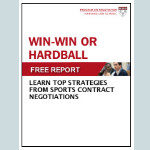
Win-Win or Hardball: Learn Top Strategies from Sports Contract Negotiations

Harvard Law SchoolHarvard Law School’s Program on Negotiation is offering a free copy of “Win-Win or Hardball: Learn Top Strategies from Sports Contract Negotiations.”

The document offers such contract negotiation advice as:

Share information – Instead of assuming your interests are directly opposed to your counterparts’ interests, provide information that could lead to wise tradeoffs

Reject the “fixed pie” – It’s easy to assume that the pie of resources to allocate is fixed; when in fact there are opportunities to expand the pie by creating value

Avoid anchoring on the first offer – Don’t become overly affected by the first number entered into the negotiation

Set concrete goals – By setting concrete goals in advance, you won’t be swayed by other’s influence tactics, vivid stories, and hard-bargaining techniques

Take my time – When you’re pressed into making snap decisions, your thinking will be more intuitive and less rational

Avoid dwelling on the past – Past investments should rarely affect our decisions about the future

Download the document.