Electronic Signature Laws Around the World: Download eBook

Electronic Signature Laws Around the WorldElectronic signatures are in use across the globe, reports eSignLive in a new ebook the company has made available for complimentary downloading. (The download form is below.)

The widespread adoption of e-signatures has been supported by electronic signature laws around the world, including the Americas, Europe, Middle East, Africa and Asia-Pacific. Many of these are based on a model law enacted by the United Nations Commission on International Trade Law – Model Law on Electronic Signatures (2001).

Today there are more than 75 countries that recognize the legal validity of e-signatures. This eBook provides an introduction to electronic signature laws around the world, including:

  • The three forms of electronic signatures – Basic, Advanced and Certificate/Qualified E-Signatures;
  • A list of e-signature types allowed by each country;
  • Links to resources such as the Database of Electronic Signature Legislation;
  • Information about data residency and privacy laws.

Download the ebook:


Importance of Licensing Technology Created While at a University

Technology - research - license - light bulbOne of the most critical and important contracts a startup can focus on, and do correctly, is to properly license IP from a university so that it can be commercialized going forward, according to a video prepared by Peter Buckland of Wilmer Cutler Pickering Hale and Dorr LLP.

He explains that a common question he hears from entrepreneurs is about how to work with technology that they created at their universities, going forward in a commercial endeavor.

“In most cases, anyone that is in anyway being paid by a university to do research, the university owns that research and for many of the universities we work with in this area, whether it’s Stanford or Cal or others, they’re all pretty in tune with their mandate, which is to commercialize that technology,” he says in the video. And the best way to do that, he adds, is to partner with the people who created that technology.

Watch the video.


‘Belt and Suspenders’ Overreach in Contracts May Prevent Satisfaction

Employment contractAn arbitration agreement is unenforceable where a party retains the right to make unilateral modifications effective upon notice to the other party, writes David Goodman of Greensfelder, Hemker & Gale, P.C.

“A starting point is to identify the transactional risks to be addressed in the contract and the entity’s needs that must be achieved, Goodman writes. “Often, drafters opt for a “belt and suspenders” approach, which is not only a terrible fashion faux pas but may result in an overreach nullifying the effectiveness of the risk management strategy.”

He discusses the example of the danger of how an attempt by an employer to get what it wanted in excess of what it needed is presented in Nelson v. Watch House Int’l, LLC, ___ F.3d ___ (5th Cir. March 2, 2016). Watch House Int’l is a March 2016 Fifth Circuit decision based on Texas law holding that the arbitration provision incorporated in a pre-employment agreement rested on illusory consideration.

Read the article.


Miller & Chevalier Chartered Finalizes Firm Move

Miller & Chevalier Chartered announces that the firm has moved from 655 Fifteenth Street, NW, to a new office building at 900 Sixteenth Street, NW. Located in the heart of downtown Washington’s central business district, the building is just two blocks from the White House and the U.S. Department of the Treasury.

Miller & Chevalier is the building’s anchor tenant, occupying 87,000 square feet, including the top six floors and a rooftop terrace overlooking the White House.

“Miller & Chevalier is well known as one of Washington’s oldest firms and as an elite law firm focused in niche areas,” said Miller & Chevalier Chair Anthony F. Shelley. “We are pleased that our new home fits so well with our personality and strategic vision as a select, DC-based, boutique enterprise. It is the perfect location from which to continue providing high-quality service on sophisticated federal issues for decades to come.”

Miller & Chevalier retained architecture firm LSM Studio to develop the space, which includes a sky-lit, two-story connection at the building’s upper levels that allows access to the outdoor terrace with iconic Washington views. To support collaboration and visibility, LSM Studio also focused on openness throughout the space and included small, interconnected floorplates.

Architect Robert A.M. Stern designed the building, which is owned by The JBG Companies and ICG Properties. The structure is designed to receive LEED Core and Shell certification.

“We are delighted to officially welcome Miller & Chevalier to 900 Sixteenth Street,” said JBG Principal Britt Snider. “As a respected Washington firm with nearly a century of service in our nation’s capital, Miller & Chevalier is a fitting partner for this truly distinguished building just steps from the White House. JBG is very proud of what we’ve created at 900 Sixteenth Street.”


Deans & Lyons Trial Lawyers Selected to 2016 Texas Rising Stars List

For a second consecutive year, every eligible lawyer at Dallas-based Deans & Lyons, LLP, has been selected to the annual Texas Rising Stars list, which recognizes the top young attorneys in the state.

Earning spots on the 2016 list from Deans & Lyons are Robert Bogdanowicz III, Courtney Bowline, Christopher Simmons and Kathleen Kilanowski.

“We are proud to again have all of our eligible attorneys chosen for this highly selective honor,” says firm co-founder Michael Lyons. “By design, our young lawyers are expected to compete and win against even the most seasoned attorneys, and this group continues to demonstrate that philosophy.”

This is the fifth consecutive year Bogdanowicz has been included on this list based on demonstrated excellence in cases involving business disputes. He also handles cases involving intellectual property, construction disputes, catastrophic personal injuries and wrongful death.

This is Bowline’s third consecutive selection to Texas Rising Stars. Her practice is dedicated to handling complex cases for plaintiffs and defendants involving business disputes, construction disputes, and personal injury and wrongful death.

Simmons has been recognized as a Texas Rising Star for a third consecutive time. He represents plaintiffs and defendants and focuses on a wide variety of business disputes and cases involving personal injury and wrongful death.

This is Kilanowski’s second Texas Rising Stars appearance. Selected for her real estate practice, she also handles construction litigation and complex commercial litigation.

Only 2.5 percent of eligible attorneys are chosen for Texas Rising Stars, which recognizes lawyers who are 40 or younger, or who have been in practice no more than 10 years. Selection is based on peer nominations and editorial review. The complete list can be found at www.superlawyers.com and appears in the April editions of Texas Monthly and Texas Rising Stars magazines.


Why a Case Against Trump for Inciting Violence Would Be Very Hard to Prove

What Donald Trump says on the campaign trail might be crass, blunt and offensive but does it cross the legal line and make him liable for inciting violence? His critics point to a few examples like when he told a crowd at a February rally: “So if you see somebody getting ready to throw a tomato, knock the crap out of ’em, would you?”

Under the First Amendment, writes on LawNews.com, an effort to prosecute a politician on such a charge would be an uphill battle.

“I have little doubt that Trump’s language and general comportment does incite some of his followers to violent behavior, in the way we might use that word in lay English,” First Amendment attorney Floyd Abrams told LawNewz.com. However, legal liability is a different story. Abrams also pointed out that speech must be intentionally done to incite violence.

Read the article.


Be Wary of Changes in New SPLA Contracts

By Christopher Barnett
Scott & Scott LLP

MicrosoftCompanies that have long relationships with Microsoft know that the company’s form licensing agreements have steadily evolved over time, and typically for the worse. If software licensing can be said to have any “natural laws,” certainly the First Law could be paraphrased to something like: “If you agree to an inch, be prepared to give a mile.” So it is with Microsoft’s standard-form Services Provider License Agreement (SPLA).

The most recent iterations of the SPLA include a handful of noteworthy changes, relative to the forms that many current SPLA licensees may have signed at the beginning of their relationships with Microsoft. Those changes include the following:

  • End User License Terms (EULTs) now apply to all end users.
    In the past, the EULTs – a form end-user license agreement for SPLA providers to include in their customer contracts – were necessary only in connection with services that included Client Software or Redistribution Software. All other end user agreements needed to include terms that aligned with a laundry list of requirements that was set forth in the SPLA. The laundry list now is gone, and all end user agreements now must incorporate the EULTs. As a result, all SPLA providers will need to be familiar with the EULTs and will need to be prepared to incorporate them into their customer agreements.
  • No limitation of liability when defending Microsoft.
    The new SPLA now expressly provides that the standard, mutual limitation-of-liability included in the Microsoft Business and Services Agreement (the master agreement to which the SPLA is attached) no longer applies to a licensee’s duty to defend Microsoft against certain third-party claims. Thus, a SPLA licensee could have effectively unlimited exposure arising from such claims. That state of affairs may be inconsistent with a licensee’s internal insurance or risk-management policies.
  • Extensive new audit rights for Microsoft.
    The most troubling new developments pertain to audits. The audit clauses in all of Microsoft’s license agreements has become more and more burdensome for licensees over recent years, and the new SPLA forms are no exception. Past SPLAs said very little regarding audits, leaving most of the parties’ audit-related obligations to be defined by the MBSA. However, the new forms contain language broadly obligating licensees to provide Microsoft’s software auditors with “access to all servers running the Products,” without defining what that “access” entails. In addition, in some forms Microsoft has incorporated extensive, new provisions related to “anti-corruption” policies, recordkeeping and audits. Those anti-corruption audits theoretically would be limited to confirming a licensee’s compliance with the new SPLA’s anti-corruption requirements. However, those requirements include an obligation to maintain an accounting system that would enable Microsoft to probe every aspect of a licensee’s finances related to SPLA.

Prospective and renewal SPLA licensees with bargaining power should seriously consider mounting a determined effort to seek appropriate amendments to the above (and other) terms in the new SPLA form. Absent appropriate amendments, companies providing hosting services may want to think about organizing their infrastructures and business models to minimize or eliminate their reliance on SPLA licensing.


GM Says ‘Accidents Happen’ in New Ignition Switch Flaw Trial

“Sometimes, accidents just happen,” a lawyer for General Motors Co. told a U.S. jury in defense of the carmaker at a test trial over a deadly flaw in millions of ignition switches, according to a BloombergBusiness report.

The accident involving a collision on a New Orleans bridge during a January 2014 ice storm is at the center of a case that could affect the outcome of hundreds of other GM ignition switch cases.

“The trial is the second of six bellwether cases, so called because they are used to test strategies,” Bloomberg reports. “The jury’s reaction to the evidence may push either side to settle — or battle out — hundreds of other cases and help set the size of any settlements.”

Read the article.


Trump Won’t Face Inciting a Riot Charges for North Carolina Rally

ABC News is reporting that Donald Trump and his campaign are not expected to face inciting a riot charges in connection with a violent incident at a rally in Fayetteville, NC.

The Cumberland County Sheriff’s office had been investigating the real estate mogul and his campaign but decided “that the evidence does not meet the requisites of the law as established under the relevant North Carolina statute and case law to support a conviction of the crime of inciting a riot,” the report says, quoting from a sheriff’s department statement.

A man who attended the rally last weeek allegedly sucker-punched a protester in the face as he was being escorted out of the venue. John Franklin McGraw, 78, faces charges of assault and disorderly conduct.

Read the article.


Austin Lawyer Headed to Prison for Aiding Stock Scammer

A federal judge in Houston sentenced an Austin attorney to 17 years in prison for harboring and concealing his client who was a fugitive in Mexico and for conspiring to commit wire fraud in the client’s stock sale scam, reports The Houston Chronicle.

Patrick Lanier, 67, represented Harris Dempsey “Butch” Ballow, of Tiki Island in Galveston County, during proceedings before the Securities and Exchange Commission in 2004 and during the criminal case that led to Ballow to flee the country. The report says Ballow was indicted in 2003 on fraud and money laundering charges stemming from misrepresentations he made in connection with the sale of stock, according to the U.S. Attorney’s Office.

“A jury convicted Lanier on 16 counts in February 2014 for helping sell shares of stock purchased by Ballow’s corporation while Ballow was on the run,” according to the report.

Read the article.


Hogan Lovells Appoints Ina Brock as Managing Partner of Clients and Industries

Hogan Lovells announces that Ina Brock, current co-head of the Life Sciences Industry Sector Group, will fill a newly created role on the firm’s International Management Committee (IMC): Managing Partner – Clients and Industries.

In this new role, Brock will be responsible for the global management of key client relationships. In a release, the firm says she will also ensure that the firm’s Industry Sector Groups (aerospace & defense, automotive, consumer, education, energy & natural resources, financial institutions, infrastructure, insurance, life sciences, real estate, sports, technology, media & telecoms, transportation) have a substantial impact in the marketplace and will focus on continuing to improve client engagement and satisfaction.

“I am looking forward to this new challenge,” said Brock. “Our industry expertise allows us to offer the most strategic advice to our clients. This new position reinforces the strong alignment between Hogan Lovells and industry sectors.”

Brock’s practice comprises product liability, mass torts and pharmaceutical liability, including international conflict of laws, jurisdiction and forum non conveniens issues as well as strategic advice on crisis communication. She will continue her regular legal practice while she serves her three-year term. Asher Rubin will become the sole global head of Hogan Lovells’ market leading Life Sciences Group.

The IMC is the body that is responsible for setting and implementing the strategic direction and business operations of the firm and is made up of the heads of Hogan Lovells’ five practice groups and five administrative regions.


Last Call for H-1Bs

By Sujata Ajmera, Partner,
Strasburger & Price

Sujata Ajmera

Sujata Ajmera

The H-1B visa allows employers to hire skilled foreign national professionals to work in the United States for up to six years. The beauty of this specific visa type is that it transcends all industries, so virtually any company seeking to hire a skilled, professional foreign national worker is eligible to file an H-1B petition for that individual. However, because of its ubiquity, it is also by far the most commonly sought after visa type.

H-1B visas are subject to an annual quota, and the filing window for any given fiscal year opens on April 1st and does not close until the cap has been reached. This is not-so-affectionately referred to as “H-1B cap season” among immigration practitioners. By law, there are 65,000 H-1B visas available annually, with an additional 20,000 set aside for individuals with U.S. Master’s degrees or higher. 85,000 visas may sound like a lot, however, when you consider that last year alone almost 233,000 H-1B visa petitions were filed in the first week of April, it becomes clear that timing is everything.

A late filing will result in a rejected petition, which means that the company must wait a full year before becoming eligible to submit a new petition. The time to start preparing is now.

Even if a company files their H-1B petition on April 1st, if the government receives an excess of petitions, which is likely to happen again this year, they conduct a random lottery, making it pure chance whether or not a company’s petition is selected or rejected. The uncertainty can be daunting, however for many employers, this is their only option to retain foreign talent; and their business success often depends on being able to hire such skilled workers.

With Austin’s robust technology, semiconductor, manufacturing, and gaming industries, there are many companies that will have a need to participate in the H-1B visa program this year. If you have not yet reached out to an immigration attorney, now is the time to get the ball rolling to ensure a timely filing and fair shot at receiving a visa for your valued foreign national employees. Most attorneys will tell you that they would like at least 2 weeks to get a filing together – though they can sometimes be prepared in slightly faster than this. The clock is ticking…



Shackelford, Bowen, McKinley & Norton Bolsters Legal Expertise in All Offices

Shackelford, Bowen, McKinley & Norton, LLP,  has announced the addition of six attorneys as the firm expands its litigation and counseling services in its Texas offices in Dallas, Austin and Corpus Christi, and in Nashville, Tennessee.

“The addition of these attorneys shows our strong commitment to the long-term growth in each of our locations so we can continue to provide clients the service they have come to expect from us over the years,” says firm managing partner John Shackelford.

Joining the firm are:

  • Partner Gerald Conley in Dallas. This respected litigator has more than 30 years of experience representing clients in intellectual property, media, securities and fiduciary issues. He also represents broadcasters, publishers, reporters and entertainers in defamation, privacy and other First Amendment issues, as well as in copyright and trademark matters. He joins the firm from Andrews Kurth LLP.
  • Partner William “Bill” Hopkins in Austin. He represents health care entities and providers in litigation and before state and federal boards on matters involving licensure, regulatory compliance and administrative issues. He has held several leadership positions with the American Bar Association’s Health Law Section. He also is the current president of the Central Texas Advisory Board of the Texas Diversity Council. He joins the firm from Husch Blackwell LLP.
  • Of Counsel Susan G. White in Austin. She represents franchised new car dealers, recreational vehicle dealers and independent car dealers in litigation and regulatory matters. Her litigation practice also includes aviation insurance defense work. She joins the firm from Sapp, White & Freeman, P.C.
  • Of Counsel Janet A. Freeman in Corpus Christi. She represents new car and truck dealer franchisers in litigation and licensing and enforcement matters. A former in-house counsel with the Texas Department of Family and Protective Services, she joins the firm from Sapp, White & Freeman, PC.
  • Associate Elizabeth Swan in Dallas. Her practice focuses on commercial litigation matters involving small businesses, as well as family law issues including divorce, child custody and support, property division and business valuation. She joins the firm from Cowles & Thompson, P.C.
  • Associate Rebekah L. Shulman in Nashville. She is a litigator and registered patent attorney. She frequently represents clients before the U.S Patent and Trademark Office on matters involving intellectual property rights. She joins the firm from Patterson Intellectual Property Law.

Shackelford, Bowen, McKinley & Norton, LLP is an aviation, general business and entertainment law firm representing aircraft owners, operators and servicers, financial institutions, recording artists, real estate owners and developers, automobile dealerships, record labels, and other businesses in legal matters across the country.


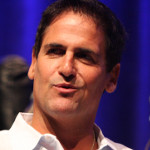
Mark Cuban: A Businessman Can Run This Country, But Trump Has Gone ‘Crazy’

Mark Cuban

Photo by Brian Solis, www.briansolis.com and bub.blicio.us

Dallas billionaire Mark Cuban is talking politics again, reports The Dallas Morning News. And while he’s not endorsing GOP front runner Donald Trump, Cuban does believe a candidate with a business background is better qualified than a politician.

When he appeared on CBS’ The Late Late Show with James Corden on Thursday, the owner of the Mavericks NBA team said he likes the fact that Trump doesn’t worry about being politically correct, the report says.

“Like, before all the presidential stuff, he was like that friend everybody had that you liked to pick on,” Cuban said. “In person, he’s nice. But now, he’s gone crazy. I can’t explain what’s happened to him.”

Read the article.


Burst Pipeline? Bankruptcy Court Rules Sabine Can Reject Midstream Contracts

Bankruptcy Judge Shelley Chapman held that Sabine Oil & Gas Corp. has satisfied the standards for rejection of several gathering and handling agreements between Sabine and its midstream counter-parties, Nordheim Eagle Ford Gathering, LLC and HPIP Gonzales Holdings, LLC, report Ron D’Aversa and Douglas Mintz of Orrick, Herrington & Sutcliffe LLP in an article posted by JDSupra.com.

The authors say the ruling has limits, and the matter ultimately turns on whether certain covenants “run with the land” under Texas law.

“While the Court held that Sabine exercised reasonable business judgment in rejecting the agreements, the Court declined to decide ‘in a binding way the underlying legal dispute with respect to whether the covenants at issue run with the land,’ and instead offered a ‘non-binding’ analysis to determine the reasonableness of Sabine’s rejection. Thus, if the counter-parties can demonstrate that the covenants do run with the land in an adversary proceeding, Sabine may not be able to terminate those covenants,” according to the article.

Read the article.


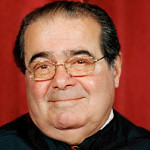
Bankruptcy Law and the Post-Scalia Supreme Court

Justice Antonin ScaliaJustice Antonin Scalia’s death is big news in the larger political world, leaving a Supreme Court that may be evenly split on a wide range of politically and socially charged legal questions, writes G. Ray Warner in Greenberg Traurig’s GT Restucturing Review.

“Although one can view many bankruptcy law questions through a political or social policy lens, the Justices rarely see the cases they take in that way. Instead, they treat most of their bankruptcy appeals as technical questions of statutory interpretation,” the article says.

“Justice Scalia was very hostile to the idea of equitable powers and his opinion in Law v. Siegel threatened the very idea of bankruptcy courts as courts of equity. His departure leaves that side of the debate without a strong advocate and likely shifts the balance back towards more robust equitable powers in bankruptcy,” Warner writes.

Read the article.


Arbitration Provisions, Unconscionability, and Employment Contracts

In a recent case out of California, Yeotis v. Warner Pacific Insurance Services Inc., No. B245770, the agreement in question was found to be unconscionable in places, but that didn’t doom the arbitration provision contained within it, writes Stacey Lantagne in ContractsProf Blog.

The court concluded that the contract was an adhesion contract, because the plaintiff was required to sign it in order to keep her job. There was, therefore, some procedural unconscionability attached to the formation of the contract,” she explains. “Additionally, there was some substantive unconscionability in the contract’s provisions that gave the court pause.”

Read the article.


SEC Is Not ‘Targeting Compliance Professionals’

The SEC announced the promotion of Anthony Kelly on Thursday, the same day he participated in a panel discussion at the Investment Adviser Association’s annual compliance conference. In the panel, he took the opportunity to reassure the audience that his team is not singling out CCOs for enforcement actions, reports Financial Planning.

“I know there’s a sense out there that the SEC is targeting compliance professionals,” Kelly said.

“I can tell you that is not the case. There is no change in policy where we are now trying to target compliance professionals,” he said. “There’s no shift in our thinking.”

“Industry concerns about regulators targeting CCOs gained steam last summer after the SEC brought an enforcement action against BlackRock and its CCO in a case turning on the failure to disclose a conflict of interest and other compliance lapses,” the report says.

Read the article.


Donald Trump’s Rallies Are Becoming Increasingly Violent

Photo by Michael Vadon

Photo by Michael Vadon

An alleged assault of a protester at a Donald Trump rally by a man who was later arrested after saying that the protester “deserved it” and “next time, we might have to kill him,” is only the latest in a series of violent and frightening incidents at Trump rallies of late, reports Vanity Fair.

Last week, some two dozen Black Lives Matter protesters were forcibly expelled from a Trump event in New Orleans, following a week in which the Republican front-runner initially refused to condemn the Ku Klux Klan and former K.K.K. leader David Duke.

Other incidents occured at a Trump rally in Georgia, in Louisville, and at a rally in Las Vegas where Trump said that he’d like to punch one protester in the face, reminiscing about the “good old days” when agitators would be carried out on a stretcher, the magazine reports.

Read the article.


McDonald’s Under Fire for Labor Violations in Landmark Joint Employer Case

McDonald's signOpening arguments kicked off Thursday in a long-awaited National Labor Relations Board case that could, for the first time ever, put McDonald’s on the hook for labor violations committed by the company’s franchised restaurants, reports International Business Times.

The case could determine whether McDonald’s is a so-called joint employer of workers at its franchisees, the independently-owned businesses that make up 90 percent of the company’s roughly 13,000 stores in the U.S and employ the vast majority of its 420,000 workers, explains reporter Cole Stangler.

“In addition to making the company more liable for labor violations, a decision from the NLRB that McDonald’s is a joint employer would open the door for a union formed by workers at franchised stores to bring the parent company to the bargaining table,” according to the report. “Such a ruling could also set a precedent for other fast-food franchises, according to industry observers and legal experts.”

Read the article.