Avoid Nullification of Contractual Indemnity Protection

All contractors dread receiving the seemingly inescapable call that a preventable, yet too common, workplace accident occurred such as a crane collapse, the fall of an ironworker, or a delivery vehicle accident, writes James J. Buldas of Pietragallo Gordon Alfano Bosick & Raspanti LLP.

“Besides the human and project costs these accidents bring, claims and lawsuits nearly always follow,” he warns in his article. “While defending claims and lawsuits may cause even the most seasoned contractors to suffer from sleepless nights, responsible parties may take solace in knowing that their counsel negotiated defense and indemnity agreements in their contracts. Why then do such parties sometimes learn that because of the language in an insurance policy, the indemnity clause in the construction contract provides little or no protection?”

Because of unforeseen risk, additional insured endorsements have been revised to link contractual indemnity obligations to additional insured coverage. These new endorsements explicitly limit additional insured status to the indemnity clause of the underlying contract, regardless of whether the endorsement incorporates the “arising out of” or “caused, in whole or in part” language.


Read the article.


Court Dismisses Chicken Grower’s Claims That OK Foods Breached Contract

A federal judge in the Eastern District of Oklahoma has dismissed a poultry grower’s breach of contract claim against OK Foods Inc. of Fort Smith, Arkansas, after the company severed ties with the grower amid concerns over animal welfare standards.

The company terminated its grower’s agreement with Earl Oldham of Stigler, Oklahoma, just over a year into the three-year agreement following the drowning deaths of an estimated 19,000 broiler chickens during a May 2015 rainstorm. It was the second mass die-off in five years blamed on groundwater flooding at the farm.

In a release, the firm said:

After realizing the water was rising in his three poultry houses, Oldham requested the company remove all chickens from his property. Upon arrival, a company representative discovered that many of the chickens had already died. OK Foods took immediate steps to relocate the surviving chickens to a nearby poultry farm. After OK Foods notified Oldham that his contract would be terminated, the grower filed a breach of contract suit.

The lawsuit dismissal follows a summary judgment motion filed by OK Foods’ attorney Clayton Bailey of Dallas’ Bailey Brauer PLLC. In granting the summary judgment, the court threw out  Oldham’s claims seeking nearly $330,000 in lost-profit damages.

“Mr. Oldham in essence moved to terminate the contract with his demands to remove the broilers from the farm, something OK Foods was more than willing to oblige,” says Bailey.

He noted that the swift termination of the contract was in accordance with animal welfare policies implemented by OK Foods CEO and President Trent Goins, Vice President of Live Operations Gary Hogue and Director of Broiler and Hatchery Operations Kelly Garris.

“OK Foods did not agree with the conditions found at this farm, and it was not something that could be tolerated. The operator’s own words, actions and inactions in effect invalidated his grower agreement. OK Foods simply formalized that termination,” says Mr. Bailey. “Animal welfare is something OK Foods takes seriously. OK Foods’ live operations team is ensuring that OK Foods’ chickens are raised ethically and efficiently, and that the company’s customers receive top-quality products.”

In addition to Bailey, OK Foods was represented in Earl Oldham v. OK Foods, Inc. f/k/a OK Foods, Inc., 6:15-cv-00384-RAW by Niki Cung of Kutak Rock LLP, Fayetteville, Arkansas.


Quarles & Brady Ranked in American Lawyer National Report

The national law firm of Quarles & Brady LLP announced that American Lawyer has included the firm in this year’s rankings of the National Report.

The report consists of 94 law firms ranked by third, fourth, and fifth-year associates, who rated their workplace on a scale of 1 to 5, with 5 being the highest score. The associates rated their firms based on the following criteria:

• Compensation and benefits
• Training and guidance
• Relations with partners and other associates
• The interest and satisfaction level of the work
• The firm’s policy on billable hours and management’s openness about firm strategies
• Partnership chances

Last year, the firm was ranked No. 48th, but this year the firm jumped 20 spots to No. 28.

“We are proud to see our associate program ranked so highly in this national report,” said Firm Chair Kimberly Leach Johnson. “We take seriously our goal of helping these very promising associates become great lawyers, and work to do that through mentorship, open communication and meaningful opportunities.”


Buchalter Has New Automotive Industry Group Chair in Los Angeles

Buchalter announced that Eric M. Kennedy has joined as chair of the firm’s Automotive Industry Group in Los Angeles. Kennedy was previously a partner at Payne & Fears.

“Eric brings an impressive resume, having represented Fortune 500 companies across a wide array of industries, with a particularly strong focus in the automotive sector” said Adam J. Bass, President and Chief Executive Officer of Buchalter. “We expect Eric to fit in seamlessly from a cultural standpoint, and his practice aligns well with our overall strategic plan. We look forward to seeing his practice grow and offering the support he needs along the way.”

In a release, the firm said:

Kennedy has experience in state and federal courts across the country, with a focus on commercial litigation including class-action matters and disputes over contracts, false advertising, fiduciary relationships, fraud, trademarks, copyrights, and trade secrets. He has represented a number of companies across a variety of industries, most notably automobile design and manufacturing, petroleum, technology, and computer manufacturing and distribution.

“The automotive industry is undergoing a remarkable transformation. With more and more companies designing and producing extremely intelligent vehicles incorporating unprecedented advances, it seems that every day brings something new and exciting in connectivity, autonomy, mobility, and efficiency,” Kennedy said. “With innovation, however, often comes increased regulatory scrutiny. I am confident that joining Buchalter– a full-service firm with a true entrepreneurial spirit – will strengthen my efforts to help my client base navigate this new environment.”

Outside of his practice, Kennedy serves on the Board of Directors for The Los Angeles Center for Law and Justice (LACLJ), The Triunfo YMCA, and Law Rocks. He is also an active volunteer, frequently donating his time as an AYSO coach and BSA leader.

Kennedy earned his J.D. from the University of Southern California and his B.S. in Psychology from Brigham Young University.


DLA Piper Advises Guardian Capital Partners in Carson-Dellosa Publishing Acquisition

DLA Piper represented private equity firm Guardian Capital Partners in the acquisition of Carson-Dellosa Publishing, LLC, a provider of K-8 supplemental education content.

The firm announced in a release:

Partnering with Guardian, Carson-Dellosa’s executive management team will continue to operate the company, which provides products to more than 1,000 schools. Carson-Dellosa provides workbooks, critical-needs resources, and test-prep and hands-on learning materials, for parents, teachers and students.

The acquisition will help position Carson-Dellosa, which has more than 35 years experience in digital and print consumer educational products, for continued growth and will bolster the company’s operating and financial capabilities.

The DLA Piper team representing Guardian was led by partners Jay Coogan, Lisa Jacobs and Darius Gambino, and associates Michael Bushey, Alvin Johnson, Priya Narahari (all of Philadelphia), of counsel Cathryn Le Regulski (Northern Virginia), partner Julia Kovacs, and associate Brittany Ann McCants (all of Washington, DC), partner Frank Mugabi and associate Witold Jurewicz (both of New York), partner Nate McKitterick (Silicon Valley) and associate Nelson Lam (San Francisco).


Farrell Fritz & Ranked in Chambers High Net Worth 2016

Farrell Fritz announced that the firm has been recognized as one of two New York Leading Firms in Chambers High Net Worth 2016, the first publication of its kind. The firm was ranked as a leading firm in the area of Private Wealth Disputes.

Estate Litigation partners Jack Barnosky and John Morken were recognized as Leading Individuals. They have been concentrating their practices in estate litigation formore than 30 years.

Chambers and Partners identifies and ranks the most outstanding law firms and lawyers throughout the world. The qualities that determine rankings include technical legal ability, professional conduct, client service, commercial awareness/astuteness, diligence and commitment.

Barnosky, a Halesite, NY resident, earned his LL.M. in taxation from New York University School of Law, his J.D. from St. John’s University School of Law and his A.B. from Assumption College. Morken, a Centerport, NY resident, earned his J.D. from New York University School of Law and his B.A. from Swarthmore College.


Theranos Walks Away From Zika Test

Elizabeth Holmes

Elizabeth Holmes

Photo by Max Morse for TechCrunch

Fox Business is reporting that Theranos Inc. has withdrawn its request for emergency clearance of a Zika-virus blood test after federal regulators found that the company didn’t include proper patient safeguards in a study of the new test.

“The move is another setback for the Palo Alto, Calif., company as it tries to recover from crippling regulatory sanctions that followed revelations by The Wall Street Journal of shortcomings in Theranos’s technology and operations,” Fox Business reports. “Theranos has said it is appealing.”

Elizabeth Holmes, founder of the troubled company, recently announced development of a new blood-testing device that she said was designed for use outside a clinical laboratory and could run accurate tests from a few drops of blood.

Read the article.


ABA Journal Names a New Wave of Legal Rebels

The ABA Journal‘s eighth year of naming the profession’s legal rebels came up with a list that represents all parts of the profession: “From a law firm managing partner who overhauled her firm’s customer service process to a law professor who took a bad experience with a traffic ticket and turned it into an online adjudication project. Not surprising: A computer scientist helps develop the biggest artificial-intelligence effort in law. Surprising: A staff attorney for a state public defender’s office is also a data scientist.”

One of the rebels is Jimoh Ovbiagele, with Ross Intelligence, a digital legal assistance program that’s partially funded by an independent subsidiary of the legal giant Dentons. The system is licensed to such firms as Baker & Hostetler, Latham & Watkins and Wisconsin’s von Briesen & Roper.

Another is Google’s Mary Shen O’Carroll, who updated the company’s legal department to include such innovations as Google’s Outside Counsel Dashboard, which allows Google lawyers to see real-time information relating to their outside counsel spending, and includes an e-billing system.

Read the article.


Why Apple’s $14.5 Billion Tax Fine Is Worse for Shareholders Than it Looks

Apple’s $14.5 billion EU tax fine may take a bigger bite out of the iPhone maker than shareholders are acknowledging, reports Fortune.

A European tax commission said Apple more than $14.5 billion in back taxes and interest that it had avoided paying European governments for years because of a sweetheart deal with Ireland. They said Apple was paying a tax rate of 0.5 percent, when it should have been paying 12.5% under Ireland’s tax rules.

Reporter  explains that “the company made $39 billion in its fiscal 2014, which ended in September and the last year covered by the tax deal. That represents about 20% of the profits it made during the 11-year period covered by the $14.5 billion tax fine. So if Apple had paid its full taxes, it would have owed nearly $3 billion in extra taxes.”

If Apple has to pay those taxes in the future, the company’s earnings could drop to $41 billion. That would translate into a market cap of $482 million, or roughly $88 billion less than where the stock trades today, Gandel writes.

Read the article.


One of Peter Thiel’s Fellows Created a New Startup That Will Fund Lawsuits

A new startup, Legalist, is looking to make money from the practice of bankrolling lawsuits, reports Business Insider. The startup plans to fund those that it calculates has a chance to win.

Although Eva Shang, its cofounder, is a Thiel Fellow, she said the company won’t be funding lawsuits like the one Peter Thiel backed when Hulk Hogan successfully sued Gawker. The fellowship means that Shand took a $100,000 investment from Thiel’s foundation to help build Legalist.

“In a presentation at Y Combinator’s Demo Day on Tuesday, Shang argued that litigation funding is poised to become an ‘explosive asset class.’ The startup has funded one lawsuit for $75,000 and expects a return of over $1 million once the case is over. That money will then be reinvested in other lawsuits, and the process will repeat itself,” reports .

Legalist uses an algorithm tocalculates the odds of winning the case and the time scale in which it would finish.

Read the article.


Computational Pipeline Monitoring for Gas Pipelines – What Works, What Doesn’t

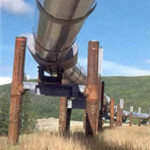
Elevated pipelineOil & Gas Journal will present a webinar sponsored by Schneider Electric on computational pipeline monitoring (CPM) techniques and their use in detecting commodity releases on pipelines.

The free webinar will be Oct. 6, 2016, beginning at 1 p.m. Central time.

“This webcast will look at what is so special with natural gas pipelines compared to liquid pipelines and how these specifics impact the base assumptions associated with Computational Pipeline Monitoring (CPM) techniques. An evaluation will then be done as to whether the five well-known CPM techniques outlined in RP API 1130 are suitable for detecting commodity releases on natural gas pipelines,” the Journal says on its website.

The speaker will be Lars Larsson, a Senior Product Manager at Schneider Electric.

Register for the webinar.


‘Legal Said It Was Okay’

Stephen R. Williams describes that uneasy feeling an in-house lawyer can experience when overhearing someone in the company saying the heart-stopping phrase “Legal said it was okay.”

Williams, writing for Above the Law, explains that it’s nearly impossible to remember each time he or his boss have weighed in on the legal aspect of a given topic. And then to hear someone who he can’t immediately identify, or cannot recall meeting with, cite something his department has said as the rationale for their action can invoke an immediate sense of panic.

He offers some advice by discussing two of the greatest lessons he has learned in his time in-house.

Read the article.


Increasing Use of Cyber Insurance Requirements in Contracts

As the risk of cyber threats to all businesses grows, there is a corresponding interest in managing and shifting cyber risks by contract and through cyber insurance, write Branwen Buckley and Corby J. Baumann of Thompson Hine.

“Insurance requirements are common in commercial contracts, and many contracts now include a sub-clause regarding cyber insurance. Whether a company is asking for a contracting party to provide cyber insurance or is on the receiving end of such a request, there are some important background considerations to remember,” the authors explain in their article.

They list some issues to consider when evaluating contractual requirements for cyber coverage: cyber insurance can never be a substitute for proper preventive measures, keep cyber insurance provisions specific, consider asking to see the policy, and be realistic in your expectations.

Read the article.


Six Questions Owners Should Answer Before Entering a Construction Contract

There are six questions that an owner can ask to evaluate what rights and obligations it will have upon entering into a construction contract, writes Daniel Bradfield, a partner in Arnall Golden Gregory LLP.

“Quite often owners simply verify the economic terms for the project, set a completion date, possibly include references to drawings or plans, and then sign a construction contract with little regard to the various provisions that will impact the amount of leverage available in the event a problem occurs with the project,” Bradfield writes in the article.

He discusses the six questions:

  • What is being signed?
  • What actions can an owner take if the contractor does not finish the work on time?
  • What does the contractor need to provide the owner in order to receive payment?
  • How are disputes to be resolved?
  • What does the owner owe the contractor if the owner terminates the construction contract?
  • What, if any, roles will the architect play in the project under the terms of the construction contract?

Read the article.


Selling Your Product or Service Into China: The Contract Basics

Chinese yuanDan Harris of China Law Blog has published a sample email that addresses many of the key points a company should be thinking about if it is contemplating selling into China.

The sample is an email (with identifiers removed) from a China attorney to a client, written to gather sufficient information to create a first draft of a product sales agreement for the sale of a product from an American company to a host of Chinese automobile companies.

The email covers such issues as the product, price terms, payments terms, shipping terms, scheduling and timing, facility, subcontractors and component suppliers, packaging and labeling, molds and tooling, quality contrl, warranty, general service, intellectual property, dispute resolution, and other special matters.

Read the article.


The Drive to Automation and Your IT Outsourcing Contract

Barbara Melby and Glen Rectenwald of Morgan, Lewis & Bockius address the question of what robotics and automation really mean in the context of an IT outsourcing contract.

“At least for now, they are not about robots rolling around the data center floor or application development center,” they write in the article. “Robotics and automation are about software and tools that allow for automated processing, monitoring, and reporting, which provides real-time data and data analysis and a reduced need for manual (read—’human’) intervention. Many vendors are touting proprietary tools and solutions that enable more automation, resulting in more accurate and timely information and services and lower costs.”

They address five key contract considerations for outsourcing customers considering automation, including costs of automation, documented benefits (upfront and ongoing), sharing of reduced costs, ownership of the output, and back-end considerations.

Read the article.


Download: What It Takes to Be an Effective General Counsel

National Association of Corporate DirectorsThe National Association of Corporate Directors is offering free downloads of an article featured in the association’s July/August issue of NACD Directorship magazine, Tom Sager’s How to Win at War.”

Sager is a former general counsel at DuPont Co.

The article describes how to:

  • establish the general counsel position as vitally important;
  • define your role in strategic boardroom decisions; and
  • prepare for battling activists, based on Sager’s experience with Nelson Peltz.

NACD Directorship magazine offers boardroom intelligence and corporate-governance information. The full publication is available exclusively to NACD members, but anyone may download a complimentary copy of the article.

Download the article.


In-House Lawyers Make More, But Not Like Associates

Banking - investing - money - advisorsBloomberg Law reports that salaries for in-house attorneys are increasing by more than four percent annually, but almost half are still unhappy with what they’re being paid, according to a survey released this week.

The BarkerGilmore survey of trends in legal department compensation also asked in-house attorneys to compare themselves to firm lawyers by asking them to rate their pay relative to their “peers.”

“While their salaries are going up at a rate of 4.2 percent across industries — well above the U.S.’s 2015 inflation rate of 0.1 percent — 44 percent of respondents said their compensation, including cash bonuses and equity awards, is ‘below or significantly below that of their peers,’ ” reports Bloomberg’s .

The survey found that lawyers in the services industry reported the highest dissatisfaction rates, while lawyers in the energy sector were most likely to be looking for new jobs.

Read the article.


Viacom Top Lawyer’s Fate Highly Uncertain After Months of Corporate Infighting

As  one of the country’s top paid lawyers, Viacom general counsel Michael Fricklas has also been one of the entertainment industry’s most influential. But now he finds his own job hanging by a thread as Viacom works through a months-long legal battle with founder Sumner Redstone for control of the media giant, reports The Hollywood Reporter.

“A settlement between Viacom and Redstone’s National Amusements, resolving Dauman’s lawsuit, allows Fricklas to resign with ‘good reason’ if he’s not serving under [Philippe] Dauman or [Tom] Dooley, and insiders say it’s likely he’ll exit if Dooley does at the end of September when Dooley’s interim term is up and the board picks him or someone else to lead the company. But even if Dooley survives, it’s hardly certain that Fricklas will, too,” according to reporter Eriq Gardner.

“As the lawyer who also held a front-row seat to this drama, and one with a hand in most of the company’s most sensitive affairs for the past two decades, he also knows where the bones are buried. That’s a potentially strong pitch he could make to the Redstones in an effort to keep his job,” comments Gardner.

Read the article.


Prominent Florida Lawyer Pleads Guilty in Money-Laundering Case

Alan Koslow, one of South Florida’s most effective lawyerspleaded guilty Thursday to a money-laundering conspiracy charge.

Federal prosecutors charged him earlier this year with helping people he thought were criminals to hide the source of $220,000 linked to illegal gambling and drug dealing of cocaine and counterfeit Viagra, reports the Sun Sentinel. The transactions were actually part of an undercover FBI sting.

In his Nov. 10 sentencing, Koslow will lose his law license and will face up to five years in federal prison and a $250,000 fine.

The Sun Sentinel’s Paula McMahon reports: “Koslow accepted $8,500 from undercover agents as payment for laundering cash by running it through his friend Susan Mohr’s business bank account in Fort Lauderdale during several months in 2012 and 2013, according to court records.”

Read the article.