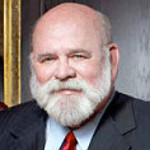
Larissa Park Joins DLA Piper’s IP and Tech Practice in Boston

DLA Piper announced  that Larissa Park has joined the firm’s growing Intellectual Property and Technology practice as a partner in the Boston office.

Park has worked with a wide array of clients, from startups to publicly traded companies, with a focus on semiconductor devices and processing, Internet-based technologies, and financial and business methods. She has written and prosecuted a range of patent applications relating to nanotechnology, silicon processing for displays and solar applications, light-emitting diodes, battery systems, optical systems, cellular networks, computer databases, options trading, solid state devices, and wireless positioning systems.

“With an impressive background managing intellectual property matters, Larissa will be a terrific addition to our team,” said John Allcock, global co-chair and US co-chair of the firm’s Intellectual Property and Technology practice. “She has counseled companies of all sizes, and her deep knowledge of the technology sector will enhance offerings to our clients and strengthen our presence in Boston’s developing market and beyond.”

Park also has litigated patents in US district courts and the Federal Circuit, and has counseled on dozens of petitions for Inter Partes Review before the United States Patent and Trademark Office. Her addition follows the arrival of patent prosecutor Mike McGurk and patent litigator Michael Strapp as partners in the firm’s Boston office in the past year.

“Larissa’s extensive work with technology companies will complement the talent we’ve added recently,” said John Rattigan, managing partner of DLA Piper’s Boston office. “She has a great reputation in the Northeast and across the country and will bolster our Corporate practice in addition to our IPT and patent prosecution team.”

Park joins DLA Piper from Wilmer Hale in Boston, where she served as counsel in the firm’s IP practice group. She is involved in a number of local organizations and events serving entrepreneurs, including the MassChallenge, the Harvard Business School Business Plan Competition, and the Harvard Business School’s Rock Center for Entrepreneurship.

Park received her J.D., cum laude, from the University of Pittsburgh School of Law, and her B.A. in Physics from Cornell University.


Invitation: Game Technology Law Conference

Law Seminars International will hold the Fifth Seattle Comprehensive Two-Day Conference on Game Technology Law on Oct. 13-14, 2016. The conference will be at the Washington State Convention Center in Seattle and also will be broadcast via webcast.

The event is designed to benefit attorneys, business executives, and anyone else involved in the interactive entertainment industry. Information on the agenda, faculty bios, tuition, and CLE is available on the registration page.

On its website, Law Seminars International says participants will learn about:

~FTC regulatory update
~The current state of the industry for business models and financing sources
~New developments in the IP underpinnings for video games
~Tips for building a game as a brand
~Analysis of rights of publicity cases and clearance process tips
~Virtual/augmented reality opportunities and issues for the game industry
~Special privacy and data security issues for the game industry
~eSports and fantasy sports: the line between games of skill and gambling
~Virtual currency systems and related tax issues
~Tips for assembling a package that will be attractive to investors

Register or get more information.


Download: 2016 Law Firm Benchmarking Report

ExterroExterro is offering its new “2016 Law Firm Benchmarking Report – Staying Competitive in Today’s Crowded Legal Market” for free downloading.

This benchmarking report discusses why changing legal business circumstances will force firms to find ways to increase productivity or risk revenue loss.

The download includes:

  • 24-page comprehensive report, which surveyed 112 law firm professionals
  • Key topics include how law firms are billing their clients, approaches used for managing legal operations and more…
  • Example of one interesting stat: 79% of law firm respondents stated that client expectations have elevated (i.e. clients expect more for less)

Download the report.


Big Year for this Trial Firm

Frank L. Branson

Frank L. Branson

In an article on its website, the Law Offices of Frank L. Branson tallied some of the firm’s recent victories, including a $10.9 million verdict for the families of two north Texas grandmothers who died as a result of injuries from the crash of a the Choctaw Casino chartered bus.

In that case, the Choctaw Nation of Oklahoma refused to take responsibility for its role in ensuring the safety of its guests and offered only $50,000 to settle the case, the firm says on its website. At trial, testimony established a critical finding that the Choctaw Casino had retained the right to control the charter bus and its driver.

In another case, the firm won $4.45 million in actual damages and another $598,500 in exemplary damages for a physician who was forced out of a partnership in two medical imaging center businesses.

The firm has been honored by Best Law Firms in America Metropolitan Tier I, Texas Super Lawyers, and more.

Read the article.


Litigation Finance: Driving Law Firm Profitability

Wednesday, Sept. 21, 2016
New York

Bloomberg BNABloomberg BNA and Bentham IMF will hold an executive briefing and reception that explores how firms are integrating financing into their litigation practices.

The event will be Wednesday, Sept. 21, 2016, at Bloomberg LP, 120 Park Ave., New York, from 4:30 p.m. until 6:30 p.m., with a networking reception to follow.

Law firms face increasing pressure to help clients gain affordable access to the courts as skyrocketing legal costs and other factors make litigation more expensive. Financing provided by litigation funders is helping firms meet this demand while also accomplishing strategic objectives, Bloomberg says on its website.

Erwin Chemerinsky, Dean of University of California Irvine School of Law and author of the forthcoming book,Closing the Courthouse Doors, will deliver a keynote speech on how the upcoming election can change the course of the Supreme Court’s recent decisions and create a new era of wider access to civil justice.

Following Dean Chemerinsky, a panel of top legal and funding professionals will discuss the impact of funding on the U.S. legal system, and how law firms are taking measured risk to increase profits and accomplish growth objectives. Finally, the panel will look at the benefits to corporate clients, as well as plaintiffs.

Register for the event.


Download: Legal Hold and Data Preservation Benchmark Survey Report

Legal Hold and Data Preservation Benchmark Survey ReportZapproved has made available for free download its Legal Hold and Data Preservation Benchmark Survey Report, the industry’s most extensive survey series focused on legal data preservation and collections practices. Building on the 2013, 2014 and 2015 studies, more than 600 professionals dealing directly with litigation hold management participated.

The report has findings on the demographics, processes, common pain points and risks associated with legal holds, data preservation and data collection. Some of the key findings include:

  • A strong response showing a vast majority of automated users feel “confident” or “very confident,” compared with 59% of manual users — a huge 26% difference.

  • Respondents using automated systems trust custodian compliance at 76% versus just 56%, more than double the spread from 2015 which was 9.8%.

  • In looking at a “culture of compliance,” 69 percent of survey respondents said they conduct some form of training for employees. This is down from 2015’s 75 percent but on theaverage for the three years this question has been part of the survey.

  • When looking at intention to upgrade, manual users are 60% more likely to express a desire to do so compared to automated users. The gap closed slightly from 2015 which saw this at 67 percent.

Download the report.


Obama Nominates Possible First Muslim-American Judge to Federal Court

NBC News is reporting tht Muslim-American groups are applauding President Barack Obama’s nomination of a Washington lawyer to serve in U.S. District Court — a move that could make him the first ever Muslim-American federal judge, according to advocates.

“If confirmed, Abid Riaz Qureshi would sit on the District of Columbia’s federal bench, the White House announced Tuesday,” according to the report by Chris Fuchs. “Qureshi, who graduated Harvard Law School in 1997, is a partner in the D.C. office of Latham & Watkins LLP, specializing in healthcare fraud, securities violations, and cases involving the False Claims Act, according to a White House statement.”

The report says that, while Muslim Americans have filled roles as state judges, none have served at the federal trial or appellate levels, according to Muslim Advocates, a national legal advocacy organization.

Read the article.


Legal Experts Shocked by Fox’s $20 Million Settlement With Gretchen Carlson

The news of Gretchen Carlson‘s $20 million settlement with 21st Century Fox is sending shock waves through the legal world, especially in employment and labor law circles, according to a LawNewz.com report.

 spoke with several legal experts about the settlement, including one who called this a “watershed moment for sexual harassment cases.”

Some of the experts said the case could open the door to more sexual harassment claims in the workplace, and some were surprised by the high dollar amount that 21st Century Fox agreed to pay.

The article quotes Washington, DC, employment lawyer Tom Spiggle as saying this case could convince victims of sexual harassment that the laws on the subject still have teeth.

Read the article.


Law Enforcement ‘Not Winning’ War on White-Collar Crime

Many of those attending the 34th international symposium on economic crime in Cambridge, England, have the view that the record of combating economic crime is so woeful that governments need a new approach, according to a report in The New York Times.

About 1,600 delegates from academia and the legal and compliance profession attended the event.

“If this is a war, we are not winning it,” said Alison Levitt, a partner at the London law firm Mishcon de Reya, speaking on a panel at the University of Cambridge’s Jesus College. She was not opining on drugs or terrorism, rather on the limited progress law enforcement has made in battling economic crimes like money laundering, fraud and insider trading.

Levitt recommended that the same stigma that is associated with crimes like rape be attached to economic crime, reports Anita Raghavan.

“Ironically, one participant suggested that the publication of the Panama Papers, which revealed how wealthy individuals used elaborate corporate structures and offshore tax havens to obscure their ownership of assets, would lead to less transparency,” The Times reports.

Read the article.


62 Dykema Attorneys Named to Michigan Super Lawyers and Rising Stars List

Dykema announced that 44 of its attorneys from the firm’s five Michigan offices, and from multiple practice areas, were named to the 2016 Super Lawyers list by Michigan Super Lawyers Magazine. Additionally, 18 of the firm’s attorneys were named to the 2016 Rising Stars list.

Three of the firm’s Michigan practitioners were also included on Super Lawyers “Top Lists.” These honorees, and the Top List(s) they have been included on, are:

• Maria B. Abrahamsen – Top 50: 2016 Women Michigan Super Lawyers; Top 25: 2016 Women Business Michigan Super Lawyers
• James P. Feeney – Top 100: 2016 Michigan Super Lawyers
• Brian M. Moore – Top 50: 2016 Michigan Super Lawyers; Top 100: 2016 Michigan Super Lawyers

The Super Lawyers designation, conferred upon the most respected legal practitioners in the state, is based upon peer recognition and professional achievement. No more than five percent of the lawyers in each state are selected by the research team to receive this honor. The Dykema attorneys named on the 2016 Michigan Super Lawyers list, identified by Michigan office and the practice area(s) for which they are being recognized, are:

Ann Arbor

• Maria B. Abrahamsen – Health Care
• Marie R. Deveney – Estate Planning & Probate; Tax: Consumer
• Kathrin E. Kudner – Health Care; Food and Drugs; Business/Corporate
• Ronald J. Santo – Employment & Labor
• Robert P. Tiplady – Estate Planning & Probate
• Jill M. Wheaton – Appellate; Civil Litigation: Defense; Personal Injury – Products: Defense

Bloomfield Hills

• Brendan J. Cahill – Business/Corporate; Mergers & Acquisitions; Securities & Corporate Finance
• Michael G. Cumming – Estate Planning & Probate; Tax
• Stephen R. Estey – Land Use/Zoning; Eminent Domain; General Litigation
• James P. Feeney – Personal Injury – Products: Defense; Civil Litigation: Defense; Class Action/Mass Torts
• Adam M. Fishkind – Real Estate: Business
• Alan M. Greene – Land Use/Zoning; Eminent Domain; Construction Litigation
• Dennis M. Haffey – Business Litigation; Professional Liability: Defense; Securities Litigation
• Kyle R. Hauberg – Real Estate: Business
• Margaret Adams Hunter – Employee Benefits
• Howard B. Iwrey – Antitrust Litigation; Franchise/Dealership
• Mark G. Malven – Technology Transactions; Mergers & Acquisitions; Business/Corporate
• Bonnie Mayfield – Employment Litigation: Defense; Personal Injury – Products: Defense; Class Actions/Mass Torts
• D. Richard McDonald – Securities & Corporate Finance; Mergers & Acquisitions
• Brian M. Moore – Business Litigation; General Litigation; Real Estate: Business
• Paul L. Nystrom – Business Litigation; Personal Injury – Products: Defense; Class Actions/Mass Torts; Land Use/Zoning
• Rex E. Schlaybaugh, Jr. – Securities & Corporate Finance; Mergers & Acquisitions
• Sheryl L. Toby – Bankruptcy: Business; Creditor Debtor Rights: Business
• Stephen L. Tupper – Technology Transactions; Mergers & Acquisitions

Detroit

• J. Michael Bernard – Mergers & Acquisitions; Business/Corporate; Securities & Corporate Finance
• Robert A. Boonin – Employment & Labor; Employment Litigation: Defense; Schools & Education
• Eric Thomas Carver – Estate & Trust Litigation; Estate Planning & Probate; Business/Corporate
• Michael P. Cooney – Personal Injury – Products: Defense; Business Litigation; Intellectual Property Litigation; Class Action/Mass Torts
• Samuel C. Damren – Business Litigation; Alternative Dispute Resolution; Closely Held Business
• Sherrie L. Farrell – Business Litigation; Business/Corporate; Bankruptcy: Business; Class Action/Mass Torts
• Grant P. Gilezan – Environmental; Energy & Natural Resources; Environmental Litigation
• Steven E. Grob – Tax: Business; Estate Planning & Probate
• Kathryn J. Humphrey – Aviation and Aerospace; Personal Injury – Products: Defense; General Litigation
• Mark D. Jacobs – Environmental; Utilities; Administrative Law
• Peter M. Kellett – Class Action/Mass Torts; Business Litigation; Personal Injury – Products: Defense
• Joel D. Kellman – Real Estate: Business; Banking; Nonprofit Organizations
• Jin-Kyu Koh – Mergers & Acquisitions; Business/Corporate; Healthcare
• Cameron H. Piggott – Real Estate: Business; Energy & Natural Resources
• Thomas M. Schehr – Business Litigation

Grand Rapids

• James S. Brady – Criminal Defense; Civil Litigation: Defense
• Brian J. Page – Real Estate: Business; Business/Corporate; Banking

Lansing

• Richard J. Aaron – Utilities; Energy & Natural Resources; Administrative Law
• Ann D. Fillingham – Government Finance; Business/Corporate
• Lori McAllister – Business Litigation; Insurance Coverage; Securities Litigation; Class Action/Mass Torts; Administrative Law

Rising Stars are those up-and-coming attorneys who are 40 years of age or younger and have practiced law for 10 years or less. No more than 2.5 percent of the lawyers in the state are selected by the research team to receive this honor. The Dykema attorneys named on the 2016 Rising Stars list, identified by Michigan office and the practice area(s) for which they are being recognized, are:

Ann Arbor

• David M. George – Class Action/Mass Torts; E-Discovery; Consumer Law; General Litigation
• Noah S. Hurwitz – Business Litigation; Employment & Labor; Civil Litigation: Defense
• Cody D. Rockey – Antitrust Litigation

Bloomfield Hills

• Michael J. Blalock – Business Litigation; Civil Litigation: Defense
• Jong-Ju Chang – Business Litigation
• William C. Lentine – Tax: Business; Estate Planning & Probate; Mergers & Acquisitions
• Todd C. Schebor – Environmental; Environmental Litigation; Eminent Domain
• Christyn M. Scott – General Litigation; Real Estate: Business
• Thomas H. Trapnell – Business Litigation; Franchise/Dealership; Consumer Law
• Michael R. Vogt – Real Estate: Business
• Jeanne M. Whalen – Technology Transactions; Mergers & Acquisitions; Health Care

Detroit

• Jennifer Boueri Chilson – Business Litigation
• Janet L. Conigliaro – Class Action/Mass Torts
• Robert Hugh Ellis – Business Litigation
• Nasseem S. Ramin – Business Litigation
• Boyd White, III – Class Action/Mass Torts; Personal Injury – Products: Defense; Business Litigation

Grand Rapids

• Elisa J. Lintemuth – Employment Litigation: Defense; Business Litigation; Employment & Labor
• Dawn N. Williams – Consumer Law



European Corporate Counsel Summit Set for November in Rome

The bi-annual European Corporate Counsel Summit will take place November 21-22, 2016 at the Parco Dei Principe Grand Hotel & Spa in Rome, Italy.

The Marcus Evans event aims to help business people invigorate their operations, grow sales faster through a time-efficient format, and target qualified buyers through one-on-one meetings, the company says on its website.

Register for the event.


Lawyer.com Hit with Defamation Class Action Over Lawyer-Grading System


Report card

Image by Borealnz

Kentucky lawyer Alex R. White has filed a class action complaint in U.S. District Court for the Southern District of New York against Lawyer.com LLC and World Media Group LLC, alleging violation of New York and other state consumer protection statutes, reports Legal NewsLine.

Reporter Jenie Mallari-Torres writes that the complaint claims White and his class suffered damages to the reputations of their business and professional careers when users posted unflattering reviews on the defendants’ website. Some the lawyers and judges had grades of “D” or “F”.

“White alleges the defendants enriched themselves at the expense of lawyers who have not authorized the disclosure of their personal and professional information, bombarded attorneys with unsolicited emails from ‘potential clients. as part of its efforts to sell premium memberships on its website which cost hundreds of dollars a month and promoted attorneys and law firms based solely on how much money was paid,” according to the report.

Read the article.


Webinar: Internet of Things – Intellectual Property Issues

Internet of Things

Image by Ian Kennedy

A complimentary webinar hosted by Finnegan, Henderson, Farabow, Garrett & Dunner will discuss intellectual property issues for Internet of Things (IoT) technology and how to navigate through the IoT patent obstacle course.

The hour-long event will be Wednesday, Sept. 14, at 1 p.m. EDT.

Topics will include:

  • What are the challenges in protecting IoT inventions?
  • What makes an IoT patent valuable?
  • How should a company deal with the more than 22,000 IoT-related patents and pending patent applications world-wide?

“Most industries have focused on cooperating with each other to solve the technical challenges in making a workable IoT ecosystem,” the firm says on its website. “But many businesses are getting ready for the intense competition that will undoubtedly follow after IoT becomes ubiquitous. Intellectual property rights and patents, including design patents, will play a major role in that competitive landscape.”

Register for the webinar.


Distributed Energy Resources: Seizing Opportunities While Managing Grid Impacts

High power - electric- gridGreentech Media will present a complimentary webinar on how distributed energy resources can be coordinate with centralized generation, in economically sustainable ways, to drive savings and enhance efficiency — to the mutual benefit of all entities involved.

The complimentary 60-minute webinar will be Thursday, Sept. 29, at 2 p.m. EDT. ABB will host the event.

Presenters will  review the findings of a recent Greentech Media whitepaper that uncovers how distributed energy resources offer substantial opportunities to help shift utilities toward a more sustainable and resilient energy system, yielding significant economic and environmental benefits for utilities and renewable project developers.

Register for the webinar.


Continuing Bad Faith: Theory of Liability or Rule of Evidence?

An insurer’s duty of good faith is pervasive and its application to claim handling has matured into a formidable body of law, write Douglas L. Christian and Nathan D. Meyer for Jaburg Wilk.

But when a bad faith lawsuit converts the quasi-fiduciary relationship with the policyholder into an adversarial one, how does a policyholder lawsuit affect the insurer’s duty of good faith? And, how does the insurer’s duty of good faith affect the lawsuit?

“Policyholders argue that if a lawsuit obviates the insurer’s duty it will encourage insurers to engage in conduct that will precipitate a lawsuit. Insurers respond by arguing that if the fiduciary duty continues unabated, it will encourage premature lawsuits by policyholders, deprive insurers of their ability to adjust losses, and eviscerate their rights as litigants,” according to the article.

The authors discuss   the development of the continuing duty of good faith, whether insurer litigation and post-filing conduct is admissible under current rules of evidence, and whether continuing bad faith is actionable as a separate theory of liability.

Read the article.


For Businesses, Vendor Contracts Can Have Huge Cybersecurity Implications

Computer security eyeWith all the pressure on companies to build a robust cybersecurity defense within their own four walls, one area of risk might be getting overlooked, writes Shawn Shinneman of the Dallas Business Journal.

He talked to Sara Romine, an attorney at Carrington Coleman in Dallas, to find out how to deal with an attack that comes in through a third-party vendor.

Companies can be at risk and liable when dealing with vendors who have direct access to sort, store or transmit their data, she told the reporter.

“She’s found that companies tend to make some mistakes that grant leverage to the other side during negotiations either to strike a new agreement or renew an existing one. One big one is waiting until the last month or so to start the process,” the article reports.

Read the article.


Female Lawyer’s Gender-Bias Suit Challenges Law Firm Pay Practices

Kerrie L. Campbell brought more than two decades of experience in consumer product safety and product defamation litigation when she joined the Washington office of the Chadbourne & Parke in January 2014, but she contends that other Chadbourne partners shut her out of leadership positions and paid her far less than male partners at her level, reports The New York Times.

“After being told this year that she would be terminated, she sued in federal court on Wednesday, asking for a total of $100 million on behalf of herself and other female partners who, she said, receive less compensation than male partners even when they bring in more client revenue,” writes Elizabeth Olson. “A five-man management committee at the firm arbitrarily awards male partners more points, which translate into higher dollar compensation, than they do to women, she maintained.”

In a statement responding to the suit, Chadbourne denied the gender discrimination claims, saying her complaint against the firm is riddled with falsehoods and “will be shown to be completely baseless.”

Read the article.


Fearing Lawsuits, U.S. Banks Set Sky-High Limits for Director Pay

Bank sign

Image by Mark Moz

Over the past two years, a growing number of U.S. banks has capped their directors’ earnings, but the ceilings are so high that they primarily serve to fend off potential shareholder litigation rather than control the pace of pay increases, reports Olivia Oran in a Reuters article.

The banks’ caps can be triple what directors now get paid, according to data and filings reviewed by Reuters.

“For the most part, these limits aren’t really going to affect director pay, other than the fact that it’s really just a protection for them,” said Bill Gerek who advises companies on executive pay and governance matters at Korn Ferry. “What’s the cost?”

Oran reports that consultants and lawyers say having any ceiling makes a company less likely to be targeted in a lawsuit from shareholders.

Read the article.


Alabama Law Firm Says It Has Received 26k Calls After Talcum Powder Verdicts

A law firm in Montgomery, Ala., says it received nearly 26,000 phone calls from people inquiring about a possible link between talcum powder and ovarian cancer after its clients won a total of $127 million in two verdicts earlier this year, reports AL.com.

Beasley, Allen, Crow, Methvin, Portis & Miles, P.C. reported 12,221 open cases from the 25,916 calls it had received as of Thursday. In a statement, the firm said it now has 867 cases filed nationwide against Johnson & Johnson regarding talcum powder products, which plaintiffs have claimed are linked to cases of ovarian cancer.

“In February a City of St. Louis Circuit Court jury awarded the family of Jacqueline Fox $72 million, finding Johnson & Johnson liable for her ovarian cancer that led to her death,” reports Kent Faulk of AL.com. “In May another jury in St. Louis found Johnson & Johnson liable for ovarian cancer linked to genital use of its talcum powder products and awarded a South Dakota woman, Gloria Ristesund, $55 million.”

“Though it’s been discussed as a hypothesis and carefully studied for decades, there is no proven linkage between talc and ovarian cancer,” Gene Williams, outside counsel for Johnson & Johnson, told Legal NewsLine.

Read the article.


How to Roll Out the Best-Interest Contract Exemption

Banking - loan - money - handshake - advisingFor advisers helping clients plan for retirement, drafting a binding contract may now simply be a cost of doing business, reports Kenneth Corbin for FinancialPlanning.

“That contract, through which advisers must pledge to act as fiduciaries and make recommendations in the best interests of their clients, is at the heart of a new fiduciary regulation from the Department of Labor, which is aiming to mitigate the harm to investors from conflicted retirement advice,” he explains.

Advisers should learn how to incorporate the best-interest contract exemption into their practices if they help clients plan for retirement.

In his article, Corbin writes that there’s a streamlined version of the contract requirement in the DoL’s rule, which would ease the compliance burden for so-called level fee advisers, firms that receive fees that don’t vary based on the type of product or investment that they are recommending.

Read the article.