Matthew T. Connelly and Martin Syvertsen Join Freeborn as Litigators

Matthew T. Connelly and Martin Syvertsen have joined Freeborn & Peters LLP in Chicago as associates in the Litigation Practice Group.

“We welcome Matthew and Martin to our firm,” said Anthony J. Carballo, a Freeborn partner and co-leader of the firm’s Commercial Litigation Team. “Both Matthew and Martin have valuable trial experience that will enhance our services to clients in all areas of complex disputes and litigation.”

Connelly previously served as a law clerk for Judge William J. Bauer of the U.S. Court of Appeals for the Seventh Circuit. As a law student, he served as an extern for Judge Jean C. Hamilton of the U.S. District Court for the Eastern District of Missouri. He also was a clerk at a law firm in St. Louis during law school.

Connelly received his law degree from Washington University School of Law, summa cum laude, and holds a Bachelor of Arts, magna cum laude, from Loyola University Chicago.

Syvertsen served for seven years as an Assistant State’s Attorney in Cook County, Ill., most recently in the Complex Litigation Unit. He also previously practiced in the Federal Civil Rights and Torts Unit, as well as in the Felony Trial and Criminal Appeals Divisions, of the State’s Attorney’s Office. During his tenure with the State’s Attorney’s office, Syvertsen achieved numerous successful results in federal jury trials and before the U.S. Court of Appeals for the Seventh Circuit.

Syvertsen also currently serves as an adjunct professor in the trial advocacy program at Loyola University Chicago School of Law, from which he earned his law degree. He holds a Bachelor of Arts from the College of the Holy Cross in Worcester, Mass.




From the Source: A Discussion with the TTAB About Changes to its Rules

Practical Law will present a free 60-minute webinar that will address the recent amendments to the Trademark Rules of Practice and how they affect TTAB practice and procedure.

The event will be Thursday, Nov. 10, 1-2 p.m. EST.

The program will cover:
* critical amendments to TTAB procedure.
* a discussion about the TTAB’s reasoning behind the amended rules.
* the TTAB’s expectations for compliance with the amended rules.
* a Q&A with senior representatives from the TTAB.

Presenters:

Cheryl Butler, Senior Counsel, USPTO Trademark Trial and Appeal Board
Cheryl Butler is Senior Counsel for TTAB Policy and Procedure and the TBMP Editor. Ms. Butler previously served as an Interlocutory Attorney and, prior to that, as a Trademark Examining Attorney. Ms. Butler received her J.D. from George Mason University School of Law and her B.S. in Geosciences from the University of Arizona.

Michael Webster, Interlocutory Attorney, USPTO Trademark Trial and Appeal Board
Michael Webster currently serves as an Interlocutory Attorney at the TTAB. Prior to joining the Board, Mr. Webster was a Trademark Examining Attorney at the USPTO for over fifteen years. He is a graduate of Regent University School of Law and earned his bachelor’s degree in Economics from Indiana University and an M.B.A. from Robert Morris University.

Uli Holubec, Senior Legal Editor, Practical Law Intellectual Property & Technology (Moderator)
Uli Holubec joined Practical Law from Quinn Emanuel Urquhart & Sullivan LLP, where she was a senior associate and handled a variety of trademark and other intellectual property matters. Uli previously was an intellectual property attorney at White & Case LLP and an intellectual property litigation associate at Lieberman & Nowak, LLP.

Michael Chiappetta, Senior Legal Editor, Practical Law Intellectual Property & Technology (Moderator)
Michael Chiappetta joined Practical Law from Fross Zelnick Lehrman & Zissu, PC, where he was counsel focusing on trademark and copyright litigation. Previously, he was an entertainment litigation associate at Troop Meisinger Steuber & Pasich, LLP in Los Angeles.

Register for the event.


Embraer Settles Bribery Charges With SEC and DOJ

Embraer Phenom 300

Image by Bidgee

The U.S. Securities and Exchange Commission, along with the U.S. Department of Justice and Brazilian authorities, have reached a global settlement that requires aircraft manufacturer Embraer S.A. to pay more than $205 million to resolve alleged violations of  the Foreign Corrupt Practices Act, reports 24/7 Wall St.

The SEC alleged Embraer made more than $83 million in profits as a result of bribe payments from its U.S.-based subsidiary through third-party agents to foreign government officials in the Dominican Republic, Saudi Arabia and Mozambique, including $3.52 million in bribes to a Dominican Republic air force official to secure a military aircraft contract in that country. Another allegation claimed Embraer paid $1.65 million in bribes to an official in Saudi Arabia.

“Under the settlement, Embraer must pay a $107 million penalty to the DOJ as part of a deferred prosecution agreement, as well as more than $98 million in disgorgement and interest to the SEC., reports .

Read the article.


ScottMadden Releases Latest Edition of Energy Industry Update

ScottMadden, Inc., an energy consulting firm, recently released its Fall Energy Industry Update.

On its website, ScottMadden says this issue focuses on strategic drivers that are propelling the industry like nuclear challenges, changing energy supply and demand patterns, and federal-state policy friction:

  • Nuclear Challenges and Responses: Low natural gas prices, challenging capacity markets, continuing investment needs, and weak carbon price signals are putting pressure on existing nuclear plants, especially in competitive markets. What are the risks and implications?
  • The Duck Curve: Everyone talks about the duck curve, but what really drives it? Our analysis confirms the duck curve is real and growing faster than expected. In addition, we found some interesting, unexpected, and important nuances. It turns out that the conventional wisdom is not supported by the data.
  • Emerging Federal-State Policy Friction: Historically, the boundary between federal and state jurisdiction in the wholesale and retail energy markets has been called “a bright line.” Was it? Is it? How is this unfolding, and what does it mean?

Download the update.


Five Questions GC Should Ask About Privacy and Cybersecurity in Third-Party Contracts

CybersecurityWhile a company cannot eliminate risks involving compromised data and systems, there are some actions that a company should take to protect data in the hands of third-party suppliers, advises Mayer Brown LLP.

In an article posted on the firm’s website, authors Rebecca S. Eisner, Lei Shen and Lindsay T. Brown discuss five privacy- and security-related questions that a general counsel should ask regarding company data in the hands of third-party suppliers and other business partners.

They questions they discuss at length are: Have We Assessed Our Security and Privacy Risks? How Robust Is Our Oversight of Third Parties Who Have Our Data or Access to Our Networks? Do We Have Appropriate Contractual Protections? How Do We Monitor Developments? and Do We Address Privacy and Security in Other Transactions, Such as M&A?

Read the article.


What are Consequential Damages on a Construction Contract?

Construction design planningWhen a party breaches a contract and the contract does not contain a valid liquidated damages clause, the non-breaching party may be entitled to compensatory damages. Charles B. Jimerson and Kayla A. Haines of Jimerson & Cobb, P.A. explain that the appropriate measure of damages arising from a breach of an enforceable contract is usually “the difference between the value expected from the contract and the value actually received by the non-breaching party.”

In their article, they write: “Many factors can impact the recoverability of consequential damages, such as common law implied warranties, or indemnity provisions. Therefore, when entering into a construction contract, parties should carefully evaluate the proposed contract language to fully comprehend the risks they are about to assume. In order to prevent any extensive consequential damages that might result from a construction project, parties should use whatever power they may have while creating their contract to predestine certain expenses that a party would incur in the event of pervasive defects or significant project delays.”

Read the article.


Securing Assent: The Internet Twist of Electronic Contracts

Handshake with computersIf any area of the law could be shielded from the all-consuming influence of the Internet, it ought to be the age-old law of contracts, writes Mark Sableman in Thompson & Coburn’s blog, Internet Law Twists & Turns. He points out that basic elements of contract law, like requirements of offer, acceptance, and consideration, don’t change because of the Internet.

But courts have been struggling with one crucial point involving electronic contracts: “When and how does a user agree to a contract electronically? This crucial element of contract formation — manifestation of assent — is the Internet twist for contract making.”

“Getting clear assent in real time, however, isn’t always enough. You also may need to prove at a later date that consent occurred. Your ordering software should record customer activity, such as the click-through consents. And you should retain records of your past website forms and contract terms, so that you can recreate those that were in place at the time of any contested transaction,” Sableman writes.

Read the article.


Narrowing Down Clinton’s Choices For Supreme Court Nominee

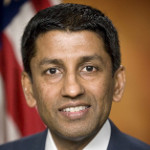
Sri Srinavasan

Sri Srinavasan meets all the criteria on Empirical SCOTUS’ list for USSC nominees.

Empirical SCOTUS takes a look at the leading prospects who may be on the list of possible nominees for a Hillary Clinton selection for the U.S. Supreme Court — assuming she ends up in the White House and Donald Trump doesn’t.

Adam Feldman points out that his speculation also assumes that Obama nominee Merrick Garland will not be confirmed by the Senate in a lame-duck session.

All judges on the list aside from Garland are less than 60 years of age. The other criteria were that they had an initial ABA Qualifications rating of “well qualified” and the judge must have gone to a top-five ranked law school.

Feldman singles out Sri Srinivasan of the DC Circuit as the only judge to meet all of the list’s criteria. The India-born Stanford graduate worked in the Office of the Solicitor General, is ranked “highly qualified” and is 49 years old.

Read the article.


Chadbourne Sex-Bias Class Action Adds Six Partners as Defendants

The woman partner who filed a gender discrimination class-action against Chadbourne & Parke leveled new accusations in an amended complaint on Thursday, including that the firm’s head of litigation placed a cartoon of a fat man in a bowler hat on her wall and took a postcard from her office, reports Bloomberg Law.

The complaint includes new allegations from former partner Jaroslawa Z. Johnson who is joining current partner Kerrie Campbell as a named plaintiff in the suit. Johnson ran the firm’s Kiev office for nearly 10years.

Reporter  writes that the complaint also adds six individuals as named defendants, including Abbe Lowell, the head of litigation based in D.C., and four members of the management committee — Andrew Giaccia, the firm’s managing partner; Lawrence Rosenberg, Howard Seife, and Paul Weber, who are all located in New York City. Marc Alpert, a former member of the management committee, is also named as a defendant.

Read the article.


Class-Action Attorneys Awarded $555.2 Million for Work in BP Suits

Image by U.S. Coast Guard

Image by U.S. Coast Guard

A federal judge has ordered that attorneys representing private individuals and companies who entered into economic and medical claims settlements with BP stemming from the Deepwater Horizon disaster are entitled to be paid $555.2 million to cover their legal fees and remaining court costs, reports The Times-Picayune of New Orleans.

U.S. District Judge Carl Barbier pointed out that award represents about 4.3 percent of the estimated $13 billion that BP is expected to pay under the ongoing settlements. That compares to the average 9.92 percent of awards paid as fees and court costs in 21 similar “super-mega-fund” settlements totaling more than $1 billion, he said in an order.

“In weighing the award against local billing rates, Barbier said it would be the equivalent to an average $450 per hour legal fee, after being weighted for the intensity of effort involved in the case,” writes reporter Mark Schleifstein. “That compares to average nationwide rates of $604 for partners and $370 for associates in 2014, and to the $600 per hour paid by the state of Louisiana to its attorney in the BP case, Barbier said.”

Read the article.


Why You Really Should Read Your Employment Contract

Employment contractIn a new online audio discussion, Bloomberg takes a look at “all the stuff you sign when you sign on for a job.”

Citing nondisclosure agreements required for staff and volunteers in the Trump campaign, the turmoil at Fox News after Roger Ailes stepped down from the top post, and a poll that showed that up to 90 percent of respondents did not read their employment contracts, Bloomberg calls on labor and employment lawyer Brett Gallaway to break down the standard terms of a boilerplate contract and what signing that dotted line really means.

Listen to the discussion.


ACC Annual Meeting 2016 – A Wrap-Up from Above the Law

Above the Law covered the recent Association of Corporate Counsel annual meeting and published a wrap-up of its coverage.

The stories include some wise advice from a panel of general counsel, in “5 Tips For Running Your In-House Legal Department Like a Business.”

Other items include “Judge Richard Posner On SCOTUS: ‘The Supreme Court Is Awful’,” “5 Tips For In-House Lawyers To Make Discovery Less Painful,” “From Bathrooms To Body Art: Emerging Issues In Employment Law,” “How In-House Lawyers Can Expand The Role Of Non-Lawyers Allied Professionals To Improve Delivery Of Legal Services,” and “A Crash Course On Indemnification And Insurance In Big-Ticket Litigation.”

Also, “The Challenging Value Proposition Of Junior Associates,” “10 Tips For A New General Counsel,” “Litigation Finance: What Lawyers Need To Know,” “Explaining Privacy And Cybersecurity To A Corporate Board,” “5 Tips For Executing Major M&A Transactions,” and “What Will (And Won’t) Get Your M&A Deal Killed.”

Read the articles.


Casino Could Face Liability Claim in Crash That Killed Charter Bus Passengers

A California casino could be held responsible for the deaths of more than a dozen casino customers following the crash of a charter bus with a questionable safety record, says Dallas bus crash lawyer Frank Branson.

Even though the bus involved in the California casino crash was owned and operated by an independent charter company, casinos have been held liable for passengers’ safety based on incentives and control exercised over the charter company and scheduling of charter trips.

“Casinos depend on these charter buses to bring in business,” says Branson in a post on the website of Androvett Legal Media & Marketing. “They negotiate with charter bus companies to receive the cheapest price and pay little attention to safety. The end result is poorly maintained buses and overworked drivers to transport patrons.”

Branson’s input comes after the deadliest bus crash in California in decades early Sunday morning near Palm Springs. A USA Holiday tour bus returning from the Red Earth Casino slammed into a tractor-trailer, killing 13 people – including the bus driver – and injuring 31 others.

“The speed of the bus was so significant that when it hit the back of the big rig…the trailer itself entered about 15 feet into the bus,” according to the California Highway Patrol. There were no signs of the driver applying the brakes.

As the NTSB investigates the cause of the crash, early reports indicate the bus owner and operator had been sued twice for negligence involving previous crashes, including one that killed three people.

In May of this year, Branson won a $4.9 million judgment against the Choctaw Nation of Oklahoma for the family of an 83-year-old woman killed in a 2013 casino charter bus crash.

“If casinos are going to charter the buses to bring gamblers, they should make sure the buses and drivers are safe,” says Branson.


Zapproved Announces EU-U.S. Privacy Shield Certification

Computer - cybersecurity -privacyZapproved Inc., a developer of cloud‐based software for corporate legal departments, announced that the U.S. Department of Commerce has accepted Zapproved’s self-certification as Privacy Shield compliant. Zapproved’s Privacy Shield Certificate is available on the U.S. Department of Commerce’s Privacy Shield website.

The EU-U.S. Privacy Shield Framework was designed by the U.S. Department of Commerce and European Commission to provide companies on both sides of the Atlantic with a mechanism to comply with EU data protection requirements when transferring personal data from the European Union to the United States in support of transatlantic commerce. Becoming certified as EU-U.S. Privacy Shield compliant enables Zapproved to demonstrate compliance with EU data transfer rules and our ongoing commitment to best practices in data privacy.

“Zapproved takes data security and data privacy very seriously,” said Brad Harris, VP of Product Strategy for Zapproved. “We proactively look for ways to implement best practices, whether it be earning SOC2 ® certification or self-certifying as Privacy Shield compliant. Ensuring data security and privacy is part of our ongoing commitment to our many customers who engage in commerce globally.”


Startup Company Carve-Out Plans: Mechanics, Tax Obstacles, and Optimization

Practical Law will present a webinar highlighting common constraints on carve-out plans in the U.S. tax regime, including Section 409A (regulating deferred compensation arrangements) and Section 280G (regulating golden parachute payments). We will also discuss new proposed regulations and recent Delaware case law on these topics.

The event, featuring presenters from Fenwick & West LLP, will be Wednesday, Nov. 2, beginning at 1 p.m. EDT.

A carve-out plan is a type of instrument to incentivize current executives, employees and other service providers by committing to make a payout at a change in control. This arrangement allows the executives working hard to get a struggling company to a liquidity event to share in the value they create for the shareholders. Carve-out plans are typically tense negotiations of competing interests to encourage retention for senior management and maximize value for shareholders. To further complicate matters, carve-out plans are subject to a unique and complicated set of tax rules.

Register for the webinar.

The discussion will include:
* Should compensatory arrangements be reduced for other payouts?
* Should the carve-out awards settle in stock or cash?
* Must employees be employed at the time of the change in control to receive a payout? Should the carve-out forfeit under certain conditions?
* What should happen to the forfeited amounts?
* How can the plan be amended?

A short Q&A will follow.

Presenters:
Marshall Mort, Associate, Fenwick & West LLP
Marshall Mort focuses his practice on compensation and employee benefits matters. Marshall particularly enjoys developing creative solutions that support attractive compensation plans. Working with both private and public companies, Marshall excels in navigating complex tax, securities, and accounting issues within the equity and executive compensation environment. This includes maximizing tax efficiency, and advice that further supports HR policies to promote retention and mitigate risk. Marshall writes and speaks on equity compensation and benefits issues, and has served as an adjunct lecturer at Santa Clara University-Leavey School of Business.

Taylor Cashwell, Associate, Fenwick & West LLP
Taylor Cashwell focuses his practice on a broad variety of corporate matters to support clients in the high technology and life sciences industries. While attending law school, Taylor was a concurrent member of the Hastings Law Journaland Hastings Women’s Law Journal. He served on the executive board of OutLaw and externed as Law Clerk for the National Center for Lesbian Rights, where he later served as Fenwick & West Public Interest Fellow.

Amy Adams, Senior Legal Editor, Practical Law Employment Benefits & Executive Compensation (Moderator)


Leveling Deal Activity And Optimism In Dykema’s 12th Annual M&A Outlook Survey

M&ARespondents to Dykema’s 12th Annual M&A Outlook Survey predict a flat year ahead with steady deal flow, expressing an overall neutral viewpoint coinciding with the recent leveling off of the global M&A market.

Nearly half (47 percent) of respondents said they expect the market will see no significant change in the next 12 months, up from 43 percent in last year’s survey. Executives expressed some concerns about the effects corporate tax increases, increased federal regulation and taxation of carried interest could have on M&A in the coming year. But they believe other hot button news like Brexit fallout, financial-institution regulatory reform and uncertainty about the upcoming presidential election, will have a negligible effect on deals.

“When it comes to M&A in 2017, the biggest determining factor is likely the fate of the U.S. economy,” opined Thomas Vaughn, co-leader of Dykema’s M&A practice. “It’s not surprising that respondents – seeing a decline in 2016 deal volume after several years of strong growth – are taking a wait-and-see approach.”

The survey yielded a number of other interesting conclusions, including:

  • By a two-to-one margin, respondents said the policies of Republican Donald Trump, if elected, would be more supportive of the U.S. M&A market than Democrat Hillary Clinton. But a plurality of respondents said both candidates would have a neutral effect on the U.S. M&A market in 2017.
  • About half of respondents (49 percent) said availability of capital was most responsible for fueling current M&A activity, essentially the same percentage as in 2015. Twenty-five percent of respondents credited favorable interest rates, a 7 percentage point increase from 2015 despite the Federal Reserve’s December 2015 rate increase.
  • Respondents said U.S. financial buyers had the most influence on U.S. deal valuation over the past 12 months. This was the first time strategic U.S. buyers weren’t seen as the most influential since the 2008 survey – even if financial buyers beat out strategics by only 5 percentage points.
  • Sixty-eight percent of respondents said they expected an increase in M&A activity from privately owned businesses in 2016, down from 72 percent last year. The 4 percent difference basically mirrors the drop in the percentage of respondents predicting M&A growth this year.
  • Despite the drop in overall confidence, 70 percent of respondents said they expect an acquisition involving their company or one of their portfolio companies in the next 12 months, up from 67 percent in 2015. Forty-eight percent expected a sale, compared with 42 percent last year.
  • Aging business owners seeking to sell were again seen as the top driver for growth in M&A activity from privately owned businesses.

“While this year’s report demonstrates a more neutral sentiment for the global M&A market as a whole, there are segments of the market catching attention, including the energy, healthcare and technology sectors,” said Jeff Gifford, co-leader of Dykema’s M&A practice. “On the international front, the pace of outbound acquisitions by Chinese companies, particularly in the U.S. and Europe, does not appear to be slowing down anytime soon. This trend is in large part due to an increasing level of comfort navigating Chinese regulatory bodies and growing confidence that these deals will go through successfully.”

Survey results are being released this week at Dykema’s exclusive annual M&A outlook events in Detroit, Chicago and San Antonio.

See the full report.


D’Arcy Conrique New Senior Advisor at Barnes & Thornburg

D’Arcy Conrique, a 27-year-veteran of the international film industry, has joined Barnes & Thornburg LLP in its entertainment practice. Conrique, who comes to the firm from Akin Gump, will serve as senior advisor for entertainment contracts.

Conrique has a background in film production and distribution and has been involved in the review and drafting of agreements for single-picture production loan financing and credit facility transactions.

“We are very excited about the depth of knowledge and relationships that D’Arcy brings to our entertainment team and what he can offer to clients,” said Jason Karlov, chair of the Entertainment, Media and Sports Practice Group at Barnes & Thornburg. “It is yet another example of our strategic growth and the progress being made to make sure we have experienced professionals covering all the critical disciplines on behalf of our clients in the entertainment, music and sports industries.”

Prior to entering private practice, Conrique was president of production and distribution of Arcadia Film Group, a production and distribution company that handled worldwide distribution and production of motion picture film properties. His industry experience includes serving as a senior sales executive at J&M Entertainment, a London-based film production and distribution company, and senior vice president of The Kushner-Locke Company, a publicly traded mini-major film studio.

“Bringing D’Arcy on board deepens our commitment to our film finance practice and our clients,” said Carolyn Hunt, who heads up Barnes & Thornburg’s film finance practice. “He is a well-respected and recognized industry professional and we are excited to have him on board to assist in our ability to deliver cost-effective transactions for our film and television clients.”

Active in the industry, Conrique is a member of the Producers Guild of America – Diversity Committee, the National Association of Latino Independent Producers and an active participant in the Independent Film and Television Alliance. He earned his B.A. in 1987 from California State University-Los Angeles.


Compliance and Ethics Program Comparison: Survey Results

scce-logoThe Society of Corporate Compliance and Ethics and the Health Care Compliance Association recently conducted a survey to gauge the effectiveness of compliance programs at preventing incidents from occurring.

The SCCE has made the survey results available for free downloading.

For any compliance program, a critical measure of success is its ability to prevent incidents from occurring. Determining how many events are avoided is difficult, though, the SCCE says on its website. Employees rarely come forward to report, “I was about to commit a felony and then remembered that compliance training I received.”

Yet, near misses do occur and can provide proof of a compliance program’s effectiveness. To gain a better understanding of the effectiveness of compliance programs at preventing problems, in the third quarter of 2016 the Society of Corporate Compliance and Ethics and the Health Care Compliance Association jointly fielded the survey of compliance and ethics professionals.

Download the survey results.


Alabama Supreme Court Justices Recuse Themselves in Roy Moore’s Fight to Return to Office

The Alabama Supreme Court will recuse itself from suspended Chief Justice Roy Moore’s appeal of his ethics convictions, and defer to a special court to hear the appeal, according to a report by the Montgomery Advertiser.

Reporter  wrote that a public lottery will be held in the Alabama Supreme Court chambers Thursday afternoon, where the names of seven justices drawn from a pool of retired appellate court, circuit court and district court judges will take place.

Moore was suspended last month for the remainder of his term after he urged state probate judges to defy the federal courts on gay marriage, telling probate judges that a state order to refuse marriage licenses to gay couples remained in “full force and effect.” His advice came six months after the U.S. Supreme Court ruled gays and lesbians have a fundamental right to marry.

Read the article.


Judge Richard Posner On SCOTUS: ‘The Supreme Court Is Awful’

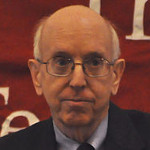
Judge Richard Posner

Image by Chensiyuan

Judge Richard Posner of the Seventh Circuit had some harsh words for justices of the U.S. Supreme Court, decreeing that only two of them write readable opinions and singling out Justice Samuel A. Alito for penning “the most tedious opinion I’ve ever read.”

Above the Law covered Posner’s interview at a Chicago bookstore on the occasion of the publication of a biography of the outspoken jurist.

“I’m very critical. I don’t think the judges are very good. I think the Supreme Court is awful. I think it’s reached a real nadir. Probably only a couple of the justices, Breyer and Ginsburg, are qualified. They’re okay, they’re not great,” he said in the interview.

Above the Law’s David Lat reported that Posner also was critical of the justices’ lack of trial experience: “[I]f you look at the Supreme Court, for example, of the nine justices — I’m bringing Scalia back from the dead to have the standard number of justices — of those nine, one had been in a trial courtroom. It’s ridiculous to have an appellate judge who doesn’t have trial experience.”

Read the article.