Former FDA Criminal Investigations Director Joins DLA Piper in Miami

George Karavetsos has joined DLA Piper in the firm’s litigation practice as a partner in the Miami office.

Karavetsos most recently served as the director of the U.S. Food and Drug Administration’s Office of Criminal Investigations, where he helped develop FDA enforcement initiatives. He also oversaw more than 300 agents and administrative personnel in the investigation of criminal violations of the Federal Food, Drug, and Cosmetic Act and related laws.

Prior to his role with the FDA, Karavetsos spent more than 12 years as an assistant U.S. attorney in the Southern District of Florida, rising to executive assistant US attorney, the third-highest position in the office. Karavetsos was responsible for prosecuting complex white collar and international narcotics and money laundering cases.

In a release, the firm said Karavetsos will focus on pharmaceutical, medical device, food, dietary supplement, tobacco and healthcare matters, advising the firm’s broad array of clients in these sectors.

The news release continues:

“George has a very unique combination of white collar and FDA regulatory experience,” said Loren Brown, co-chair of DLA Piper’s global and US Litigation practices. “We’re excited to add someone with George’s reputation and talents to our team, and he will immediately enhance our trial bench, white collar and investigations platform, and FDA regulatory practice.”

Earlier this month, Louis Ramos, formerly an assistant US attorney and assistant general counsel at Pfizer, joined DLA Piper’s Litigation practice in Washington, DC. Ramos, like Karavetsos, brings extensive expertise in the life sciences and healthcare areas.

“We look forward to involving George in several sectors that are important in this region and beyond,” said Joshua Kaye, DLA Piper’s managing partner of the Miami office. “His extensive experience trying healthcare fraud cases will prove invaluable to our clients and will help reinforce our Firm’s commitment to assisting clients in meeting their compliance goals through prevention, compliance and advocacy services.”

Karavetsos earned his J.D. from Suffolk University Law School and his B.A. from the Virginia Military Institute.


Join Our LinkedIn Group


E-Sign: Reducing Risk & Strengthening Enforceability Webinar

Esignature - contract -signingeSignLive by Vasco will present a complimentary one-hour webinar providing practical evidentiary considerations of electronic records and signatures and guidance on how to reduce your risk.

The event will be Tuesday, Feb. 7, 2017, beginning at 2 p.m. Eastern time.

Organizations undergoing digital transformation often have legal questions related to moving paper-based business processes online without introducing new risks. Beyond the minimum requirements for electronic and digital signatures set forth in the laws, addressing the risk of fraud, repudiation and compliance is of utmost importance as well. In the event of a regulatory audit or legal dispute, avoiding fines and ensuring admissibility is dependent on a company’s ability to produce convincing, reliable evidence.

Presenters will be Pat Hatfield, Partner at Locke Lord LLP, and Andrea Masterton, Corporate Marketing Director at eSignLive.

Highlights will include:

  • A brief overview of e-sign legislation
  • Insights gained from relevant case law
  • How e-signature laws overlay with existing commercial and industry regulations
  • The challenges of defending electronic transactions
  • A live demonstration of ‘best practice’ e-signature audit trails & process evidence

Register for the webinar.


Join Our LinkedIn Group


Painful Verdicts for Johnson & Johnson

The Lanier Law FirmIn 2016, two federal juries in Dallas delivered significant verdicts on behalf of the victims of serious medical complications caused by defective metal-on-metal hip implants made by Johnson & Johnson and its subsidiary DePuy Orthopaedics Inc., according to a post by the plaintiffs’ legal counsel, The Lanier Law Firm.

Although the court has reduced the amount of punitive damages awarded by the juries in each case, and those judgments are under appeal by The Lanier Law Firm, the two verdicts still total almost $700 million in actual and punitive damages assessed against Johnson & Johnson and DePuy.

In the post, the firm said these verdicts marked the second and third bellwether trials among thousands of similar lawsuits nationwide that have been consolidated in multidistrict litigation (MDL 3:11-md-0244) in the U.S. District Court for the Northern District of Texas. A bellwether trial is one that is typically representative of all the issues involved in the litigation of a mass tort case.

Read the article.


Disparate Treatment and Disparate Impact Are Tests for Discrimination

DiscriminationDisparate treatment and disparate impact are two very different types of employment discrimination that use two very different tests to determine if illegal discrimination has occurred and if an employer may be liable for such discriminatory conduct, according to an article published by Lynch Service Company. Having a better understanding of these terms and the potential liability they may impose on a business can help HR professionals and CEOs prevent expensive litigation.

The article covers anti-discrimination laws, disparate treatment, legal test for disparate treatment, disparate impact, and the legal test for disparate impact.

.

Read the article.


Government Contracts Legislative and Regulatory Update

Dentons has published the latest edition of its “Government Contracts Legislative and Regulatory Update,” a summary of the relevant changes that took place during December.

Highlights this month include:

• President Obama signed into law legislation which extends and cements whistleblower protection for certain contractor employees
• FAR Council issues final rule amending the FAR in response to injunction of certain Fair Pay and Safe Workplaces rules
• DoD issues class deviation regarding controversial IR&D costs rule
• FAR Council issues final rule mandating privacy training for contractor employees privy to PII

Read the update.


Join Our LinkedIn Group


Jeffrey Cohen Will Join Lowenstein in Bankruptcy Practice

Lowenstein Sandler LLP announced that Jeffrey Cohen will join the firm as a partner in its bankruptcy practice, with a focus on troubled retailers and technology companies. Cohen joins Lowenstein from Cooley LLP, where he was a partner.

Cohen said, “I am excited to join Lowenstein Sandler’s team of incredibly talented bankruptcy and transactional lawyers. My new colleagues have made a name for themselves zealously representing creditors in distressed retail, including playing a key role in the Borders, Coldwater Creek, and Filene’s cases — and the firm’s technology and emerging company practices lead the pack in the New York market.”

In a news release, the firm said:

Cohen has extensive experience representing debtors and creditors’ committees in bankruptcy proceedings involving retailers such as Blockbuster Video, Golfsmith, Eastern Mountain Sports, Bob’s Stores, City Sports, Levitz Furniture, KB Toys, Filene’s Basement, Brookstone, and Pizzeria Uno, as well as individual creditors in complex Chapter 11 cases throughout the United States. Notably, in the tech sector, Jeff served as debtor’s counsel to Quirky and Wink and as creditors’ committee counsel in Atari, Beyond Oblivion, Fuhu and Hipcricket, in their Chapter 11 proceedings. Mr. Cohen is also a certified bankruptcy mediator and approved fee examiner by the U.S. Trustee for Region 3.

Kenneth A. Rosen, Chair of Lowenstein’s Bankruptcy, Financial Reorganization & Creditors’ Rights Department, said, “Jeff brings an enormous amount of talent in retail bankruptcies, both on the creditor and debtor sides. I have known him for years, and have long admired his legal work. His impressive handling of substantial cases will greatly add to our depth of experience in retail and tech matters.”


Join Our LinkedIn Group


White Paper: Top 6 Legal Risks When Adopting E-Signatures

eSignLive by VascoMoving business processes online without introducing new risks is not a simple task. The fraud, repudiation, admissibility and compliance risks are challenging enough to address when executing transactions on paper. If not done properly in the electronic world, these risks can be far greater. This paper discusses how a well-designed process, supported by new-generation electronic signature technology, can actually reduce risk and increase the enforceability of e-transactions compared to paper processes. (See the download form below.)


This paper explains how eSignLive addresses the top six risks of bringing processes online as identified by leading
e-commerce law firm, Locke Lord LLP, which has guided Fortune 500 companies in the design and implementation of
electronic signature processes:

  1. User Authentication Risk: “This Isn’t My Signature”
  2. Repudiation Risk: “That’s Not What I Signed”
  3. Admissibility Risk: “Objection, Your Honor”
  4. Compliance Risk: “I Never Saw That”
  5. Adoption Risk: “Am I Done Yet?”
  6. Relative Risk: “How Does It Compare to PAPER?”


Join Our LinkedIn Group


Apple Adds to Qualcomm’s Troubles, Filing Lawsuit Over Rebates

Apple sued Qualcomm, its longtime partner,  over what it said was $1 billion in withheld rebates on Qualcomm’s smartphone technology, according to The New York Times.

Apple said the money had been promised in conjunction with an agreement not to buy chips from other suppliers or to divulge ualcomm’s intellectual property licensing practices, writes reporter Quentin Hardy.

The suit follows the Federal Trade Commission’s accusation that Qualcomm used anticompetitive practices to guarantee its high royalty payments for advanced wireless technology.

“The commission cited Qualcomm’s deals with Taiwanese companies that manufacture Apple iPhones over semiconductors it sells for the iPhone,” writes Hardy.

Read the NYT article.


Join Our LinkedIn Group


Texas Supreme Court Rules Pipeline Can Take Land by Eminent Domain

Kinder Morgan pipelineThe Texas Supreme Court ruled that a pipeline company could take private property by eminent domain, answering the question of whether or not the pipeline qualified as a “common carrier” under the Texas Natural Resource Code, reports Snell & Wilmer L.L.P. in its S&W Environmental & Natural Resources law blog.

In the article, Rachel M. Lynn explains that, typically, the power of eminent domain is granted to governmental entities rather than private institutions. Under Texas law, however, a common carrier has the right and power of eminent domain.

“The test utilized by the court to determine [the pipeline company’s] common carrier status was whether or not the pipeline would serve the needs of the public, not only those of the builder,” Lynn writes. “To pass this test, the court noted, the pipeline would need to provide reasonable proof of a future customer.”

Read the article.


Join Our LinkedIn Group


Webinar: Lessons Learned from Federal Opinions on Patentable Subject Matter

Intellectual property IPFitch, Even, Tabin & Flannery LLP will present a free webinar, “Alice in Chains? Lessons Learned from Recent Federal Circuit Opinions on Patentable Subject Matter,” presented by Eric L. Broxterman and David A. Gosse.

The webinar will take place on Wednesday, Jan. 25, 2017, at 9:00 am PST / 10:00 am MST / 11:00 am CST / 12:00 noon EST.

The Federal Circuit has overruled several district court opinions finding patents invalid for lack of patentable subject matter, most recently in Enfish v. Microsoft, BASCOM v. AT&T Mobility, and McRO v. Bandai Namco Games America. This webinar will review these and other Federal Circuit opinions that have begun to define the boundaries of “abstract ideas” under the Supreme Court’s Alice test.

The event will cover the following topics and more:
• The test for patentable subject matter under Alice v. CLS Bank
• A survey of recent Federal Circuit cases
• Considerations when responding to a motion for dismissal based on Alice
• How claim construction can alter the analysis of patentable subject matter

CLE credit has been approved for California and Illinois and is pending in Nebraska. Other states may also award CLE credit upon attendee request.

Following the live event, a recording of the webinar will be available to view for one year at fitcheven.com.

Register for the webinar.


Join Our LinkedIn Group


The Implied Covenant of Good Faith and Fair Dealing

Contract - agreement - handshake - dealSometimes there’s a disconnect between “fairness” and the “justice” that is doled out by the legal system. One notable exception is the application by the courts of the concept of “the implied covenant of good faith and fair dealing,” writes David Allen of Jaburg Wilk.

Every contract consists of one or more express agreements, legally referred to as “covenants” between the parties, Allen explains. But inherent in every contract is also an unwritten “implied” additional covenant that is not expressly set forth; namely, the implied covenant of good faith and fair dealing.

In his article, he explains the obligations mandated by the implied covenant and how courts can be expected to enforce them.

Read the article.


Join Our LinkedIn Group


Contracting by Tweet: What Impact Can the New Administration Have on Existing Contracts and Future Awards?

Among the many subjects to receive President-elect Trump’s attention in coming days are venerable defense contractors and their performance of major systems contracts, points out an article published in Covington & Burling LLP’s Inside Government Contracts.

 president always can pressure high-profile government contractors to “voluntarily” take actions to their detriment and in favor of the government, but what legal tools or contractual remedies are available if a president forces a particular outcome?

“From a purely legal standpoint, however, the Administration’s powers are circumscribed by the remedies available to contractors and challenges that prospective offerors can bring through the bid protest process.” the authors content.

Read the article.


Join Our LinkedIn Group


Careful Drafting of Non-Competes and Other Restrictive Covenants Can Save the Day

It generally is a defense to a breach of contract claim if the defendant proves that the plaintiff was the first one to materially breach the parties’ agreement, writes Shep Davidson for The In-House Advisor.

He discusses a recent Massachusetts Superior Court case illustrating how a plaintiff seeking to enforce a post-employment restrictive covenant can avoid falling victim to such a defense – if the company has a carefully crafted agreement is in place.

In his article, he outlines the lessons for in-house counsel, advising how a well-drafted contract can eliminate a potential defense that could thwart an otherwise well-conceived restrictive covenant.

Read the article.


Join Our LinkedIn Group


Fixing Your Contracts: What Training in Contract Drafting Can and Can’t Do

Contract with penMost contracts prose is dysfunctional, but training is available to help contracts professionals draft clearly and concisely. But that gets you only so far; you also have to supplement training with centralized initiatives, write Chris Lemens and Kenneth A. Adams for the Association of Corporate Counsel.

They discuss the style of writing in most contracts (“fundamentally flawed”) and consider what is required to produce clear, concise contracts (training and guidelines).

In their article, some of the advice they discuss includes: lose the archaisms, gain control of verbs, stop using the phrase “best efforts,” and don’t rely on mystery usages.

Read the article.


Join Our LinkedIn Group


General Counsel in the U.S. are Bullish on Trump

A majority of chief legal officers at U.S. companies expressed optimism that their business operations will be positively affected when Donald Trump becomes president, according to a survey by legal market research firm Acritas.

The survey found 72 percent of respondents believe their business operations will be impacted as a result of Trump’s election, Bloomberg Law reports. Fifty-six percent of respondents expected Trump to affect their business in a positive way while 44 percent had a negative outlook.

“Most of the positive responses related to a perception that Trump will cut back on the rules and regulations many companies believe hold them back unnecessarily, said Lizzy Duffy, vice president of Acritas US Inc.,” according to the report.

Read the Bloomberg article.


Join Our LinkedIn Group


Attorney Brian ‘Strong Arm’ Loncar’s Death Ruled Accidental Cocaine Overdose

Prominent Dallas lawyer Brian Loncar, known for his TV identity “The Strong Arm,” died last month due to an accidental cocaine overdose, officials said Thursday, according to a Dallas Morning News report.

Loncar’s cause of death was the “toxic effect of cocaine,” a spokeswoman for the Dallas County medical examiner. Hypertension and cardiovascular disease were also listed as secondary factors, she said.

“The personal injury lawyer, 56, was found dead in his new Rolls-Royce Wraith on Dec. 4, days after burying his youngest daughter, Grace Loncar, who had killed herself at age 16,” writes Dallas Morning News reporter Naomi Martin.

Read the Dallas News article.


Join Our LinkedIn Group


Trump Pays $25 Million to Settle Trump University Litigation

Days before President-elect Donald Trump was to take the oath to uphold the Constitution, he followed through on a more painful obligation: coughing up $25 million to settle litigation over his defunct Trump University real estate seminar program, reports Politico.

“Last March, Trump vowed not to settle the long-running litigation — two federal class-action fraud lawsuits and a parallel state court action brought by New York Attorney General Eric Schneiderman.” writes Gerstein. “The suits accused Trump U. of deceiving students by falsely claiming that Trump knew the instructors and that the school was an accredited university.”

Read the Politico article.


Join Our LinkedIn Group


Longtime Litigator Leads Geographic Expansion

Jay OldVeteran trial lawyer Jay Old has joined the commercial litigation firm Hicks Thomas LLP, where he will represent construction, insurance, petrochemical and healthcare companies, effective Jan. 1, the firm announced in a news release.

Old’s addition will also include the opening of offices in Austin and Beaumont, further extending the geographic reach of the Houston-based firm, now in its 20th year.

Five other lawyers from his firm will joined Hicks Thomas, including labor and employment attorney Jim Henges.

Old frequently speaks at continuing education programs for lawyers. He is also a former president of the Texas Association of Defense Counsel and chaired the Construction Law Section of the State Bar of Texas.

Read more about the new hire.


Join Our LinkedIn Group


Challenges Women Lawyers Face in Business Development

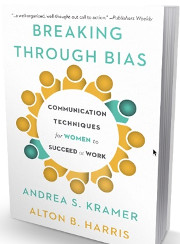
Women promoting their careers or their law practices need to understand that they’re marketing their skillset, and everything they do is marketing, advises Andrea S. Kramer, co-author of Breaking Through Bias: Communication Techniques for Women to Succeed at Work.

She co-authored the book with her husband, Alton B. Harris.

In a question-and-answer exchange with Amy Boardman Hunt of Muse Communications, Kramer talked about challenges women lawyers face when developing business.

Kramer, a partner at McDermott Will & Emery LLP, answered such questions as:

  • What challenges do women lawyers face when it comes to business development?
  • How can we combat bias, particularly unconscious bias?
  • What’s the best way for women to develop relationships with male clients? What’s the gender-neutral version of a hunting trip or a suite at the football game?
  • What’s the key to schmoozing male clients or prospective clients when you don’t want to suggest it’s something other than business?

Read the interview.


Join Our LinkedIn Group


Dykema Elects Six New Members

National law firm Dykema has announced that its Executive Board elected six new members to the firm effective Jan. 1, 2017. Dykema’s new partners, and descriptions of their practices, are listed below.

Jennifer Boueri Chilson is a member of Dykema’s Business Litigation Practice Group and is based in the firm’s Detroit office. Her practice focuses on business, commercial, and contract litigation. Her primary emphasis is in the area of complex business and commercial disputes, privately-owned business disputes, shareholder disputes, business torts, recall and warranty cost-recovery matters, automotive supplier disputes, government investigations, construction lien disputes, financial services, commercial real estate, and lending litigation, in which she represents some of the nation’s largest financial institutions.

Chilson earned a J.D., cum laude, from the Wayne State University, and a B.A. from the University of Michigan.

Robert Hugh Ellis is a member of Dykema’s Financial Services Litigation Practice Group and is based in the firm’s Detroit office. His practice focuses on business and commercial litigation in the areas of privately-held business disputes, insurance litigation, complex contract and management disputes, commercial real estate, business torts, trade secret claims, recall and warranty cost-recovery matters, automotive supplier disputes, as well as matters concerning bankruptcy litigation, insurance company insolvencies, and product liability defense.

Ellis earned a J.D., cum laude, from the University of Wisconsin Law School, and a B.A., magna cum laude, from the University of Southern California.

Cale A. Johnson is a member of Dykema’s Business Litigation Practice Group and is based in the firm’s Bloomfield Hills office. He focuses on all aspects of antitrust and competition law and has extensive experience representing corporations in government investigations, including civil merger defense and criminal investigations into allegations of price fixing, bid rigging, and market allocation. Johnson has also represented a number of U.S. and international Fortune 500 companies in high-profile civil litigation, including class action defense.

Johnson earned a J.D. and a B.A. from the University of Michigan.

Rochelle E. Lento is a member of Dykema’s Real Estate Practice Group and is based in the firm’s Detroit office. Her practice focuses on affordable housing development, mixed-use and economic development representing nonprofit and for profit developers throughout the Midwest in complex transactions involving Low Income Housing Tax Credits, Federal and State Historic Tax Credits, federal HOME and other HUD Financing Tools, and New Market Tax Credits; and general real estate. Lento has also been active in the ABA Forum on Affordable Housing & Community Development Law.

Lento earned a J.D. from the University of Detroit, and a B.A., cum laude, from the State University of New York at Potsdam.

David A. Vanderhider is a member of Dykema’s Commercial Litigation Practice Group and is based in the firm’s San Antonio office. His practice focuses on business litigation and arbitrations related primarily to construction, real estate, products liability, energy, and other complex business disputes typically involving contracts and business management. In addition to representing manufacturers and distributors in products liability cases, Vanderhider also has extensive experience drafting and negotiating contracts, lien documents and lien releases for clients acting as an owner, general contractor, subcontractor, architect and engineer in both public and private construction projects.

Vanderhider earned a J.D., summa cum laude, from the St. Mary’s University School of Law, and a B.A. from Baylor University.

Harry W. Wolff III is a member of Dykema’s Taxation Practice Group and is based in the firm’s San Antonio office. He counsels clients on a full range of legal issues related to taxation, estate planning and probate law. Wolff has experience in the creation and implementation of sophisticated estate plans, the preparation and filing of transfer tax returns and filings and the formation, operation and governance of closely held businesses and nonprofit organizations. He also advises clients on general tax planning, reporting, and compliance matters.

Wolff earned an LL.M. from the Georgetown University Law Center, a J.D. from the University of Houston Law Center, and a B.S. in Public Relations from the University of Texas at Austin. He is Board Certified in Estate Planning and Probate Law by the Texas Board of Legal Specialization.


Join Our LinkedIn Group