Federal Judge Sues Judiciary for Ordering Him to Get Mental Health Evaluation

A BuzzFeed News report covers the story of a federal judge in Ohio who is suing the federal judiciary, claiming that other judges violated his constitutional rights in ordering him to undergo a mental health screening.

Reporter Zoe Tillman writes that US District Judge John Adams, who sits in Akron, faced disciplinary action after a panel of judges found that he mistreated another official in his courthouse and refused to cooperate with an investigation into his behavior by undergoing a mental health exam.

The basis for the order involved a magistrate judge, Tillman explains:

“After a magistrate judge missed a deadline that Adams had set for completing work on a case in February 2013, Adams issued an order that the magistrate judge explain why that magistrate judge should not be held in contempt. The magistrate judge submitted an explanation, and Adams accepted it.”

Read the BuzzFeed article.


Join Our LinkedIn Group


Google Sued by Women Workers Claiming Gender Discrimination

Bloomberg Law reports that Google Inc. was accused in a class action of systematically paying male employees more than females, adding the internet giant to a growing list of technology companies sued for gender discrimination.

“Three women who worked at Google in recent years sued in San Francisco Superior Court alleging that the company pays women less than men for equal or similar work,” according to reporter Erik Larson. “They also say it puts them on career paths with lower pay ceilings, according to a copy of a complaint provided by their lawyer. The filing couldn’t be immediately verified in court records.”

Some other tech companies, including Microsoft Corp. and Twitter Inc., have been targets of similar litigation claiming men are favored for advancement.

Read the Bloomberg article.


Join Our LinkedIn Group


Squire Patton Boggs Fights for Domain Name With Chinese Imitator

International law and lobbying firm Squire Patton Boggs hit another roadblock in its fight with a Chinese entity when a panel concluded that the current trademark holder in China maintained rights in the domain and dismissed the complaint.

World Trademark Review reports that a Chinese company appears to be practicing law using the same name and logo as that of the established firm Squire Patton Boggs, promoting its practice on a website located at squirepattonboggs.net.

“Delving deeper, we discovered the Chinese company is the same one that had previously used the brand of another international law firm, Norton Rose Fulbright (we reported on this a year prior),” writes Tim Lince. “Much of the text used on the Chinese company’s website was lifted from other law firm sites, and many of the images were either stock images or taken from movie posters, including those on the staff page.”

Read the World Trademark Review article.


Join Our LinkedIn Group


Announcing LawGeex 4.0 – Contract Review Automation

LawGeexLawGeex, developer of an AI contract review platform for businesses, has launched product enhancements that provide more control, speed and consistency than ever before.

LawGeex combines machine learning algorithms and text analytics to quickly review and approve everyday contracts, helping businesses answer the question “Can I sign this?”

The new features and significant design upgrade empower customers to have deeper and wider control of their AI-powered reviews, contract editing and approval process, the company said in a release.

One of the main features of the latest release is more granular control when creating legal policies in the LawGeex Policy Center. The introduction of specific variations of legal concepts allows businesses more granular control in clause concepts they want to see — and do not want to see — in contracts before signing them. Based on these pre-set policies, the LawGeex’s AI can automatically accept, red flag or reject clauses in incoming contracts., and a revamp of LawGeex’s Action Center.

Another feature of the new release is a revamp of LawGeex’s action center — where the contract can be edited after the AI’s first line of defense. When reviewing a contract within LawGeex, customers can now clearly see which of their policies were applied to each clause and can red-line the contract within the platform, instantly inserting their company’s standard clause language with one click (LawGeex also provides default language). Users also have full visibility on their company’s clause definitions, fallback positions, tips, and more, during the editing process, bringing an unparalleled transparency and cohesiveness between a company’s policies and the actual contract review. The enhancements also include improved layout for LawGeex AI-reviewed contracts. Clauses are grouped simply by their status as “Missing” or “Present”, and reviewers are simply able to manually override the acceptance or rejection of clauses.

Read more about the release.


Register for the Innoxcell Annual Symposium – USA Series

The Innoxcell Annual Symposium 2017 USA Series (IAS) scheduled for Oct. 12 in San Francisco focuses on USA – Asia Cross Border Litigation and Investigation matters.

The event will be at Park Central – 50 Third Street San Francisco, CA 94103 (Financial District).

This conference is for U.S. companies operating in Asia. C-level, In-house counsel, compliance, audit and risk professionals should attend to gain insight knowledge on cross border litigation, investigation, data privacy, mitigation risks and antitrust matters.

‘Complimentary tickets are available  for corporate counsel, compliance, investigation and risk professionals.

Topics 

  • Crossing Border: Dispute Resolution, Corporate Compliance and Investigations
  • Fighting Fraud, Bribery and Corruption
  • Carried Out Antitrust Investigation in Asia
  • Procurement Fraud – Prevent – Detect and Investigate
  • Criminal Defense and Dealing with the Investigating Authorities
  • Economic Uncertainty, Unethical Conduct: How Should Over-Burdened Compliance Functions Respond?
  • Legal Risk Control of Investment & International Joint Venture – Due Diligence, Core Terms, Negotiation and Execution
  • Fraud, Bribery & Corruption Impact on International Arbitration
  • The Bedtime Story – A Journey to the Dark Side of International Business and Steps to Protect Your Organization
  • Mastering Internal Investigations in Japan and Asia Pacific
  • Using AI and Visual Analytics for Investigations

Register for the symposium.


Texas AG Files Suit Against 3 Businesses for High Prices in Storm’s Aftermath

A North Texas gas station chain is among the Texas businesses named in price-gouging lawsuits filed in the wake of Hurricane Harvey, attorney general Ken Paxton’s office announced Tuesday.

One gas station was reported to have charged $6.99 for a gallon of regular gas, and another reportedly charged almost $10. A motel franchisee also attracted the AG’s attention.

“Robstown Enterprises, Inc., which operated the Best Western Plus Tropic Inn in Robstown, charged three times its normal room rate during the weekend Hurricane Harvey hit, authorities said. The news release said Best Western has since ended its relationship with the company,” according to KXAS -TV reporters Brian Roth and Wayne Carter.

Texas law prohibits businesses from charging exorbitant prices for drinking water, food, clothing and fuel during a declared disaster.

Read the KXAS article.


Sex Scandal Simmered for Years Before Silicon Valley CEO’s Swift Fall

After weeks of growing scrutiny of alleged sex-related improprieties involving Social Finance CEO Mike Cagney, the start-up said he would leave as chief executive by the end of the year and that he would step down immediately as chairman, reports The New York Times.

“Although many of the issues at other firms stemmed from the actions of midlevel executives or investors, Mr. Cagney personally faces questions about his role,” write reporters Nathaniel Popper and Katie Benner. “His conduct was described by more than 30 current and former employees, most of whom asked to remain anonymous for fear of retribution.”

Cagney’s position with the company had become delicate after a sexual harassment suit was filed against him by a former employee.

Cagney denied any improprieties.

Read the NYT article.


Join Our LinkedIn Group


Which Biglaw Firms Are Doing Right By Their Staff?

Above the Law follows up on an earlier report on the disparity of benefits offered to staff members of big law firms, compared to those offered to lawyers, this time with a focus on family leave.

“There’s a reason, grounded in scarcity and specialization, to pay attorneys more than the staff,” writes Joe Patrice. “But there’s not much reason why an attorney needs more time to bond with a newborn than someone in human resources would. Perhaps the firm knows that its associates are so socially dysfunctional they need an extra several weeks to seem human? That’s certainly a colorable argument.”

The article points out that some firms avoid the attorney-staff disparity by making benefits equal.

Read the Above the Law article.


Join Our LinkedIn Group


Equifax Execs Sold Shares Before the Hack Was Announced – But Was It Insider Trading?

Los Angeles Times reporter James Rufus Koren examines the question: Did three Equifax executives, including the chief financial officer, engage in insider trading when they sold thousands of shares in the days after the company discovered a massive security breach?

“The credit bureau has publicly stated the executives were unaware of the hack at the time of the sales, but the size of breach and timing of the trades has nonetheless stirred suspicion,” writes Koren.

SEC filings show that three days after the company discovered a massive hack had stolen information of up to 143 million consumers in Equifax’s files, the CFO and the president of a business unit sold more than 10,000 shares. The next day, the president of another business sold some shares. All shares sold for about $146 each.

When Equifax announced the hack weeks later, the stock closed down about 16% from the time the executives sold stock, Koren writes. The company has said the executives did not know about the hack at the time of the sales.

Read the LA Times article.


Join Our LinkedIn Group


Despite EPA’s Insistence, Clean Power Plan Remains ‘The Law Of The Land,’ Democratic State Officials Insist

The battle over the Clean Power Plan has intensified as Democratic state officials are publicly locking horns with Scott Pruitt, the head of the U.S. Environmental Protection Agency, over the legal advice that he has given to states that oppose the Obama-era carbon-cutting plan, reports Forbes.

Ken Silverstein explains that in March Pruitt wrote a letter in which he advised the states that they do not have to meet the deadlines set by the Clean Power Plan that aims to cut CO2 emissions by 32% by 2030, from a 2005 baseline. But 14 state attorneys general disagree, saying the regulation remains in effect unless the courts would rule otherwise.

“The country is well on its to way to achieving the desired outcome of the regulation: carbon emissions in this country have dropped from 6.13 billion metric tons in 2007 to 5.35 billion metric tons last year because natural gas is replacing coal-fired generation,” writes Silverstein.

Read the article.


The Questionable Non-Compete: How to Hire Someone but Avoid a Tortious Interference Claim

Employment contractA post on the website of Nilan Johnson Lewis addresses a question about hiring: What specific steps should you take to set up your best defense to a claim that your company interfered with a new hire’s non-compete agreement with her current employer?

The article defines tortious interference and then discusses five considerations: selecting counsel, proving reasonable reliance, selecting the witnesses, proving the advice happened, and proving the substance of advice.

“By taking these actions with future litigation squarely in mind, your company can create the best evidence to support a justification defense when hiring a new employee with a questionable non-compete,” the article concludes.

Read the article.


Join Our LinkedIn Group


Landmark Second Circuit Ruling Clarifies the Standards for Mobile Contracts

smartphone with magnifying glassThe U.S. Second Circuit Court of Appeals has issued a landmark ruling in Meyer v. Kalanick that clarifies the standards for contract formation in the age of smartphones and mobile contracting, providing important guidance to companies about how to design enforceable mobile contracts, reports Coblentz Patch Duffy & Bass.

The court applied California law to determine the enforceability of the arbitration clause in Uber’s Terms of Service, holding that a “reasonably prudent smartphone user” unambiguously assents to a conspicuously hyperlinked contract when he downloads a smartphone application to his mobile phone and signs up for an account.

“Now is a good time for businesses to review their online and mobile contracting practices,” according to the article by Timothy Crudo, Rees Morgan, Skye Langs, and Mark Hejinian. Make sure that your terms and conditions are highly visible on an uncluttered page or screen.”

Read the article.


Join Our LinkedIn Group


Construction Contracts and Arbitration Provisions: Is the Word “May” Mandatory? Maybe!

According to some courts, the traditional line of reasoning in defining “may” versus “shall” is no longer the trend in the context of arbitration provision in construction contracts, writes Matthew DeVries in Best Practices Construction Law.

Traditionally, the use of “may” could be interpreted as making performance permissive or optional, while “shall” makes performance mandatory.

DeVries cities a case in which the Supreme Court of Virginia held that the parties’ use of the word “may” in the dispute resolution provisions of their construction contract required mandatory participation in arbitration at the election of one of the parties.

Read the article.


Join Our LinkedIn Group


Mother Nature Is Tough – How About Your Contracts?

What happens to supply contracts when a natural disaster floods entire cities, shuts down factories, cuts off warehouses, washes trucks off the road, and essentially brings an entire supply chain to a screeching halt?

Joe Jones, writing for Squire Patton Boggs’ Global Supply Chain Law Blog discusses that question in a new post:

“In most US states, UCC Section 2-615 allows sellers to delay or cancel delivery if ‘performance as agreed has been made impracticable by the occurrence of a contingency the non-occurrence of which was a basic assumption on which the contract was made.'”

But inn practice, he warns, this “impracticability” defense can be difficult to exercise. For instance, hurricanes are a regular occurrence on the Gulf and Atlantic coasts of the United States, so a customer might argue that a supplier in Houston or Miami should have considered hurricane risk when agreeing to supply products from that location.

Read the article.


Join Our LinkedIn Group


Church-State Debate Surfaces in Hurricane Harvey’s Wake

“Hurricane Harvey didn’t cherry pick its victims, and FEMA shouldn’t cherry pick who it helps,” Washington, D.C. attorney Diana Verm told the Houston Chronicle this week.

In a post on the website of Androvett Legal Media & Marketing, Verm, who specializes in religious liberty cases, is representing three small Texas churches who recently sued the Federal Emergency Management Agency, alleging the government’s disaster relief policy violates the Constitution by denying faith groups the right to apply for funds.

Texas nonprofits that sustained damage by the Category 4 hurricane have 30 days to apply for emergency cleanup grants. The Houston-area churches maintain they should be eligible since they have and continue to support victims of the devastating storm.

David Coale, a Dallas appellate attorney who specializes in constitutional cases, says the complaint by the Rockport First Assembly of God in Aransas County, Harvest Family Church in Harris County and Hi-Way Tabernacle in Liberty County goes a step farther than previous similar cases by moving beyond exterior structures and building repairs into providing personal services.

“On its face it’s a reasonable request — it’s a disaster and they need all the help they can get,” Coale, a partner with Lynn Pinker Cox Hurst, told the newspaper.  “On the other hand, we are talking about giving people money to offer a place to sleep. There is stuff up in the church about religion and there will be people in the church providing a little bit of ministry.”

The Texas case comes three months after a U.S. Supreme Court ruling that prohibited government discrimination against a Missouri church that had applied for funding for playground equipment.


Join Our LinkedIn Group


Widening Your Moat: Using Continuation Applications to Protect Commercially Successful Products

Fitch, Even, Tabin & Flannery LLP will present a free webinar, “Widening Your Moat: Using Continuation Applications to Protect Commercially Successful Products,” featuring Fitch Even partners Jonathan H. Urbanek and Mark A. Borsos.

The event will be Thursday, Sept. 28, 2017, at 9 am PDT / 10 am MDT / 11 am CDT / 12 noon EDT.

CLE credit has been approved for California, Illinois, and Nebraska. Other states may also award CLE credit upon attendee request. There is no fee to attend, but registration is required. Register at http://bit.ly/FitchEven_SeptWebinar

Protecting a commercially successful product is critical for any business. Although patents can help to prevent others from utilizing covered technology, recent trends in case law and post-issuance validity challenges introduced by the American Invents Act have made it more difficult for businesses to effectively enforce patents against competitors. Continuation applications can be an important tool for bolstering patent protection for key products, providing the patent owner leverage in negotiations and enforcement.

This webinar will provide tips and strategies on how to use continuation applications to
• Limit design-arounds that use similar technology
• Target commercial products
• Expand the scope of patent protection
• Mitigate invalidity challenges
• Avoid antitrust pitfalls

Following the live event, a recording of the webinar will be available to view for one year at www.fitcheven.com.

Register for the webinar.


Join Our LinkedIn Group


Is Your LinkedIn Profile Compliant with State Bar of Texas Rules?

LinkedInTexas lawyers are bound by the Texas Disciplinary Rules of Professional Conduct, which covers advertising, which includes social media, which includes LinkedIn. Compliance, or non-compliance, with those rules is monitored by The State Bar of Texas’ Advertising Review Committee, points out Amy Boardman Hunt of Muse Communications.

She discusses ethical rules as they pertain to ad review issues.

The two most important rules, she explains, are: 1. Never publish anything false or misleading, and 2. Make sure your goal is to educate your audience, not to market yourself.

She goes on to discuss the best practices for staying out of trouble.

Read the article.


VMware Audits – What You Need to Know About Licensing Rules Pt. I

By 
Scott & Scott LLP

It is not unusual for companies to use virtualization technologies to reduce costs, ensure redundancy, and reduce physical size of the network. Some of these companies are turning to VMware to manage their virtualized environments. Virtualization can involve complex technical and licensing issues. Failure to properly license the environment risks subjecting the company to unbudgeted licensing and compliance fees. The following is a number of common questions and concerns related to licensing VMware.

1. Is a customer allowed to use software for evaluation purposes?
Yes, as long as the evaluation copy is not used in the production environment and is for testing only.

2. Can an affiliate use the software?
Typically a corporate affiliate is allowed to use the software if the affiliate is under common control or ownership of more than 50%. This means that any joint ventures or affiliates with less than 50% common ownership, control, or voting rights must be separately licensed. See VMware End User License Agreement (“EULA”), Section 1.1.

3. Can the software be transferred?
Subject to all of the terms and conditions of the VMware End User License Agreement, the software cannot be transferred unless the customer obtains written consent from VMware, which will not be unreasonable withheld. See Section 12.1 of the EULA.

4. Does the license expire?
The EULA indicates that all VMware licenses are perpetual unless the order for the software specifically limits the term of the license. This means that license will not expire unless it is terminated.

5. Can VMware be installed at any location?
No. VMware can only be installed in the territory specified in the order (for example, North America). Global corporations may consider alternative licensing options, or negotiating and specifying the territories in the original order to ensure all locations are properly licensed.

6. Can VMware be used with Oracle software?
Yes, but it may require additional licensing fees for use of the Oracle products in a virtualized environment.
It is important to carefully review the contemplated use cases for VMware against the licensing restrictions to ensure that the company is in compliance with its license agreement.


Join Our LinkedIn Group



Equifax Faces Multibillion-Dollar Lawsuit Over Hack

Cybersecurity - hacking - hackerBloomberg reports that a proposed class-action lawsuit was filed against Equifax Inc. late Thursday evening, shortly after the company reported that an unprecedented hack had compromised the private information of about 143 million people.

The law firms filing the suit are Olsen Daines PC and Geragos & Geragos, a celebrity law firm known for blockbuster class actions. Reporter Polly Mosendz writes that Ben Meiselas, an attorney for Geragos, said the class will seek as much as $70 billion in damages nationally.

In the security breach, hackers are believed to have accessed Social Security numbers, addresses, driver’s license data, and birth dates. Some credit card information was also put at risk.

Read the Bloomberg article.


Join Our LinkedIn Group


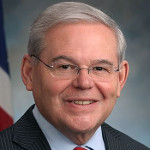
Federal Judge Excoriates Sen. Menendez Prosecution Team

The judge overseeing the bribery trial of Sen. Robert Menendez ripped into prosecutors Thursday for trying to focus on what he called “tabloid’’ details — an unusual description for dry testimony about a series of emails about a hotel reservation, reports The Washington Post.

“U.S. District Judge William Walls stopped testimony for 20 minutes in which he tongue-lashed prosecutors for their painstaking recounting of emails used to book a luxury hotel in Paris for the New Jersey Democrat in 2010,” writes reporter Devlin Barrett. “The three-day hotel stay is a central part of the Justice Department’s case.”

At one point, the judge sent the jury out of the courtroom and then began chewing out Justice Department lawyers.

“Whether these defendants engaged in bribery does not depend on whether the senator chose a more expensive room. We’re not talking about Days Inn,’’ he said.

Read the Washington Post article.


Join Our LinkedIn Group