Presenting Alice-Friendly Patent Claims: Is McRo Worth a Second Look?

Intellectual property IPFitch, Even, Tabin & Flannery LLP will present a free webinar, “Presenting Alice-Friendly Patent Claims: Is McRo Worth a Second Look?,” featuring Fitch Even partner Steven G. Parmelee.

The event will be Wednesday, Oct. 25, 2017, at 9 am PDT / 10 am MDT / 11 am CDT / 12 noon EDT.

CLE credit has been approved for California, Illinois, and Nebraska. Other states may also award CLE credit upon attendee request. There is no fee to attend, but registration is required.

While the Federal Circuit has identified small precedential islands of relative safety, the court has yet to chart a veritable Northwest Passage through which one can safely navigate the risks and concerns presented by the Supreme Court’s Alice decision, the firm says on its website.

Or have they?

McRo, Inc. v. Bandai Namco Games America, Inc., et al. is sometimes considered for its rather tepid and, to date, somewhat inconsequential consideration of preemption issues. McRo’s analysis and holding regarding abstractness, however, is perhaps more valuable to those writing and prosecuting patent applications than has been generally acknowledged to date.

During this webinar, presenter Steve Parmelee will be explore these questions:
• Whether McRo presents a new two-step abstractness analysis that offers useful and practical opportunities
• If so, whether such an opportunity is “more than a drafting effort designed to monopolize the [abstract idea] itself”

He will also share these insights, among others:
• Anecdotal McRo prosecution experience at the USPTO
• Claim and specification drafting tips

Following the live event, a recording of the webinar will be available to view for one year at www.fitcheven.com.


Register for the webinar.


Join Our LinkedIn Group


Business With a Friend: Lessons from a Liftboat Contract

Charles Sartain, a partner in Gray Reed, uses a recent 5th Circuit ruling on a liftboat construction contract to illustrate his advice on how to administer and perform a contract, especially one with a friend.

Writing in the firm’s Energy & the Law blog, he discusses Semco, LLC v. The Grand, LTD. The case involves a $15.9 million contract between long-time friends to construct a liftboat, a construction project that involved numerous change orders.

“At some point, the parties ‘got away from the change order program’ and informal requests were approved by email or orally,” Sartain explains. Then allegations of fraud were raised.

Read the article.


Join Our LinkedIn Group


When Contracts and Bankruptcy Collide, a Short Term May Be Better in the Long Term

Before entering into a long-term contract, you should consider that the longer the contract, the greater the risk of a change in the contract counterparty’s financial situation. A safe credit risk in 2017 might find itself filing for bankruptcy by 2020, warns Jeffrey A. Krieger, a partner in Greenberg Glusker Fields Claman & Machtinger LLP.

For those who respond that they’re not worried because the agreement includes a bankruptcy termination clause, Krieger says: “The U.S. Bankruptcy Code has a lot to say about the rights of both the debtor and the non-debtor party once a bankruptcy is filed – often to the chagrin of the non-debtor party.”

“A Right to Terminate clause is unenforceable because the non-debtor party’s termination would violate the ‘automatic stay’ of Bankruptcy Code section 362. Once a bankruptcy is filed, section 362 puts a halt to any action to obtain possession of, or exercise control over property of the estate,” he writes.

He offers an approach that could deal with this potential problem before signing the agreement.

Read the article.


Mitigating Cyber Risk: Third-Party Service Provider Contract Considerations

CybersecurityBusinesses are adapting to the new reality of cybersecurity threats by shoring up technology and educating employees regarding best practices and risks associated with an online presence, writes Marc C. Tucker, a partner in Smith Moore Leatherwood LLP.

“A business’s electronic data is quickly becoming its most valuable asset— an asset worth protecting,” he explains. “If data is trusted to a third party, the parameters of what is expected to keep your data safe should be memorialized in a contract with that service provider.”

“Strategic third-party contracting practices will not eliminate all cyber risks but is an additional arrow in the quiver as you strive to protect sensitive data.”

Read the article.


Join Our LinkedIn Group


Webinar: Contract Compliance – Why it Matters to Procurement

Determine, Inc. and Jason Busch of Spend Matters will co-host a webinar titled Contract Compliance — Why it Matters to Procurement, on Tuesday, Oct. 24 at noon Eastern time.

The webinar will be available on-demand for anyone who registers.

Presenters will discuss why ensuring contract compliance through effective contract management isn’t an afterthought; it’s at the functional heart of successful end-to-end procurement savings, efficiency and supplier performance.

Topics include:

  • CLM – the nexus of compliance, stakeholders, suppliers and customers
  • Why compliance is the new savings
  • Integrating contracts and procurement seamlessly
  • How process management simplifies collaboration

Register for webinar.


Join Our LinkedIn Group


Hogan Lovells Adds Three Business and Securities Litigators in New York

Hogan Lovells announced that Michael C. Hefter, Seth M. Cohen and Ryan M. Philp have joined its New York office as partners in the firm’s Litigation practice.

The group previously practiced together at Bracewell LLP where Michael co-chaired the securities litigation practice and served as the head of commercial litigation in the New York office. The team focuses on a wide range of complex commercial litigation matters, including M&A, transactional and securities litigation, as well as Delaware governance issues.

“Michael, Seth and Ryan are distinguished additions to the firm,” said Michael Davison, head of the firm’s Litigation, Arbitration and Employment practice group. “Their combined experience and excellent reputation will be instrumental in strengthening both our Global Litigation and Transactional practices.”

In a release, the firm said the team represents corporations, investment funds, banks, and officers and directors in litigation and arbitration in a wide variety of industries, including claims involving breach of contract, breach of fiduciary duty, fraud and other business disputes, securities litigation, RICO class actions, structured finance disputes, post-acquisition disputes, corporate governance, claims involving lender liability issues, shareholder class and derivative actions, claims involving LLC and limited partnership issues and structures, bankruptcy-related litigation, energy disputes, and other forms of litigation.

“This move strategically meets the increasing demand by our New York clients for more Delaware M&A and securities litigation support,” said Dennis Tracey, head of the firm’s Litigation Practice in the Americas. “Our US Litigation practice has been focused on recruiting laterals with experience representing corporations and financial service companies in disputes that arise out of major public and private transactions, particularly with the recent expansion of our M&A practice in Northern California.”

About the Lawyers:

Michael C. Hefter was co-chair of the securities litigation practice group and head of commercial litigation in Bracewell LLP’s New York office. He has acted as lead litigation and trial counsel for numerous clients in complex jury and non-jury trials.. He received his J.D., with honors, from Emory University School of Law and his B.A from the University of Michigan.

Seth M. Cohen is a trial partner who advises clients on a wide range of complex commercial litigation matters in the federal, state and appellate courts. Cohen graduated with his J.D., cum laude, from Emory University School of Law and received his B.A., cum laude, from Cornell University.

Ryan M. Philp is a trial partner who represents public companies, private investment firms, financial institutions and officers and directors in all phases of civil litigation. He earned his J.D., cum laude, Order of the Coif, from Seton Hall University School of Law and his B.A., cum laude, from Loyola College in Maryland.


Join Our LinkedIn Group


How Lawyers Protect the Harvey Weinstein in Your Workplace

In workplace harassment cases — both in Hollywood and in the rest of the American workforce — many companies try to use nondisclosure agreements to protect the employer from legal consequences for wrongdoing, according to Bloomberg Law. And the NDA can also serve to keep criminal behavior out of the public eye and the courts.

That’s how someone like Hollywood producer Harvey Weinstein can be a repeat offender without consequence, explains Bloomberg reporter Rebecca Greenfield.

She quotes Peter Romer-Friedman, an employment lawyer at Outten and Golden: “It’s buying silence. It’s buying confidentiality. It’s trying to sanitize. These agreements are often protecting criminal activity.”

“NDAs are geared to ensure that the fraction of people who do come forward can’t warn others or bring claims to light, all of which contributes to the culture of silence around workplace harassment.
Legal scholars are now asking if settlements backed by nondisclosure pacts are protecting criminal activity,” Greenfield writes.

Read the Bloomberg article.


Join Our LinkedIn Group


Florida Law Firm Fined $9 Million By Federal Court Over Tobacco Litigation

First Coast News reports that federal judges in Florida handed down $9,164,404.12 in fines Wednesday on prominent Jacksonville litigation firm, Farah & Farah, P.A.

Farah & Farah and the Wilner Firm filed 1,250 frivolous tobacco claims against the Engle Trust Fund, the court found.

“Engle is a class action lawsuit named for a Miami pediatrician who defeated tobacco companies in court,” First Coast News explains. “A multi-million dollar fund paid by tobacco companies was set up for Floridians and their survivors who suffered illnesses due to cigarette smoking from 1994-2006. The class action in 2008 was estimated to include 700,000 people.”

Some cases filed by the attorneys were for deceased clients, non-smokers, those who did not suffer from one of the required diseases, and 572 that did not authorize the attorneys to file lawsuits on their behalf, the report says.

Read the First Coast News article.


Join Our LinkedIn Group


GM to Pay $120M in Multistate Defective Ignition Switch Settlement

Image by C_osett

General Motors will pay $120 million to settle claims from dozens of states in its massive ignition switch defect scandal, reports The Detroit Free Press.

Earlier this year, the U.S. Supreme Court ruled that GM could no longer avoid hundreds of suits from victims of the defective ignition switches in accidents occurring before GM filed for Chapter 11 bankruptcy in 2009. according to reporter Eric D. Lawrence.

“The settlement is tied to violations of consumer protection laws and is on top of GM’s previous penalties and settlements of an estimated $2.5 billion, including $900 million to settle a U.S. Department of Justice criminal case,” Lawrence writes.

The settlement does not resolve federal multi-district litigation involving what has been reported as possibly hundreds of plaintiffs.

Read the Free Press article.


Join Our LinkedIn Group


Webinar: Focus on Higher Value Work – How GC Can Improve Their Contracting Process

WebinarContractWorks will host a complimentary live webinar titled “Focus on Higher Value Works: How General Counsel Can Improve Their Contracting Process” on Wednesday, Nov. 1, at 11 a.m. Pacific time.

Managing contracts manually can be extremely time-consuming for general counsel and their teams, taking focus away from higher value work, ContractWorks says on its website. During this webinar, participants will hear about ways legal counsel can spend more hours on legal matters and less on contract management.

Participants will learn:

  • How to obtain better contract visibility and avoid missed or lost contracts.
  • How to automate contract approval and signing.
  • How to mitigate contract risk and compliance issues.

Anyone unable to watch the webinar at the time of presentation may register and receive the recording after the webinar.

Register for the webinar.


Appeals Court Tosses $72 Million Award in Talcum Powder Case

The Associated Press is reporting that a Missouri appeals court on Tuesday that vacated a $72 million award to an Alabama woman who claimed her use of Johnson & Johnson products that contained talcum contributed to her ovarian cancer has thrown the fate of awards in similar cases into doubt.

“The appeals court cited a Supreme Court ruling in June that placed limits on where injury lawsuits could be filed, saying state courts cannot hear claims against companies not based in the state where alleged injuries occurred. The case involved suits against Bristol-Myers Squibb over the blood-thinning medication Plavix,” writes the AP’s Margaret Stafford.

More than 1,000 plaintiffs have filed similar lawsuits in St. Louis against New Jersey-based J&J. “In four of five trials held so far, jurors awarded more than $300 million combined. Only two of the 64 cases attached to Fox’s case lived in Missouri,” according to Stafford.

Read the AP article.


Join Our LinkedIn Group


Lawsuit Alleging General Electric Ripped Off Its Workers Shows the Pitfalls of 401(k) Plans

A lawsuit recently brought against General Electric Co. raises the question: Can your employer be trusted to manage your retirement fund exclusively for your own benefit?

Los Angeles Times reporter Michael Hiltzik explains that the suit alleges that GE managed the plan for its own benefit by loading it with mutual funds owned by its own subsidiary.

“The funds charged high fees while also underperforming the investment markets, a double-barreled drawback that cost employees millions in potential gains,” according to Hiltzik.

Plaintiffs claim that a large portion of the funds was invested in GE-owned mutual funds, and the company pocketed the management fees paid by its own employees. All but one of the five GE funds underperformed its benchmark investment index.

Read the LA Times article.


Join Our LinkedIn Group


Disney Takes Insurer AIG to Court Over ‘Pink Slime’ Defamation Settlement

The Walt Disney Company is going to battle with its insurer, AIG, as it seeks coverage for a massive settlement in the “pink slime” defamation case, Variety is reporting.

Disney is trying to force AIG to submit to arbitration on the coverage dispute. While the underlying litigation is not identified, the dates line up with Disney’s court battle with Beef Products Inc. in South Dakota, according to reporter Gene Maddaus.

BPI sued Disney, alleging that ABC News had damaged its business with a series of reports on “pink slime.” Disney settled the case partway through trial in June.

“In August, Disney disclosed that it had incurred legal costs of $177 million, the bulk of which was believed to be due to the BPI settlement,” Maddaus writes. “The total settlement was believed to be significantly larger, once insurance claims were factored in.”

Read the Variety article.


Join Our LinkedIn Group


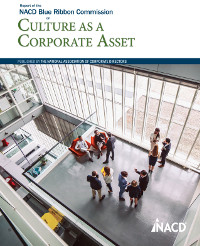
Download: Complimentary Copy of NACD’s New Culture Report

The National Association of Corporate Directors (NACD) has published a report titled “Culture as a Corporate Asset: Translate Values into Value,” the topic of this year’s NACD Blue Ribbon Commission Report.

Just released at the 2017 NACD Global Board Leaders’ Summit, the report provides directors with the following information:

  • A definition and key characteristics of organizational culture
  • Priorities for action for the entire board and committees
  • 10 strategic recommendations for overseeing culture

Organizations with strong, positive cultures have been shown to outperform their peers in customer satisfaction, quality, productivity, and profitability, the NACD says on its website. The absence of a healthy culture can create or increase many types of risks.

Yet, in a recent NACD survey, less than half of directors reported that their boards assess alignment between their company’s purpose, values, and strategy. And only 50 percent say they understand the “buzz at the bottom” — how culture actually translates into norms and behavior among rank-and-file employees.

Download the complimentary report.


Webinar: Step-Up Your Third-Party Risk Management Program

Risk managementNAVEX Global will present a free webinar, “Using Metrics to Improve Your Third-Party Risk Management Program,” on how to set up a third-party risk management program for success.

The event will be Thursday, Oct. 26, at 10 a.m. PDT/1 p.m. EST.

Participants will learn how companies with advanced programs manage their third-party risk and due diligence processes and will get industry benchmarks to size up your program.

Expert presenters will discuss the steps that should be taken to improve a program and minimize risk — regardless of organization size or number of third parties managed.

Organization following the steps have:

  • Reduced their risk of legal or regulatory action
  • Appropriately defined “high risk” third parties
  • Found the most powerful screening and monitoring methods
  • Measured the effectiveness of their third-party due diligence programs

Register for the webinar.


Jury Slaps JPMorgan Chase with $6 Billion-Plus Verdict in Sabre Creator’s Estate

A jury has awarded the widow and heirs of Sabre airline reservation system pioneer Max D. Hopper more than $6 billion in damages after finding JPMorgan Chase in breach of its fiduciary duty in administering the multimillion-dollar Hopper estate.

“JPMorgan Chase is one of the world’s largest and most respected banks, and its clients expect honesty and fairness in the handling of trusts and estates,” said James S. Bell of James S. Bell, PC, trial lawyer for Hopper’s adult children, Dr. Stephen Hopper, a Tulsa, Oklahoma, psychiatrist, and Laura Wassmer, mayor of Prairie Village, Kansas.

“In this case, the JPMorgan Chase name doesn’t mean the institution put its clients’ interests above its own. When challenged, the bank used the family’s own money to fight them in court over the handling of their father’s estate,” said Bell.

Hopper, who helped create the Sabre reservations system, died unexpectedly in 2010 without a valid will. At the time of his death, his estate was estimated at more than $19 million.

Read details about the case.


You Don’t Think Your Small Business Will Get Hacked? You’re Wrong.

Hacking - cybersecurity - phishingWhile the majority of businesses at risk for criminal hacking are major institutions that deal with a lot of data — such as banks — the idea that small and midsize businesses aren’t a target is mistaken, reports the Chicago Tribune.

Reporter Corilyn Shropshire credits that analysis to Richard Sypniewski, CEO and managing director of Sagin, a management consulting and IT management firm.

Sypniewski said nonprofit institutions are at greater risk for criminal hacking than some other targets.

“According to [a Better Business Bureau] study, 90 percent of cyberattacks on business come from phishing emails and 90 percent of those phishing emails are ransomware, in which scammers breach a company’s operating system with software designed to block access or hold data hostage until a sum of money is paid,” writes Shropshire.

Read the Chicago Tribune article.


Join Our LinkedIn Group


On-Demand: Impacts of Tightening Natural Gas Market on Procurement Strategy

Ecova has posted an on-demand webinar reviewing the top takeaways from third quarter of 2017.

The webinar also covers potential short- and long-term impacts of a tighter natural gas supply and demand balance heading into this upcoming winter.

Other energy and natural gas market trends covered include:

  • Upcoming winter, gas and storage vs historical averages
  • Associated risks with less gas supply heading into winter
  • Working risk tolerance into procurement strategy

Watch the on-demand webinar.


Proving Liability in Las Vegas Shooting Could be Challenging

Lawsuits are being filed over the Oct. 1 Las Vegas massacre that left 58 dead and more than 500 wounded when Stephen Paddock fired down on a country music festival from a nearby high-rise hotel. Among the first was a suit filed by a wounded Texas college student, seeking to hold MGM Resorts, Live Nation, Bump Stock manufacturer Slide Fire and the estate of the gunman liable, reports Androvett Legal Media & Marketing.

“There does not appear to be any dispute that Stephen Paddock was the gunman, making the move to freeze the estate a prudent decision,” says Dallas attorney Timothy Zeiger. “Injured victims will often sue the estate of the person who acted negligently, such as when a careless driver causes a traffic fatality, or in this case carries out an intentionally malicious act.

“However, despite the reported size of his estate, given the large number of potential claims related to the horrific injuries and deaths he caused, the chance that any particular victim will be justly compensated from the estate does not appear to be likely,” adds Zeiger, head of the litigation section at Shackelford, Bowen, McKinley & Norton.

It is still too early to determine the legal responsibility of MGM Resorts, Live Nation or Slide Fire, Zeiger says. He notes that unless a tragedy is “reasonably foreseeable” and not just an “isolated, and up to now, unique crime,” it will be difficult to prove negligence.


Join Our LinkedIn Group


How to Structure Global Mobility Assignments, Expatriate Postings and Cross-Border Secondments

International business - globe -worldIn structuring overseas postings, multinationals inevitably struggle with the interplay between expatriate assignment strategy and the legal ramifications of a particular foreign posting, points out Donald C. Downling, a shareholder in Littler Mendelson P.C.

“The various types of cross-border personnel moves raise questions of how best to structure a given international assignment,” he writes. “To resolve these questions, we address four threshold issues: (A) who is and is not an expatriate?; (B) four expatriate structures; (C) selecting the best expatriate structure; and (D) written expatriate agreements.”

A link at the end of the article on Littler’s website connects to the full report.

Read the article.


Join Our LinkedIn Group