Insurance Giant Receives New York Subpoena on Sales Practices

The New York Times is reporting that New York’s attorney general has subpoenaed TIAA, the giant insurance company and investment firm, seeking documents and information relating to its sales practices, according to people briefed on the inquiry.

Last month, the newspaper raised questions about the firm’s sales methods. TIAA oversees almost $1 trillion in client assets, for more than four million workers at thousands of nonprofits, according to reporter Gretchen Morgenson.

A related SEC complaint was filed by former TIAA employees who contend they were pressured to sell products that generated more revenue for the firm but were more costly to clients while adding little value.

Read the NYT article.


Dallas-Based Locke Lord Fined for Ethics Violations, “Acting Without Integrity”

Law firm Locke Lord has received the largest fine ever levied by the profession’s U.K. regulatory body, the Solicitors Disciplinary Tribunal, reports The Global Legal Post.

“The firm has to pay £500,000 [$654,632] after accepting four allegations of misconduct, including acting with a lack of integrity, the first time a law firm has admitted to this,” according to the report.

The firm failed to supervise a lawyer involved in transactions showing signs of irregular financial arrangements or investment schemes, the regulatory body alleged.

On its website, the Dallas-based firm says it has offices across the United States, as well as in Hong Kong and London.

Read the Global Legal Post article.


What is Legal Entity Management? Beyond Corporate Secretary Functions

Legal entity management transforms the lawyer’s mundane corporate secretary function into a platform to deliver better business results and improve client relations, writes Mark Little of Berkman Solutions in an article on the company’s website.

He explains that, legal entity management provides three benefits to clients:

1. Ensure compliance
2. Manage legal risk at the entity level
3. Communicate value of the legal team to the business.

“To manage legal entities in an era of increasing complexity and responsiveness requires five steps: centralize all entities on a corporate registry, track ownership details for each entity, manage officers and directors, store corporate documents with the entity details, and adapt to changing corporate forms and laws,” he writes.

Read the article.


Former HHS, Office of Inspector General Senior Counsel Joins Berkeley Research Group

Berkeley Research Group announced that Kristen Schwendinger has joined the Health Analytics practice in the firm’s Washington, DC, office and will focus on Corporate Compliance and Risk Management.

She joins BRG from the U.S. Department of Health and Human Services (HHS) Office of Inspector General (OIG) and has significant industry experience across provider and supplier entities. She will focus her consulting practice on pharmaceutical, biotech and medical device manufacturers, a wide array of healthcare providers, companies in other regulated industries and individuals on a variety of compliance-related issues, including federal healthcare laws and regulations; policies and procedures; compliance assessments related to Department of Justice (DOJ), Securities & Exchange Commission and other regulatory investigations; IRO monitoring and testing; CIA readiness assessments and reporting; and creative restructuring and reform.

Before joining BRG, Schwendinger served as a senior counsel at HHS OIG, where she focused on healthcare enforcement, compliance and investigations. She has experience in the government’s fraud investigation process, the False Claims Act, Anti-Kickback Statute, Civil Monetary Penalties Law and exclusions from federal healthcare programs. Schwendinger is a respected compliance professional, having managed numerous corporate integrity agreements while advancing the OIG’s approach to corporate monitoring.

“In a climate of increased scrutiny and accountability for compliance programs, it is an exciting time to join BRG’s Corporate Compliance and Risk Management team. I am honored to contribute to BRG’s impressive team, bringing knowledge from monitoring corporations as part of my expertise from HHS OIG,” said Schwendinger.

In a release, the company says:

Schwendinger brings deep experience to BRG for a wide range of providers to include grantees, contractors, life science companies, physician practices, hospitals, health centers, durable medical equipment, pharmacies, manufacturers and long-term care providers and suppliers. Among her accomplishments are collaborations on various matters with the National Institutes of Health, Food and Drug Administration and Centers for Disease Control and Prevention, as well as with HHS representatives at the Centers for Medicare & Medicaid Services. She also worked on OIG’s updated healthcare provider self-disclosure protocol, in addition to processes for disclosures by contractors or grantees.

Across hundreds of cases for which she obtained settlements or judgments, Schwendinger advocated for OIG’s enforcement positions related to hospice, home health, durable medical equipment, life science companies and individual providers. She served as OIG’s Grant and Contract Fraud coordinator, earning awards for excellence and innovation. She also served as a member of the grant fraud subcommittee for the DOJ’s Financial Fraud Task Force for HHS OIG. Working from the start of investigations through to resolutions, she took depositions and also handled appeals before the Departmental Appeals Board and federal courts. She championed an initiative for OIG to obtain new grant and contract Civil Monetary Penalty Law authority, which was enacted as a part of the 21st Century Cures Act.

“We are excited to have someone of Kristen’s caliber join BRG’s Corporate Compliance team. Her OIG and healthcare experience will strengthen our range of services to life sciences and other organizations, as well as their counsel.” said Ed Buthusiem, Managing Director of BRG’s Corporate Compliance and Risk Management team.

Prior to her time at the OIG, Schwendinger worked at IU Health (formerly Clarian Health) and Massachusetts General Hospital on community benefits tax reporting and research fundraising.



Trust and Estates Attorney Natalie Perry Joins Barnes & Thornburg’s Chicago Office

Barnes & Thornburg LLP has added Natalie Perry to its Chicago office as a partner in the Corporate Department. Perry focuses her practice on estate, gift and income tax planning, and business succession planning.

Inn a release, the firm said Perry, who also is a Certified Public Accountant, represents high net worth families and business owners and advises on asset protection strategies, tax planning and wealth transition, and the formation and administration of private foundations and charitable trusts. She also has extensive experience with contested estate and trust administration matters that involve disputes among beneficiaries and advised trustees.

“Natalie works with families and closely held businesses on estate and corporate planning issues that range from the routine to the complex,” said Mark Rust, managing partner of Barnes & Thornburg’s Chicago office. “She will play an instrumental role in further developing the sophisticated services that we deliver to private clients in the Midwest and across the country.”

Earlier in her career, Perry served as a wealth adviser for JPMorgan’s Private Bank, where she assisted business owners with succession planning. In 2016, Perry was elected to the American College of Trust and Estate Counsel, where Fellows are chosen based on their professional reputation, exceptional skill and substantial contributions to the field through lecturing, writing, teaching and bar activities.

Perry earned her J.D. from DePaul University College of Law and her bachelor’s degree from Indiana University. Perry was previously at Ice Miller.


Invitation: 2018 Chief Litigation Officer & IP Law Summits

Marcus Evans Summits has announced the schedule for the 2018 Chief Litigation Officer Summit and IP Law Summit, both scheduled for March 11-13, 2018, a the Venetian in Las Vegas.

Both summits will feature networking, presentations and panel discussions.

“With our unique in-house platform, attendees have the ability to pre-select meetings with the delegates/vendors they would like to meet with. This way your agenda is tailored exactly to your needs and maximises your time there,” the company says in its invitation.

Get details about the summits.


PREX17 Insights on Building a Preservation Game Plan That is Litigation-Ready

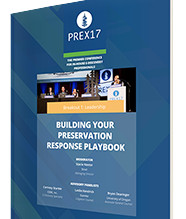
Zapproved has published “Building Your Preservation Responsive Playbook,” illustrating ways to adopt, monitor and document a preservation process that is litigation-ready.

The guide can be downloaded at no charge.

Providing insights in the publication are:

  • Cortney Starble, E-Discovery Specialist at CBRE, Inc.
  • Leslie Kendrick, Litigation Counsel at Daimler
  • Bryan Dearinger, Associate General Counsel at University of Oregon

The guide is intended to provide practical tips aimed at helping legal operations teams preserve relevant data, release legal holds and manage clear preservation workflows.

Download the guide.


Super Lawyer Boies Entangled in Intrigue Over Weinstein; Times Fires His Firm

Image by David ShankboneThe sexual-assault scandal that brought Harvey Weinstein’s career to an abrupt halt and started a national conversation about the treatment of women has led to scrutiny of tactics used by his former attorney, David Boies, one of America’s most-famous litigators, according to Bloomberg Big Law Business.

Boies hired private detectives who sought to identify accusers and undermine news coverage of their claims. Reporter Erik Larson writes that a primary target was the New York Times, which published an article in which the Hollywood producer was accused of raping an actress. At the same time, Boies’ firm, Boies Schiller Flexner LLP, was representing the Times in various legal matters, raising concerns about conflict of interest.

The newspaper fired the firm, and Boies admitted that he participated in the hiring of private investigators who targeted the Times‘ reporters.

Read the Bloomberg article.


JPMorgan Judge Upends $1.1 Million Whistle-Blower Verdict

A U.S. district judge says she saw prejudice in a jury’s verdict Tuesday that would have awarded $1.13 million in damages to a former JPMorgan Chase & Co. employee over her dismissal, according to Bloomberg.

The Manhattan jury deliberated for five hours to find the former wealth manager has been fired illegally. The jury awarded her $563,000 in back pay and $563,000 for emotional damage.

Reporter Bob Van Voris quoted Judge Denise Cote:

“The award of emotional damages says to me that the jury was prejudiced against the bank. That undermines the entire verdict.”

Read the Bloomberg article.


Jury Hits Hospital With $26M Med-Mal Verdict in Tragic Birth Case

Jurors took just eight hours to award a Brooklyn couple $26 million — double what they had sought — after overwhelmed medical residents at Maimonides Medical Center allegedly botched the birth of their twins, leaving one dead and the other deaf and mute, reports the New York Post.

Under a “high-low” agreement struck earlier by both sides, the plaintiffs agreed to receive a “high’’ of $7.5 million if they won their suit and a “low’’ of $1.5 million, even if they lost, according to reporter Julia Marsh.

In 2010, the expectant mother went to the hospital twice with cramping and spotting but was sent home by doctors-in-training, according to the lawsuit. When her twins daughters were born later, they weighed about 1.5 pounds each. A month later, one died from an infection, and the other is deaf and suffers from kidney failure.

Read the Post‘s article.


Can You Really Shut Down Your Company a Week After Your Workers Unionize?

American labor laws normally protect workers from retaliation for unionizing, but billionaire CEO Joe Ricketts seems to have used a dramatic exception when he closed his news websites after some workers voted to unionize: A business may always close its operations entirely.

Francie Diep, a reporter for the Pacific Standard, writes that all of the publcations’ offices — including those in San Francisco, Los Angeles, Chicago and Washington, which had not voted to unionize — are now closed.

“If lawyers decide to pursue a case charging that Ricketts acted illegally, they’ll have to prove that some part of the business is still operating — say, if Ricketts were tied to another media company somehow — or that, after the shutdown, Ricketts opened up a similar business elsewhere,” Diep writes.

Read the Pacific Standard article.


A Renewable-Energy Champion Is Suing His Scientific Critics

Stanford professor Mark Jacobson has sued a prominent energy researcher and the National Academy of Sciences for defamation over a sharply-worded rebuttal of his work, shifting a heated scientific debate over renewable energy out of the journals and into the courts, according to the MIT Technology Review.

The suit demands a retraction of a June paper in the Proceedings of the National Academy of Sciences.

“Jacobson seeks more than $10 million in damages from both the paper’s publisher and its lead author, Christopher Clack, who is chief executive of Vibrant Clean Energy and a former NOAA researcher,” according to the article.

Clack and 20 other researchers responded in a publication that Jacobson’s paper “contained modeling errors and implausible assumptions that could distort public policy and spending decisions.”

Read the article.


Defending Breach-of-Contract Claims in Data-Breach Litigation

A post on the What’s Fair? blog on the Ellis & Winters LLP website discusses a recent federal appellate decision that shows how data-breach lawsuits premised on overpayment theories — which often assert claims sounding in contract — still face an uphill battle.

Alex Pearce explains that the overpayment theory rests on the premise that the price of a product or service includes a payment for data security measures. He outlines the recent ruling in Kuhns v. Scottrade.

“In that decision—a boon for data-breach defendants—the Eighth Circuit employed a demanding test for the pleading of facts that give rise to an overpayment claim,” Pearce writes.

Read the article.


Tips For Drafting Employee Handbooks: Avoiding Breach of Contract Claims

A new post on Bryan Cave’s At Work blog explains how including certain language in an employee handbook may help an employer to defend breach of contract claims.

“To avoid breach of contract claims premised on employee handbook policies, employers should include an express contract disclaimer in their employee handbooks,” write Bill Wortel and Christy Phanthavong.

The article explains the “at will” clause, the use of a reservation of right by the employer to modify policies, and the need for the disclaimer to be conspicuous.

Read the article.


Enforcing Nursing Home Arbitration Agreements Post-Kindred

Liz Kramer, writing for Stinson Leonard Street’s Arbitration Nation, writes that a recent ruling for a state supreme court may be indicative of what litigation over nursing home arbitration agreements will look like after the U.S. Supreme Court’s ruling in Kindred Nursing Centers v. Clark.

Kramer, a partner in the firm, discusses the Wyoming Supreme Court’s reversal of a lower court’s ruling in an arbitration case. The lower court denied a nursing home’s motion to compel arbitration.

But the state’s high court reversed, following the U.S. Supreme Court’s Kindred ruling that another state’s rationale for not enforcing an arbitration agreement was preempted by the Federal Arbitration Act.

Read the article.


2017 In-House Benchmarking Report Just Released

Exterro has published its 40-page 2017 In-House Legal Benchmarking Report and made the report available for free downloading on its website.

This year’s report shows the areas of focus that corporate legal teams are homing in on in the hopes of gaining the kind of control that will bring efficiency: control over the process, both in-house and with third-party vendors; control over project management through the use of technology; control over data volumes and data types during preservation.

Some points about the report:

  • 40-page comprehensive report, which surveyed 85 in-house legal professionals
  • Key topics include how legal departments are allocating spend, techniques used to manage legal operations and much more…
  • Expert analysis by EDRM co-founder George Socha, on what he sees as the key takeaways from this report

Download the report.


Maximizing Impact of In-House Counsel Resources with Cloud-Based Matter Management

AdvoLogix will present a complimentary webinar designed to help participants learn strategies that legal teams today can employ to streamline matter intake, triage, prioritization, and assignment.

The webinar “Maximizing Impact of In-House Counsel Resources with Cloud-Based Matter Management” will be Wednesday, Nov. 15, 2017, 1-2 p.m Eastern time.

In-house legal teams today are hindered by the inability to embed unique legal workflows into commonly provided workplace tools, AdvoLogix says on its website. Highly paid individuals are spending too much time in email, phone calls, unproductive organizational meetings and manual document manipulation with lack of complete understanding of the impact of the work item to the business.

The webinar will cover how strategies give legal departments a clear understanding that the most critical legal issues are being worked in a priority sequence by the people with the right skills and availability. Presenters also will discuss tools that can automate workflow, informational intake, task assignment, document creation and more and also provide the metrics needed to provide insight into value delivered and effort expended by in-house counsel.

Register for the webinar.


Foley Looks to Texas, Mexico Markets with Gardere Merger Talks

Above the Law is reporting that Foley & Lardner is in merger talks with Texas firm Gardere Wynne Sewell.

“When you consider that Gardere just last month took on Bufete Hernández Romo, a Mexico City commercial arbitration and litigation boutique, it seems Foley might be very interested in moving into the hopping Texas and Mexico markets, both areas where the 19-office Foley has no presence today,” writes Joe Patrice.

The reporter points out that Foley has seen a couple of big-ticket merger attempts fail during the past few years.

Read the Above the Law article.


Billionaire CEO Shuts Down Publications After Vote to Unionize

The CEO of a group of digital local news sites shut down the publications a week after reporters and editors in the combined newsroom of DNAinfo and Gothamist voted to join a union, reports The New York Times.

Joe Ricketts, the billionaire founder of TD Ameritrade, owned the sites.

“For DNAinfo and Gothamist, the staff’s vote to join the Writers Guild of America East was just part of the decision to close the company, write Andy Newman and John Leland.

“The decision by the editorial team to unionize is simply another competitive obstacle making it harder for the business to be financially successful,” said  a spokeswoman for DNAinfo.

Read the NYT article.


Judge Rebukes Manafort’s Lawyer for Sidewalk Speech

Bloomberg Law reports that the judge overseeing Paul Manafort’s tax and money-laundering case in Washington had a stern warning for his lawyer: Stop with the sidewalk speeches.

“This is a criminal trial and not a public-relations campaign,” U.S. District Judge Amy Berman Jackson said at a hearing Thursday, according to reporters Andrew Harris and Tom Schoenberg.

The judge, threatening to impose a gag order, told the lawyers to do their “talking in the courtroom, and the pleadings, and not on the courthouse steps.”

Read the Bloomberg article.