Not So Fast: Limits of ‘Settlement Negotiation’ Protections

Padlock - contractIt’s far too simplistic to suggest that anything your company considers to be a “settlement negotiation” is going to be kept out of court, warns Joseph A. Schouten of Ward and Smith, P.A.

In an article on the firm’s website, he writes: “It’s important to understand the limits of the protections afforded to ‘settlement negotiations.’ Otherwise, your company may make a statement in what it believes to be a confidential ‘settlement negotiation’ only to have that statement used against it in court.”

In the article, he explores some of the common situations in which a company may fall into a trap if it doesn’t understand the rules regarding protections for settlement negotiations or communications.

Read the article.


Segway Competitor Rolls Away from Former CEO’s Attempt to Force Arbitration

Jason M. Knott of  Zuckerman Spaeder LLP describes a recent case in which  T3 Motion, Inc. (a Segway competitor) used a lack of mutual assent to avoid arbitration of its claims against its former CEO, William Tsumpes.

Writing in the firm’s Suits By Suits blog, Knot explains that it’s unusual for an employee to seek arbitration in a contract dispute.

“T3 wanted to litigate in court, and its former CEO, William Tsumpes, wanted to force T3 into arbitration. T3 had brought suit against Tsumpes and various corporate entities that it alleged were his alter egos, alleging that Tsumpes improperly took money from the company for his own personal use,” Knott writes.

Tsumpes presented a signed employment agreement that required arbitration, but T3 contested whether it had agreed to the written contract.

Read the article.


Two Burns Charest Lawyers to Lead Hurricane Harvey Flooding Class-Action Claims

The U.S. Court of Federal Claims has appointed two attorneys from the firm of Burns Charest LLP to lead proposed class-action claims arising from flooding in Houston that resulted from Hurricane Harvey.

Trial lawyers Daniel Charest and Larry Vincent of Burns Charest were appointed co-lead counsel, along with Charles Irvine of Irvine & Conner PLLC, to manage discovery and dispositive motions. Vincent was also appointed co-lead counsel for jurisdictional discovery and motions to dismiss.

The plaintiffs in the case are Houston homeowners whose properties were ravaged by floodwater releases from the Addicks and Barker reservoirs, which were designed for flood control.

During the massive rains that resulted from Hurricane Harvey, the Army Corps of Engineers performed controlled releases of floodwater from the reservoirs out of concern the dams would break. But the retention of flood water and subsequent releases inundated many neighborhoods, leading to hundreds of millions of dollars in damage both upstream and downstream of the reservoirs. The homeowners claim that by intentionally flooding the area, the government took their land without providing compensation in violation of the Fifth Amendment to the U.S. Constitution.

“Our clients suffered enormous damages as a result of the government’s design of the reservoirs and actions during Hurricane Harvey,” said Charest. “We are committed to helping the people of Houston receive just compensation.”

Burns Charest represents homeowners whose properties are in the flood zone upstream of the reservoirs. There are currently hundreds of upstream lawsuits pending before the U.S. Court of Federal Claims, but the attorneys estimate that number could eventually grow to more than 15,000. The court has laid out an aggressive schedule, with dispositive motions due by June 15, 2018.

“We are very pleased that the court recognizes the urgency in resolving these claims and the need to help residents who are desperate to move forward with plans to recover, rebuild or relocate,” said Charest.

Burns Charest has brought claims throughout the United States, and is currently leading the national class action litigation against EpiPen manufacturer Mylan, and against 3M Co., based on claims of defective dental crowns.

The Houston case is In re Addicks and Barker (Texas) Flood-Control Reservoirs, Master Docket No. 17-3000L, U.S. Court of Federal Claims.


Virtual Data Rooms for Litigation

Virtual data rooms have led to a paradigm shift in how communication between parties is done, according to Firmex, which provides a cloud-based solution for sharing large volumes of confidential documents. This online repository of information has been efficiently used by various enterprises and individuals to store their data and later to distribute it. Various providers have come up with their virtual data rooms which people can use to access multiple services.

One area where virtual data rooms are increasingly becoming popular is in litigation. Lawyers are taking advantage of this technology to be able to communicate not only with their clients but also counsel they work together with, experts and counsel on the opposing side. It has promoted due diligence.

Firmex provides the following information:

How is Virtual Data Rooms used in litigationBefore the invention of the virtual data room, litigators would use the conventional physical data room. However, the many shortcomings and technological advancement led to the invention of the virtual data rooms which are more efficient.

On a frequent basis, lawyers are involved in exchanging and sharing a lot of documents as that is the most used basis of communication. Therefore, it is unsurprising that there are many ways litigators use the virtual data rooms. Some of them include;

1. Communication in a class action lawsuit.
These types of lawsuits differ from the traditional suit in that in this kind; a plaintiff brings a matter before a court on behalf of a group or class of people who are absent from the court proceedings. You can only imagine the amount of documentation present in this type of case. It is a lot. However, with virtual data rooms storage and sharing of this documents has been made easy.

With this tool, people can be able to set up profiles which they can save their information or exchange information with everyone within that group. This way, instantaneous communication between the plaintiffs and counsels is achieved.

2. Sharing of documents following a subpoena request
When the opposing party acquires a subpoena for documents from the court, this might mean the counsels have to go searching for the documents. Also once they find them, they have to put them in order so that they are as per the subpoena.

When a firm uses virtual data room, the process will become relatively faster. Virtual data room tools will allow one to store documents. They can then be easily be retrieved or accessed when need be. Also, given that the subpoenas will be uploaded this tool, litigators can therefore easily copy and paste the required documents onto the subpoena.

3. Easy organization and derivability of documents
As much as having a proper filing system is good, it might not be easy to find use and share documents. For instance, if you want to analyze documented evidence with co-counsels or witnesses, it is easier when you have a virtual data roaming system. You can quickly go through all the documents without having to leave a mess.

What are some of the benefits of using virtual data room?

As already stated, it provides a more organized system through which attorneys can share and store documents with other people he is working with. Other than that, other benefits include;

• It is cost efficient
With virtual data rooms, there is less of everything which was inconveniencing. There will be fewer people working on documents and sharing also will not be a long process. This saves the firm a lot of money.

• Security
Virtual data rooms provide a safe digital tool to share information. Given there is the lawyer-client confidentiality, it is paramount to make sure that a client’s information does not get to unauthorized people. Systems such as emails can easily be hacked thus not the best way to share information. However, virtual data rooms have made security a top priority. They have measures such as multi-factor authentication and allowing users to be able to restrict the people who can access specific files.

• Convenience
Who said a counsel has to be at the office for them to be able to go through documents as they prepare their case? Virtual data rooms allow you to access information on the go regardless of where you are. The same convenience is seen in the ease to share information with colleagues.

To conclude, virtual data rooms have entirely changed how information is handled in litigation. It has resulted in a lot of ease and convenience. Choosing which virtual data room to go by might be hard. However, you should consider factors such as how good their security is, the different tools that come with and the costs involved. That will help you make the right decisions.



Orsinger, Nelson, Downing & Anderson Earns National Listing to Best Law Firms

For a second consecutive year, the family law boutique Orsinger, Nelson, Downing & Anderson, LLP, has earned both national and metropolitan Best Law Firms honors from U.S. News & World Report and The Best Lawyers in America for its family law, mediation and appellate practices.

This marks the ninth consecutive year the firm has been ranked among the top family law firms in Dallas-Fort Worth. The firm’s appellate practice earned its second national recognition.

“We take particular pride in earning this recognition, which speaks to the overall excellence of our firm and the individual attorneys, because it is rooted in both client and referring attorney feedback,” said firm partner Keith Nelson.

To be eligible for Best Law Firms rankings, a firm must have at least one lawyer listed in the previously released 2018 edition of The Best Lawyers in America. Orsinger, Nelson, Downing & Anderson has 10 attorneys honored by Best Law Firms.

Partners Richard R. Orsinger, Keith Nelson, R. Scott Downing, Jeffrey O. Anderson, William M. Reppeto III, Brad LaMorgese, Lon Loveless, Paula A. Bennett, and Amber Liddell Alwais and of counsel Marilea Lewis were honored individually for their work in Family Law. In addition, Mr. Orsinger and Mr. LaMorgese were honored for their work in Appellate Law, with Ms. Lewis recognized for her Mediation practice.

Final selection to the Best Law Firms list is based on client and attorney evaluations, along with peer review by lawyers within the same practice areas and editorial review. The full 2018 Best Law Firms list can be found at http://bestlawfirms.usnews.com/.


Day Pitney Earns Score of 100 Percent in 2018 Corporate Equality Index

Day Pitney announced that the firm has received a perfect score of 100 percent on the 2018 Corporate Equality Index (CEI), a national benchmarking survey and report on corporate policies and practices relating to LGBT workplace equality, administered by the Human Rights Campaign Foundation.

In a release, the firm announced that Day Pitney also received a perfect score on the index last year. With its 100 percent ranking for the second consecutive year, Day Pitney again earned the designation as a Best Place to Work for LGBT Equality by the foundation.

“Day Pitney is honored to be recognized as a leading supporter of the LGBT community. Through the efforts of the DP Alliance, the firms LGBT awareness group, the firm has become a tremendous supporter of LGBT initiatives internally and externally,” said Kathy Bowman-Williams, Director of Diversity and Inclusion at Day Pitney. “We will continue to look for opportunities as a firm to support the LGBT community.”

The 2018 CEI rated more than 1,000 businesses in the report, which evaluates LGBT-related policies and practices including non-discrimination workplace protections, spousal and partner medical benefits, transgender-inclusive health care benefits, competency programs and public engagement with the LGBT community. For more information on the 2018 Corporate Equality Index or to download a free copy of the report, please visit www.hrc.org/cei.


Bankruptcy Partner Gary Caris Joins Barnes & Thornburg in Los Angeles

Barnes & Thornburg LLP has added Gary Caris to its Los Angeles office as a partner in the Finance, Insolvency and Restructuring Department.

Caris focuses his practice on federal equity receivership, creditors’ representation in Chapter 11 proceedings and complex bankruptcy litigation. Caris has represented federal equity receivers in dozens of cases across the country brought by the Securities and Exchange Commission, Federal Trade Commission, Consumer Financial Protection Bureau, and Commodity Futures Trading Commission.

Caris’ experience includes assisting his receivership clients in pursing funds and other assets in connection with Ponzi schemes, deceptive marketing practices and other fraudulent business activities. He also represents financial institutions and other sophisticated businesses in Chapter 11 proceedings, bankruptcy litigation and commercial litigation matters.

“Gary is a talented litigator who has helped to recover tens of millions of dollars in money and other property for the benefit of receivership estates and his creditor clients,” said David Allen, managing partner of the firm’s Los Angeles office. “He’s a tremendous client advocate and is a valuable resource when assisting receivers and creditors.”

Caris is a current member and previously served on the board of the National Association of Federal Equity Receivers. He earned his J.D. from the University of California at Los Angeles and his B.A., summa cum laude, from California State University at Northridge. He joins the firm from Diamond McCarthy LLP.


Biglaw Firm Conducting Layoffs Among Partners, Counsel

Husch Blackwell has announced the firm is conducting layoffs among partners and counsel, reports Above the Law and the St. Louis Post-Dispatch.

No associates will be impacted by the cuts, sources tell the publications.

Greg Smith, the firm’s CEO, and Maurice Watson, the chairman, issues a statement:

“With retirements and other year-end transitions, approximately 40 attorneys, all partners or counsels, are expected to leave the firm. Such departures are offset, in part, by new attorney hires throughout the year, and our firm had a net increase of 12 attorneys for the 12-month period ending October 31, 2017. Given our firm’s size and scale, these attorney transitions are expected and normal.”

Read the Above the Law article.


FCC Plan Would Give Internet Providers Power to Choose the Sites Customers See and Use

The Washington Post reports that federal regulators unveiled a plan Tuesday that would give Internet providers broad powers to determine what websites and online services their customers can see and use, and at what cost.

Next month the Federal Communications Commission will vote on the proposal that could reshape the entire digital ecosystem: the undoing of the government’s net neutrality rules.

Reporter Brian Fung explains that Tuesday’s move hands a win to broadband companies such as AT&T, Verizon and Comcast.

“The FCC’s proposal is largely opposed by Internet companies such as Google, which said Tuesday that the net neutrality rules help protect an open Internet,” Fung writes

Read the Post‘s report.


AT&T Counsel, an Ex-Trump Attorney, Calls DOJ’s Suit on Time Warner Deal ‘Fake Antitrust’

“There is no credible evidence” that AT&T’s proposed $85.4 billion acquisition of media powerhouse Time Warner poses any threat to industry competition or consumer prices, AT&T attorney Dan Petrocelli told CNBC on Tuesday.

Petrocelli is the lead outside counsel for AT&T in the case, in which the Department of Justice has sued to block the deal.

He cited increasing competition for television and video distribution and content as a reason not to block the proposed merger, writes reporter Matthew J. Belvedere.

“Earlier this month, reports circulated that the government had demanded AT&T sell its DirectTV unit or Time Warner’s Turner Broadcasting, operator of the CNN, as a condition of approval,” Belvedere explains. “However, the government had pushed back at those reports, and AT&T said it had no intention of selling CNN.”

Read the CNBC report.


Estes Thorne & Carr Partners Recognized With 2018 Honors

Five partners in Estes Thorne & Carr, as well as the firm itself, have received recognition from lawyer rating publications, including The Best Lawyers in America and Super Lawyers.

Receiving Best Lawyers honors are Dawn Estes, Jessica Thorne, Lori Carr and Carol Payne. They were selected for the awards by their peers in the profession.

All three, as well as partner Linda Moore, also were named Super Lawyers, a rating service of lawyers from more than 70 practice areas who have attained a high-degree of peer recognition and professional achievement. This selection process includes independent research, peer nominations and peer evaluations.

And the firm was recognized by U.S. News & World Report in its Best Law Firms list for 2018.

Read more about the partners.


Trump Adds Five Names to List of Potential Supreme Court Justices

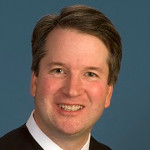
Judge Brett Kavanaugh

President Trump has added five names to his list of potential Supreme Court justices in a move that precedes the possible, but still unannounced, retirement of Associate Justice Anthony Kennedy, reports USA Today.

Reporters Richard Wolf and Gregory Korte write that the biggest new name was that of Brett Kavanaugh, a judge on the powerful U.S. Court of Appeals for the District of Columbia Circuit.

“Like Justice Neil Gorsuch of Colorado, who was confirmed to the high court in April, Kavanaugh is a conservative who once clerked for the more moderate Kennedy,” they write. “When Trump selected Gorsuch for the late Justice Antonin Scalia’s empty seat, it was viewed as a move that might entice Kennedy, 81, to step down.”

Read the USA Today article.


Now That FERC Is Back In Action, Will It Keep Pace With States on Energy Storage?

While the Federal Energy Regulatory Commission continues its investigation of the notice of proposed rulemaking on deployment of energy storage, state mandates and incentives will likely unfold ahead of federal rules moving toward a more organized market for energy storage, according to a post by Morgan, Lewis & Bockius.

Levi McAllister and Brooke E. McGlinn write:

State action is robust, and state regulatory authorities are routinely emerging as thought leaders in energy storage initiatives. As a result of these initiatives, storage developments continue and electric utilities pursue storage resource procurements. Such procurements raise a host of issues and considerations with which electric utilities must grapple, and those issues could be addressed (in part, at least) through federal action that is uniformly applicable. Nevertheless, FERC action in energy storage remains largely absent.

Read the article.


Enforce Arbitration Agreement or Waive Right to Arbitrate Trade Secret Misappropriation Claims

ArbitrationA recent federal court denied an employer’s motion to compel arbitration, finding that it waived its right to arbitration by engaging in litigation.

George L. Kanabe, a partner in the San Francisco office of Orrick, Herrington & Sutcliffe LLP, discusses three key lessons the ruling provides for plaintiff-employers.

Kanabe reports that the ruling noted, “[t]here is no other reasonable interpretation of plaintiff’s untimely demand for arbitration than as a deliberate tactic to test the judicial waters but then, when those waters did not flow the direction plaintiff intended, to change routes in hopes of finding a different current.”

Read the article.


Keys to Negotiating Indemnity Agreements

The effective management of indemnification and related insurance obligations is an active agenda item for top-level business leaders, including any CFO, CEO and general counsel, points out James Buldas in an article on the website of Business Insurance.

“It is, therefore, imperative, whether you are a Fortune 500 company or a small business, that your company’s risk management and legal departments strategically manage indemnification and insurance obligations to minimize the always increasing cost-of-business demands,” writes Buldas, a partner at Pietragallo Gordon Alfano Bosick & Raspanti L.L.P. in Pittsburgh.

His article covers the language of the indemnity agreeement, selecting the governing law, specificity in insurance obligations, requesting the appropriate additional insured endorsement, and communication between legal and risk management departments and brokers.

Read the article.


3 Practical Business Contract Tips From Travelzoo GC Rachel Barnett

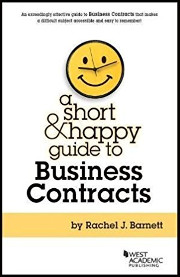
Rachel Barnett, general counsel of travel deal publisher Travelzoo, is the author of a new book, “The Short & Happy Guide to Business Contracts,” which modernizes contract law and applies legal concepts to the real corporate world.

In an article on Above the Law’s website by Olga V. Mack, Barnett discussed three of the most important clauses readers can learn from her book.

Those include “The ‘gotcha’ moment: non-solicitation clauses,” “The one to watch: termination clauses,” and “The messy edit: mutual indemnification clauses.”

Read the article.


How to Build a Solid Contractual Risk-Transfer Program

Liability risk managementThe use of subcontractors helps to ensure construction projects are completed in a timely and efficient manner, but it also creates a wide range of contractual risks, cautions Tommy Williams, USI Uniondale vice president, in an article for Property Casualty 3600.

“Without a properly structured risk-transfer program, a general contractor (GC), owner or property manager would assume financial responsibility unnecessarily for losses caused by a third party, who is contractually obligated to control or prevent those losses. The financial impact could be significant — more so in certain jurisdictions,” he explains.

His article discusses the basics of contractual risk transfer, common subcontractor policy exclusions, and the need for expert advice.

Read the article.


How Boards Must Think Differently in Today’s Digital Landscape

board of directors - conference tableThe evolving digital landscape continues to challenge many sitting directors with the various transformation and security issues it presents, according to Boardroom Resources. Boardroom discussions can no longer ignore the rise of the digital consumer, which has begun to affect industries far beyond just retail or business-to-consumer. These challenges are accompanied by many opportunities for directors to improve board and company performance.

In a video, Alex Schmelkin, board member with Essendant and founder & CEO of Cake & Arrow, is given an interesting task: If you could design a digital training program for today’s board members, what would it look like? Host TK Kerstetter asks Schmelkin how he would both define ‘digital’ and communicate its current and future impact for today’s directors.

In the video discussion, Schmelkin outlines several approaches that boards can take to better understand the “end user” no matter the organization or industry.

Watch the video.


A Primer on Deal Structure and Its Implications on the Sale of a Business

The success of the sale of a business often hinges on the chosen form and exit strategy, writes Jeremy S. Piccini of Bertone Piccini LLP in an article on the website of NJBiz.

The benefits of pursuing one strategy over another vary depending on the goals of the business owner, but some of the most important factors of each include tax consequences, third-party costs, and the degree of autonomy that the seller has over the future of their business, Piccini explains.

He discusses a few examples of the ideal target purchasers for a sale, including strategic competitors, private equity buyers, and employee stock ownership plans.

Read the article.


Apple’s New GC Welcomed With Multimillion-Dollar Bonus Package

Apple’s incoming chief lawyer Katherine Adams has received a bonus package in the form of restricted stock units, or RSUs, according to a mandatory disclosure filed with the U.S. Securities and Exchange Commission this week, reports Mac Rumors.

“Based on Apple’s closing price of $169.08 on Wednesday, each portion of 57,482 RSUs is worth slightly over $9.7 million for a potential total value of $19.4 million,” writes Joe Rossignol. “The amount could be higher or lower based on Apple’s performance.”

Adams, formerly senior vice president and general counsel of Honeywell, is Apple’s new general counsel and senior vice president of Legal and Global Security, reporting to CEO Tim Cook and serving on Apple’s executive team.

Read the Mac Rumors article.