Jeffrey Rasansky Makes Lawdragon 500 List of Leading Plaintiff Consumer Lawyers

Trial lawyer Jeffrey Rasansky of Rasansky Law Firm in Dallas has been recognized as one of the 500 Leading Plaintiff Consumer Lawyers in the country for 2019 by the legal media guide Lawdragon.

Each year, the Lawdragon 500 guide honors the best of the U.S. plaintiff bar.

In a release, the firm said Rasansky has represented victims of vehicle crashes; medical malpractice, including children who have suffered catastrophic birth injuries; defective products; and nursing home neglect.

“It’s an honor to be among this esteemed group of plaintiff consumer lawyers,” said Rasansky. “Our whole team works hard every day to deliver an unmatched level of personal attention to holding accountable those responsible for our clients’ pain and suffering. Doing what is right for them is what drives my passion for the law.”

Lawdragon 500 Leading Plaintiff Consumer Lawyers’ list is developed by researching top verdicts and settlements and through interviews conducted with other attorneys nationwide. These lawyers recommend those peers who they admire and would hire in a personal legal matter.


ICE Affidavit Says Plant ‘Knowlingly’ Hired Illegal Workers — No Charges for Company

The company that was the target in a sweep of workers allegedly living in the country illegally had a history of “knowingly hiring and employing illegal aliens,”  according to allegations in an unsealed affidavit for a federal search warrant.

The Chicago Tribune reports that “Six of seven Mississippi chicken processing plants raided were ‘willfully and unlawfully’ employing people who lacked authorization to work in the United States, including workers wearing electronic monitoring bracelets at work for previous immigration violations, the affidavit alleges.”

The sworn statements supported the search warrants that led a judge to authorize the raids, and aren’t official charges.

A spokesman for the company, Koch Foods, denied that the company knowingly or willfully employed any unauthorized workers at its Morton, Miss., plant.

Read the Chicago Tribune article.


Business Lobby Prods 9th Circuit to Revisit Decision Curbing Consumer Arbitration

The U.S. Chamber of Commerce and other business and employer groups have just submitted amicus briefs calling on the 9th Circuit to reconsider decisions that, in the views of these amici, eviscerate mandatory arbitration provisions, writes Alison Frankel in a Reuters report.

The briefs come in the wake of the 9th Circuit’s June 28 rulings in which plaintiffs claimed they couldn’t be forced into arbitration because they sought injunctions against corporate defendants.

The court found that because California’s policy of allowing consumers to pursue public injunctions does not specifically obstruct arbitration, it’s not precluded by the Federal Arbitration Act.

Read the Reuters article.


Texas Lawyer Charged in Vast Criminal Conspiracy Case

Image: Houston Police Department

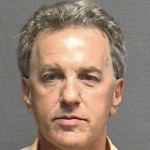
A prominent Bellaire, Texas lawyer with a history in the criminal spotlight and four others were charged in a vast criminal conspiracy case involving allegations of tax evasion, witness tampering and obstruction of justice, and accusing them of barratry, or “ambulance chasing,” and unlawfully soliciting clients through recruiters, reports the Houston Chronicle.

Prosecutors say Jeffrey Stern, founding partner of a personal injury firm, led the scheme. Stern faces prosecution along with two personal injury lawyers, a legal aide and a clinic owner, writes the Chronicle‘s Gabrielle Banks.

He is charged with conspiring to defraud the government, willfully filing multiple false tax returns and aiding in the preparation of those returns.

Read the Chronicle article.


Ethics Beyond Compliance: Diversity & Inclusion Master Class

On Tuesday, Sept. 10, 2019, NAVEX Global will host a complimentary Master Class consisting of webinars discussing the topic of diversity and inclusion.

Most compliance professionals know it’s important to highlight “diversity and inclusion” when discussing corporate priorities with your board, executives and employees, NAVEX says on its website. But how do you really move the needle from making talking points to cultivating a truly diverse and inclusive workplace where employees feel a sense of belonging and value?

Attend this class to hear:

  • Foundations for an Effective Diversity & Inclusion Program
  • Going Beyond Ideology to Achieve Impact with Diversity & Inclusion
  • Live Q&A with Instructors

Register for the webinars.


LIBOR Phase-Out: Considerations for Oil & Gas Companies

By Shane Randolph and Jeff Nicholson
Opportune LLP

With over $370 trillion of global financial contracts referencing LIBOR (London Inter-bank Offered Rate), many oil and gas companies are curious about how the phase-out of LIBOR by 2021 could impact their organization. Many companies are beginning to ask how this transition will impact their organization and what steps can be taken now. The following is a discussion of:

• why LIBOR is being phased out;
• the transition plan for the phase-out;
• items companies should consider; and
• the steps that can be taken now.

Why is LIBOR Being Phased Out?
LIBOR has been the default local and international benchmark interest rate for a diverse range of financial products for decades. The rate is based on various banks’ proprietary observations rather than robust market transactions. This has left the rate vulnerable to manipulation and major rate-fixing scandals came to light starting in 2007. As a result, the U.K.’s Financial Conduct Authority (FCA) decided that it will no longer compel banks to submit LIBOR estimates by the end of 2021.

What is the Transition Plan?
As a response to the issue in the U.S., the U.S. Federal Reserve Board (the “Fed”) convened the Alternative Reference Rates Committee (ARRC) in 2014 to establish a viable alternative to the U.S. dollar LIBOR. The ARRC determined in 2017 that the overnight indexed swap (OIS) rate based on the Secured Overnight Financing Rate (SOFR), a broad treasury repurchase agreement financing rate used when banks borrow or loan treasuries overnight, would be its preferred alternative reference rate. Accordingly, the Fed began publishing the SOFR daily rate on April 3, 2018 to prepare for its use as a benchmark rate.

The current transition timeline proposed by AARC has SOFR being the primary replacement for LIBOR in the U.S. by the end of 2021. The table below shows the ARRC’s anticipated completion dates and milestones to be achieved by those dates.

There are concerns about utilizing SOFR as a benchmark rate, and it will take time for enough liquidity to develop in the SOFR market to alleviate concerns regarding its viability as a benchmark. One issue is that SOFR is a spot rate from the median of overnight transactions, and it is likely to vary materially from day-to-day. Another issue is that SOFR has only a one-day tenor, whereas LIBOR has many different tenors.

What Should Companies Consider?
Companies should inventory all agreements that reference LIBOR. Also, when executing new agreements, management should carefully consider language addressing alternative or fallback rates if LIBOR is unable to be determined. If contracts are not amended to include alternative rates or fallback provisions in the absence of LIBOR before the relevant LIBOR index is discontinued, it could cause settlement issues or render contracts invalid.

From an accounting and financial reporting standpoint, the impact could be substantial. The primary areas affected include hedge accounting and accounting for debt modifications. In addition, discount rates for impairment testing, lease accounting, asset retirement obligations and fair value estimates will need to be assessed. Fortunately, both the U.S. and international accounting regulatory bodies, FASB and IASB, appear to be aligned and will provide significant relief for the transition, particularly in the areas of hedge accounting and debt modifications. As of now, the actions by the FASB and IASB are tentative proposals, but additional guidance should be provided by the end of 2019.

What Steps Can Be Taken Now?
At this stage in the process, companies should increase organizational awareness, carefully monitor the execution of new agreements referencing LIBOR and create an inventory of existing agreements and valuation models.

Increasing organizational awareness will be key for the transition away from LIBOR. While some may be aware of the impending LIBOR replacement, there may be a lack of appreciation of how broadly the event will impact the organization beyond hedging and debt activities. Increasing awareness throughout the organization will also assist in monitoring the execution of new agreements referencing LIBOR.

In summary, the replacement of LIBOR will have a significant impact globally. Oil and gas companies are encouraged to consider the impact to their organization and take steps to assess existing agreements and carefully monitor the execution of new agreements.

As a Managing Director at Opportune, Shane Randolph assists companies and financial institutions throughout North America, South America, Europe and Asia-Pacific in their understanding of what is possible as they deal with the challenges of implementing risk management programs and highly technical accounting pronouncements. He oversees the risk management, derivatives, stock-based compensation and complex securities service offerings of Opportune. He assists clients with the entire risk management life cycle, including strategy, execution, compliance, valuation and hedge accounting. He has undergraduate and graduate degrees in accounting from Oklahoma State University. He also is a member of the American Institute of Certified Public Accountants and maintains a Series 3 Securities License.

Jeff Nicholson is a Senior Consultant in the complex securities, hedging and stock-based compensation practice of Opportune LLP. He holds a Bachelor’s degree in Business Administration and Management from the University of Colorado, Boulder and a Graduate degree in Finance from the University of Colorado, Denver.



Perkins Coie Adds Environmental and Natural Resources Partner Thomas Jensen

Environmental and natural resources law attorney Thomas Jensen has joined Perkins Coie’s Washington, D.C. office as a partner in the Environment, Energy & Resources (EER) practice.

In a release, the firm said Jensen has experience providing project development, permitting and regulatory counsel, and litigation support to diverse clients, including utilities, energy companies, natural resource companies and pipeline operators. He also has worked on the environmental review and multi-jurisdictional permitting required for the development of large infrastructure projects

Prior to entering private practice, Jensen served as majority counsel to the U.S. Senate Committee on Energy and Natural Resources, and as associate director for Natural Resources at the White House Council on Environmental Quality.

Jensen joins Perkins Coie from Holland & Hart LLP. He earned his J.D. from the Northwestern School of Law at Lewis & Clark College and a B.A. in History from the University of Southern California.


Stroock Adds Litigation Partner James Serritella

James R. Serritella, a commercial litigator whose practice focuses on disputes in the financial services, bankruptcy and insurance sectors, has joined Stroock as a partner in its New York office.

In a release, the firm said the addition marks Stroock’s 10th lateral partner hire in the past 12 months. Serritella is the third litigation partner in this group, following the addition of Joshua Sohn in August and Jennifer Recine in March.

The firm said Serritella has defended against billions of dollars in claims related to residential mortgage-backed securities, redemptions in funds linked to Bernie Madoff, and various other matters involving financial services. He has also litigated and counseled clients on insurance coverage issues in connection with various types of policies, including professional liability, directors and officers liability, employment practices liability, and cybersecurity.


The Best Law Schools in the World

The law school of Harvard University tops the list of best law schools in the world, as ranked by the Quacquarelli Symonds team at Top Universities.

Six of the top 10 law schools are in the United States: Harvard, Yale, Stanford, UC Berkeley, Columbia and New York University.

Above the Law takes a deeper dive into the list:

“Farther down the list, but still within the top 25 law schools in the world, you’ll see Chicago (#11), Georgetown (#17), and UCLA (#23 in the world, yet not in the U.S. News T14). Going deeper into the list, but still within the top 50 law schools in the world, you’ll find Michigan (#27), Penn (#30), Duke (#33), Cornell (#35), and Northwestern (#50).”

Read the article.


Feds Say East Coast Lawyer Used His Learjet to Ship Pot, Hash Oil Across the Country

Marijuana - CanabisFederal prosecutors in Sacramento have charged an East Coast attorney with conspiracy to possess and distribute marijuana and hashish oil, alleging that he used his personal Learjet since last summer to fly the drugs around the country, reports The Sacremento Bee.

Manish Patel, an attorney licensed in New York and New Jersey, is named in a criminal complaint unsealed Thursday morning in federal court, according to the Bee‘s Sam Stanton.

The El Dorado County District Attorney accused Patel of flying marijuana and cannabis oil into California and other locales since at least August 2018, using a $345,000 Learjet he purchased mostly with cash.

Read the Sacremento Bee article.


Water: The Hot Commodity in the Permian and Elsewhere

Oilwell-gas-frackingCharles Sartain of Gray Reed & McGraw summarizes in a blog post the takeaways from a recent presentation two of the firm’s lawyers made recently on the use, control and ownership of water in oil and gas operations.

“Groundwater is privately owned by the owner of the surface estate,” he explains. “As with oil and gas, it is subject to the rule of capture. Landowners’ requests that the rule be modified in favor of the ‘rule of reasonable use’ have been rejected by the Texas Supreme Court.”

The post discusses the questions around ownership of produced water in the oil patch.

Read the article.


Third-Party Contract Due Diligence in Outsourcing Agreements

For the company that is outsourcing part of its business functions to a third party, reviewing existing third-party contracts for certain key terms is an important part of the outsourcing process, points out Morgan Lewis in a blog post.

Authors Barbara Murphy and Kevin P. Dermody discuss typical terms to focus on when reviewing the third-party contracts: contract expiration date/auto renewal provisions, third-party use rights and restrictions, assignment provisions, pre-paid expenses/annual fees, and termination rights/fees.

Read the article.


Private Equity: The Little-Regarded Confidentiality Agreement

Nothing is more basic to private equity deal making than shielding the private equity firm and its funds from liability for the obligations of the fund’s affiliated acquisition vehicles and portfolio companies; and this certainly includes liabilities for breach of an NDA, points out Glenn D. West in the Weil, Gotshal & Manges Global Private Equity Watch blog.

The article discusses a case that distinguishes between affiliates entitled by the non-disclosure agreement that are entitled to receive confidential information and affiliates actually bound by the agreement.

Read the article.


Ambiguous Limitation-of-Liability Clause Did Not Clearly Restrict Owner’s Claims

A Mississippi federal court denied a defendant’s motion for partial summary judgment in connection with a limitation-of-liability clause, according to a post on the Constructlaw blog of Pepper Hamilton.

Anthony Finzio writes that the Court also denied the defendant’s motion for reconsideration, concluding that the defendant had not carried its burden as the movant of demonstrating that the limitation-of-liability clause limited the plaintiff’s rights as a matter of law.

The case is DAK Americas Mississippi, Inc. v. Jedson Engineering, Inc. et al.

Read the article.


Uber GC Reveals How the CEO Persuaded Him to Join the Company He’d Said He Would Avoid

Image by Elliott Brown

Two years ago, Tony West, then the general counsel for Pepsi, took a look at a newspaper exposé about Uber and told a colleague: “Man, I’m glad I’m not the GC of that company, they’ve got some real problems.”

Business Insider tells how West came to become the top lawyer at the once-troubled company.

A few months after West saw the exposé, Dara Khosrowshahi, who had recently taken over the helm of Uber following the ousting of founder Travis Kalanick, pitched West, a former federal prosecutor, on the idea of joining Uber.

“I left that meeting in a very different mind space, in terms of both thinking about what an incredible opportunity this was, and clearly the challenges the company was facing at that time, which really fit my resume,” he said.

Read the Business Insider article.


Fears Nachawati Co-Founders Honored Among Top Attorneys in the Country

Trial attorneys Bryan Fears and Majed Nachawati, co-founding partners of Fears Nachawati Law Firm, have earned selection to the 2020 edition of The Best Lawyers in America.

Fears was selected for work involving bankruptcy and creditor debtor rights/insolvency and reorganization law. Nachawati was recognized for his work on behalf of plaintiffs in personal injury litigation. It is the first Best Lawyers listing for each.

In a release, the firm said Fears has expanded his practice to focus on mass torts involving water contamination by PFOA and PFOS chemical compounds.

Nachawati represents individuals, businesses and public and private entities in mass torts and other high-stakes litigation, including state, city and county representation against opioid manufacturers, distributors, and retailers. He is a member of the State Bar of Texas Professionalism Committee, Dallas Bar Association’s Legal Ethics Committee, the Public Justice Board of Directors, the Texas Trial Lawyers Association Board of Directors, and is a Leader’s Forum member of the American Association for Justice.


Bailey Brauer Co-Founders Recognized by Best Lawyers in America

Dallas litigation boutique Bailey Brauer co-founders Clayton Bailey and Alex Brauer have earned selection to the 2020 edition of The Best Lawyers in America based on their commercial litigation work. Bailey earned additional recognition for his appellate practice from Best Lawyers, one of the most respected U.S.-based attorney guides.

In a release, the firm said Bailey is nationally known for his trial and appellate practice in complex tort and other commercial cases in federal and state courts. He has been honored as one of The National Trial Lawyers’ Top 100 Texas Civil Plaintiff Lawyers. He represents clients in corporate litigation as well as in putative class actions and mass action lawsuits. Bailey also contributed significant expertise to sections of the ABA’s recently released Agriculture and Food Handbook.

The firm said Brauer represents companies and high net worth individuals involved in high-stakes business litigation across a wide range of industries. He focuses on disputes involving claims of fraud, tortious interference, breach of contract, breach of fiduciary duty, conspiracy, deceptive trade practices, trade secret theft, RICO, and antitrust violations. Brauer has successfully defended clients facing class and collective actions and represented plaintiffs and defendants in complex tort and negligence cases.

The profession’s oldest U.S. peer-review guide, The Best Lawyers in America is also among the most respected. Selection is based on confidential evaluations by attorneys in the same practice area and from the same geographic region.

In addition to The Best Lawyers in America, the firm and its individual lawyers have earned honors from BTI Consulting Group, Benchmark Litigation, Chambers USA, the National Law Journal, Texas Super Lawyers and D Magazine since the firm opened in 2013.


Documents: Mississippi Plant Owners ‘Willfully’ Used Ineligible Workers

The Associated Press is reporting that sworn statements supporting search warrants allege that six of seven Mississippi chicken processing plants raided last week were “willfully and unlawfully” employing people who lacked authorization to work in the United States.

Some of the workers were wearing electronic monitoring bracelets at work for previous immigration violations, according to unsealed court documents.

“The statements unsealed Thursday allege that managers at two processing plants owned by the same Chinese man actively participated in fraud,” writes the AP’s Jeff Amy. “They also show that supervisors at other plants at least turned a blind eye to evidence strongly suggesting job applicants were using fraudulent documents and bogus Social Security numbers.”

Read the AP article.


Whistleblower Alleges General Electric Shielding Losses: ‘Bigger Fraud Than Enron’

A Madoff whistleblower accused General Electric of using accounting tricks to mask the extent of its financial problems and called it “a bigger fraud than Enron,” reports The Washington Post.

“Harry Markopolos, who alerted regulators about Bernie Madoff, published a report Thursday that said GE’s accounting irregularities added up to $38 billion,” writes the Post‘s Jonelle Marte. “The investigator, who is collaborating with a hedge fund that wasn’t named, says GE understated its costs and liabilities and misled investors in its financial statements.”

GE chief executive Lawrence Culp responded that the allegation is “market manipulation — pure and simple.” He also said Markopolos never talked to company officials about his allegations.

Read the Post article.


Ten Farrell Fritz Attorneys Named to The Best Lawyers in America 2020

Farrell Fritz announced that 10 attorneys were selected by their peers for inclusion in The Best Lawyers in America 2020.

The attorneys and the fields in which they are being recognized are: Martin (Marty) G. Bunin (Bankruptcy and Creditor Debtor Rights/Insolvency and Reorganization Law and Litigation – Bankruptcy); John (Jack) Barnosky and Ilene Sherwyn Cooper (Litigation – Trusts & Estates and Trusts & Estates); Brian Corrigan, John R. Morken and Eric W. Penzer (Litigation – Trusts & Estates); Domenique Camacho Moran (Employment Law – Management); Jason S. Samuels (Litigation – Construction); Robert E. Sandler (Real Estate Law); Charles M. Strain (Health Care Law).

Jack Barnosky and Robert Sandler received the “Lawyer of the Year” award for Long Island. This recognition is awarded to individual attorneys with the highest overall peer-feedback for a specific practice area and geographic location.

Best Lawyers is the oldest and most respected peer review publication in the legal profession, the firm said in a release. A listing in Best Lawyers© is widely regarded by legal professionals as a significant honor, conferred on a lawyer by his or her peers.