Webinar: Market Uncertainty: ROI, Cost Savings & Technology

Join us for the second live webinar in our Lean Into LegalOps virtual program. This webinar will highlight practical ways for legal departments to create meaningful cost savings to strengthen and sustain their companies through these times.

Register to hear the discussion about critical questions like:
• If your legal department had to quickly find 10% savings, where could it come from?
• What process improvements can be made quickly to generate not just efficiency but also savings?
• How can you optimize existing technology or quickly implement new tools to drive savings and achieve rapid ROI?

Register here.


A General Counsel’s Tips for Integrating Post-Merger

“In 2017, Mid-America Apartment Communities Executive Vice President and General Counsel Rob Del Priore was tasked with leading the post-merger integration of his company and Post Properties, Inc. The merger made Memphis-based Mid-America the largest publicly-traded apartment real estate investment trust in the US, with an ownership interest in over 100,000 apartment homes in 17 states. In addition to the various legal issues involved in the merger, Del Priore considered the integration of the two companies’ people very carefully. In order for the merger to be truly successful and the transition to go smoothly, Del Priore knew he needed buy-in from nearly everyone. To get that support and effectively integrate the two teams, he focused on three things – communication, planning and follow through,” writes Mark P. Henriques in Womble Bond Dickinson’s Articles and Briefings.

“Communication is at the top of the list,” Del Priore said. “It’s critical to encourage candid and open communication between both parties from the beginning of the merger.”

“He emphasizes the importance of developing trust – cultivating an environment for open dialogue between the management teams of the combining companies.”

Read the article.


Foundry Employees’ Action is a “Mass Action” Subject to Removal Under the Class Action Fairness Act

“The Eleventh Circuit has clarified the scope of the ‘local event exception’ to the federal-court jurisdiction over ‘mass actions’ conferred by the Class Action Fairness Act (“CAFA”), holding that claims by former foundry employees against manufacturers and distributors of products used at the foundry are not within the exception,” posted Valerie Sanders in Eversheds Sutherland’s 11 Circuit Business Blog.

“The plaintiffs in the case are 230 former workers at a now-closed Alabama foundry.  They worked in different jobs at different times, but all claim that they were harmed by exposure to hazardous chemicals during their employment.  The defendants are unrelated companies that manufactured (and in some cases distributed) chemical products used at the foundry, including sands, resins, gases, and other substances of various formulations.  The plaintiffs’ complaint, originally filed in state court, includes several claims, all arising from the allegation that the ‘normal and foreseeable’ use of the defendants’ products at the foundry caused the ‘formation and release of hazardous and carcinogenic chemical substances,’ which harmed them.”

Read the article.


Keep Learning While Your Case Is in Limbo: Seven Ways to Use the Pause

“One after another, like dominos, court systems are shutting down or moving to drastic restrictions. In the process, court dates are being pulled and cases are moving into limbo. As that happens to your own once trial-bound cases, you think, ‘What now?’ What do you do with the time that you now unexpectedly have as your case is put on pause?” asks Dr. Ken Broda-Bahm in Persuasive Litigator.

“Clients will often issue a ‘Stop work’ notice, thinking, ‘Let’s put a pin in it, package everything so it’s fresh, then revisit the situation down the road, closer to the new date.’ Limiting the expenses is, of course, a worthwhile goal, particularly now that the economy is moving into limbo as well. But sometimes, the decision to call an abrupt and complete halt can be more penny-wise than actually wise. When a pause is created, not just by the current Coronavirus measures, but by any delay or uncertainty over a court date, that pause can be an opportunity.”

In this post, Dr. Broda-Bahm shares seven ideas on how to make the best use of an unexpected delay.

Read the article.


The Privatization of the Fourth Amendment?

“This year may prove to be one in which the concepts of privacy vis-à-vis the government and private concerns may converge,” warns Dante A. Stella in Dykema’s The Firewall.

“In 2018, the United States Supreme Court ruled in Carpenter v. United States, 138 S. Ct. 2206 (2018), that individuals have an expectation of privacy in cell-tower locations, and consequently, the government must obtain a warrant to retrieve that location data from a carrier. The 5-4 decision held that cell tower data is subject to Fourth Amendment protections because it implicates an individual’s “legitimate expectation of privacy in the record of his physical movements.” The Court also noted that the data is “detailed, encyclopedic, and effortlessly compiled,” id. at 2216, and that functioning in modern society does not allow people to simply opt-out of using mobile devices…”

Read the article.


Beth Gould Joins Freeborn’s Richmond Office as Associate in the Litigation Practice Group and Insurance/Reinsurance Industry Team

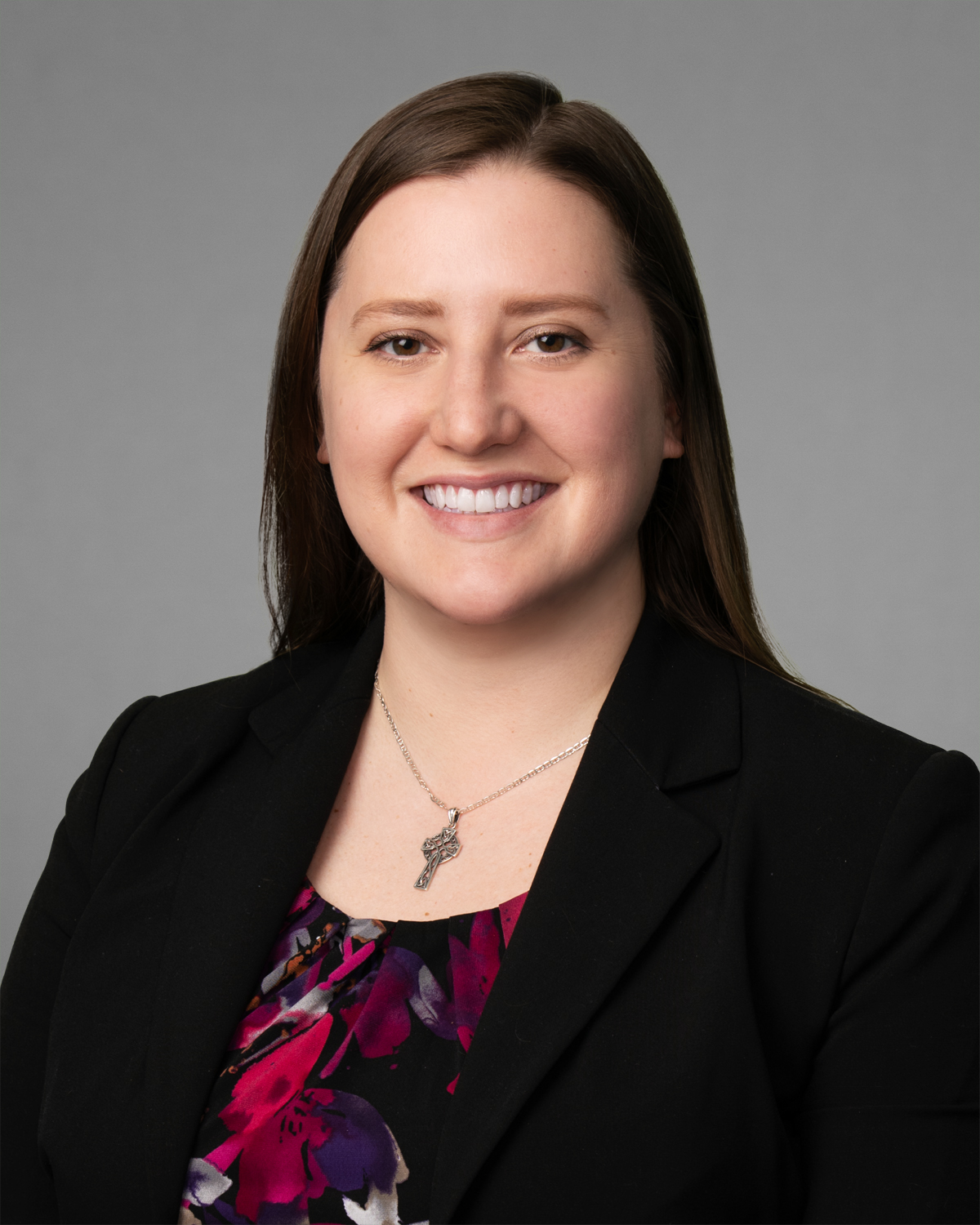
Beth Gould

GittingsLegal – NE72568

Freeborn & Peters LLP is pleased to announce that Beth Gould has joined the Firm as an Associate in the Litigation Practice Group and a member of the Insurance/Reinsurance Industry team.

We are very pleased to welcome Beth to Freeborn as an attorney in the Richmond office,” said Theodore I. Brenner, the Firm’s Richmond Office Managing Partner. “We believe Beth’s background and extensive trial experience will be a valuable asset to our acclaimed Litigation Practice Group and Insurance/Reinsurance team.”

Prior to joining the firm, Ms. Gould was an Associate at Kalbaugh, Pfund & Messersmith, P.C. She focuses her practice on insurance defense for personal lines, trucking, commercial general liability, and restaurants and retail. Ms. Gould has vast trial experience, working in partnership with her clients to craft a litigation strategy in order to ensure their needs are met and the desired outcome is achieved.

She received her Juris Doctor from the University of Richmond School of Law, and her Bachelor of Arts from Dartmouth College. Ms. Gould is licensed in the state of Virginia.

Known as a Litigation Powerhouse® with a Big Law-caliber reputation in litigation in federal and state courts throughout the United States and internationally, Freeborn has a team of litigators that includes former federal and state prosecutors with decades of trial experience handling all areas of complex disputes and litigation. Freeborn’s Insurance/Reinsurance group serves all areas of the global insurance and reinsurance marketplace, and has immersed themselves in the intricacies of reinsurance custom and practice and the commercial relationships upon which participants in the industry depend. The Freeborn Insurance/Reinsurance practice has been recommended by the 2019 Legal 500 United States Guide for Insurance.

ABOUT FREEBORN & PETERS
Freeborn & Peters LLP is a full-service law firm with international capabilities and offices in Chicago, Ill.; New York, N.Y.; Richmond, Va.; Springfield, Ill.; and Tampa, Fla. Freeborn is always looking ahead and seeking to find better ways to serve its clients. It takes a proactive approach to ensure its clients are more informed, prepared and able to achieve greater success – not just now, but also in the future. While the firm serves clients across a very broad range of sectors, it has also pioneered an interdisciplinary approach that serves the specific needs of targeted industries.

Freeborn’s major achievements in litigation are reflective of the firm’s significant growth over the last several years and its established reputation as a Litigation Powerhouse®. Freeborn has one of the largest litigation departments among full-service firms of its size – currently with more than 90 litigators, which represents about two-thirds of the firm’s lawyers.

Freeborn is a firm that genuinely lives up to its core values of integrity, effectiveness, teamwork, caring and commitment, and embodies them through high standards of client service and responsive action. Its lawyers build close and lasting relationships with clients and are driven to help them achieve their legal and business objectives. For more information, please visit www.freeborn.com.


Greenberg Traurig Celebrates Victory for Chalker Energy

AUSTIN – March 19, 2020 – Global law firm Greenberg Traurig, LLP vindicated Chalker Energy’s rights obtaining a major decision from the Texas Supreme Court.

Greenberg TraurigAfter seven years, the $240 million-dollar landmark case that came from the Court of Appeals for the First District of Texas came to an end. The central argument brought before the court was the effect of unambiguous contract language precluding the creation of any agreement or legal obligations during negotiations unless and until a “definitive agreement” was executed and delivered by the parties.

Greenberg Traurig attorneys Kendyl T. Hanks and Dale Wainwright argued the appeal on behalf of Chalker Energy and successfully convinced the court that, as a matter of law, a piece of an email communication with a losing bidder in negotiations for valuable oil and gas assets in the Texas Panhandle did not constitute a definitive agreement. Thus, Chalker Energy was free to strike a deal with another buyer.

“Contracting parties in all industries across the state of Texas needed to hear that a clear condition precedent to formation of a contract will be enforced,” said Hanks and Wainwright. “We couldn’t be more pleased with the Texas Supreme Court’s ruling and the clarification and certainty it will bring to future negotiations in industries.”

Read the court opinion here.

Hanks is an experienced business litigator and appellate advocate who is licensed in Texas and New York and represents clients throughout the country in state and federal forums. She represents clients from entrepreneurs, investors, executives and partnerships to Fortune 500 companies and burgeoning multinational firms.

Wainwright, co-chair of the firm’s National Appellate Practice, has more than three decades of experience. He represents clients in complex commercial, energy, and administrative disputes in state and federal trial and appellate courts, and is frequently engaged to handle precedent-setting and high-stakes appeals.

About Greenberg Traurig’s Appellate Practice: Greenberg Traurig’s Appellate Group has been involved in some of the most important and consequential cases of our time. In recent years, GT’s Appellate lawyers have played key roles in cases addressing voting rights and election law, federal constitutional law, environmental law, labor law, white collar criminal law, First Amendment law, real estate law, civil rights law, intellectual property and patent law, and administrative and regulatory law.  The GT appellate philosophy is to combine forum-knowledgeable lawyers who have a comprehensive understanding of their jurisdictions with colleagues who have a proven record of substantive excellence in the legal issues involved in our clients’ appellate cases.

About Greenberg Traurig, LLP – Texas: Texas is important to Greenberg Traurig, LLP and part of its history. With more than 130 Texas lawyers in AustinDallas, and Houston, Greenberg Traurig, LLP has deep roots in the Texas business, legal, and governmental communities. Greenberg Traurig Texas works with clients to address their interdisciplinary legal needs across the state utilizing the firm’s global platform. The Texas attorneys are experienced in industries key to the state’s future, including: aviation, chemicals, construction, education, energy and natural resources, financial institutions, health care, hedge funds, hospitality, infrastructure, insurance, media, medical devices, pharmaceutical and biotechnology, real estate, retail, sports, technology and software, telecommunications, transportation, and video games and esports.

About Greenberg Traurig, LLP: Greenberg Traurig, LLP (GT) has approximately 2200 attorneys in 41 locations in the United States, Latin America, Europe, Asia, and the Middle East. GT has been recognized for its philanthropic giving, diversity, and innovation, and is consistently among the largest firms in the U.S. on the Law360 400 and among the Top 20 on the Am Law Global 100. Web: http://www.gtlaw.com Twitter: @GT_Law.


Pasich LLP Legal Alert on Insurance Coverage for Losses and Claims Associated with the Coronavirus 

As the coronavirus spreads around the world and economic losses mount, insurance should not be overlooked. Pasich LLP has published a Legal Alert on Insurance Coverage for Losses and Claims Associated with the Coronavirus. It addresses why many common types of insurance may provide extensive coverage for the economic losses and litigation associated with the coronavirus. “We believe that many kinds of insurance afford protection against economic losses associated with the spread of the coronavirus and steps taken to minimize its spread,” said Kirk Pasich, Esq.  “We also believe that insurance exists for lawsuits—which have begun to be filed—relating to alleged exposures to the coronavirus or alleged failures to protect against exposure. The reality is that even if, for example, an insured does not have event cancellation insurance, or its event cancellation insurance has a clear express exclusion barring coverage, other policies may afford coverage.  In fact, there often may be coverage afforded for coronavirus-associated losses and litigation under policies that, at first blush, might not be considered as providing coverage. Those policies include property insurance policies and general liability and workers’ compensation insurance,” said Pasich.

Get the full report.


INSIGHT: New DoD Cybersecurity Certification Holds Key to Contracts

“Cybersecurity attacks represent a real threat to our national security and the defense industrial base. To combat these threats, the Department of Defense recently released Cybersecurity Maturity Model Certification v1.0—a conspicuous change in how cybersecurity will be viewed in the performance of DoD government contracts.”

“Cybersecurity will no longer be viewed primarily as an element of contract performance. Rather, once CMMC is fully implemented, third-party certified and mature cybersecurity practices and processes will be foundational in contracting with the DoD—without the appropriate CMMC certification, contractors will not be considered for contract awards.”

Read the article.


SCA: When is an Electronic Signature a Signature?

“A signature communicated through an electronic medium like email correspondence is not a binding signature unless agreed to by the parties. In the absence of such agreement, a signature will only be valid if it appears in manuscript form regardless of the medium of communication. When entering into contracts, explicit provision must be made regarding what is meant by ‘signature’,” asks Rosalind Lake and Priyanka Naidoo in Norton Rose Fulbright’s General.

“On 18 March 2020 the Supreme Court of Appeal found that funds were improperly transferred by a financial services provider (FSP) when it received fraudulent emailed instructions from a hacker posing as its client. The court found that the FSP acted without receiving proper instructions and contrary to its mandate because there was no signature on the instructions.”

“In terms of the client’s written mandate to the FSP, the FSP was engaged to act as the client’s agent and invest money on his instructions, provided that such instructions would be sent to a stated fax number or email address ‘with client’s signature’. The client’s email account was hacked by fraudsters. The fraudsters sent three separate emails to the FSP instructing that amounts be transferred to certain accounts. Two of the emails ended with the words ‘Regards, Nick’, and the third email ended with the words ‘Thanks, Nick’.”

Read the article.


The Biglaw Firm Cracking An Impressive $4 Billion In Revenue

“While not every firm has yet reported their financials, we do know what Kirkland & Ellis — the reigning top revenue pile in Biglaw — did in 2019,” reports in Above the Law’s BigLaw.

“In 2019, Kirkland saw their revenue rise by an impressive 10.6 percent, bringing them to a crazy $4.154 billion in revenue. And profits per equity partner were also up — 3.13 percent to $5.195 million.”

“The firm is also busy getting bigger.  In 2019, Kirkland’s headcount went up 12.6 percent, with the London office leading the way with a 3.3 percent headcount increase, bring that office to ~307 lawyers. However, all the headcount growth does have a downside, with revenue per lawyer dipping 1.8 percent to $1.59 million.”

Read the article.


3 Prosecutors Resign Amid Probe Into Free Utah Jazz Tickets Provided By Defense Lawyer

“Three prosecutors in Utah recently resigned amid an internal investigation into free Utah Jazz tickets they received from a defense lawyer who had appeared opposite them,” reports Debra Cassens Weiss in ABA Journal’s Latest News.

“The deputy Utah County attorneys who resigned are Craig Johnson, Chase Hansen and Pona Sitake, report the Salt Lake Tribune and the Daily Herald. Both publications obtained a human resources report on the investigation into the Dec. 4 tickets provided by defense attorney Dennis Pawelek.”

“The Salt Lake Tribune says the prosecutors resigned in early February, while the Daily Herald reports they resigned in late January.”

“Sitake also was investigated in the fall for allegations he took photos of women in court and then shared them in a group message where men talked about their looks, a prior report said.”

Read the article.


Lawyer Says Carr Issue ‘Out Of Control’

“Amid investigations, litigation and public scrutiny over allegedly exorbitant executive compensation at the Florida Coalition Against Domestic Violence, Tiffany Carr, the woman at the center of the maelstrom, has remained almost silent,” reports The Gainesville Sun.

“But a lawyer who represents Carr, the former CEO of the nonprofit organization, provided a glimpse in a court filing into her defense against accusations that she misspent public funds meant for the state’s domestic-violence centers.”

“Gov. Ron DeSantis, Attorney General Ashley Moody and House and Senate leaders in recent weeks have vilified Carr for orchestrating $7.5 million in compensation over three years, which included more than $4 million in paid time off. Inquiries into the nonprofit’s finances have also targeted the coalition’s executive staff and board of directors, who each year signed off on her salary and benefits.”

Read the article.


Blockchain for Big Law Grabs Gates Industrial General Counsel

“Integra Inc., a Denver-based company that provides enterprise blockchain services to law firms and their clients, has hired Jamey Seely to serve as its new president and general counsel,” reports Brian Baxter in Bloomberg Law’s Corporate Governance.

“The addition of Seely, a former corporate partner at Thompson & Knight, had not been announced publicly. She will join Integra in April.”

“Seely has spent nearly the past three years as general counsel at Gates Industrial Corp. plc, a Denver-based transmission belt and industrial equipment manufacturer. Shortly after her late 2017 start at the company, which at the time was controlled by private equity firm The Blackstone Group LP, Seely helped with Gates’ initial public offering that raised nearly $732 million in January 2018.”

Read the article.


Breach of Contract During COVID-19 Outbreak? Better Dust Off Your Agreements.

“As the global outbreak of coronavirus brings the American economy to a halt, countless companies will undoubtedly have trouble meeting their contractual obligations. But there are a few legal options that may help businesses avoid headaches down the road,” discusses Dan Niepow in Twin Cities Business’ Law + Crime.

“Many contracts often include force majeure provisions, which excuse poor performance under exceptional circumstances. A global pandemic would likely qualify for many agreements, but it’s worth taking a second look at contract language in any case, legal experts say.”

“As with most legal issues, there’s not really a one-size-fits-all answer. Force majeure provisions vary company to company and industry to industry, but generally speaking, they’re pulled out when something happens beyond either parties’ control. Some businesses have relied on force majeure provisions during work outages caused by striking workers or unprecedented weather conditions, said Jonathan Bye, a Ballard Spahr LLP attorney who’s worked on breach-of-contract cases for more than 30 years.”

Read the article.


Agencies, Plaintiffs Target Ethylene Oxide

“Both the United States Environmental Protection Agency (EPA) and plaintiff’s lawyers have been targeting the chemical ethylene oxide in recent months,” discusses Peter C. Condron, Andrew D. Kaplan and Bryon R. Brown in Crowell Moring’s Alerts & Newsletters.

“In December 2019, EPA published an advance notice of proposed rulemaking to gather information about the use of ethylene oxide in commercial sterilization and fumigation businesses for future Clean Air Act regulations. One week later, EPA published a proposed rule under the Clean Air Act that would seek to reduce emissions of ethylene oxide from storage tanks, process vents and equipment leaks at manufacturing facilities. These actions followed on the heels of two class action lawsuits filed in a West Virginia federal court on behalf of individuals who lived in the vicinity of two different facilities that manufactured ethylene oxide and, according to the complaint, emitted the chemical into the environment, allegedly causing harm to the plaintiffs. These actions may lead to additional interest in ethylene oxide among plaintiff’s lawyers and state regulators.”

Read the article.


Malpractice Suit for Document Hack That Exposed Client Info Can Proceed

“A prominent Chinese dissident may proceed with his malpractice case against a law firm based on allegations that the firm failed adequately to protect his personal data from hackers, a Washington, D.C. district court said in an opinion on February 20.  In his $50 million suit, the plaintiff, Guo Wengui, alleges that after he retained the firm, someone (assumed to be associated with the Chinese government) penetrated the firm’s computer servers, gained access to his confidential information and published it on the Internet,” reports Karen Rubin and Tom Zych in The Law for Lawyers Today’s Malpractice.

“The district court turned back the firm’s motion to dismiss and allowed most of Wengui’s claims to go forward.  The case bears watching as cyberattacks increasingly target law firms, and legal IT teams struggle to stay one step ahead of security threats.”

Read the article.


Regions Financial Secures General Counsel Succession

“Regions Financial Corporation has hired Tara Plimpton as senior executive vice president and general counsel, succeeding Boots Gale,” reports Ben Maiden in Corporate Secretary’s Appointments.

“Gale is taking on a senior advisory role until his retirement later this year, according to the company. Before joining Regions in 2011, he was a founding partner of Maynard Cooper & Gale in Birmingham, Alabama.”

“Plimpton now reports directly to Regions president and CEO John Turner. Among other things, she leads the company’s legal, government affairs and corporate governance teams.”

“She previously spent 17 years with General Electric, where she was general counsel for a number of the company’s divisions. She most recently worked as vice president and general counsel for GE Global Operations, managing a team of more than 450 professionals in charge of key compliance, trade, IP labor and transactional support for GE.”

Read the article.


D.C. Circuit Sidesteps Bristol-Myers Personal Jurisdiction Defense in Class Action, but Seventh Circuit Rejects It

“Two federal appellate courts published notable opinions on the intersection between personal jurisdiction jurisprudence and Rule 23 class action procedure. The defendants in both cases face nationwide class actions, and each argued that the Supreme Court’s 2017 decision in Bristol-Myers Squibb Co. v. Superior Court of California, 137 S. Ct. 1773, precludes district courts from exercising specific jurisdiction over the claims of unnamed putative class members from other states. The majority of a D.C. Circuit panel decided to resolve the appeal before it on alternate grounds. But in dissent, Judge Silberman explained why he understands Bristol-Myers’s holding to extend to nationwide class actions brought in federal court. The next day, a unanimous Seventh Circuit panel refused to extend Bristol-Myers to federal class actions,” reports Michael D. Leffel and Aaron R. Wegrzyn in Foley & Lardner’s Insights.

“The Supreme Court’s Bristol-Myers decision addresses state courts’ jurisdiction over the claims of non-resident plaintiffs in mass tort actions. The Court held that a California state court lacked jurisdiction over the defendant with respect to nonresident plaintiffs’ claims because the defendant was not incorporated in California and did not have its principal place of business in California (thus defeating general jurisdiction) and because the claims lacked an “adequate link” to California (thus defeating specific jurisdiction). Following that ruling, district courts across the country have split on whether to extend the logic of Bristol-Myers from state mass tort actions to nationwide class actions. ”

Read the article.


Wells Fargo’s Top Lawyer Turned CEO Made $9.6 Million in 2019

“Former Wells Fargo & Co. general counsel C. Allen Parker Jr. took home outsized pay of more than $9.6 million last year thanks to his elevation to interim CEO,” reports Brian Baxter in Bloomberg Law’s Banking Law News.

“Parker’s compensation is all the more notable since Wells Fargo’s top in-house lawyer has rarely, if ever, been one of the highest-paid executives at the company, according to three former lawyers for the bank.”

“The bulk of Parker’s pay—approximately $8.3 million, including a $2 million grant of restricted stock—came from his service last year as Wells Fargo’s interim CEO from March through October, according to a 2019 proxy statement filed by the company March 16.”

“The proxy, which also revealed that the bank clawed back a $15 million stock award to former CEO Timothy Sloan, came less than a week after its hire of a new general counsel in Ellen Patterson, the soon-to-be former in-house legal chief at Toronto-Dominion Bank.”

Read the article.